
3D Printing
News Videos Newsletter Contact us
Home / 3D Printers / Impossible Objects Model One CBAM 3D Printer Can Process Kevlar & Fiberglass
qidi

Impossible Objects Model One CBAM 3D Printer Can Process Kevlar & Fiberglass

May 10, 2017

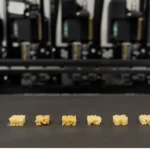
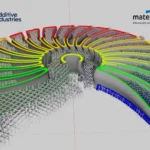
It seems every day some new form of 3D printing or a new device is popping up. Today is no different. While Impossible Objects has been in the news before, the company has only recently released their first device. The device in question is the “Model One” and it looks to be a very promising Additive Manufacturing device. It is also their first device to incorporate CBAM and lay up technologies.

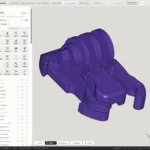
Constrained surface stereolithography
Related Story
Virginia Tech Researchers 3D Print Kapton – Highest Temperature Polymer Ever 3D Printed

The Model One is a unique device because of its range of printable materials. Impossible Objects is one of the few 3D printers that can build from composite materials like kevlar and fiberglass. The company has claimed that it can produce prints that are 100 times faster than traditional methods like SLS and FFF.

Model One CBAM 3D Printer Kevlar Carbon-Fiber Impossible Objects

What are CBAM and the Lay Up Technique?

CBAM stands for Composite-Based Additive Manufacturing. The printer can incorporate carbon, kevlar and glass fiber fabrics bonded with thermoplastic matrix materials, ranging from nylon/polyamide to polyethylene, PEEK into its prints.
Related Story
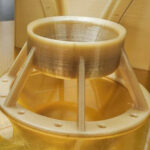
PEEK 3D Printing – Everything you need to know

The machine employs lay up technology. This refers to a method of additive manufacturing where sheets of fabric, such as fiber glass, are stacked atop each other in succession within a mold. A machine then bonds each layer by jetting resin onto the stack.

Model One uses thermal inkjet heads to extrude fluids onto sheets of composite materials. Then, the sheets are doused with a polymer powder over where the original inkjet fluid was placed. The powder adheres to the pattern of the inkjet fluid and then forms the shape of the object. Later, the machine vacuums off the excess powder, compresses the sheets and then heats them.

Upon heating, the polymer powder melts away and binds the sheets together. Next, the machine removes all of the fibers that could not be coated leaving a fully printed object. With this method, Model One can combine composite materials are polymers like PEEK. The core advantage of this technique is that it enables swift print speeds and high durability of parts.

You can see the machine in action in the video below (courtesy of Wall Street Journal):

ULTEM 3D Printers and Filament Guide
Related Story
ULTEM 3D Printers and Filament Guide

Featured Image courtesy of Impossible Objects.
Share:
WhatsApp Twitter Facebook LinkedIn Buffer Reddit E-mail
Join our newsletter

Our newsletter is free & you can unsubscribe any time.

Social

  • Facebook Facebook 3D Printing
  • Linkedin Linkedin 3D Printing
banner
banner
Join our newsletter

Our newsletter is free & you can unsubscribe any time.

Featured Industries

  • Automotive
  • Aerospace
  • Construction
  • Dental
  • Environmental
  • Electronics
  • Fashion
  • Medical
  • Military
  • Anycubic Kobra S1 Combo

    • - Print size: 250 x 250 x 250 mm
    • - budget multicolor printing
    More details »
    $429.00 Anycubic
    Buy Now
  • Snapmaker U1

    • - Print size: 270 x 270 x 270 mm
    • - multi-color printing with SnapSwap
    More details »
    $849.00 Snapmaker
    Buy Now
  • Qidi Q2

    • - Print size: 270 x 270 x 256 mm
    • - enclosed heated chamber up to 65°C
    More details »
    $580.00 Qidi
    Buy Now
  • Anycubic Photon Mono M7

    • - Print size: 223 x 126 x 230 mm
    • - 10.1 inch 14K screen
    More details »
    $279.00 Anycubic
    Buy Now
  • Flashforge Adventurer 5M

    • - Print size: 220 x 220 x 220 mm
    • - 600mm/s travel speed
    More details »
    $299.00 Flashforge
    Buy Now
  • Flashforge AD5X

    • - Print size: 220 x 220 x 220 mm
    • - dual extrusion system
    More details »
    $399.00 Flashforge
    Buy Now
  • Creality K2 Plus

    • - Print size: 350 x 350 x 350 mm
    • - multi-color printing
    More details »
    $1,199.00 Creality
    Buy Now
  • Qidi Max 4

    • - Print size: 390 x 390 x 340 mm
    • - active cooling air control
    More details »
    $1,219.00 Qidi
    Buy Now
  • Creality Hi Combo

    • - Print size: 260 x 260 x 300 mm
    • - up to 16-color printing
    More details »
    $399.00 Creality
    Buy Now
  • Flashforge Guider 3 Ultra

    • - Print size: 330 x 330 x 600 mm
    • - dual extruder system
    More details »
    $2,999.00 Flashforge
    Buy Now

Company Information

  • What is 3D Printing?
  • Contact us
  • Join our mailing list
  • Advertise with us
  • Media Kit
  • Nederland 3D Printing

Blog

  • Latest News
  • Use Cases
  • Reviews
  • 3D Printers
  • 3D Printing Metal

Featured Reviews

  • Anycubic Photon Mono M5s
  • Creality Ender 5 S1
  • The Mole 3D Scanner
  • Flashforge Creator 3 Pro

Featured Industries

  • Automotive
  • Aerospace
  • Construction
  • Dental
  • Environmental
  • Electronics
  • Medical
  • Military
  • Fashion
  • Art
2025 — Strikwerda en Dehue
  • Home
  • Join our mailing list
  • Contact us
Blog
  • Latest News
  • Use Cases
  • Reviews
  • 3D Printers
  • 3D Printing Metal
Featured Industries
  • Automotive
  • Aerospace
  • Construction
  • Dental
  • Environmental
  • Electronics
  • Medical
  • Military
  • Fashion
  • Art
Company Information
  • What is 3D Printing?
  • Contact us
  • Join our mailing list
  • Advertise with us
  • Media Kit
  • Nederland 3D Printing