Once you’ve moved beyond basic prototyping, your requirements change. You need parts with real mechanical properties, materials that withstand operating conditions, and processes that bridge prototypes to production. This guide covers advanced technologies that JUSTWAY offers like SLS, MJF, and engineering thermoplastics for functional testing and production applications. New to professional 3D printing? Start with the JUSTWAY beginner’s guide first.
Why Advanced Technologies Matter
Desktop printing and basic resin work well for form-factor testing and visual validation. But for functional testing, field trials, or low-volume production, you need technologies producing parts with consistent mechanical properties, durability, and dimensional accuracy under real-world conditions. Industrial powder bed fusion and engineering thermoplastics separate hobbyist printing from professional manufacturing.
Selective Laser Sintering (SLS): Support-Free Functional Parts
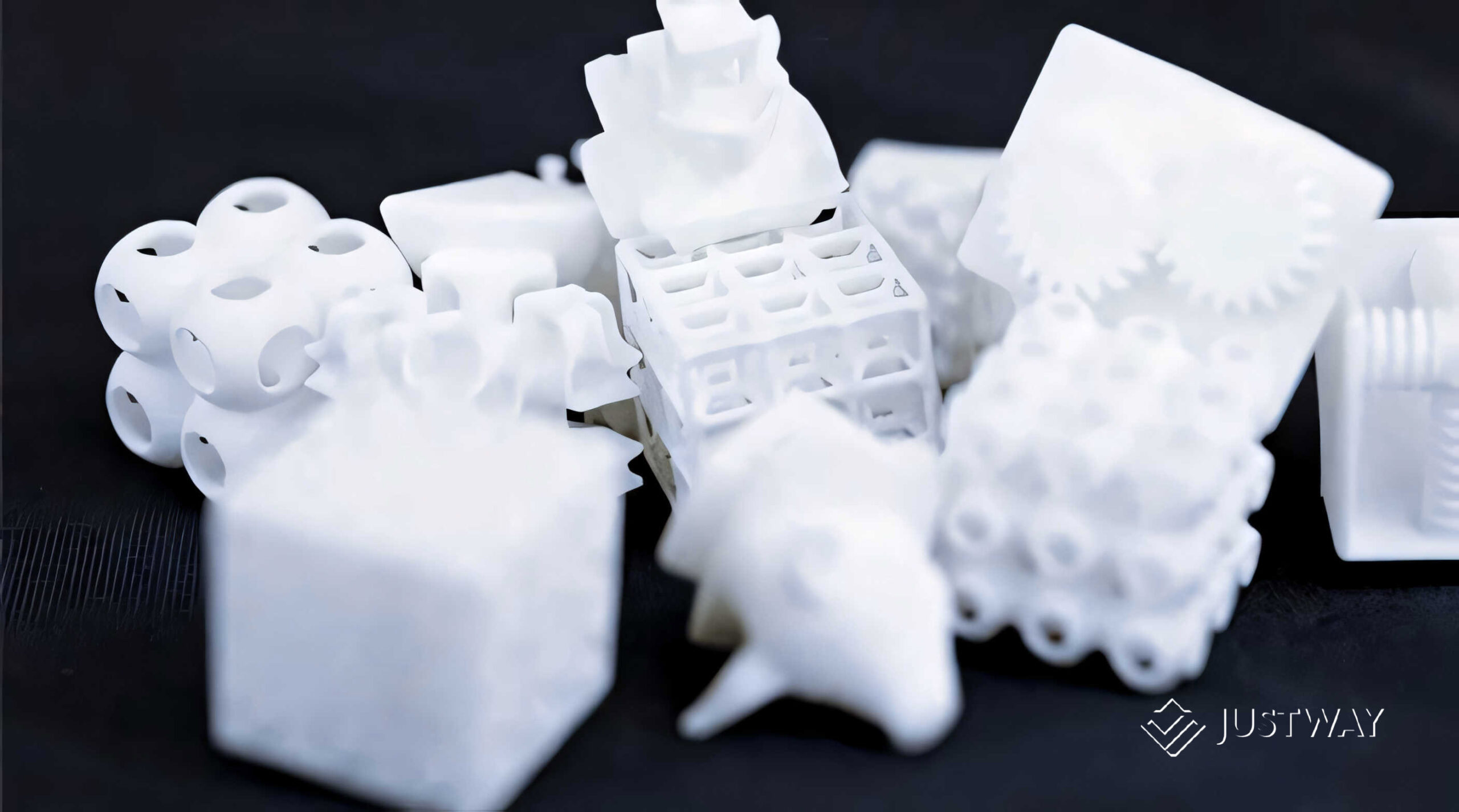
SLS uses a high-powered laser to selectively fuse powder material layer by layer. Unsintered powder surrounding each part acts as support, enabling geometries impossible with other technologies.
Key advantages
No support structures. Parts with deep undercuts, internal channels, or interlocking components print without supports requiring removal. Create assemblies as single pieces, snap-fit mechanisms, or parts with internal features that would require assembly traditionally.
Genuinely functional materials. Nylon PA12 offers good strength, flexibility, and chemical resistance. Slightly porous structure provides flexibility preventing brittle failure while maintaining rigidity for structural use. Material is isotropic—strength consistent in all directions, unlike FDM’s weak layer lines.
Efficient batch production. SLS packs multiple parts in one build chamber. Need 50 identical brackets? Print them all in one build with consistent quality.
Applications: Functional prototypes for mechanical testing, living hinges, snap-fits, manufacturing tooling, field testing components, small-medium production runs (10-1000 parts), complex internal geometries.
Glass-filled nylon increases stiffness and dimensional stability while reducing flexibility. Works well for parts maintaining precise dimensions under load or elevated temperatures.
Multi Jet Fusion (MJF): Production-Intent Parts
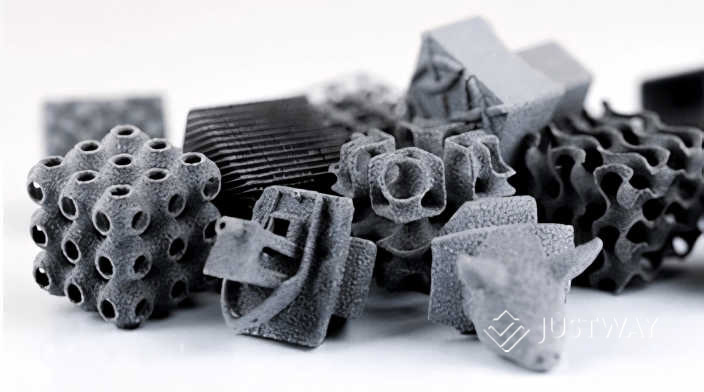
MJF uses inkjet heads to apply fusing and detailing agents across powder beds, then infrared heat fuses entire layers at once. Results: better mechanical properties, finer detail, smoother surface finish than SLS.
Why engineers choose MJF
Mechanical properties approach injection molding. MJF nylon has higher tensile strength and better elongation at break than SLS. Suitable for functional testing simulating production conditions. Validating designs before mold tooling? MJF provides realistic mechanical behavior.
Better surface finish. MJF produces smoother surfaces with finer detail than SLS’s grainy texture. Matters for small features, text, logos, and reduces post-processing for cosmetic applications.
Tighter dimensional accuracy. Better dimension control matters for assemblies, interference fits, or critical tolerances. Makes MJF ideal moving from “proof of concept” to “production-intent prototype.”
Applications: Production-intent prototypes, functional testing under real conditions, bridge manufacturing, end-use parts for low-medium volumes, custom components with specific mechanical requirements, parts requiring good finish and dimensional accuracy.
Engineering Thermoplastics: High-Performance Materials
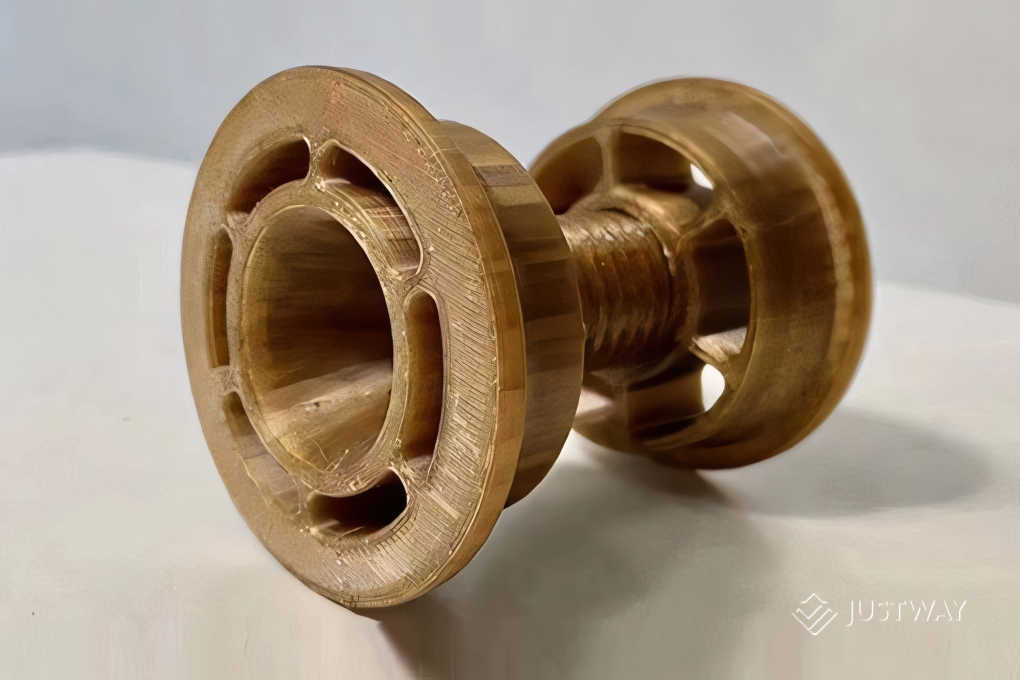
Polycarbonate (PC) provides high impact strength and temperature resistance to 110°C. Tough enough for drops and impacts, maintains dimensional stability across temperature ranges. Works for protective enclosures, functional prototypes needing abuse resistance, or parts seeing elevated temperatures.
PEEK (Polyetheretherketone) sits atop the performance pyramid. Glass transition temperature around 143°C, excellent chemical resistance. Biocompatible (medical applications), maintains strength at elevated temperatures, resists most chemicals including fuels and solvents. Expensive and requires specialized printing, but for aerospace, medical, or harsh industrial environments, no plastic matches PEEK’s performance.
Design Considerations
Wall thickness: SLS and MJF handle thin walls well—down to 0.7-1mm. Enables lightweight designs maintaining strength.
Internal features are free: No support removal means designing channels, voids, or complex internal structures without cleanup worries.
Surface finish is functional: Slightly textured surfaces benefit some applications. For smooth finishes, plan vapor smoothing or coating.
Tolerances tighten: MJF particularly holds tolerances approaching CNC machining.
The Professional Workflow
1. Design with manufacturing in mind (utilize SLS/MJF freedoms)
2. Upload and review DFM feedback
3. Order test quantities (1-5 parts validate design/material)
4. Functional testing (stress test under real conditions)
5. Iterate as needed
6. Scale to production quantities once validated
Cost Considerations
Advanced technologies cost more than basic FDM or resin. SLS and MJF pricing reflects higher material costs and longer print times. A $15 FDM part might run $40-80 in SLS/MJF.
However, consider: no tooling costs, faster iteration than traditional manufacturing, testing in production materials, consolidated assemblies reducing part count, small batch production without minimums.
When to Choose Advanced Services
Use SLS for functional parts with complex geometries, printing assemblies as single pieces, or requiring consistent mechanical properties in all directions.
Use MJF when mechanical properties approaching injection molding are critical, dimensional accuracy matters, or doing production-intent testing before tooling.
Use engineering thermoplastics (PC, PEEK) when operating conditions exceed standard material capabilities—high temperatures, chemical exposure, or environments where standard plastics fail.
Moving Beyond Prototyping
JUSTWAY’s advanced services enable engineering workflows that weren’t economically viable a decade ago. Design parts with complex internal structures, print in production-intent materials, test under real conditions, and iterate within days instead of weeks. For small batch production, skip tooling entirely and print on demand.
The technologies are mature, materials proven, platform straightforward. What separates advanced services from beginner options isn’t complexity—it’s capability. When projects demand performance, these tools deliver.
JustWay runs limited-time discount promotion until April 22: