
The BMW Group has appointed Timo Göbel as the new head of its Additive Manufacturing Campus (AMC), focusing on further integration of 3D printing technology across vehicle production. Göbel brings experience from materials engineering and application development, including previous work at Rolls-Royce where he advocated for additive manufacturing processes.
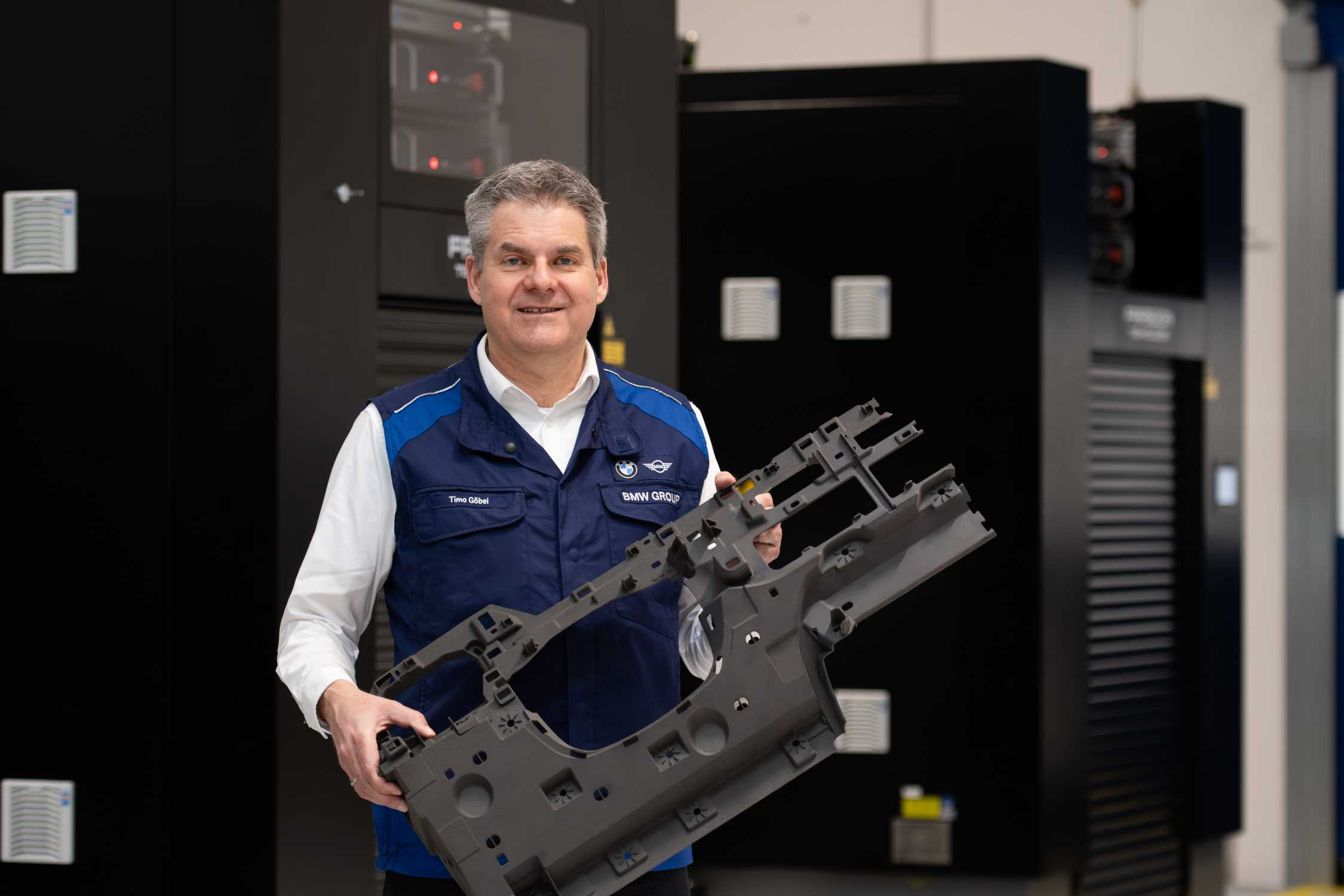
BMW currently uses 3D-printed components across all phases of vehicle development, from prototypes to series production and aftermarket parts. The technology is deployed in production facilities worldwide and supports all BMW Group brands, including MINI, BMW, Rolls-Royce, and BMW Motorrad. Since the AMC began operations, more than 1.6 million components have been manufactured, with an additional 100,000 components produced annually at vehicle plants globally.
The company plans to scale operations through automated, digitally networked process chains and open-material systems that integrate with existing production infrastructure. In the metals segment, BMW is introducing a new generation of metal 3D printers and plans to integrate Wire Arc Additive Manufacturing (WAAM) technology. WAAM is already established in prototype development, with vehicle testing underway since 2025 and series production of initial components planned from 2027.
BMW’s additive manufacturing timeline began in 1990-1991 with its first equipment development and prototype parts production. Key milestones include the first series production of polymer components in 2012 with the Rolls-Royce Phantom, followed by metal components in 2017 with the BMW i8 Roadster. The dedicated AMC facility opened in 2020 in Oberschleißheim, consolidating production, research, and training operations.
Source: press.bmwgroup.com