

Researchers at Idaho National Laboratory (INL) have developed a new nuclear fuel design using 3D printing technology that mimics natural geometric patterns called triply periodic minimal surfaces (TPMS). The Intertwined Nuclear Fuel Lattice for Uprated heat eXchange (INFLUX) fuel design replaces conventional cylindrical fuel rods with complex, three-dimensional lattice structures similar to those found in butterfly wings and sea urchin shells.
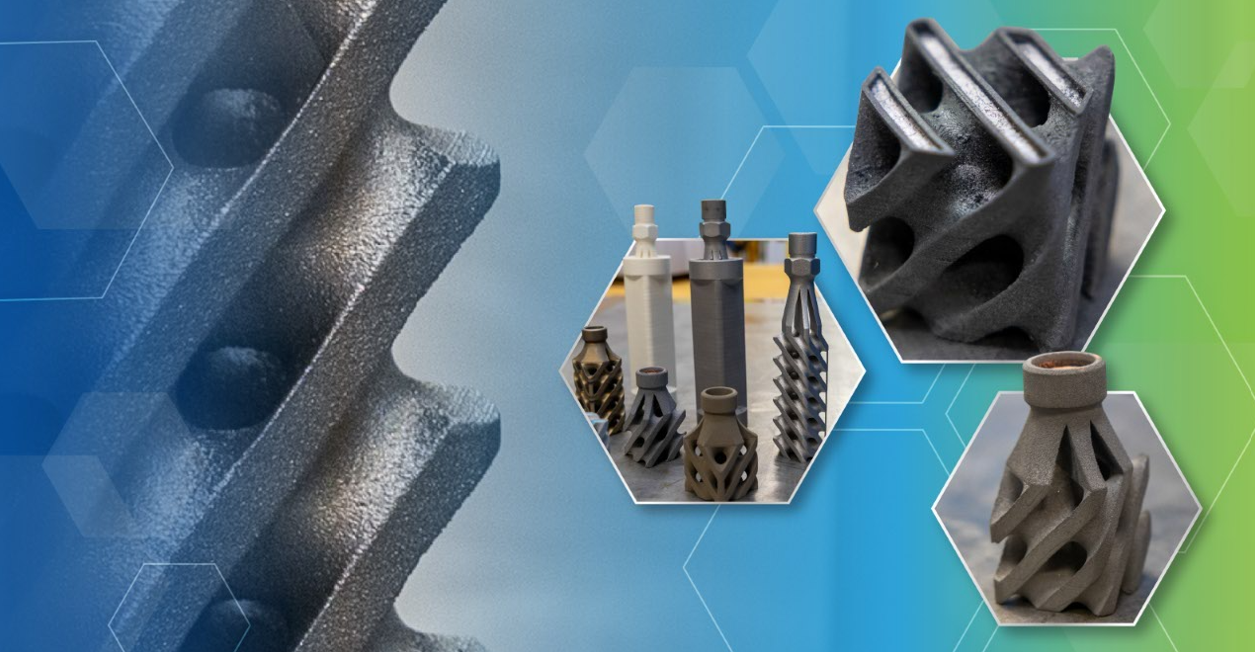
Initial experiments showed the TPMS geometry triples the heat transfer coefficient compared to standard rod-type fuel. INL researcher Nicolas Woolstenhulme noted that “cylinders are actually a terrible shape for heat transfer,” explaining that the team was inspired by additive manufacturing applications in other industries. The improved heat transfer properties could increase fuel power density and reduce operating temperatures.
The research team, including University of Wisconsin professor Mark Anderson, created electrically conductive polymer-composite versions of the lattice structure with embedded temperature sensors for testing. They used electrical current to simulate nuclear heating and measured heat transfer characteristics with gas and liquid coolants. Computer modeling indicates the design reduces fuel thickness while improving heat production capabilities.
Manufacturing the complex geometry required INL to develop new fabrication methods combining commercial 3D printing with hot-isostatic pressing. This process enabled researchers to create INFLUX structures in both ceramic/metal and metal/metal material systems, though current additive manufacturing technology cannot yet meet the stringent requirements for actual nuclear fuel production.
The INFLUX design forces coolant through what researchers describe as a “smooth labyrinth” path for better heat mixing without significantly increasing hydraulic resistance. During hypothetical loss-of-coolant accidents, the continuous lattice structure could help fuel cool faster than conventional rods, potentially improving reactor safety. The design may also offer neutronics benefits by reducing neutron escape paths.
Further development is needed before the technology can be implemented in commercial reactors. Woolstenhulme stated the team must determine “which plant type would benefit from this” and optimize hydraulic resistance for specific reactor designs. Potential applications include microreactors requiring high power density and gas-cooled reactors where enhanced heat transfer offers significant advantages.
Source: inl.gov