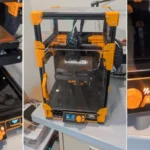
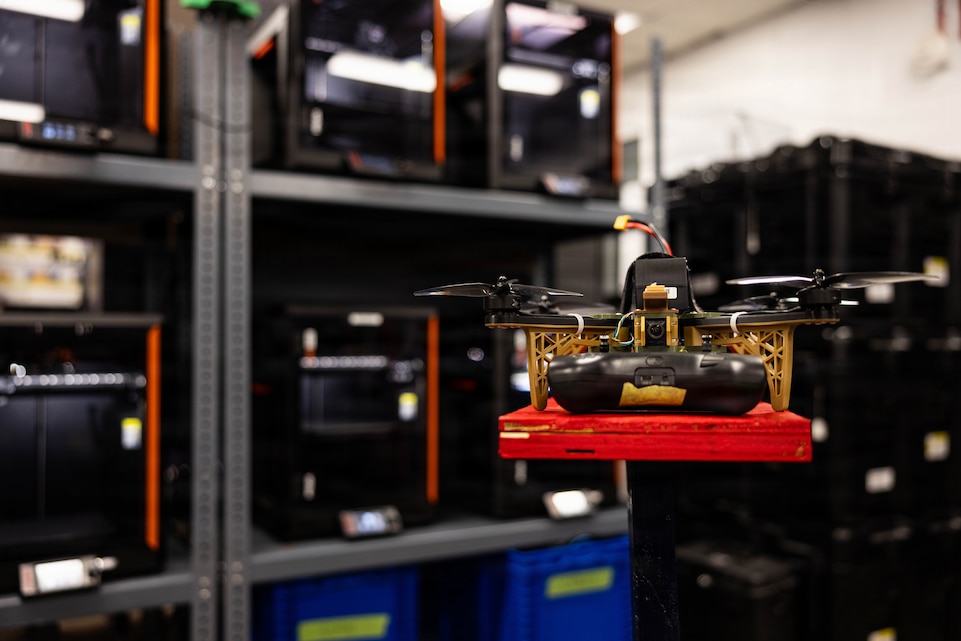
The 2nd Marine Logistics Group has developed the Marine Corps’ first National Defense Authorization Act-compliant 3D-printed drone, called HANX. The drone represents an advancement from previous Marine Corps 3D-printed drone efforts, such as the “nibbler” from 2017, which did not meet current NDAA compliance requirements. HANX’s compliance status means it is designed to be resilient against backdoor programs from adversaries.
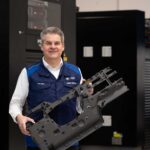
U.S. Marine Corps Sgt. Henry David Volpe, an automotive maintenance technician with 2nd Maintenance Battalion, led the drone’s development. Volpe began 3D printing in seventh grade and joined a Lego robotics club in middle school before studying automotive maintenance technology in college. He joined the Marine Corps in 2022 after COVID-19 disrupted his civilian work and education.
Volpe worked at the II Marine Expeditionary Force Innovation Campus, which teaches Marines 3D printing, robotics, and manufacturing skills. After visiting U.S. Army Fort Campbell to observe their 3D-printed drone program, Volpe was inspired to create a more cost-effective alternative. “Their drone has some capabilities mine doesn’t, and some very nice cameras with it, but what I saw was a big price tag. I knew I could make something far cheaper without sacrificing too many features,” said Volpe.
The development process took 90 days and over 1,000 hours of work, with Volpe creating five major versions before completing the final prototype. A team of Marines assisted with various aspects of the project, including design input and maintaining 3D printers during production. The drone required NDAA-compliant components to prevent potential security risks from backdoor software.
HANX received interim flight clearance approval from NAVAIR, making it the first NDAA and NAVAIR approved 3D-printed drone built entirely by Marines. The platform is designed to be modular and adaptable for various mission types, including reconnaissance, logistics, and attack operations. The Innovation Campus has developed training plans to enable Marines across different units to manufacture and maintain the drone system.
The development comes amid the Department of Defense’s initiative to acquire 300,000 one-way attack drones by 2028. HANX’s low cost and modifiability make it suitable for units that need customizable drone capabilities without the restrictions typically associated with contractor-built systems. Marine Corps Special Forces Command at Camp Lejeune has already begun utilizing the platform for their operations.
Source: marines.mil