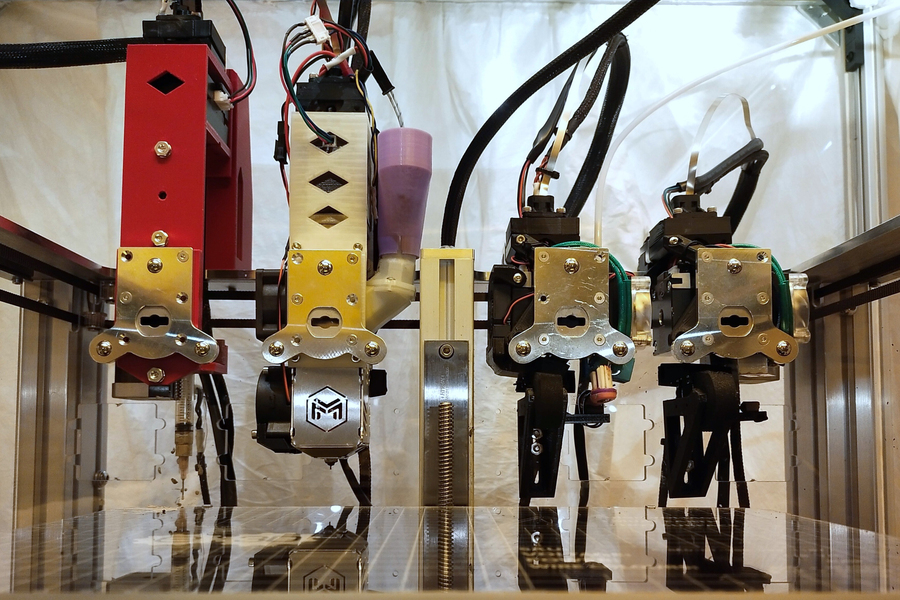
Researchers at MIT have created a 3D printing platform capable of producing electric motors using multiple functional materials in a single process. The system uses four specialized extruders that can handle different forms of printable materials, including electrically conductive and magnetic materials. The printer switches between extruders as it builds devices layer by layer.
The research team used their platform to produce a fully functional electric linear motor in approximately three hours using five different materials. The motor required only one post-processing step – magnetizing the hard magnetic materials – to become fully operational. Material costs for each device are estimated at around 50 cents.
The custom-built system required significant engineering work to integrate different extrusion methods into one platform. “There were significant engineering challenges. We had to figure out how to marry together many different expressions of the same printing method — extrusion — seamlessly into one platform,” says Luis Fernando Velásquez-García, senior author of the study published in Virtual and Physical Prototyping.
The 3D-printed linear motor demonstrated performance equal to or better than similar motors made through more complex manufacturing processes. Linear motors generate straight-line motion and are commonly used in robotics, optical systems, and conveyor applications. The technology could potentially enable on-site manufacturing of electronic components for various industries, reducing reliance on distant suppliers and lengthy production delays.
The researchers plan to integrate the magnetization process directly into the printing workflow and work toward fabricating rotary motors. They also aim to add more tools to enable production of more complex electronic devices through this single-step manufacturing approach.
Source: news.mit.edu