
The University of Oklahoma has been awarded $8.8 million to launch Phase II of a metal 3D printing research program aimed at cutting the time and cost of certifying printed parts for U.S. Air Force aircraft. OU and Oak Ridge National Laboratory are leading the effort in partnership with the Air Force Sustainment Center, the Air Force Research Laboratory and the Oklahoma City Air Logistics Complex.
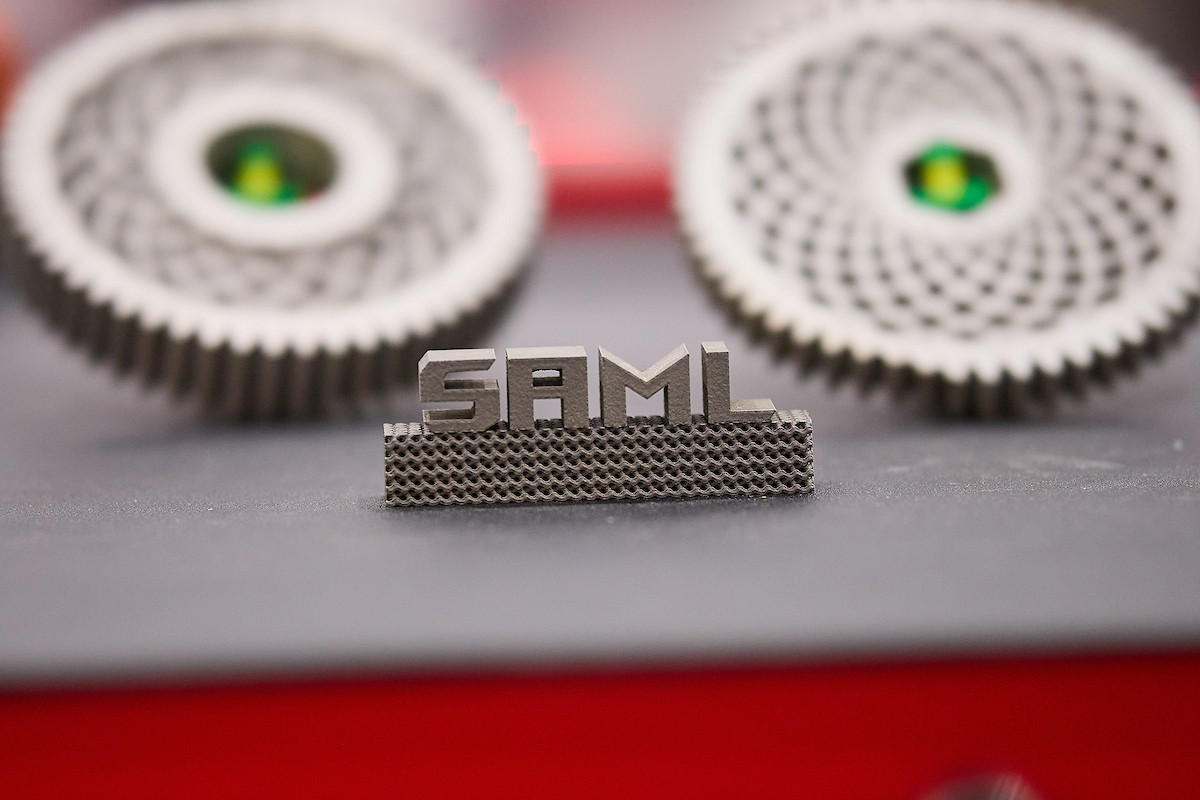
The program targets a concrete problem: military aircraft can stay in service for more than 60 years, and replacement parts for those aging platforms are increasingly hard to source. Right now, the materials, geometry and machines used in additive manufacturing each require separate testing before a part can be certified as airworthy, making the process expensive and slow.
The new approach ditches that piecemeal testing in favor of digitally tracking the entire manufacturing process. By collecting data at every step, the system would allow parts to be printed on different machines and platforms while still meeting military safety standards. The goal is a single, standardized qualification process across the Air Force Sustainment Center and the Oklahoma City Air Logistics Complex and their supply chains.
Phase I concentrated on producing replacement components using laser powder bed fusion. “In Phase 2, we will be looking at the repair of components in addition to the manufacturing of new components and looking at quality assurance using AI and in situ monitoring,” said Zahed Siddique, associate dean of research in the Gallogly College of Engineering at OU.
The research will run through 2028 and builds on an OU-ORNL collaboration announced in April 2025, when the two institutions established an additive manufacturing center in Norman, Oklahoma, through OU’s Sooner Advanced Manufacturing Laboratory. Part of that work involves deploying ORNL’s Peregrine software, a tool designed to detect defects during the printing process.
“Standardizing additive manufacturing qualification is a pervasive issue in the aerospace industry,” said Mark Benedict, senior scientist for convergent manufacturing at AFRL, “and the work that the OU-ORNL partnership is accomplishing accelerates the technology’s adoption for our sustainment enterprise.”
Moe Khaleel, associate laboratory director for National Security Sciences at Oak Ridge National Laboratory, framed the stakes plainly: “Sustainment is extremely important to the readiness of our U.S. Air Force and broader Department of War. We are proud to partner with the University of Oklahoma and the Air Force to democratize national laboratory capabilities — like the Peregrine software — which can accelerate manufacturing innovation and ultimately build defect-free parts that are born ready to fly.”
Source: ou.edu