
3D Printing
News Videos Newsletter Contact us
Home / News / Realtime AI-based Keyhole Pore Detection

Realtime AI-based Keyhole Pore Detection

January 9, 2023

Researchers at University of Virginia have published a paper highlighting their work in the use of machine learning (ML) for the real-time detection of keyhole defects during the LPBF printing of titanium.

Keyhole defects are common in laser welding and LPBF printing processes, and can result in the formation of random pores through the printed material, resulting in a weak and brittle part.

Keyholes

A keyhole defect in metal 3D printing refers to a cavity that forms in the melt pool of the material being printed. This cavity is shaped like a keyhole (hence the name), with a narrow opening at the top and a wider area at the bottom.

Keyhole defects can occur during laser-based 3D printing processes when the laser is operating at a slow speed and high power. Keyhole defects are caused by a variety of factors, including the properties of the material being printed, the laser parameters being used, and the design of the 3D printing setup. You can read our previous article on keyhole formation here.

The team, consisting of researchers from University of Virginia, Carnegie Mellon University, and the University of Wisconsin-Madison used simultaneous high-speed operando synchrotron x-ray imaging and thermal imaging, along with multiphysics simulations, to discover two types of keyhole oscillation in laser powder bed fusion of Ti-6Al-4V.

They then utilized machine learning to further amplify their understanding of this phenomenon and developed an approach for detecting the stochastic (random) keyhole porosity generation events with sub-millisecond temporal resolution and a near-perfect prediction rate.

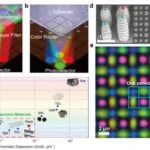
You can see one of the ML-aided parts in the image below.
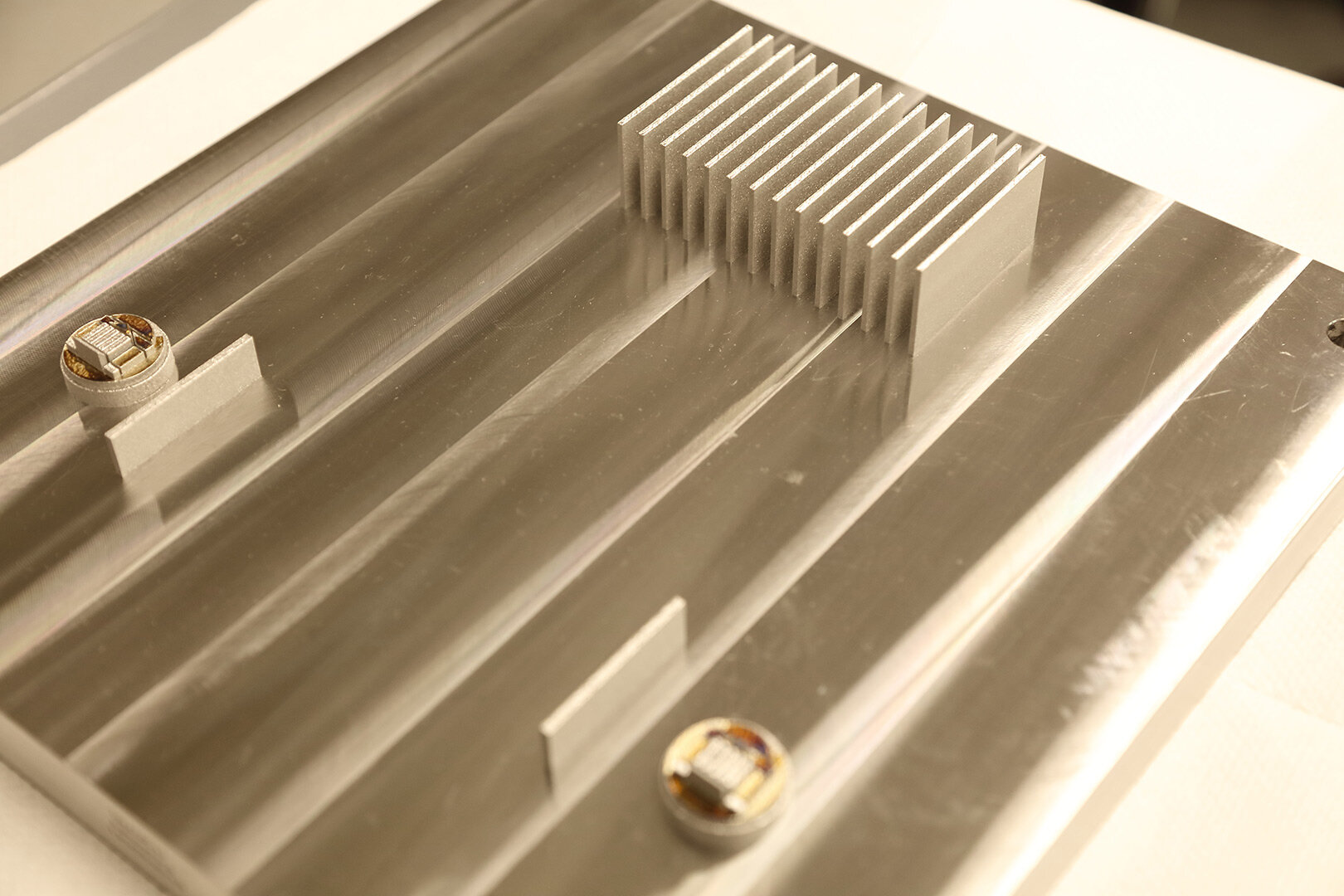
keyhole-free metal printing
Reliable, keyhole-free metal printing. (Image credit: Sun et al.)

The operando x-ray imaging provided highly accurate data labeling, enabling the researchers to demonstrate a practical and straightforward method for implementing their approach in commercial systems.

Accelerating Widespread Adoption

This approach was developed to detect the exact moment when a keyhole pore forms during the printing process, which they succeeded in achieving.

“By integrating operando synchrotron X-ray imaging, near-infrared imaging, and machine learning, our approach can capture the unique thermal signature associated with keyhole pore generation with sub-millisecond temporal resolution and 100% prediction rate,” said Tao Sun, associate professor of materials science and engineering at the University of Virginia.

The porosity resulting from keyhole formation has been seen as a hurdle in the widespread adoption of large scale metal additive manufacturing, especially in industries requiring a high level of quality and reliability in their parts. It is difficult to detect using typical sensors as the defect formation occurs randomly beneath the surface.

“Our findings not only advance additive manufacturing research, but they can also practically serve to expand the commercial use of LPBF for metal parts manufacturing,” said Anthony Rollett, co-director of the NextManufacturing Center at CMU.

You can read more in the paper titled “Machine learning–aided real-time detection of keyhole pore generation in laser powder bed fusion”, published in Science, which is available at this link.

Share:
WhatsApp Twitter Facebook LinkedIn Buffer Reddit E-mail
About the author | Phillip Keane
Phillip is an aerospace engineer from UK. He is a graduate of Coventry University (UK), International Space University (France) and Nanyang Technological University (Singapore), where he studied Advanced Manufacturing at the Singapore Centre for 3D Printing.
Join our newsletter

Our newsletter is free & you can unsubscribe any time.

Latest posts

Marines 3D-Print Coast Guard Replacement Part in Hours During South Korea Exercise

U.S. Marines with 3rd Marine Logistics Group used a 3D printer to manufacture a replacement component for a U.S. Coast Guard vessel during... read more »

Military
Marines 3D-Print Coast Guard Replacement Part in Hours During South Korea Exercise

UT Austin Researchers Create 3D-Printable Material That Mimics Human Tissue

Researchers at The University of Texas at Austin have developed a 3D-printable material that replicates human tissue's ability to sort and filter molecules,... read more »

Materials
UT Austin Researchers Create 3D-Printable Material That Mimics Human Tissue

Beyond Prototypes: Scaling with LS Manufacturing’s Integrated On-Demand Solutions

Why hardware teams are pairing additive manufacturing with CNC machining and molding, and what a single point of contact changes about the road... read more »

News

Czech Scientists Test 3D-Printed Titanium Implants That Release Drugs Inside the Body

Researchers at the University of Chemistry and Technology in Prague are testing 3D-printed titanium joint implants capable of releasing medication directly into the... read more »

Medical
Czech Scientists Test 3D-Printed Titanium Implants That Release Drugs Inside the Body

Best 3D Printers for Miniatures 2026: Resin and FDM Picks

Miniatures are the category where the printer decides the ceiling before you open a single STL. The best 3D printer for miniatures is,... read more »

3D Printers

Purdue Researcher Uses 3D Printing to Build Affordable Groundwater Sensors for a Few Hundred Dollars Each

A Purdue University researcher has developed a patent-pending, 3D-printed groundwater sensor that costs a few hundred dollars per unit, offering a cheaper alternative... read more »

Environmental
Purdue Researcher Uses 3D Printing to Build Affordable Groundwater Sensors for a Few Hundred Dollars Each

Queen’s University Belfast Researcher 3D-Prints Flow Battery for £74, Shares Design Globally for Free

A post-doctoral researcher at Queen's University Belfast has developed a 3D-printed flow battery that costs roughly £74 to build and is now being... read more »

Electronics
Queen's University Belfast Researcher 3D-Prints Flow Battery for £74, Shares Design Globally for Free

MIT’s 3D-Printed Concrete Bridge Shows Printer Hardware, Not Concrete, Is the Limiting Factor

MIT researchers have 3D-printed and load-tested a 2.3-meter concrete bridge using a computational framework that bakes a printer's physical limitations directly into the... read more »

Construction
MIT's 3D-Printed Concrete Bridge Shows Printer Hardware, Not Concrete, Is the Limiting Factor

Manchester Researchers Link Temperature Swings to Defects in Aluminium 3D Printing

Scientists at The University of Manchester have found that small temperature changes during molten metal deposition can substantially alter the quality of 3D-printed... read more »

3D Printing Metal
Manchester Researchers Link Temperature Swings to Defects in Aluminium 3D Printing

Social

  • Facebook Facebook 3D Printing
  • Linkedin Linkedin 3D Printing
Join our newsletter

Our newsletter is free & you can unsubscribe any time.

Featured Industries

  • Automotive
  • Aerospace
  • Construction
  • Dental
  • Environmental
  • Electronics
  • Fashion
  • Medical
  • Military
  • Flashforge Guider 3 Ultra

    • - Print size: 330 x 330 x 600 mm
    • - dual extruder system
    More details »
    $2,999.00 Flashforge
    Buy Now
  • Creality Hi Combo

    • - Print size: 260 x 260 x 300 mm
    • - up to 16-color printing
    More details »
    $399.00 Creality
    Buy Now
  • Snapmaker U1

    • - Print size: 270 x 270 x 270 mm
    • - multi-color printing with SnapSwap
    More details »
    $849.00 Snapmaker
    Buy Now
  • Flashforge AD5X

    • - Print size: 220 x 220 x 220 mm
    • - dual extrusion system
    More details »
    $399.00 Flashforge
    Buy Now
  • Qidi Max 4

    • - Print size: 390 x 390 x 340 mm
    • - active cooling air control
    More details »
    $1,219.00 Qidi
    Buy Now
  • Flashforge Adventurer 5M

    • - Print size: 220 x 220 x 220 mm
    • - 600mm/s travel speed
    More details »
    $299.00 Flashforge
    Buy Now
  • Qidi Q2

    • - Print size: 270 x 270 x 256 mm
    • - enclosed heated chamber up to 65°C
    More details »
    $580.00 Qidi
    Buy Now
  • Anycubic Kobra S1 Combo

    • - Print size: 250 x 250 x 250 mm
    • - budget multicolor printing
    More details »
    $429.00 Anycubic
    Buy Now
  • Anycubic Photon Mono M7

    • - Print size: 223 x 126 x 230 mm
    • - 10.1 inch 14K screen
    More details »
    $279.00 Anycubic
    Buy Now
  • Creality K2 Plus

    • - Print size: 350 x 350 x 350 mm
    • - multi-color printing
    More details »
    $1,199.00 Creality
    Buy Now

Company Information

  • What is 3D Printing?
  • Contact us
  • Join our mailing list
  • Advertise with us
  • Media Kit
  • Nederland 3D Printing

Blog

  • Latest News
  • Use Cases
  • Reviews
  • 3D Printers
  • 3D Printing Metal

Featured Reviews

  • Anycubic Photon Mono M5s
  • Creality Ender 5 S1
  • The Mole 3D Scanner
  • Flashforge Creator 3 Pro

Featured Industries

  • Automotive
  • Aerospace
  • Construction
  • Dental
  • Environmental
  • Electronics
  • Medical
  • Military
  • Fashion
  • Art
2026 — Strikwerda en Dehue
  • Home
  • Join our mailing list
  • Contact us
Blog
  • Latest News
  • Use Cases
  • Reviews
  • 3D Printers
  • 3D Printing Metal
Featured Industries
  • Automotive
  • Aerospace
  • Construction
  • Dental
  • Environmental
  • Electronics
  • Medical
  • Military
  • Fashion
  • Art
Company Information
  • What is 3D Printing?
  • Contact us
  • Join our mailing list
  • Advertise with us
  • Media Kit
  • Nederland 3D Printing