
Eindhoven University of Technology (TU/e) has announced a collaboration with Motion Imager to develop volumetric additive manufacturing techniques for complex geometric structures. The project focuses on creating reproducible, industrially viable manufacturing methods by combining scientific research with established materials processing knowledge.
The collaboration aims to align material design with manufacturing capabilities to achieve consistent performance. Current material discovery approaches often result in compromised functionality, higher waste, and manufacturing challenges when the production process is not considered during the design phase.
The technology targets applications requiring extreme precision, such as micro-thrusters for satellites and space vehicles. These components demand multi-material compositions, wall thicknesses below tens of micrometers, and complex internal structures while maintaining specific mechanical, optical, thermal, and chemical properties.
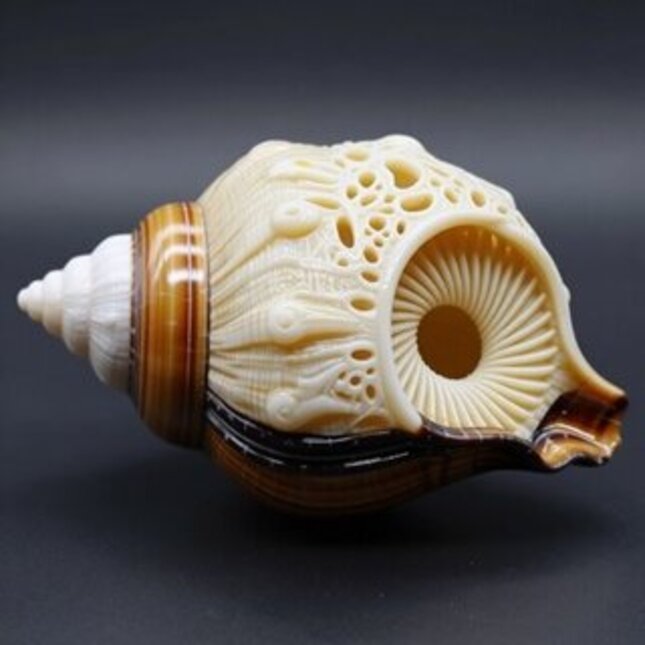
According to the announcement, volumetric additive manufacturing could achieve a Buy-to-Fly ratio closer to 1, significantly reducing material waste. Traditional manufacturing methods including casting, molding, and layer-based additive manufacturing typically result in Buy-to-Fly ratios of 2 for basic structures, with complex geometries reaching ratios as high as 20.
The project seeks to demonstrate manufacturing capabilities for structures with micron-scale surface precision, including non-planar and overhanging features without support fixtures. Target industries include automotive, aerospace, biomedical, and soft robotics applications.
The collaboration combines academic research from TU/e with Motion Imager’s development expertise to create standardized techniques, processes, and computational tools for the manufacturing approach.
Source: tue.nl