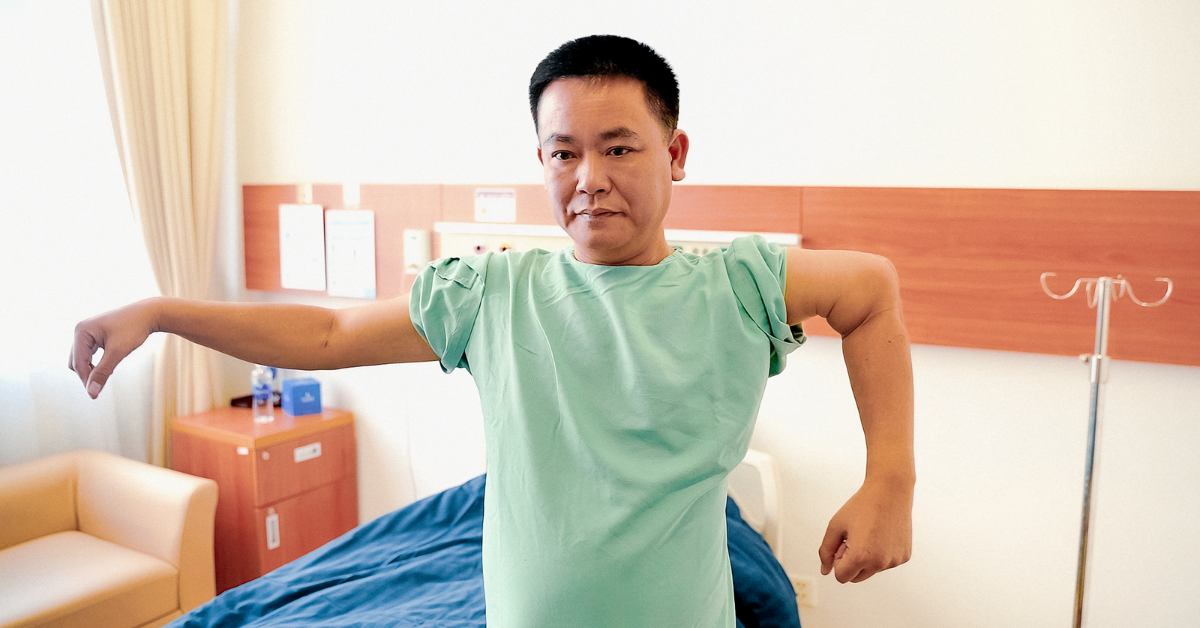
A man from Vietnam has a functioning elbow for the first time in 27 years, thanks to a 3D-printed megaprosthesis that, according to the surgical team, has no domestic precedent.
Vu Hong Phong’s situation was complicated. Multiple surgeries over 27 years hadn’t fixed the post-traumatic deformity. By the time he reached Vinmec, his elbow joint was fused, unstable, and missing roughly 6 centimeters of bone. His left arm was noticeably shorter than his right.
Standard elbow replacement wasn’t an option.
A Case Beyond Conventional Solutions
Megaprostheses are oversized implants designed to replace large sections of bone. They were originally developed for limb-salvage surgery in cancer patients facing amputation. Their use at the elbow joint, particularly for non-oncologic cases like decades-old trauma, remains uncommon.
“This is an extremely rare case with a very high level of complexity, and there are virtually no precedents in Vietnam,” said Dr. Tran Quyet, who heads upper limb surgery at Vinmec’s orthopedic trauma center.
From CT Scan to Custom Implant
The surgical team reconstructed Phong’s remaining elbow anatomy digitally using CT-based modeling on an in-house platform. This allowed them to map the defect in detail, simulate the reconstruction, and 3D print a megaprosthesis matched to his specific anatomy.
Vinmec has not disclosed specifics on the printing technology or implant material, citing partnership agreements.
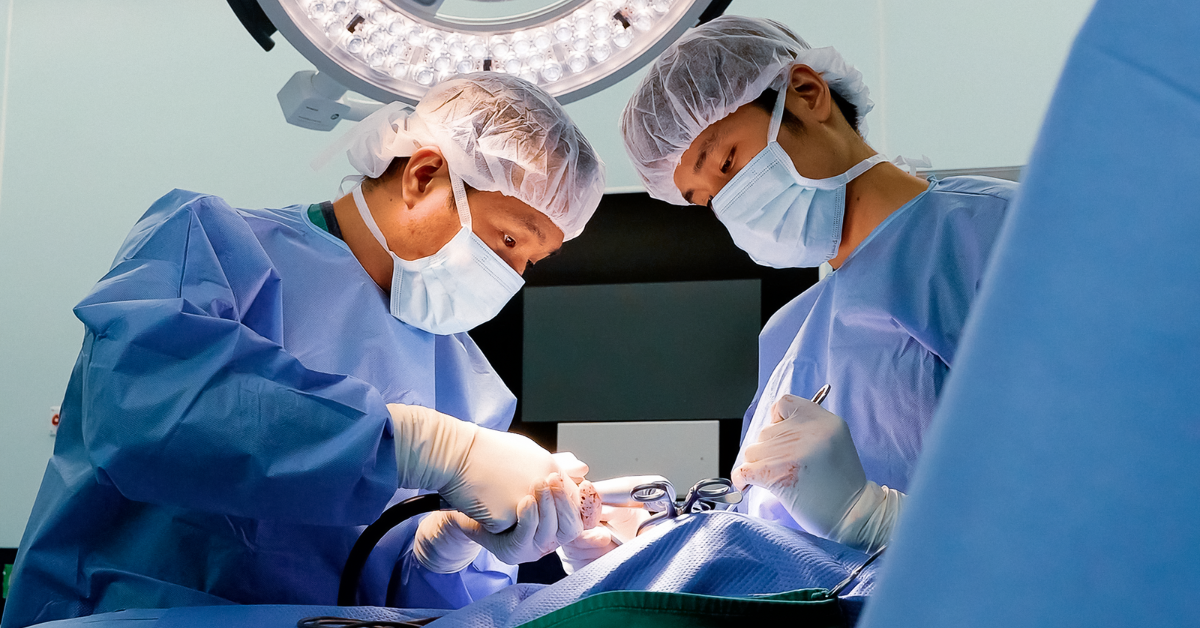
What we do know: the surgery was completed without nerve or vascular complications. Phong was moving his arm gently within three days, and had full extension, flexion, and overhead mobility within two weeks.
Part of a Broader Push
This isn’t Vinmec’s first notable 3D printing case. The hospital previously completed what they describe as Southeast Asia’s first fully 3D-printed titanium chest wall reconstruction. Then in 2025, they used a custom-printed metal implant for a total femoral replacement in a young child with aggressive bone cancer, preserving the limb when amputation had been the expected path.
Vinmec positions these cases as part of a patient-first approach that integrates digital planning and additive manufacturing for patients who may have exhausted conventional options. Whether that model scales beyond individual successes will depend on long-term outcomes and continued investment in their in-house capabilities.
The elbow case is more niche, but it adds to a growing portfolio that’s worth watching for anyone tracking medical 3D printing in the region.