
3D Printing
News Videos Newsletter Contact us
Home / Environmental / 3D Printed Membranes for Water Osmosis
qidi

3D Printed Membranes for Water Osmosis

November 27, 2020

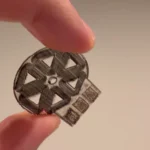
Researchers at Singapore University of Technology and Design (SUTD) and Nanyang Technological University (NTU Singapore) have been investigating methods to print microfiltration membranes and spacers using a variety of AM and hybrid 3D printing processes.

The membranes and membrane spacers are used extensively in water treatment processes such as microfiltration / nanofiltration, reverse osmosis and membrane distillation.

Membrane spacers are traditionally made by extrusion and welding of low-density polypropylene filaments into a mesh. This separates the membranes, which themselves are normally manufactured from porous ceramics, or polymers.

Ceramic membranes have a high cost due to the high temperature requirements of the manufacturing process. Polymer membrane manufacture is so complex it requires accurate control and monitoring of process parameters that it similarly adds to the costs.

And so the research team has examined the current capabilities of AM when applied to these components, as well as observed the limitations. Many of these limitations can be overcome by use of hybrid AM.

Fast-Complexity concrete slab featured image
Related Story
New Hybrid Process Combines Concrete Casting with 3D Printing

3D Printing & Hybrid 3D Printing

Due to the small diameter required for the membrane pores (0.1–1.0 µm) it is difficult to manufacture the membranes with 3D printing alone, due to the limits in resolution of 3D printers. For this reason, various Hybrid 3D printing approaches were reviewed.

A Hybrid approach requires secondary processes to attain the pore diameters beyond what 3D printing can provide alone. For the Hybrid AM strategy, researchers examined dip-coating, thermal curing, thermal sintering and debinding in combination with various AM methods to make the prototypes.

The 3D printing methods included material extrusion, material jetting, powder bed fusion, vat photopolymerization and binder jetting.

The spacers were successfully manufactured with AM, and Hybrid AM was not needed at that point. Hybrid AM appears to offer more value in membrane production than spacer production, at least for the immediate future.

The paper concludes by identifying limitations in current AM technology regarding resolution, and suggests that Hybrid AM can serve a purpose for producing membranes. In terms of pure AM processes however, Two-Photon Polymerization (TPP) method seems to offer the highest resolution for such small pores.

“It will not be an easy challenge to overcome upscaling and material limitations, but consistent research efforts are already evident today,” said Professor Chua Chee Kai co-author and Head of Pillar for Engineering Product Development, SUTD.

“Potentially, 4D printing can even be a possibility in the future to fabricate smart spacers and membranes that adapt to its surrounding environment.”

You can read the full research paper over at this link.
Share:
WhatsApp Twitter Facebook LinkedIn Buffer Reddit E-mail
About the author | Peter Strikwerda
Co-Founder 3DPrinting.com
Join our newsletter

Our newsletter is free & you can unsubscribe any time.

Social

  • Facebook Facebook 3D Printing
  • Linkedin Linkedin 3D Printing
banner
banner
Join our newsletter

Our newsletter is free & you can unsubscribe any time.

Featured Industries

  • Automotive
  • Aerospace
  • Construction
  • Dental
  • Environmental
  • Electronics
  • Fashion
  • Medical
  • Military
  • Flashforge AD5X

    • - Print size: 220 x 220 x 220 mm
    • - dual extrusion system
    More details »
    $399.00 Flashforge
    Buy Now
  • Creality Hi Combo

    • - Print size: 260 x 260 x 300 mm
    • - up to 16-color printing
    More details »
    $399.00 Creality
    Buy Now
  • Snapmaker U1

    • - Print size: 270 x 270 x 270 mm
    • - multi-color printing with SnapSwap
    More details »
    $849.00 Snapmaker
    Buy Now
  • Flashforge Adventurer 5M

    • - Print size: 220 x 220 x 220 mm
    • - 600mm/s travel speed
    More details »
    $299.00 Flashforge
    Buy Now
  • Anycubic Photon Mono M7

    • - Print size: 223 x 126 x 230 mm
    • - 10.1 inch 14K screen
    More details »
    $279.00 Anycubic
    Buy Now
  • Flashforge Guider 3 Ultra

    • - Print size: 330 x 330 x 600 mm
    • - dual extruder system
    More details »
    $2,999.00 Flashforge
    Buy Now
  • Anycubic Kobra S1 Combo

    • - Print size: 250 x 250 x 250 mm
    • - budget multicolor printing
    More details »
    $429.00 Anycubic
    Buy Now
  • Qidi Max 4

    • - Print size: 390 x 390 x 340 mm
    • - active cooling air control
    More details »
    $1,219.00 Qidi
    Buy Now
  • Qidi Q2

    • - Print size: 270 x 270 x 256 mm
    • - enclosed heated chamber up to 65°C
    More details »
    $580.00 Qidi
    Buy Now
  • Creality K2 Plus

    • - Print size: 350 x 350 x 350 mm
    • - multi-color printing
    More details »
    $1,199.00 Creality
    Buy Now

Company Information

  • What is 3D Printing?
  • Contact us
  • Join our mailing list
  • Advertise with us
  • Media Kit
  • Nederland 3D Printing

Blog

  • Latest News
  • Use Cases
  • Reviews
  • 3D Printers
  • 3D Printing Metal

Featured Reviews

  • Anycubic Photon Mono M5s
  • Creality Ender 5 S1
  • The Mole 3D Scanner
  • Flashforge Creator 3 Pro

Featured Industries

  • Automotive
  • Aerospace
  • Construction
  • Dental
  • Environmental
  • Electronics
  • Medical
  • Military
  • Fashion
  • Art
2025 — Strikwerda en Dehue
  • Home
  • Join our mailing list
  • Contact us
Blog
  • Latest News
  • Use Cases
  • Reviews
  • 3D Printers
  • 3D Printing Metal
Featured Industries
  • Automotive
  • Aerospace
  • Construction
  • Dental
  • Environmental
  • Electronics
  • Medical
  • Military
  • Fashion
  • Art
Company Information
  • What is 3D Printing?
  • Contact us
  • Join our mailing list
  • Advertise with us
  • Media Kit
  • Nederland 3D Printing