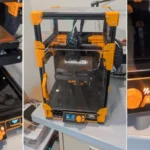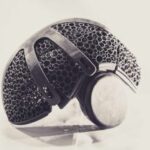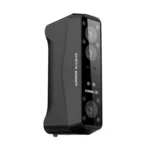
A 17-person audio software company in Lisbon has 3D-printed replicas of every employee’s ears, heads, and torsos to test acoustic realism, part of a push to bring theater-quality spatial sound to ordinary headphone listeners. Sound Particles, founded in 2016, uses the printed models for granular acoustic testing based on the premise that each person’s unique anatomy shapes how sound reaches the brain.
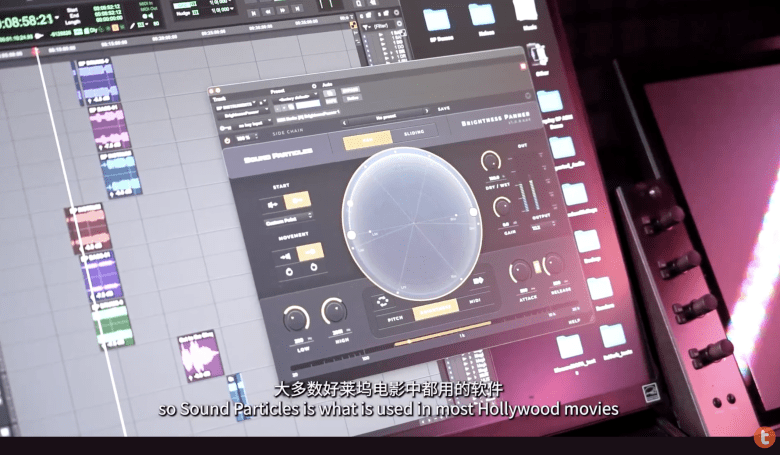
The company’s core technology borrows from computer graphics: it treats individual sounds as particles in a 3D environment, letting creators place sounds in virtual space, assign position and movement, and capture the result through virtual microphones. That approach underpins soundscapes in productions including *Dune* and *Oppenheimer*. A small number of base samples can be adjusted into thousands of distinct variations, which the team says makes dense scenes feel more natural while cutting down on manual editing.
The ear-printing program feeds directly into Sound Particles’ biggest product bet. Most immersive audio today depends on multi-speaker theater setups, but the company has spent years building personalized binaural audio technology that uses a listener’s head and ear geometry to simulate how sound moves and interacts with the body. The goal is convincing 3D audio through regular headphones, no speaker array required.
The company’s product lineup now includes plugins for digital audio workstations, immersive synthesizers, and a 3D sound library. It’s also applying its spatial audio engine to AI development, generating audio datasets with precise spatial labels and realistic environmental noise to train neural networks for speech recognition and smart vehicle environment detection.
Sound Particles started with a single foundational question about how sound should exist in 3D space, and has followed that question from Hollywood film production to consumer headphones to AI training data.
Source: technode.com