
3D Printing
News Back to school deals Contact us
Home / News / The Humble 3D Printer – An Unexpected Saviour of the Endangered Rhino?
qidi

The Humble 3D Printer – An Unexpected Saviour of the Endangered Rhino?

December 23, 2016

When you hear about 3D printing you may well think of novelty products – miniature printed heads and bizarre keepsakes. You could well conjure up replacement parts for mass-manufactured items. You might even think of the ways in which 3D printing is revolutionising the medical realm by printing replacement body parts.

What you probably don’t think about is how 3D printing could possibly be the seriously surprising saviour of the endangered rhino. Incredible so it seems, one pioneering start-up is making the case for achieving exactly this in the coming months and years – this is their story.

Related Story
Bento the Puppy Receives 3D Printed Medical Treatment

Save the Rhino – The terrifying stats behind the Rhino’s plight
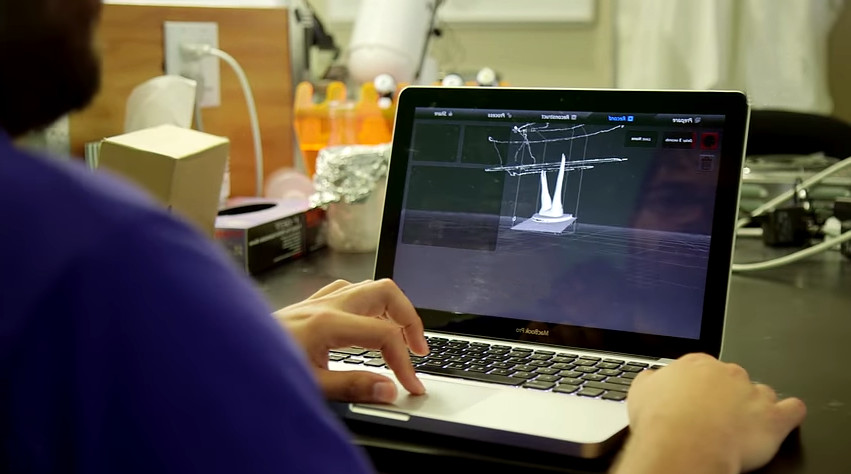
Pembient Startup modeling a 3D rhino horn ready for printing.

Since 2008 poachers have killed at least 5,940 African rhinos – a figure that only becomes ever more frightening when you consider that there are only 29,000 rhinos left in the wild as of recent counts. In short, if we continue down the same track, rhinos could be wiped out within 5 to 10 years.

For decades, there have been efforts for putting poachers off – introducing fines and other measures, and yet the practice has persevered. This is perhaps not so surprising, given the strength in belief that rhino horn can cure a wild array of medical conditions, including cancer. The market and demand for rhino horn and other by-products is simply huge – being seen in many cultures as a form of ‘wonder drug’ and as a status symbol.
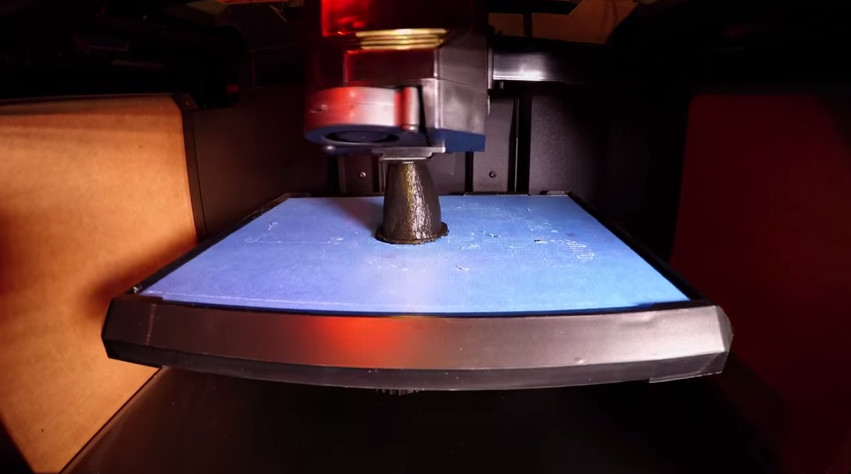
Specialized 3D printer using “additive manufacturing” to create rhino horn
Specialized 3D printer using “additive manufacturing” to create rhino horn<br />

Whilst the scientific community has completely debunked rhino products as having no medicinal power whatsoever, these beliefs continue unabated, with the black market now representing a staggering $20 billion. In Vietnam, rhino horn attracts a price tag of up to $100,000 per kilogram (more expensive, weight for weight, than cocaine).


Introducing bioengineered wildlife products

Printed 3D rhino horns sound every inch the hair brained, outlandish idea – at least at first. Pembient – an IndieBio SF 2015 company based in San Francisco, could well be on the cusp of something incredible – but if you’re thinking that this project involves plastics and synthetic materials, you’ll need to think again.

Powder containing same chemical structure as horns for printing

The 3D printed rhino horns that they create consist of a powder of organics, metals, minerals and proteins, as well as real rhino DNA (most specifically, this comes from rhino keratin – the same material that forms our hair and nails). The result? Well that would be 3D printed horns that are the same shape, size and structure as real rhino horns. In fact, so real are they, that the Pembient team have had one of their horns tested in an independent lab, where it was found to be indistinguishable from a real rhino horn – identical in every way on the macroscopic, microscopic, and molecular level.

3D printed Rhino horn
Completed 3D print of rhino horn – resembling the real thing

The founders of the project, and VP George Bonaci, plan to partner with those in the rhino horn trade around the world. They argue that poachers typically become involved in the practice owing to poverty (where a single rhino kill could well feed their otherwise destitute family for a good number of months). By selling mass-produced, 3D printed rhino horn to the black market through individual players, a sustainable supply comes to replace the need for poaching…. In essence, the poachers still get to feed their family, while rhinos stay alive.

Good intentions – yet this concept is not one that has been free from criticism

Whilst many have heralded what could be the most innovative potential solution to rhino poaching yet, others have met it with problems and counter arguments – notable of which has been the question as to whether Pembient could well make the market for illicit horn all the more widespread.

If you start to nuance that message with some rhino horn is good, some of it is bad, some of it is legal, some of it is illegal, you lose people and lose the clarity of the message.

– Patrick Bergin, CEO of the African Wildlife Foundation

Other critics have also gone on to suggest that their scheme could undo much of the good work that has been achieved by governments and organisations around the world that have worked for so hard to get a grip on poaching. However for every rebuttal, Pembient have responded with persuasive arguments as to why their 3D printed rhino horn is a viable alternative.

These practices are based on thousands of years of cultural tradition — they’re a lot older than Thanksgiving. We can’t just tell them to stop.

– Matthew Markus, CEO of Pembient

The big plan and the ultimate result

CEO of Pembient, Matthew Markus, outlines a further plan to introduce the rhino horn to markets such as that of lifestyle items (rhino horn is popularly carved to create jewelry, liberation cups and chopsticks). Their strategy, they say, will then see these faux horn products exported and sold on to countries such as China and Vietnam. In the process, they say, cutting the need to seek supply from those poaching in Africa.

 Endangered Rhino
Saving the most endangered species in Africa – the rhino.

Steps to saving the rhino horn through 3D Printing:

  1. Produce rhino horns using 3D printing technology
  2. Sell faux horns to poachers at a reduced price (to at least cover manufacturing costs)
  3. Poachers sell the horns to black market at inflated price, making a profit while feeding their families.
  4. Demand for horns are not at the expense of rhinos lives

Ultimately? The aim is that the market becomes saturated with rhino horn. And, as anyone with any business knowledge knows – with masses of supply, comes a fall in demand – prices will drop and so too will the need for killing rhinos, ergo -rhinos survive. The inspiration for this approach came from the economics notion of Gresham’s Law, as previously mentioned by the CEO of Pembient. At first, this big plan was met with widespread scepticism, however this seems to have softened just recently, most tellingly demonstrated by TRAFFIC – an influential non-profit that is charged with monitoring wildlife trades.

It would be rash to rule out the possibility that trade in synthetic rhinoceros horn could play a role in future conservation strategies

– Spokesman for TRAFFIC

This stance has been reciprocated by Pembient, who welcome positive input from the wildlife community – with Markus committing to attending the 17th meeting of the Conference of the Parties to Convention on International Trade in Endangered Species of Wild Fauna and Flora (CITES), where world-leading conservationists will also be in attendance.

Whilst the future of the rhino still remains uncertain, and the issue of rhino poaching is undeniably complex, there’s no doubting the incredible promise of 3D printing technology and the innovation so adeptly demonstrated by Pembient. How this story unfolds, we shall simply have to wait and see.


Related Story
3D Printed Coral Reefs Help Scientists Analyse Environmental Damage
Share:
WhatsApp Twitter Facebook LinkedIn Buffer Reddit E-mail
Join our newsletter

Our newsletter is free & you can unsubscribe any time.

Latest posts

University of Maine Launches 30-Foot 3D-Printed Offshore Boat

The University of Maine launched a 30-foot 3D-printed boat designed for offshore speeds near 40 knots, skipping a new mold for every hull.

News
University of Maine Launches 30-Foot 3D-Printed Offshore Boat

SUNLU FilaDC i10: 10-spool filament dehumidifying cabinet

A co-branded storage cabinet that SUNLU rates to hold up to ten 1 kg spools at 10 to 55 percent RH without heating... read more »

News

ORNL Combines 3D Printing and Electroforming for Leak-Free Nuclear Parts

Oak Ridge National Laboratory and A.J. Tuck combined 3D printing and electroforming to make leak-free HIP cans for nuclear and energy components.

News
ORNL Combines 3D Printing and Electroforming for Leak-Free Nuclear Parts

MIT Researchers 3D Print Modular Blocks for Shape-Changing Smart Devices

MIT researchers have 3D printed a set of modular building blocks that stay electrically connected no matter how you compress, stretch, rotate, or... read more »

Materials
MIT Team 3D-Prints Modular Blocks That Stay Wired When They Change Shape

SHINING 3D Launches the EinScan Trak: Wireless Marker-Free Tracking With a Detachable Handheld Scanner

SHINING 3D has launched the EinScan Trak, a wireless tracking and scanning system whose spherical scanner splits open to release a standalone handheld... read more »

News

Queen’s Belfast Team 3D Prints Dissolving Microneedle Patch for Skin Cancer

Queen’s University Belfast pharmacy researchers have 3D-printed a dissolving microneedle patch that carries two skin-cancer drugs in the resin itself, in a single... read more »

Medical
Queen's Belfast Team 3D Prints Dissolving Microneedle Patch for Skin Cancer

WSU Team Use AI to 3D Print NASA’s GRCop-42 Copper Alloy

Washington State University researchers used AI to find process settings that 3D print GRCop-42, a NASA copper-chromium-niobium alloy used in rocket engine combustion... read more »

3D Printing Metal
WSU Team Prints NASA's Copper Alloy at 500 Watts After AI Search

USC Researchers 3D Print $30 MRI Coils for Infant Heart Scans

University of Southern California researchers have 3D printed flexible MRI coils in under 10 minutes for about $30, and tests showed roughly four... read more »

Medical
USC Team Prints Stretchable MRI Coils in Under 10 Minutes

Kansas State Tests Off-Site 3D-Printed Concrete Storm Shelter Modules

A Kansas State researcher is printing full-size 4-by-4-foot concrete modules off-site, then assembling them as storm-shelter blocks meant to take tornado winds and... read more »

Construction
Reese Greenlee

LLNL Team Prints Ceramic Waveguide Lasers By Direct Ink Writing

A Livermore team 3D-printed an all-ceramic waveguide by extruding ytterbium-doped yttrium aluminum garnet filaments within an undoped garnet matrix and then drying, sintering,... read more »

News
LLNL Team Prints Ceramic Waveguide Lasers By Direct Ink Writing

Social

  • Facebook Facebook 3D Printing
  • Linkedin Linkedin 3D Printing
Join our newsletter

Our newsletter is free & you can unsubscribe any time.

Featured Industries

  • Automotive
  • Aerospace
  • Construction
  • Dental
  • Environmental
  • Electronics
  • Fashion
  • Medical
  • Military
  • Creality Hi Combo

    • - Print size: 260 x 260 x 300 mm
    • - up to 16-color printing
    More details »
    $399.00 Creality
    Buy Now
  • Snapmaker U1

    • - Print size: 270 x 270 x 270 mm
    • - multi-color printing with SnapSwap
    More details »
    $849.00 Snapmaker
    Buy Now
  • Flashforge Guider 3 Ultra

    • - Print size: 330 x 330 x 600 mm
    • - dual extruder system
    More details »
    $2,999.00 Flashforge
    Buy Now
  • Flashforge AD5X

    • - Print size: 220 x 220 x 220 mm
    • - dual extrusion system
    More details »
    $399.00 Flashforge
    Buy Now
  • Creality K2 Plus

    • - Print size: 350 x 350 x 350 mm
    • - multi-color printing
    More details »
    $1,199.00 Creality
    Buy Now
  • Anycubic Photon Mono M7

    • - Print size: 223 x 126 x 230 mm
    • - 10.1 inch 14K screen
    More details »
    $279.00 Anycubic
    Buy Now
  • Flashforge Adventurer 5M

    • - Print size: 220 x 220 x 220 mm
    • - 600mm/s travel speed
    More details »
    $299.00 Flashforge
    Buy Now
  • Qidi Q2

    • - Print size: 270 x 270 x 256 mm
    • - enclosed heated chamber up to 65°C
    More details »
    $580.00 Qidi
    Buy Now
  • Anycubic Kobra S1 Combo

    • - Print size: 250 x 250 x 250 mm
    • - budget multicolor printing
    More details »
    $429.00 Anycubic
    Buy Now
  • Qidi Max 4

    • - Print size: 390 x 390 x 340 mm
    • - active cooling air control
    More details »
    $1,219.00 Qidi
    Buy Now

Company Information

  • What is 3D Printing?
  • Contact us
  • Join our mailing list
  • Advertise with us
  • Media Kit
  • Nederland 3D Printing

Blog

  • Latest News
  • Use Cases
  • Reviews
  • 3D Printers
  • 3D Printing Metal

Featured Reviews

  • Anycubic Photon Mono M5s
  • Creality Ender 5 S1
  • The Mole 3D Scanner
  • Flashforge Creator 3 Pro

Featured Industries

  • Automotive
  • Aerospace
  • Construction
  • Dental
  • Environmental
  • Electronics
  • Medical
  • Military
  • Fashion
  • Art
2026 — Strikwerda en Dehue
  • Home
  • Join our mailing list
  • Contact us
Blog
  • Latest News
  • Use Cases
  • Reviews
  • 3D Printers
  • 3D Printing Metal
Featured Industries
  • Automotive
  • Aerospace
  • Construction
  • Dental
  • Environmental
  • Electronics
  • Medical
  • Military
  • Fashion
  • Art
Company Information
  • What is 3D Printing?
  • Contact us
  • Join our mailing list
  • Advertise with us
  • Media Kit
  • Nederland 3D Printing