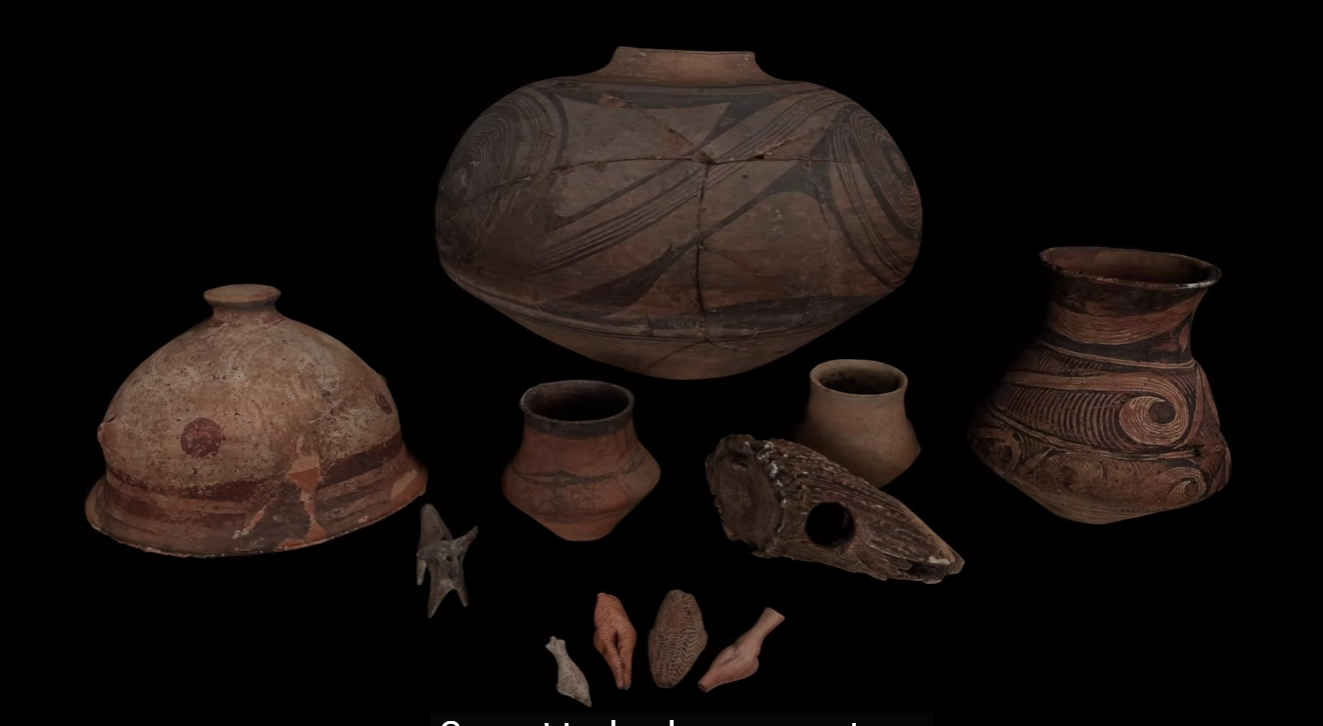
For 6,000 years, the ceramics and figurines of the Cucuteni civilization lay buried in Romanian soil. One of prehistoric Europe’s most technically accomplished cultures, the Cucuteni people left behind an extraordinary material record: elaborately decorated pottery, geometric surface patterns, and anthropomorphic figurines that continue to puzzle and fascinate archaeologists today. The artifacts now held at the History and Ethnography Museum of Târgu Neamț are among the finest surviving examples, and they are the subject of an ongoing digitization effort that is creating permanent, high-fidelity 3D records of objects that cannot be safely handled or reproduced.
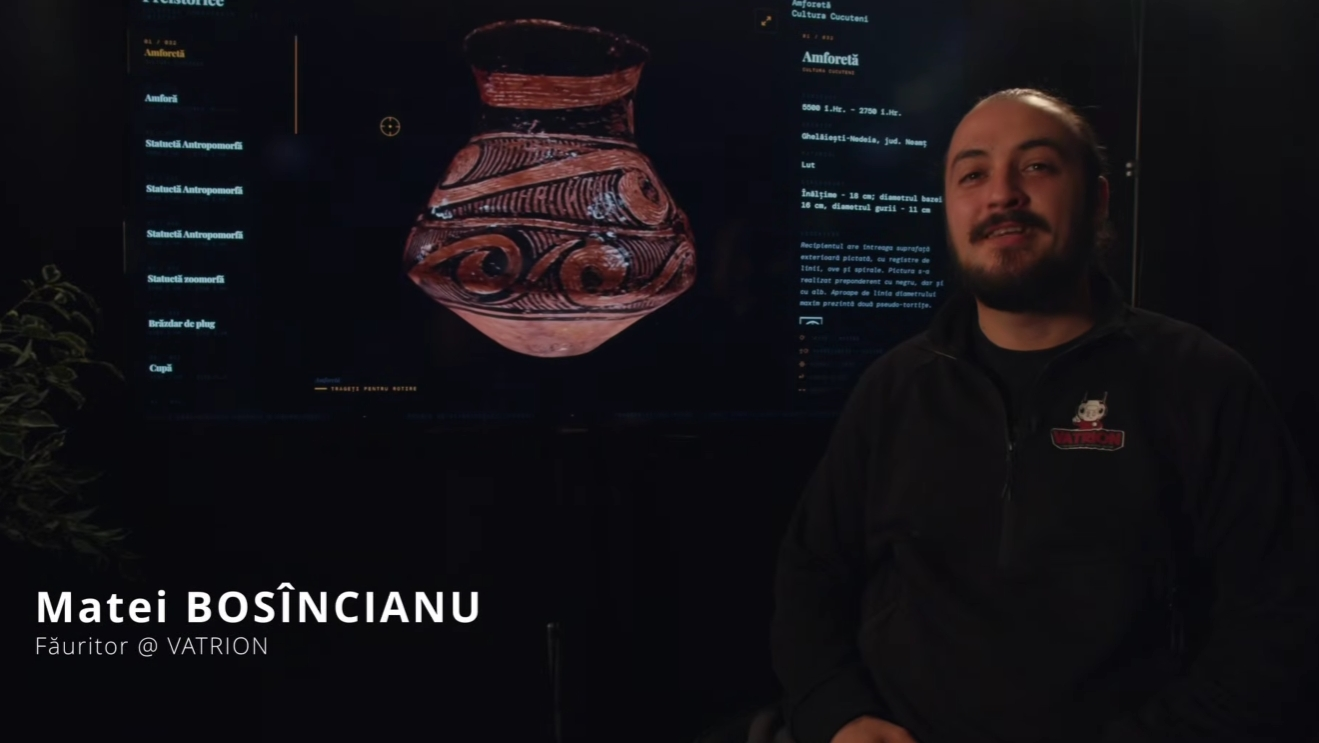
The project is led by Matei Bosincianu, a professional 3D scanning specialist and member of the Creality 3D Scanner community, working through his studio Vatrion. It is a voluntary social initiative undertaken in partnership with the Neamț National Museum Complex, and it is being carried out using the Creality RaptorX 3D scanner.
The Challenge
Digitizing archaeological artifacts is not a straightforward scanning task. The objects are irreplaceable, fragile, and in many cases carry surface detail that took thousands of years to develop. Any digitization method that involves physical contact, applied coatings, or repeated handling introduces risk. The requirement here was for a solution that is entirely non-invasive, yet precise enough to capture the kind of fine surface geometry that gives these objects their historical value.
The Cucuteni ceramics present particular challenges. Their surfaces carry intricate incised and painted decorations applied by hand, and the clay itself retains impressions from the people who made them, including, in some cases, fingerprints pressed into the surface before firing. Capturing that level of detail accurately, and doing so without disturbing objects that have survived six millennia, set the bar for what the scanning equipment needed to deliver.
The RaptorX in Practice
The Creality RaptorX uses advanced laser technology to map surfaces by capturing millions of data points per second, producing high-density 3D point clouds without any physical contact with the subject. Its precision reaches down to hundredths of a millimeter, which in this context means it can faithfully record surface textures, fine geometric patterns, and even the faint impression of a fingernail pressed into clay thousands of years ago.
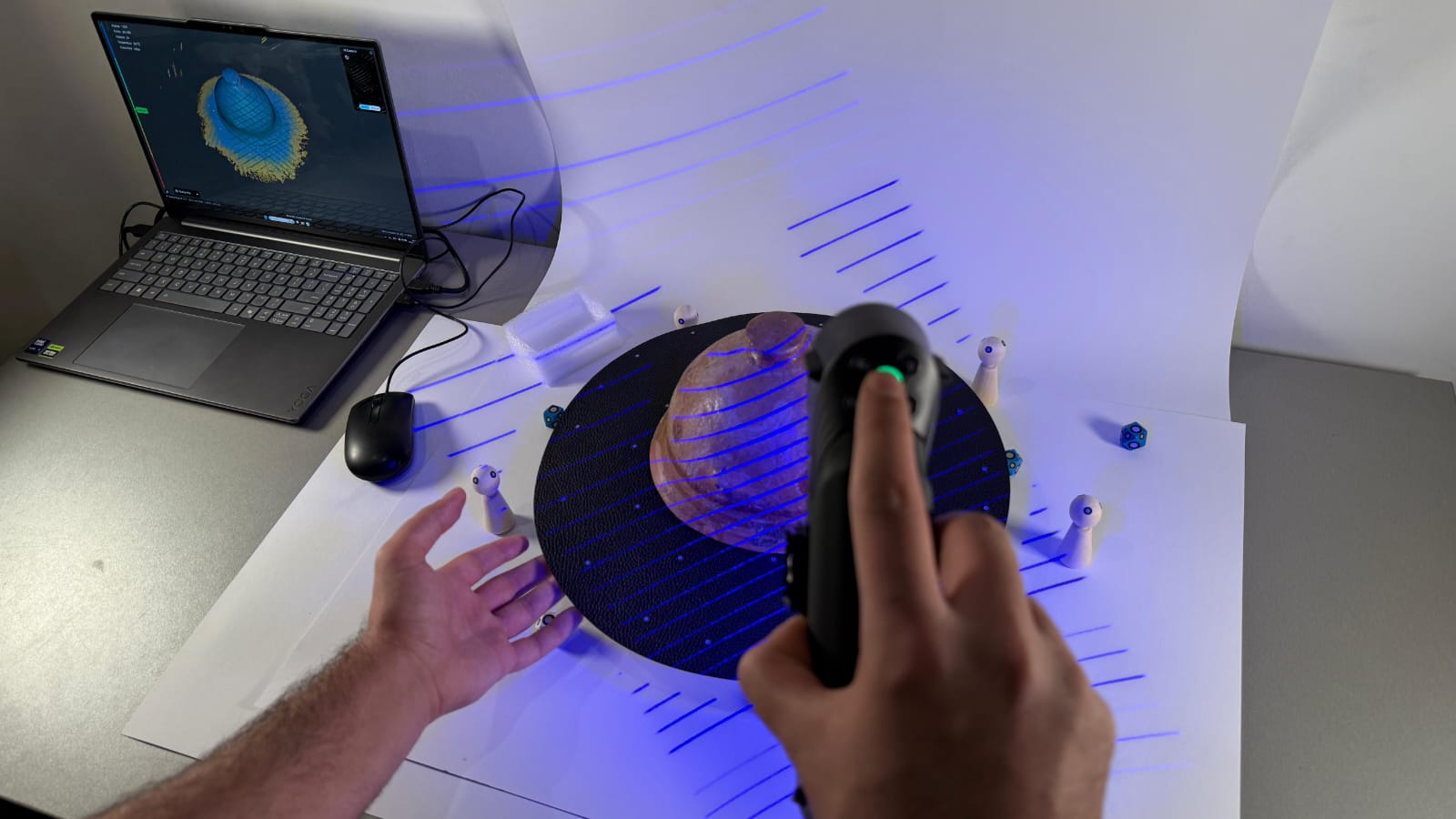
For the Vatrion team, this level of detail matters not just aesthetically but scientifically. A 3D model that accurately captures surface geometry can be studied, measured, and compared in ways that photographs cannot support. Researchers working with the digitized collection can examine tool marks, surface treatments, and construction methods from any angle, without the objects ever leaving their climate-controlled storage.
Recognition and Reach
The project has drawn significant attention beyond the heritage and scanning communities. It earned a dedicated feature on Știrilor ProTV, Romania’s highest-rated national news programme, and generated substantial engagement across social media platforms. Bosincianu and the Vatrion team also produced a documentary chronicling the scanning process, which provides a detailed visual record of how the RaptorX was used across the collection.
That kind of mainstream visibility matters for a project of this nature. Cultural heritage digitization is often conducted quietly, with results accessible only to specialists. This project has taken a different approach, with the digitized artifacts set to become publicly accessible via QR codes for museum visitors, as well as uploaded to platforms such as Sketchfab for researchers, educators, and anyone with an interest in the Cucuteni civilization.
Broader Implications
What makes this project worth paying attention to, beyond the historical subject matter, is what it demonstrates about where accessible precision scanning now sits. The Cucuteni digitization effort is a volunteer initiative, not a funded institutional programme. It is being carried out by a small professional team using commercial scanning equipment, in a museum setting, without the kind of specialised laboratory infrastructure that heritage digitization projects have historically required.
The fact that work of this quality and cultural significance is being produced under those conditions reflects a genuine shift in what professional 3D scanning tools can deliver, and who can deploy them effectively. The digitized artifacts form part of the Neamț National Museum Complex’s heritage collection and will remain accessible for researchers and the public long after the physical originals have continued to age.
Learn more about the Creality RaptorX →
About Creality
Creality is a developer and manufacturer of 3D printing and 3D scanning hardware, serving a global community of professional users, researchers, and creators. Their 3D scanner range spans consumer and professional applications, with the RaptorX positioned at the professional end of the lineup.
To stay up-to-date about Creality’s latest happenings, follow them on Facebook, Instagram, and TikTok.