Researchers at the University of Nottingham have developed 3D printed surfaces with specialized textures that can redirect unwanted gas particles away from quantum sensors. The team, led by L. Hackermueller from the School of Physics and Astronomy, created intricate surface patterns that bounce particles in specific directions to keep interference to a minimum. Their research was published in the journal Physical Review Applied.
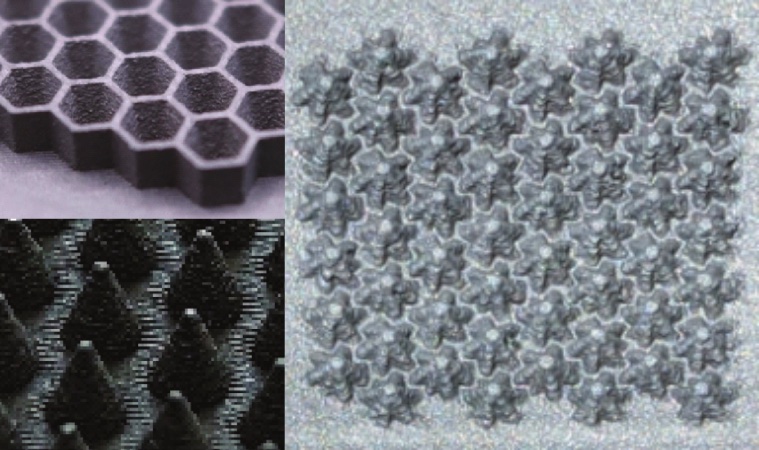
The scientists used 3D printed titanium alloy to create different surface patterns, including hexagonal pockets and conical protrusions designed to increase contact between atoms and the surface. These hockey puck-sized systems fit into standard commercial vacuum chamber ports. Testing showed the structured surfaces enhanced vacuum pump performance by up to 3.8 times the pumping rate per unit area, with simulations suggesting potential improvements of up to ten-fold.
Quantum sensors rely on microscopic quantum objects to measure magnetism, gravity, and other phenomena with high precision. These sensors require vacuum conditions because air molecules can interfere with their sensitive measurements. Even in controlled vacuum environments, unwanted particles can introduce measurement noise.
“We are still discovering the most effective surface textures; promising candidates include a hexagonal pattern similar to a honeycomb and an intricate three-dimensional pattern derived from geometry-inspired artwork. This relatively low-tech innovation can substantially improve advanced quantum technologies,” according to Nathan Cooper, Research Fellow in the School of Physics and Astronomy and lead author on the paper.
Co-author Ben Hopton, a PhD student, noted the practical implications of the work. “What’s exciting about this work is that relatively simple surface engineering can have a surprisingly large effect. By shifting some of the burden from active pumping to passive surface-based pumping, this approach has the potential to significantly reduce, or even remove, the need for bulky pumps in some vacuum systems, allowing quantum technologies to be far more portable.”
Source: nottingham.ac.uk