
Mercedes and Red Bull have reportedly found a way to work around Formula 1’s new compression ratio regulations for the 2026 season. The FIA reduced the maximum allowable compression ratio from 18:1 to 16:1 to reduce development costs and level the playing field for new teams.
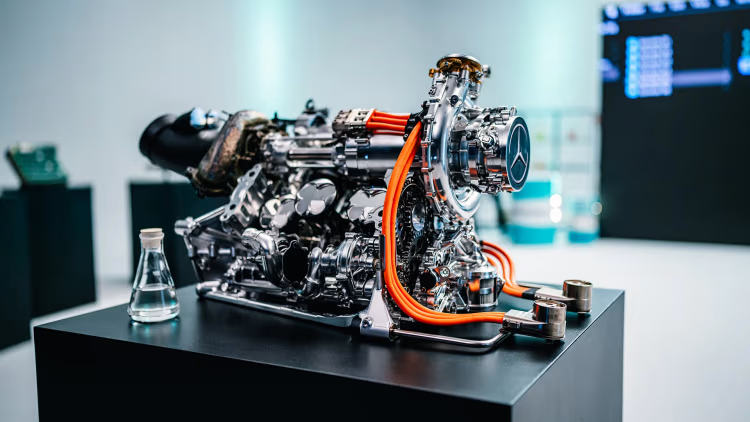
The current regulations measure compression ratios based on static engine conditions at ambient temperature. However, engine components expand and stretch during operation at high temperatures and RPM, which can alter the actual compression ratio. Mercedes and Red Bull are attempting to exploit this difference by engineering pistons that expand strategically under operating conditions.
Both teams are using 3D printing technology to create pistons with complex internal structures that cannot be achieved through traditional forging methods. The additive manufacturing process allows engineers to control material density and internal architecture throughout each part. This enables them to design pistons that channel combustion heat to specific areas, causing greater thermal expansion than conventional solid pistons.
The approach could provide a meaningful power advantage if successful, as higher compression ratios generally produce more engine power. Ferrari, Audi, and Honda have submitted a joint letter to the FIA requesting clarification on the regulations and asking for compression ratio measurements at operating temperature. With the season starting March 8, rule changes before the opener appear unlikely.
Source: autoblog.com