The University of Utah, Penn State, and Colorado-based Elementum 3D have been awarded a NASA Small Business Technology Transfer (STTR) Phase I grant to develop cold spray additive manufacturing techniques for GRX-810, a high-temperature alloy NASA named its Commercial Invention of the Year.
Cold spray additive manufacturing deposits metal particles at high velocities to build dense coatings or bulk structures. It’s similar in concept to 3D printing but suited for large or complex components because it offers higher deposition rates and minimal thermal damage. The challenge is understanding exactly how particles bond, deform, or rebound on impact — a question that gets far more complex with alloys engineered for extreme temperatures and reactive environments like rocket engines.
Each partner takes on a distinct role. Elementum 3D, based in Erie, Colorado, supplies the GRX-810 feedstock and brings manufacturing perspective. Penn State leads cold spray process development. The University of Utah’s STARS Lab, directed by Dr. Suhas Eswarappa Prameela in the Department of Materials Science and Engineering, runs single-particle experiments using a Laser-Induced Particle Impact Test (LIPIT) system to isolate the variables that determine whether individual particles stick or bounce off during spraying.
“I think this confluence of basic and applied research is absolutely critical,” said Dr. Eswarappa Prameela. “Our strength lies in understanding the fundamental physics, but programs like STTR allow us to translate those insights into manufacturing-relevant knowledge that industry and NASA can directly use.”
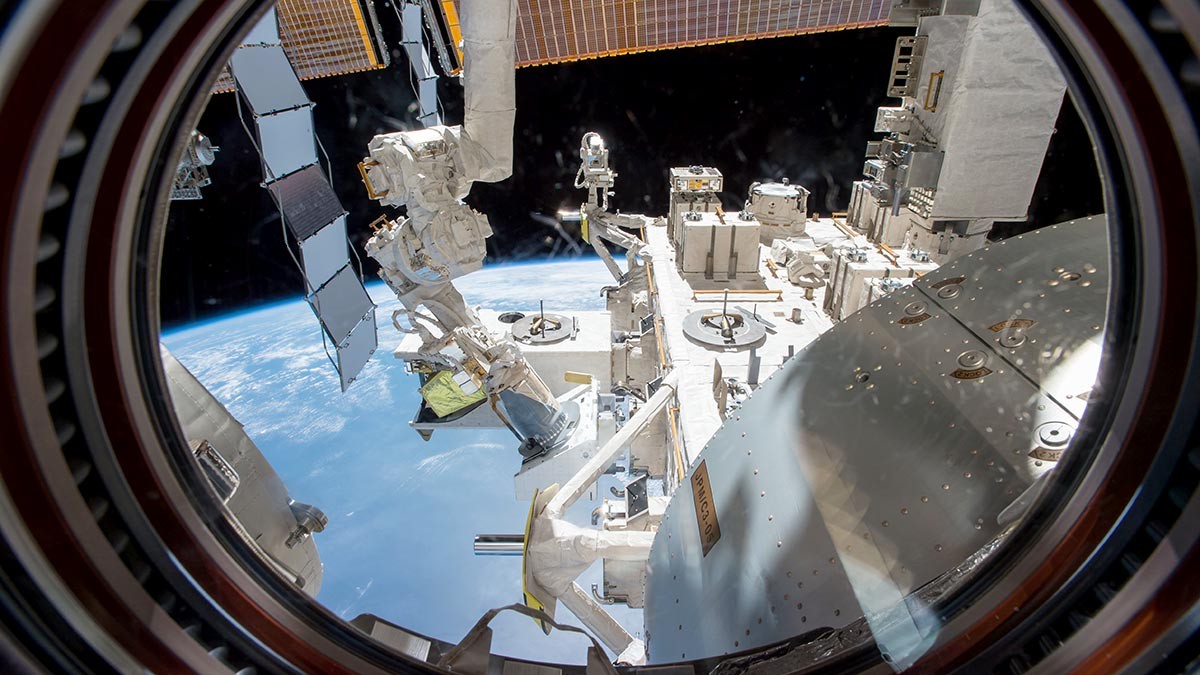
The goal is to map how material and processing parameters influence GRX-810’s bonding behavior, ultimately guiding full-scale cold spray manufacturing for reusable rocket engine components. Reusable engines face repeated exposure to extreme temperatures and reactive environments, and traditional materials and manufacturing methods have increasingly struggled to meet the demands of higher operating limits.
NASA’s STTR Phase I funds projects for 13 months. Teams that succeed are eligible to compete for a Phase II award, which would support further development and scale-up of the manufacturing process.
Dr. Eswarappa Prameela, who recently discussed NASA’s Artemis II mission in a local news interview, says the collaboration model itself matters as much as the technical work. “Complex problems like these cannot be solved in isolation,” he said. “Engaging with people who bring different tools, perspectives, and expertise is essential.”
Source: research.utah.edu