
Researchers at Western University have launched a four-year, $4.4-million (USD) project that uses artificial intelligence and 3D printing to produce custom hearing-aid earmolds for children before they’ve outgrown the ones they’re wearing. The ALLEars project, funded by the Oberkotter Foundation and developed in partnership with Boys Town National Research Hospital in Nebraska, aims to replace a slow, reactive process that currently leaves some children waiting up to 21 days for replacement earmolds.
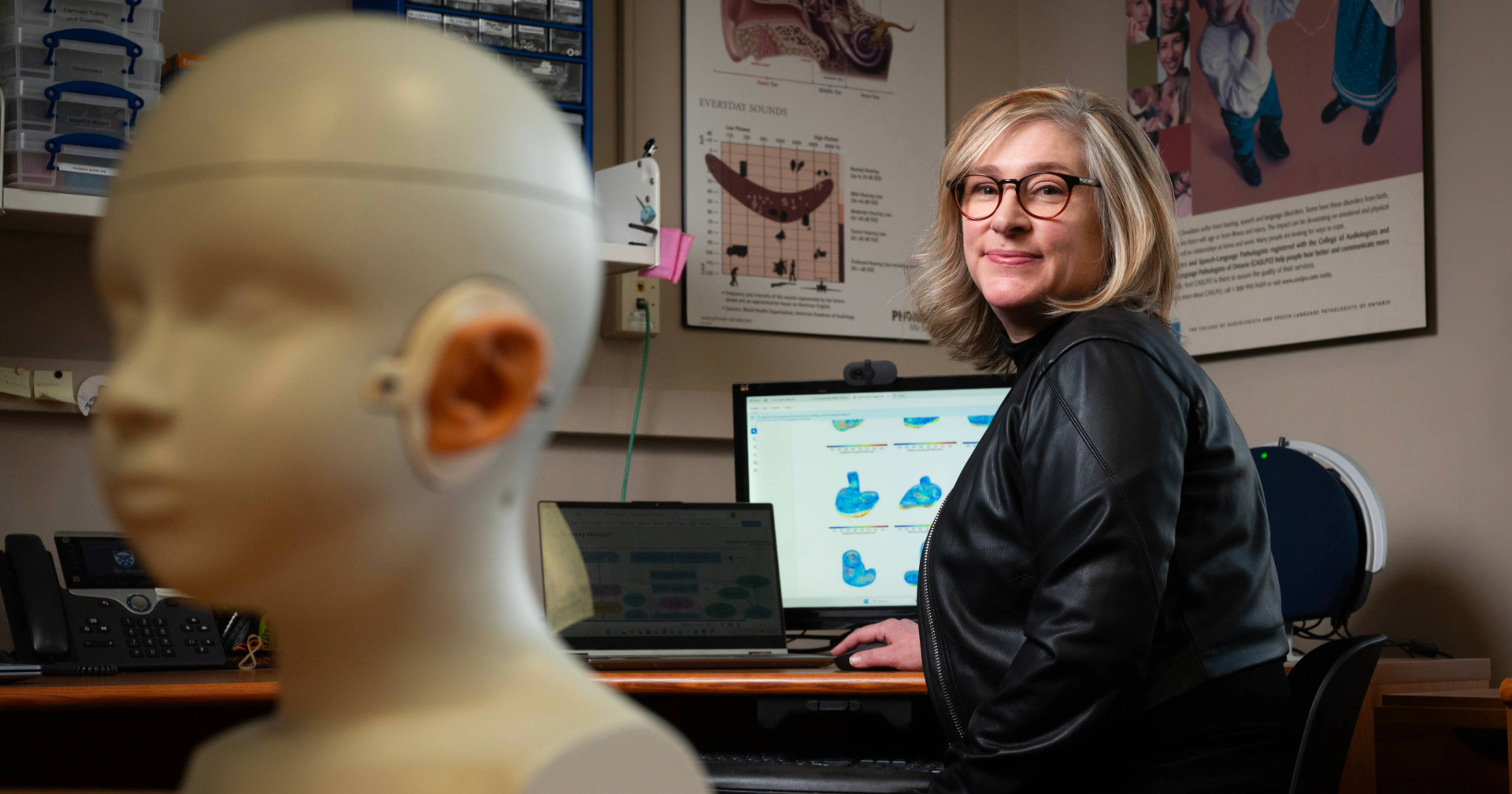
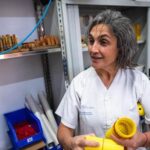
The core problem is straightforward: children’s ears grow fast, and earmolds that fit perfectly one month won’t fit the next. The World Health Organization estimates 34 million children worldwide are deaf or hard of hearing, and hearing aids can’t function correctly without a custom-fitted earmold. Right now, families cycle through audiology appointments to get new impressions taken, then wait weeks for the physical molds to arrive. “In the first few years of life, children are going through a really rapid period of growth,” said Susan Scollie, professor in Western’s Faculty of Health Sciences, audiologist, and lead investigator on ALLEars. “That growth can repeatedly interrupt their hearing aid use during the critical language development years.”
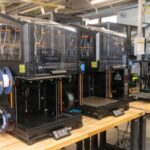
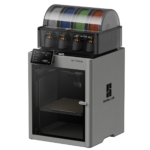
ALLEars will build a training dataset from thousands of ear impressions collected from children, then use that data to train an AI model that predicts how a child’s ear will change over time. Once a prediction is made, the digital file goes to the lab of Joshua Pearce, a professor in Western’s Faculty of Engineering, where postdoctoral research associate Alessia Romani translates it into a 3D-printed physical earmold. “We’re bringing a completely fresh and new high-tech approach to an old problem: kids outgrowing their earmolds faster than we can make them,” Scollie said.
Soodeh Nikan, an engineering professor and the project’s AI lead, is also developing a mirroring technique where the AI uses the scan of one ear to predict the shape of the other. That could cut the number of impressions young children need to endure. “If a child receives an impression on the left ear, they don’t need to repeat it for the right ear,” Nikan said. Separately, Boys Town’s team, led by vice president of research Ryan McCreery, is applying machine learning to predict how sound changes inside a child’s ear canal as they grow, ensuring hearing aids deliver the correct amplification levels over time.
The team is designing the entire workflow to be openly shared with hearing healthcare providers worldwide. Pearce’s lab is focused on making the production process fast and low-cost, with particular attention to low- and middle-income countries where access to earmold manufacturers is limited or nonexistent.
One of the pilot study’s participants is an eight-year-old boy who has worn hearing aids since he was six months old. His mother, Emily, described the real-world weight of the current system. “It can take 14 to 21 days to get earmolds back after an ear impression. Two weeks is a long time for him to have to wait to get his hearing back to where it needs to be.” She contributed her son’s former earmolds to help researchers map how ears change over time, saying, “If the ALLEars project reduces those barriers — minimizing wait times and making it easier to get earmolds — it’s going to impact families.”
“If we can reduce appointments, expand global access to earmold manufacturing and solve a daily clinical challenge for audiologists, it will be game-changing. This project is a once-in-a-lifetime opportunity,” Scollie said. Families with pediatric earmolds to contribute to the project can contact the research team at allears@uwo.ca.
Source: news.westernu.ca