
NP Aerospace has produced a 110 kg Mastiff suspension and differential carrier using Caracol’s Vipra AM wire arc additive manufacturing platform, completing the print in approximately 60 hours and cutting lead times by up to 50% compared to conventional casting and forging methods.
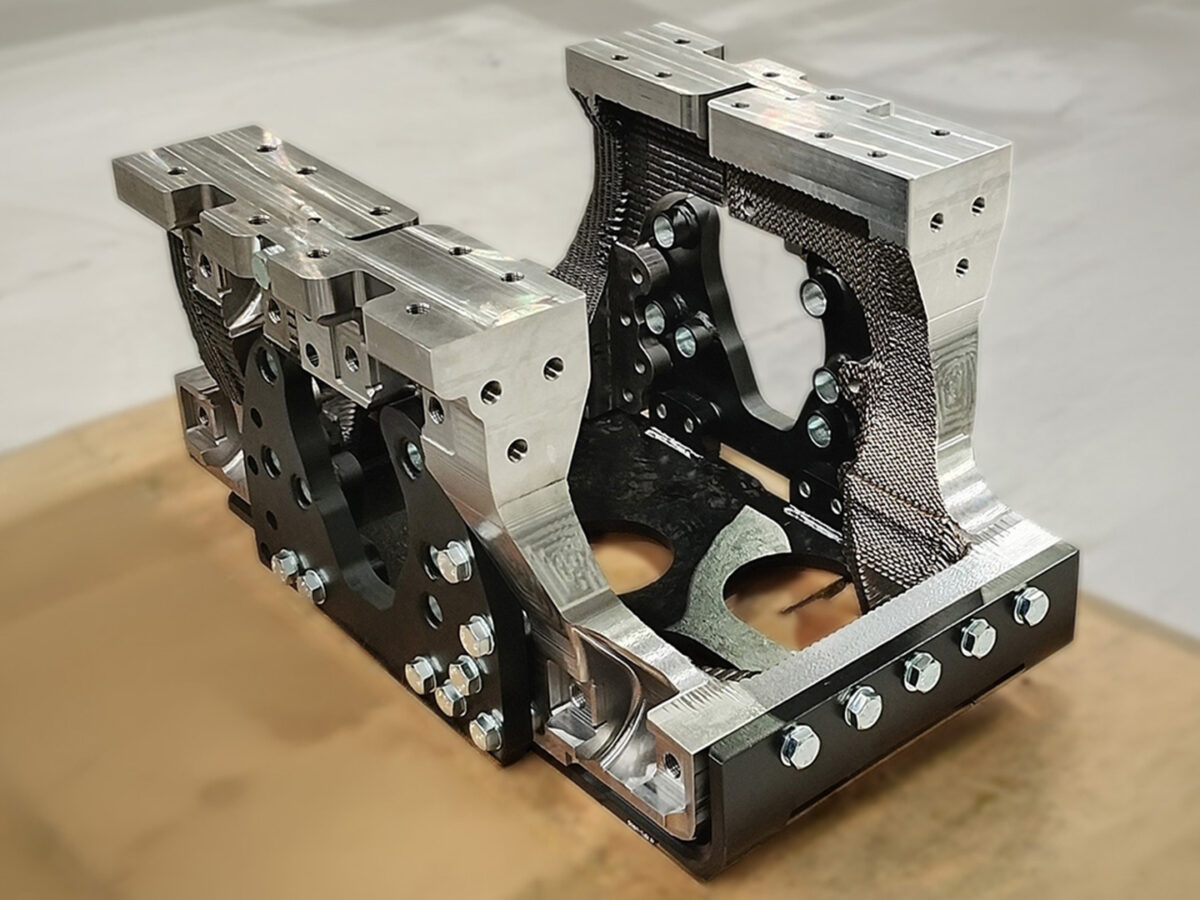
Working with the Digital Manufacturing Centre (DMC), NP Aerospace printed the fully structural metal component on Caracol’s VIPRA XP system using ER100 wire feedstock. The finished part measures 540 × 500 × 500 mm and required heat treatment and machining as post-processing steps. Tooling costs were eliminated entirely, which makes the approach economically viable for low-volume production runs where traditional tooling investment is hard to justify.
The Mastiff suspension and differential carrier is a load-bearing component for protected and dual-use vehicles that must withstand demanding dynamic loads, shock, and harsh operating conditions. Conventional manufacturing routes for parts of this size typically involve long tooling design and qualification cycles, high upfront costs, and geometric constraints that restrict complex, topology-driven shapes.
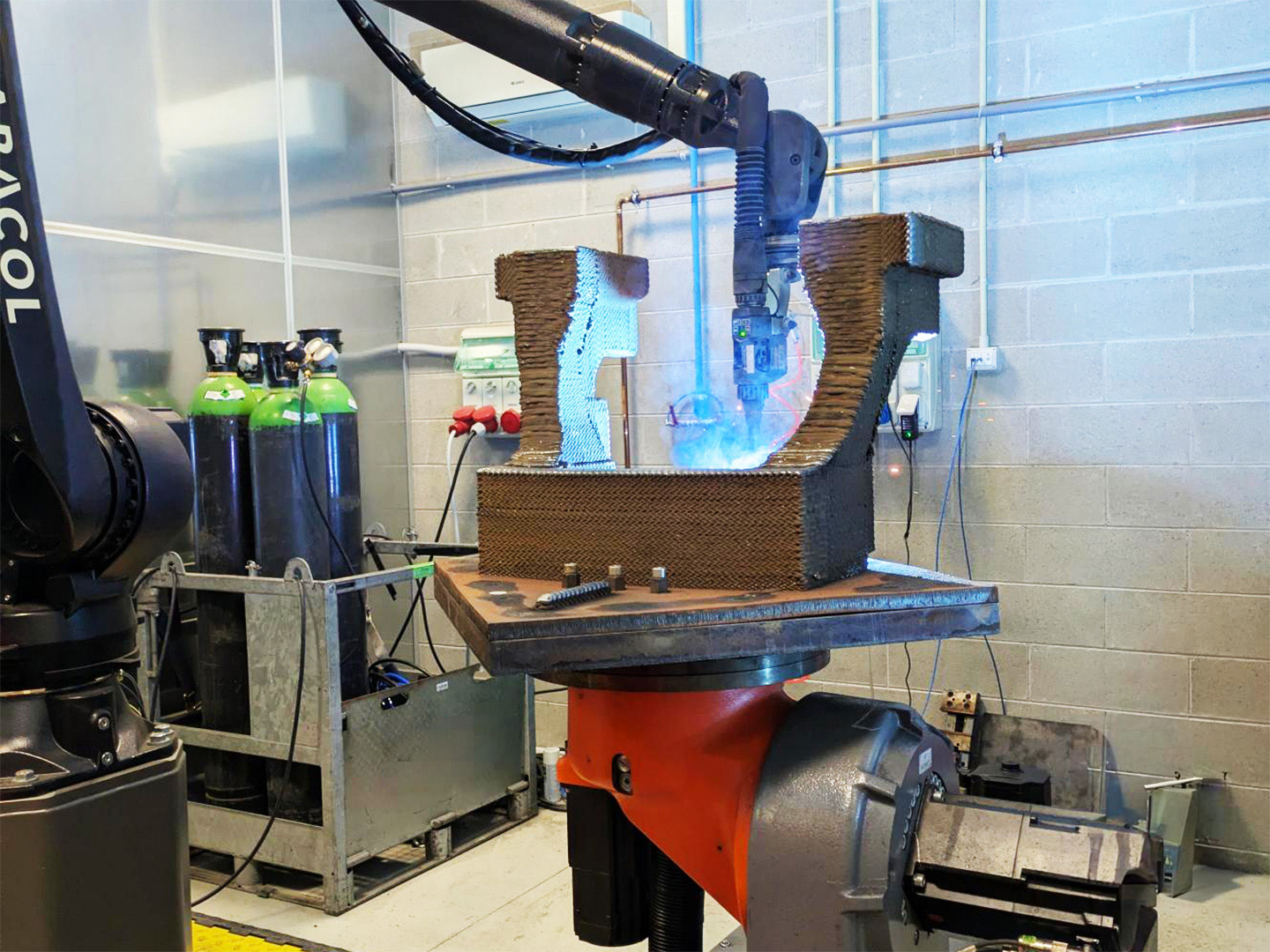
Caracol’s multi-axis robotic system allowed NP Aerospace to print extreme overhangs and intricate organic surfaces that would be extremely difficult or impossible on fixed-axis systems, all without redesigning the part’s functional specification. The process met the existing performance envelope of the conventionally manufactured component.
The process route is described as inherently scalable for future spiral development cycles, supporting faster design iteration for dual-use vehicle applications.
Source: caracol-am.com