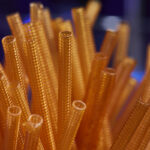

Yes, 3D printing is safe when done correctly. 3D printing safety comes down to four hazards every maker should manage: fumes (different for FDM and resin, see our FDM vs resin comparison if you’re still choosing), burns, fire, and resin handling. None of this is exotic: the precautions are similar to running a soldering iron, a hot glue gun, or a kitchen oven. This guide covers each in plain language, with the gear and workspace setup that actually mitigates the risks. Updated for May 2026 with current research and equipment.
Is 3D printing safe?
Yes, for the vast majority of home and classroom use, with reasonable precautions.
FDM with PLA in a ventilated room is comparable to running a desk lamp. Resin printing and high-temperature filaments need more care. None of it is exotic; the precautions are similar to other household appliances that get hot or release fumes.
The four hazards and how each is managed
1. Fumes: moderate risk on high-emission materials. Mitigated by ventilation and filtration.
2. Burns: common but mostly minor. Mitigated by enclosed printers and waiting for parts to cool.
3. Fire: statistically rare. Mitigated by modern firmware plus a smoke detector.
4. Resin handling: moderate risk for resin printers, zero for FDM. Mitigated by PPE and external venting.
New to 3D printing? Start here.
FDM uses filament spools (plastic wire on a reel) and is the most common type for first-time owners. Resin uses liquid in a tray. The minimum setup depends on what you are actually printing.
FDM with PLA
A room that is not your bedroom. Don’t touch the bed or nozzle while it is hot. That is the whole list. A $20 box of nitrile gloves is a nice optional add for cleanup.
FDM with ABS, ASA, nylon, composites
A sealed enclosure with activated-carbon filtration. A smoke detector in the room. Read the FDM fumes section below.
Resin printing
Full PPE kit (5+ mil nitrile gloves, splash-rated safety glasses, half-face respirator). Ventilation routed to outside. Adds $150 to $300 in the first month (see our cost breakdown).
Already been printing for a while without all of this? See the recovery section below.
Already been doing it wrong? Don’t panic. Click to see what to do.
You haven’t done permanent damage just by reading this article later than ideal. The point is to correct course now.
If you’ve been printing PLA in your bedroom: you’re almost certainly fine. Move the printer to a different room and stop sleeping near it. Open the bedroom window for a day to flush residual VOCs. PLA’s emissions profile is genuinely low and short-term exposure is comparable to short-term cooking-fume exposure.
If you’ve been printing ABS, ASA, nylon, or composites without an enclosure: monitor yourself for headaches, throat irritation, or breathing changes over the next few days. Move the printer to a well-ventilated space immediately. Plan an enclosure purchase within the week. If you have noticed any persistent symptoms while printing, see a doctor.
If you’ve been resin printing without PPE: stop now. Wash any exposed skin thoroughly with soap and warm water (not solvent). Watch for skin reactions, eye irritation, or respiratory changes over the next 48 hours. Get nitrile gloves (5+ mil), splash-rated safety glasses, and a half-face respirator before your next session. If you notice any redness, itching, breathing changes, or eye discomfort, see a doctor; resin sensitisation is real and worth treating early.
If you’ve been running prints overnight or unattended without a smoke detector: install one this week. The cumulative risk has been low; the upside of correcting now is high. Add a smart plug while you’re at it. Don’t let perfect be the enemy of done.
Jump to a section
FDM fume management
Applies to printers that use plastic filament spools. Every heated thermoplastic releases two kinds of emissions: ultrafine particles (UFPs, small enough to bypass the nose and reach the lungs directly) and volatile organic compounds (VOCs, the airborne chemicals released when plastic is heated). The specific compounds depend on the filament: PLA releases mostly lactide and minor irritants, ABS and ASA release styrene and acrolein, nylon releases caprolactam, and carbon-fibre composites add the base polymer’s emissions plus fine particulate from the carbon. PLA at 200C is the cleanest of the common filaments and the closest to benign. ABS at 240C, ASA at 250C, and carbon-fibre-filled composites release a meaningfully different and more concerning emissions profile. A May 2025 scoping review in the Journal of Exposure Science and Environmental Epidemiology, covering 47 studies of desktop printers, confirmed that VOC concentrations remain elevated for hours after a print ends, with slow-decaying compounds persisting well beyond the print itself.
The single most useful distinction to learn is activated carbon versus HEPA. Activated carbon adsorbs VOCs and odours. HEPA filters capture particulates down to 0.3 micrometres. They do different jobs and a complete fume-management setup uses both stages, not one or the other. Marketing copy that calls a filter “HEPA-grade” without mentioning carbon is selling you half a solution for VOC-heavy materials.
The setups that work for FDM at home, in priority order, are a sealed enclosure with an activated-carbon stage and external venting to outside; a sealed enclosure with an internal carbon filter (acceptable for PLA, less acceptable for ABS or carbon-fibre composites); and open-room printing of PLA with adequate cross-ventilation.
What does not work, in any room you spend time in, is printing ABS, ASA, or nylon composites with the window cracked, running an unfiltered enclosure that traps fumes and releases them in a concentrated burst when you open the door, or relying on an air purifier placed in another room.
For the product side of this, including which built-in-filter machines (Bambu P1S, FlashForge Adventurer 5M Pro, Creality K1C) and which aftermarket enclosures (Wham Bam HotBox, Creality Official Enclosure, VEVOR Acrylic) handle different materials, see our dedicated Best 3D Printer Enclosures 2026 guide. This page covers why and how. The enclosures guide covers which one.
Resin fume management
Applies to printers that use liquid resin in a tray (also called MSLA, DLP, or SLA printers). Resin printing is a different category from FDM. Photopolymer resins release volatile organic compounds during printing that are toxic at high enough concentrations, and some formulations include sensitisers that can produce reactions at very low exposures after repeated contact. Many of the most concerning compounds, including some isocyanates, are odourless or odour-masked by the resin’s own scent. The reflex “I can’t smell anything strong” is not evidence that the air is safe. Treating resin printing as low-risk because no odour is detected is one of the most consistent mistakes new resin owners make.
External ducted exhaust is the standard for resin, not an upgrade. An unvented enclosure with an internal carbon filter alone is worse than printing in an open ventilated room, because the enclosure concentrates fumes during the print and then releases a high-concentration burst the moment you open the door to remove the build plate. The correct setup is a sealed enclosure or fume hood with a fan and ducting routed to outside through a window or a permanent vent. An internal carbon filter is useful as an odour-reducing second stage for neighbours, not as a primary safety measure.
PPE for resin printing is non-negotiable. You need nitrile gloves rated 5 mil thickness or higher (not 3 mil food-prep gloves; uncured resin will permeate thin gloves over a 30 to 60 minute window), splash-rated safety glasses (uncured resin in the eye is a medical issue), and a half-face respirator with Organic Vapor cartridges if you’re working near the printer for extended periods or doing any post-processing. Surgical masks and N95 dust masks are not the right tool for VOCs; they filter particulates only and offer no protection against resin vapours.
UV exposure during MSLA printing and post-cure is the other side of resin safety. Resin printers with the lid closed shield you from the LCD’s UV output during normal printing, and you should never need to look directly at the screen. The risk is in two specific moments: inspecting a print mid-job with the lid open (avoid this, but if you must, look briefly and from an angle), and using an open-style post-cure station without the cover closed. Post-cure UV at full power is bright enough to cause “arc-eye” style retinal irritation similar to welding flash. Use UV-rated safety glasses for any open-station UV work; most chemical-splash glasses we recommend are UV-rated already, but verify by looking for “U6” or similar ANSI marking on the lens. Sealed wash-and-cure stations close the cure chamber automatically, which is the right design.
Sensitisation is the long-tail risk worth understanding. Most resin users never develop a reaction. Consistent PPE (gloves, glasses, respirator for extended sessions) keeps the risk negligible. But for users who do develop a sensitisation, the reaction can become permanent and increasingly severe with each subsequent exposure. The pattern is: low immediate risk for occasional contact, escalating risk for users who skip PPE over months or years. Resin is the rare hobby where casual safety practice has cumulative consequences.
Wash-and-cure stations contain the IPA wash and the UV cure inside sealed chambers, which reduces your direct exposure compared to manual washing. Water-washable resins reduce IPA dependence and are a meaningful improvement for apartment-bound workflows, with the trade-off that cured parts are slightly more brittle than equivalent solvent-wash formulations.
Read more: Best resin 3D printer enclosures (DORUNDEA, YOOPAI, Clearview, grow-tent setups for heavy users), Best Resin 3D Printers (water-washable picks and low-odour formulations), and Best Wash and Cure Stations.
Burns, hot surfaces, and moving parts
Hotends run from 180C for PLA up to 410C for PEEK. Heated beds run from 60C for PLA to 110C for ABS and ASA. Build chambers on enclosed machines sit at 40C to 70C during print. None of these are “leave a fingerprint” hot. All of them produce a second-degree burn on direct contact. The two common burn scenarios are reaching for the heated bed to retrieve a finished print before it has cooled, and reaching toward the hotend during a nozzle clearance or filament-change task without waiting for it to cool down first.
Practical mitigations are habit changes more than equipment. Wait for the bed to drop below 35C before reaching in (most slicers and printers can display this; many have a “print finished, cooling” stage). Use the manufacturer-supplied scraper or a flex-plate to lift parts rather than your fingers. Never test if a nozzle is hot with bare skin. Treat a printer as an active appliance during the entire print cycle, not just during the motion phases.
Moving parts and pinch hazards
3D printer gantries, Z-axis carriages, and (on bed-slingers) the Y-axis bed all move at speed. Current FDM machines run 300 to 600 millimetres per second of toolhead motion. The pinch points are at corner brackets, belt-and-pulley assemblies, lead-screw mounts, and (on enclosed printers) the door interlock area. Children’s fingers and pets’ tails are the obvious concerns. Less obvious: long hair, loose sleeves, hoodie strings, and dangling jewelry can catch on a moving part during maintenance or first-layer adjustment, and the printer will continue its motion regardless.
For moving parts, enclosed printers with door interlocks (Bambu X1, P1S, A1; Prusa Core One; Creality K1C) physically prevent reach during operation. For open-frame printers, tie back long hair, roll up sleeves, and remove dangling jewelry before any maintenance task. Pause the printer (via the screen or app) before reaching into the build area. Never reach into a moving printer to “just nudge” something.
First aid for thermal burns
Cool running water for 10 to 20 minutes (not ice, which can damage tissue further). For anything beyond a small first-degree burn, seek medical attention. Don’t apply ointments, butter, or toothpaste; just cool water. Resin burns are different and are covered in the Resin handling section below.
For kid-accessible setups, a sealed enclosure with a magnetic-door safety interlock (Bambu, Prusa Core One) doubles as a physical barrier and a thermal one. Open-frame printers like the Ender 3 V3 SE need either supervision or physical placement out of small-hand reach. Pets can also reach hot beds; cats in particular are attracted to the warmth and will sit on a 60C bed without leaving until forced off.
Fire safety and electrical
3D printer fires are statistically rare. The documented failure modes are well understood: thermal runaway (a thermistor or heater fault that causes the system to drive the heater while reporting an incorrect temperature), MOSFET failure on lower-quality mainboards, partial nozzle clog leading to heat creep up the heatbreak, and PSU short on cheap or counterfeit power supplies. Every one of these has a firmware or hardware countermeasure on current printers from reputable brands.
Current firmware handles most of these failure modes directly. Marlin’s Thermal Runaway Protection (in the codebase since 2014, default-enabled on mainline configurations since around 2017) shuts the heater off if temperature stops responding to commands. Klipper’s verify_heater module does the same with finer-grained checks. Bambu and Prusa firmware add hardware-level temperature cutoffs (thermal fuses in the hotend assembly) and automated home/level checks before each print. AI failure detection (Bambu’s first-party NPU detection on the X1 Carbon, A1 series via cloud, and H2D; Obico and OctoEverywhere as third-party options for other machines) catches spaghetti failures and detached prints, which are the most common precursor to a runaway-extruder fire.
Some electrical baseline should be in place before any of the smart-detection layers below. Plug the printer into a grounded outlet, ideally GFCI-protected (most bathroom, kitchen, and garage outlets in the US and EU are). Avoid extension cords for printer power; if one is necessary, use a heavy-gauge cord rated for at least 15A and never daisy-chain. Don’t share the circuit with high-draw appliances like microwaves, air conditioners, or space heaters. The smart plug recommendation below is layered on top of this baseline electrical safety, not a replacement for it.
On top of the printer’s own protections, four pieces of detection and shutoff hardware do most of the work. A smart smoke detector with phone alerts in the print room (First Alert, Nest Protect, or X-Sense as a budget option). A smart plug for the printer’s power feed (Kasa, TP-Link Tapo, or Shelly) so you can shut off power remotely if you receive a smoke alert. An ABC-rated fire extinguisher within easy reach, mounted on a wall, not stored in a cupboard. The fire extinguisher must be ABC-rated because printer fires are electrical at root; never use water on an active printer fire. For workshops running multiple printers or with limited ventilation, add a carbon monoxide detector alongside the smoke detector; smouldering fires can produce CO before they reach open combustion.
Placement makes a measurable difference. Place the printer on a non-flammable surface (steel shelf, tile floor, ceramic). Do not place it on a carpet or directly on wooden furniture without a heat-resistant mat underneath. Keep flammables (alcohol, solvents, paper) at least 1 metre away. Do not place the printer near curtains or under shelving with combustibles above it.
Overnight prints are the question every maker eventually faces. Homeowner-insurance underwriters in the US and UK have started asking specifically about supervised printing on policy renewals. The pragmatic compromise most makers settle on is camera monitoring (Bambu’s built-in, the OctoPrint plug-in, Obico) with phone notifications, plus a smart plug for remote shutoff, plus an in-room smoke detector. The fully cautious answer is “never run unsupervised”. Pick a posture that matches your tolerance and your insurance.
Resin handling and IPA
Uncured liquid resin is a moderate skin and respiratory irritant. Cured resin (post-UV) is inert plastic for typical handling and disposal. The hazardous state is the uncured one, which includes drips on the build plate, the vat itself, half-cured supports, IPA-bath residue, and any tools or surfaces that contacted resin during a print. The risk profile is similar to working with two-part epoxy or some industrial paints: not exotic, but real.
The required PPE list is short and inflexible. Nitrile gloves at 5 mil thickness or higher (latex gloves let resin through faster than nitrile, and 3 mil food-prep nitrile gloves are not sufficient for continuous contact), splash-rated safety glasses (impact rating alone is not enough; you specifically need chemical splash protection), and clothing you don’t mind staining. A half-face respirator with Organic Vapor cartridges is recommended for extended sessions and required if your workspace ventilation is anything less than well-vented.
IPA, isopropyl alcohol, is flammable, and that property is often underweighted by new resin users. 90+ percent IPA has a flash point of 12C and vapours that are heavier than air, which means they pool near the floor and around electrical outlets. Keep IPA containers closed except when actively decanting. Do not pour IPA down a drain (it can ignite in plumbing and is regulated as hazardous waste in many jurisdictions). The standard hobbyist disposal practice is to let the spent IPA sit in a UV-exposed open container until the dissolved resin cures and settles out, decant the clear IPA back into a sealed container for reuse, and dispose of the cured resin sludge as inert plastic.
If uncured resin contacts your skin: wash immediately with soap and warm water for at least 30 seconds, not solvent (solvents drive resin deeper into the skin). For prolonged or repeated exposure, you may develop a sensitisation reaction (contact dermatitis, redness, itching) which can become permanent and increasingly severe with each subsequent exposure. If you notice any reaction, stop work, wash thoroughly, and improve your PPE before next session. If skin reactions persist or worsen, see a dermatologist.
If uncured resin contacts your eye: rinse with clean water or saline for at least 15 minutes and seek medical attention immediately. This is the most common emergency-room resin-printing visit and should be taken seriously.
Disposal rules favour caution. Uncured resin in any form is hazardous waste in most US states and EU countries. Empty resin bottles, FEP films coated in residue, paper towels used for cleanup, and contaminated gloves should all go in a sealed labelled container, taken to a hazardous-waste collection point. Cured solid resin parts are inert plastic and can go in regular waste. The transition is the cure: if it’s solid and fully cured, it’s fine; if any uncured material is present, treat as hazardous.
Supervision, kids, and pets
3D printers fit into a household the same way a soldering iron or sewing machine does: rewarding for many ages, but not a hands-off appliance. The supervision policy should match the kind of printer and the kind of household. The section below is general-purpose guidance for home use. For classroom and school programs, see the dedicated section below.
Children’s age-appropriateness scales with the kind of printer and the household’s workshop discipline. Ages 6 to 8 can press start on a pre-prepared print under direct adult supervision, with no contact during the print. Ages 9 to 12 can run their own prints with the design and slicing prepared by an adult, with periodic check-ins. Ages 13 and up can run an FDM printer end-to-end with appropriate training. Resin printing should wait until 13 at the earliest because of the resin-handling steps, and even then with continuous adult oversight. These are not hard rules and a careful 10-year-old can do more than a careless 16-year-old; the point is to match the printer’s hazards (hot surfaces, fumes, moving parts) to the child’s ability to follow workshop discipline.
Pets warrant their own consideration. Cats are the dominant concern because they’re attracted to the warmth of a heated bed and will sit on a hot surface long enough to cause discomfort or minor burns. Dogs are less interested in the printer itself but will investigate failed prints and chew them, which is a choking hazard for small parts. Either way, an enclosed printer with a closed door is the simple solution. For open-frame printers, a physical barrier (a baby gate, a closed office door) is the next-best step.
Across both audiences, the strongest single safety practice is being in the same building when a print is running. Camera monitoring with phone notifications is good. Being present is better. Reserve overnight prints for machines and configurations you’ve already validated on dozens of supervised prints.
Classroom and school programs
Running 3D printers in a classroom or school maker space has compliance considerations that home setups do not. The hazards are the same; the regulatory frame is different. If you’re an individual hobbyist, skip this section. If you’re a teacher, administrator, librarian, after-school programme lead, or anyone setting up 3D printing in an educational institution, every item below applies.
Material Safety Data Sheets (SDS)
Any classroom with chemical hazards must keep current Safety Data Sheets on file and accessible to staff. Filament and resin manufacturers all publish SDS documents; find them on the manufacturer’s website or request from support. Print, file in a labelled binder in the workspace, and review annually. This is an OSHA requirement in US schools (29 CFR 1910.1200) and an equivalent legal requirement in most EU jurisdictions. Administrators will ask about this during accreditation visits.
Eyewash station
Required for any classroom with resin printing or IPA handling. A plumbed eyewash station (ANSI Z358.1-compliant) should be within 30 seconds’ reach of the resin workstation. A wall-mounted squeeze-bottle eyewash unit is the minimum if plumbed installation is not possible, but a plumbed unit is the standard for school accreditation in the US, UK, and EU. Test the eyewash monthly and document the test in the safety binder.
Locked storage for resin and IPA
Liquid resin, IPA, and any other chemical consumables must be in locked cabinets accessible only to authorised staff. Cured prints can be on open shelves. Uncured anything goes in the locked cabinet. This applies to leftover resin in printer vats overnight too: at end of day, either drain the vat into a sealed bottle and lock it away, or lock the entire printer cabinet if the printer lives in a locked enclosure.
District policy and liability
Even with full PPE, SDS files, and eyewash stations, many K-12 districts ban resin printing entirely and restrict FDM to PLA-only. Always check district policy AND school insurance coverage before procuring equipment. The district risk-management or operations office is the right starting point; many districts have a CTE (Career and Technical Education) office that owns the policy explicitly. Build their sign-off into your project timeline; it can take weeks. California districts should also know about AB 2047, the state’s new 3D printer firearm blocking law: it places no requirement on schools or on printers already owned, and its sales rule is years away at the earliest, but expect procurement offices to ask. Our AB 2047 explainer sets out what it does and does not require.
Teacher-to-printer ratio
For credible continuous supervision, plan no more than 2 to 3 simultaneous active prints per supervising adult. A single teacher cannot maintain useful eye-contact with 8 running printers; the supervision is illusory at that ratio. For larger maker spaces, queue prints to match the supervising-adult availability rather than running them all in parallel.
Student accessibility considerations
Students with asthma, severe eczema, multiple chemical sensitivities, or compromised immune systems should not work directly with resin or high-emission FDM materials (ABS, ASA, nylon composites). Offer cured-only handling, design-only roles, or off-site/take-home alternatives. Document the accommodation as part of the student’s individualised education plan where formalised. A blanket “everyone uses the resin printer” policy excludes affected students; planned alternatives include them.
Substitute teacher protocol
3D printers should not be running under substitute teachers who haven’t been trained on the specific equipment. Build a “paused for substitute” policy into your print scheduling. The classroom may continue with design work, slicing, post-processing of already-cured prints, and curriculum activities; live printing waits for the regular teacher’s return. Document this policy in the classroom safety binder so substitutes can refer to it.
Documented safety curriculum
Students should complete a documented safety training (and pass a brief assessment) before operating equipment. A typical introductory module is 30 to 45 minutes covering hot surfaces, fumes, moving parts, PPE, and emergency procedures, with a signed parental acknowledgement filed in the safety binder. Re-run the module annually for returning students and at the start of any new term for incoming cohorts.
Take-home rules for prints
Cured PLA parts are fine to send home. Cured resin parts may be sent home after a full UV post-cure step (not just the printer’s automatic cure step; use a dedicated post-cure station or several hours of direct sunlight). Uncured resin in any form (vat residue, contaminated wash bottles, IPA bath residue, paper towels) must not leave the workshop. When in doubt, keep it in the workshop until the next supervised cleanup session.
Recommended classroom printer picks
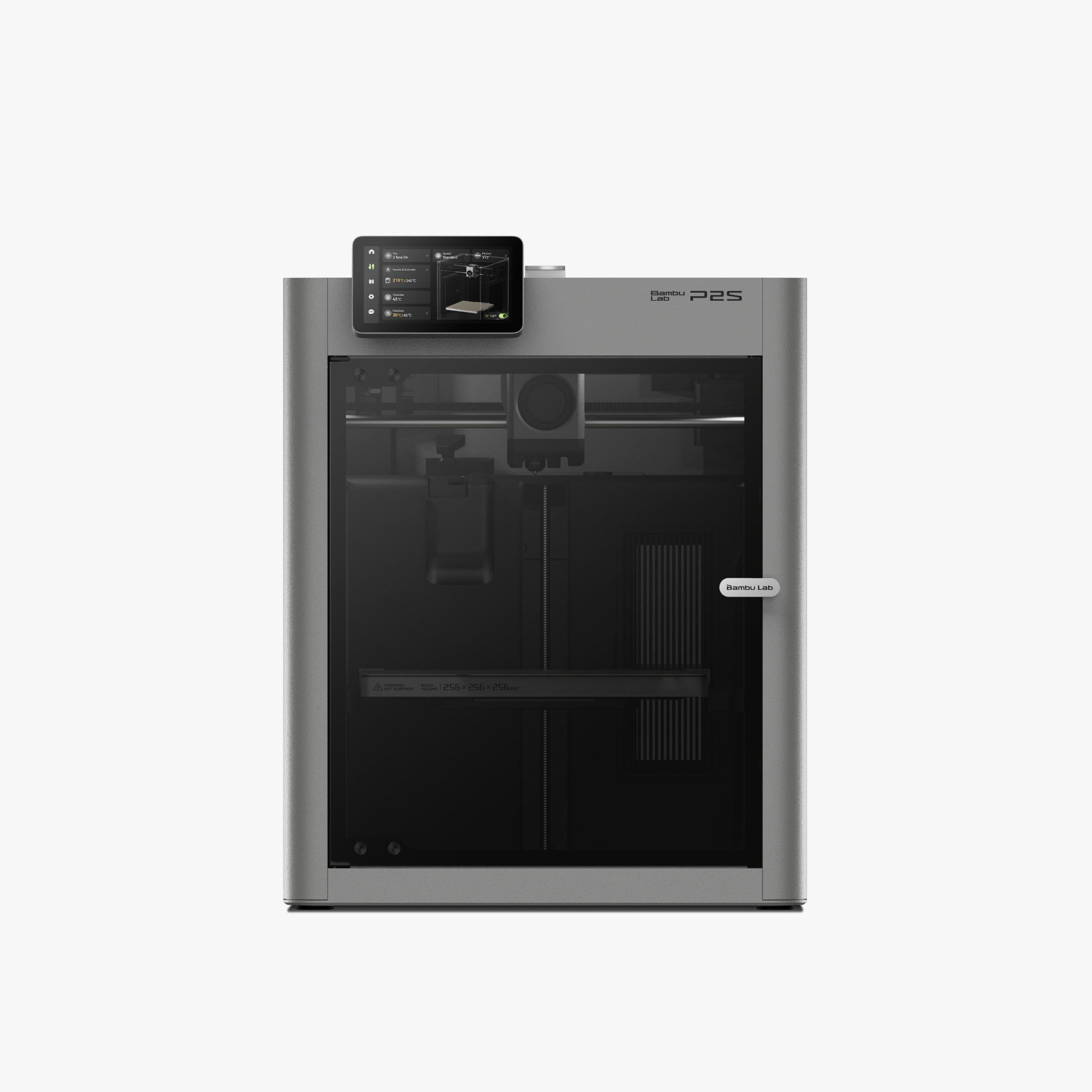
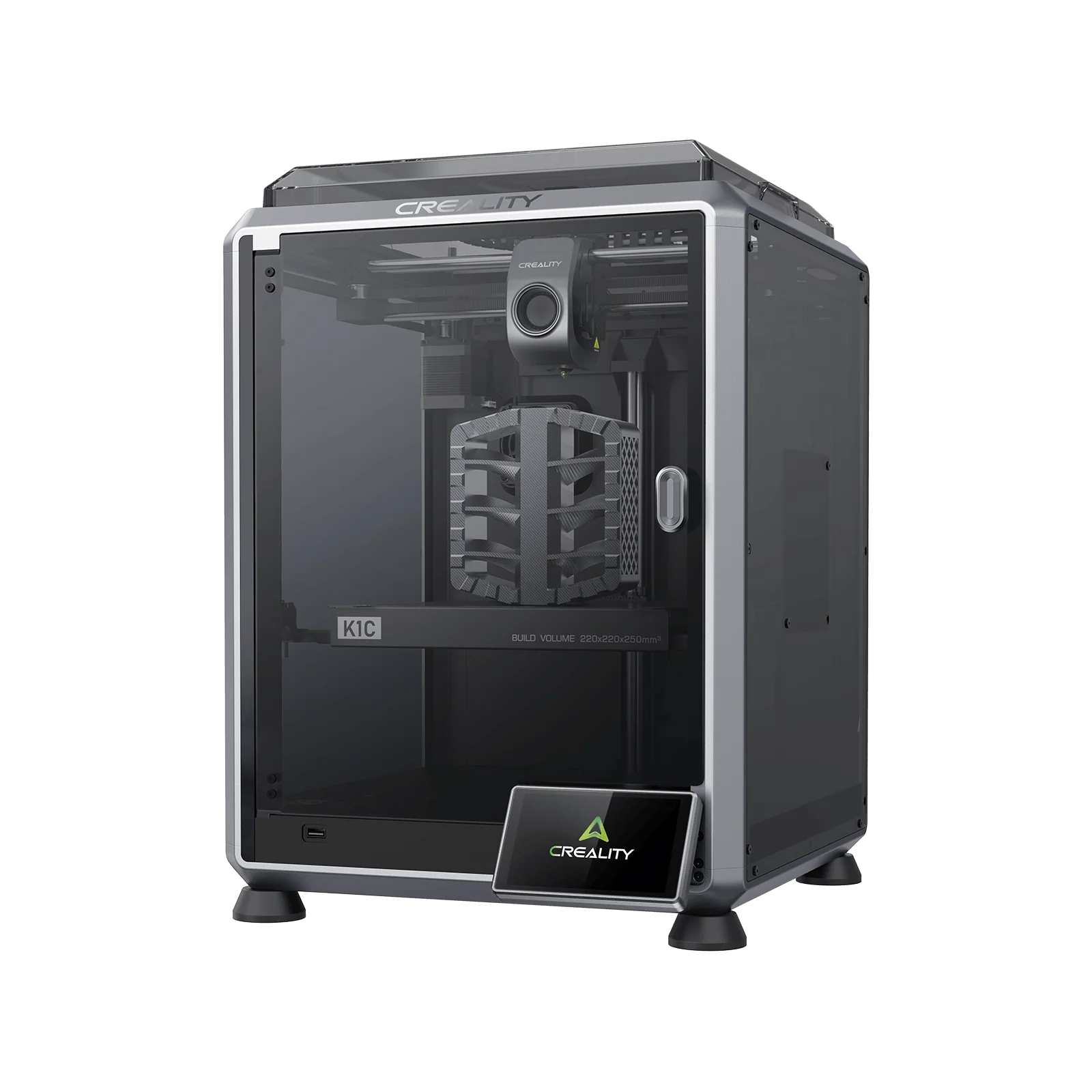
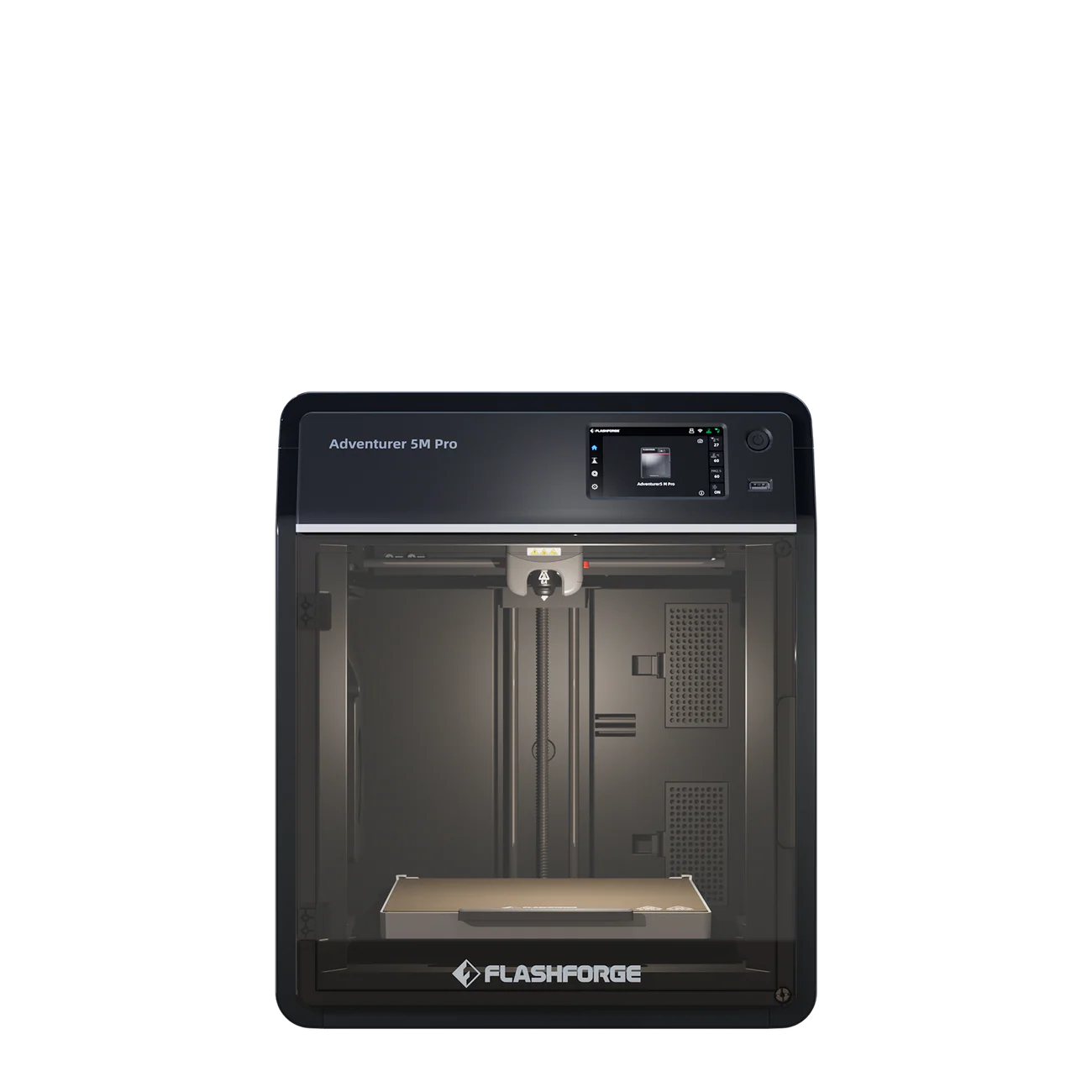
For K-12 classrooms, we recommend enclosed FDM machines that ship safety-ready out of the box: the Bambu Lab P2S (HEPA H13 + activated carbon dual-stage filtration, enclosed chamber with magnetic door, polished UI for student use), the Creality K1C (enclosed CoreXY, hardened nozzle for carbon-fibre work in older grades), and the FlashForge Adventurer 5M Pro (filtered enclosure, simple-UI machine often deployed in primary school classrooms). Avoid open-frame FDM printers in K-12 unless they’re physically placed out of student reach. Avoid resin printers in K-12 below grade 10 except in carefully-supervised after-school clubs with full PPE and an eyewash station.
Best for primary classrooms
Bambu Lab P2S
Enclosed chamber with HEPA H13 plus activated carbon filtration (dual-stage, addresses both ultrafine particles and VOCs). Magnetic door, 256mm cube build volume, polished UI for student use. AMS 2 Pro compatible for multi-colour student projects. The cleanest plug-and-play choice for K-12 classrooms in 2026.
Best for older students
Creality K1C
Enclosed CoreXY with hardened nozzle. Handles carbon-fibre composites for advanced engineering students. Strong fit for grades 10-12 CTE and maker spaces with project depth.
Best simple-UI option
FlashForge Adventurer 5M Pro
Filtered enclosure, simple-UI machine often deployed in primary-school classrooms and STEM clubs. Easier learning curve for elementary and middle school. Lower ceiling for advanced materials.
Teacher training pathways
Many districts require certified safety training for teachers running hazardous-material classrooms. Specific 3D-printing training is available through MatterHackers Education, Bambu Education, and various STEM consortiums. Check with your district’s CTE office; many have allocated training budgets for this. The American Library Association also has 3D-printing-in-libraries safety guidance worth reading even if your space is a regular classroom rather than a library makerspace.
A 2025 ScienceDirect study on classroom 3D printer emissions found measurable cell-level oxidative stress and DNA damage markers from both PLA and ABS particulate matter, and the EPA continues active research on educational-environment exposures specifically. Filtered enclosures are essential in any classroom setup, not optional. Printers should never be left running in unattended classrooms overnight or over weekends, even with smart smoke detectors in place.
Workspace setup checklist
A safe 3D printing workspace is built around eight decisions, ordered to follow the standard occupational-safety hierarchy of controls: engineering controls (ventilation, enclosure) first, then administrative controls (work practices and supervision), then PPE as the last layer. Walk through them in order before your first print in a new setup.
Step 1
Pick the room
A spare room, garage, basement, or dedicated office. Never a bedroom (you sleep there for eight hours; that’s the longest exposure window in the day). For resin, never a living area where food is consumed. Apartment-bound makers can run FDM PLA in a living area with a window cracked; ABS, ASA, and resin should not be done in a primary living space without dedicated ventilation.
Step 2
Set up a non-flammable surface
Steel shelf, tile floor, ceramic, or a heat-resistant silicone mat over a wooden desk. Not carpet, not directly on wood, not on a fabric tablecloth. Leave at least 30cm of clearance around the printer for airflow and at least 1 metre between the printer and any flammables (alcohol, solvents, paper, curtains, books).
Step 3
Route ventilation
For FDM with PLA, an open window on opposite sides of the room provides adequate cross-ventilation. For FDM with ABS, ASA, nylon, or carbon-fibre composites, plan a sealed enclosure with either an internal activated-carbon stage or a duct routed out a window. For resin, the duct is mandatory; route to outside through a window adapter or a permanent vent. See the enclosures guide for hardware specifics.
Step 4
Install a smart smoke detector
A Wi-Fi-connected smoke detector with phone alerts. First Alert Onelink, Nest Protect, or X-Sense are common picks across price tiers. Place it on the ceiling within 3 metres of the printer, but not directly over it (printer exhaust can trigger false alarms). Test monthly. For workshops with limited ventilation or multiple printers running simultaneously, add a carbon monoxide detector alongside.
Step 5
Set up safe electrical and add a smart plug
Plug the printer into a grounded outlet, ideally GFCI-protected. Don’t daisy-chain extension cords. Don’t share the printer’s circuit with high-draw appliances (microwave, space heater, air conditioner). On top of that baseline, add a Wi-Fi smart plug (Kasa, TP-Link Tapo, Shelly) on the printer’s power feed; confirm it’s rated for the printer’s draw (most consumer printers pull 15A or less, well within standard smart-plug ratings). Test the GFCI outlet monthly with the test button; replace it if it does not trip. Pair the smart plug with the smoke detector via Home Assistant, SmartThings, or a manual phone shortcut so you can shut the printer off remotely if you receive a smoke alert.
Step 6
Mount an ABC fire extinguisher
ABC-rated dry powder extinguisher, 5lb minimum (2.3kg in metric markets). Wall-mounted within arm’s reach of the printer. Do not store it in a cupboard. Check the pressure gauge quarterly; replace or recharge if it drops out of the green zone. Never use a water extinguisher on a printer fire (the fire is electrical at root and water makes it worse).
Step 7
Stock PPE within arm’s reach
A box of 5+ mil nitrile gloves (100-pack), a pair of chemical-splash safety glasses, a half-face respirator with Organic Vapor cartridges in a sealed bag (cartridges degrade in open air). Stored on the same surface as the printer, not in another room. If PPE is more than a few steps away, you will not put it on every time.
Step 8
Plan the cleanup workflow
A dedicated resin disposal container with a sealed lid for FEP scraps, paper towels, and used gloves. A separate bin for cured plastic. A second box of disposable lint-free shop cloths for IPA wipes. For FDM, a small enclosed container for failed prints awaiting recycling. The cleanup setup should be visible from the printer; if it’s hidden, you’ll defer cleanup and contamination spreads.
In an emergency
Fire larger than a single printer: evacuate the room and call 911 (US) or 112 (EU/UK), or your local emergency number. Smaller fire: ABC extinguisher, then call.
Resin in the eye: rinse with clean water or saline for at least 15 minutes, then call Poison Control (US: 1-800-222-1222; UK: NHS 111; EU: your country’s poison hotline) and seek medical attention.
Respiratory exposure (strong fumes, dizziness, throat irritation): leave the area immediately, get to fresh air, monitor for 30 minutes. Persistent symptoms need medical attention.
Burn: cool running water for 10-20 minutes, no ice or ointments. Burns larger than a coin, blistering, or on the face or hands need medical attention.
Recent research, summarised
A May 2025 scoping review in the Journal of Exposure Science and Environmental Epidemiology pooled 47 studies of desktop 3D printer emissions and confirmed three findings now considered settled in the field: ultrafine particle and VOC concentrations rise during prints, persist for hours after print completion, and vary by 1-2 orders of magnitude between materials. A separate 2025 ScienceDirect study on classroom emissions documented measurable cell-level oxidative stress markers from both PLA and ABS particulate matter, prompting renewed EPA attention to educational-environment exposures. The practical implication: ventilation matters during and after every print, with high-emission materials and child-occupied spaces deserving the strictest controls. For context, OSHA’s Permissible Exposure Limit (PEL) for formaldehyde is 0.75 ppm 8-hour time-weighted average, and ACGIH’s TLV for styrene is 20 ppm 8-hour TWA. Typical FDM emissions during printing measure well below these limits per print but accumulate over multi-hour sessions in unventilated rooms. EU readers can find equivalent limits in REACH dossiers and national workplace-safety regulations.
Recommended 3D printing safety equipment
Three priorities for 3D printing safety equipment: fume control, fire response, and resin-handling PPE. For filtered enclosures, see our dedicated Best 3D Printer Enclosures 2026 guide (covers Bambu P1S built-in carbon, Wham Bam HotBox, VEVOR acrylic, DORUNDEA resin, AC Infinity grow tent setups). The picks below cover everything else: standalone extractors, PPE, fire safety, and IPA-handling supplies.
Quick triage by use case sorts what to buy. If you’re printing PLA only, you can get away with nothing on this page initially; a box of nitrile gloves for cleanup is the only must-buy. If you’re printing ABS, ASA, nylon, or carbon-fibre composites, add an enclosure (from the enclosures guide) and a smoke detector. If you’re resin printing, the full PPE kit (gloves, glasses, respirator) plus a vented enclosure is the floor, not the aspiration. Buy in this order: PPE first, then ventilation, then fire safety.
Workplace and classroom note (US): OSHA’s Respiratory Protection Standard (29 CFR 1910.134) requires anyone wearing a tight-fitting respirator in a workplace to be part of a formal program: written procedures, fit testing, medical clearance, and training. EU and UK readers fall under PPE Regulation (EU) 2016/425 and national workplace-safety laws (UK: COSHH). Home users are exempt but should still confirm a good respirator seal. School maker spaces, after-school clubs, and any income-earning workshop fall under workplace rules.
Standalone fume extractors
For printers that already have an enclosure but need a second-stage extractor, or for open-frame setups where an enclosure isn’t possible. DIY alternative: the community-printed VOXEL Bento Box V2 ($30 plus printed shroud) is the maker-favorite for Bambu P1P/P1S and Voron Trident owners who can print their own enclosure. Not affiliate-eligible, just a genuine recommendation.
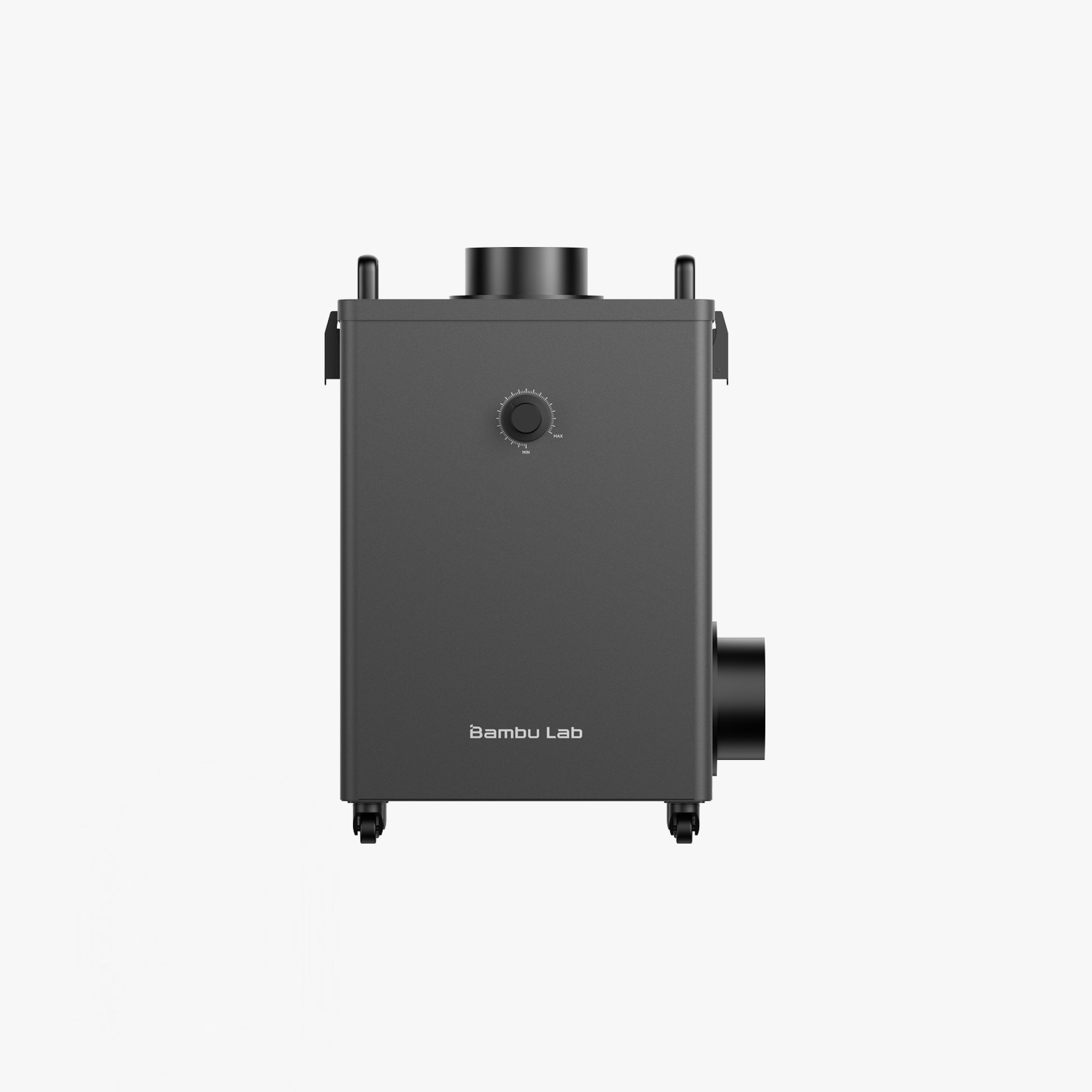
Best low-cost pick
Bambu Lab Smoke Purifier
Bambu’s own standalone HEPA + activated carbon unit for the P1P, P1S, X1 series, and H2D. Plug-and-play, sealed metal casing. About $100-150.
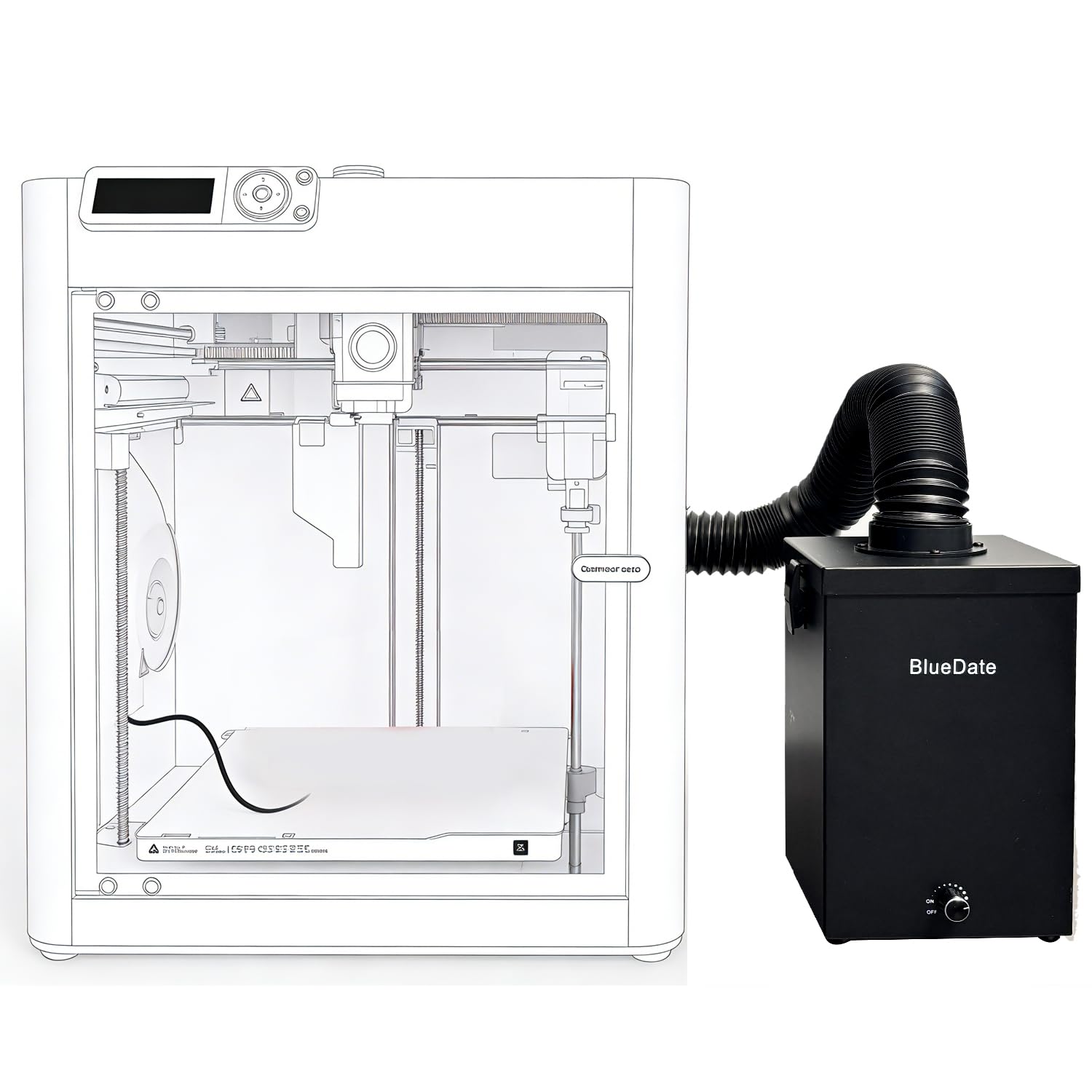
Best Amazon plug-and-play
BlueDate 3D Printer Air Purifier
6-stage filtration with H13 HEPA plus activated carbon. Compatible with Bambu P1P/P1S/X1C/H2D series. Ships with multiple filter sets. About $50-80.
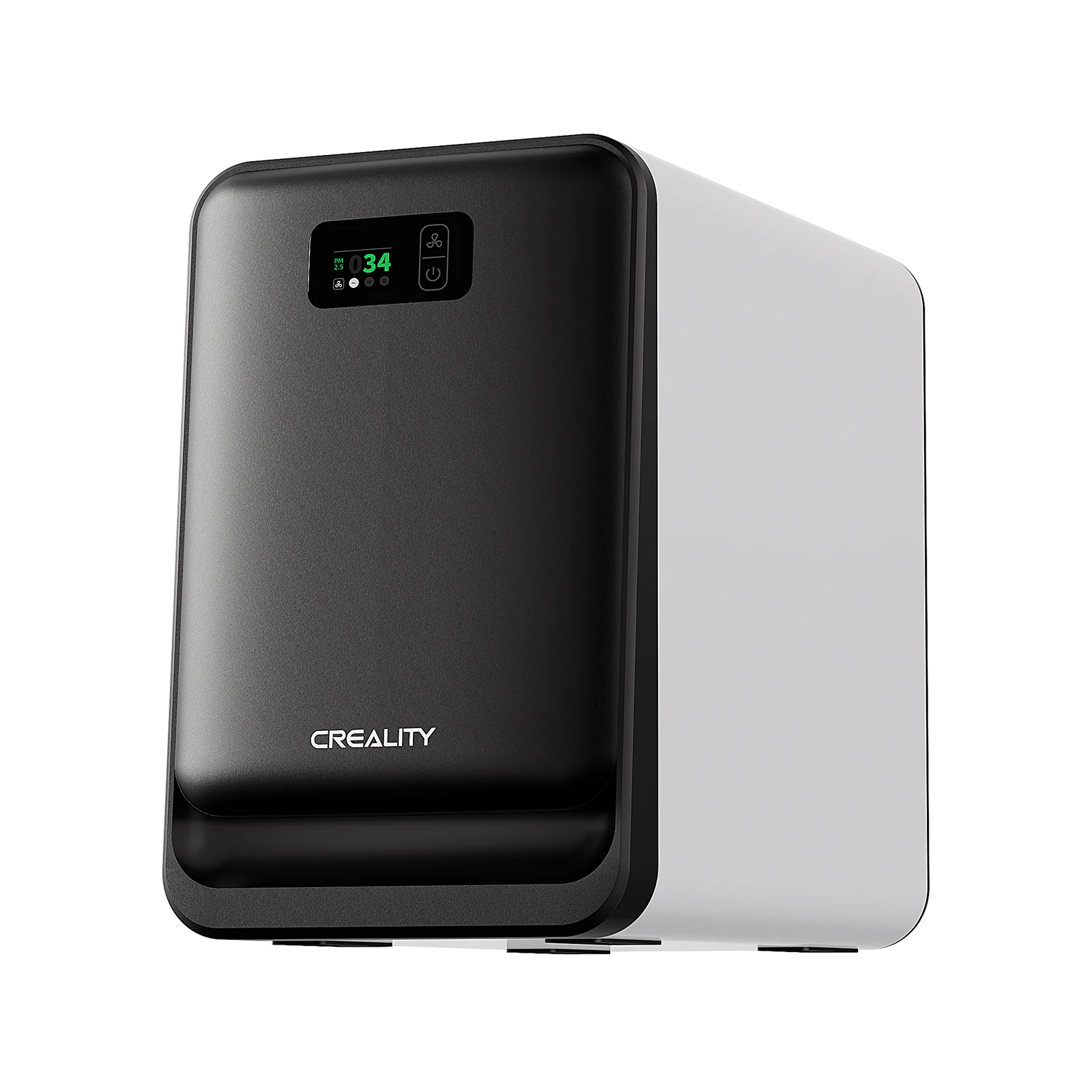
Best mid-tier pick
Creality Laser Smoke Purifier
3-stage HEPA plus carbon unit originally designed for laser engraving, equally suited to 3D printing. Variable fan speed, freestanding. About $200.
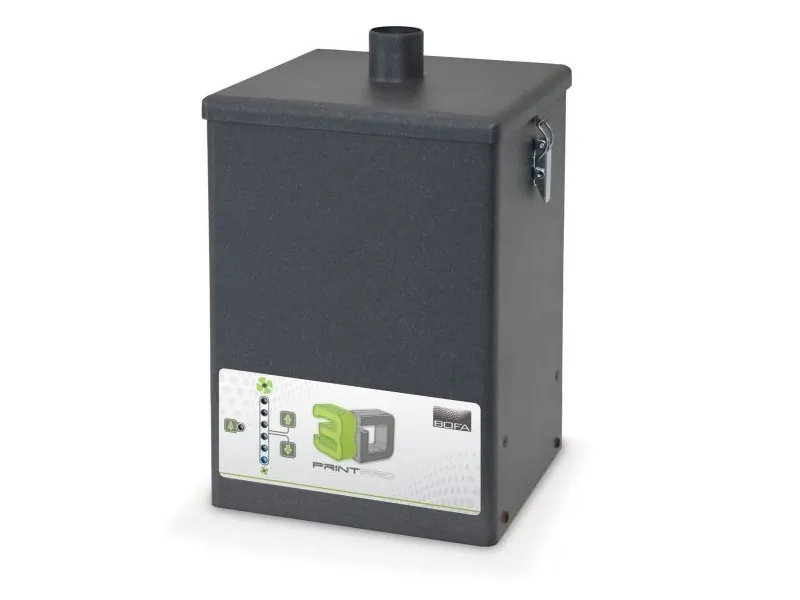
Premium / prosumer
BOFA 3D PrintPRO 3
Industrial-grade extraction designed specifically for prosumer 3D printing. HEPA H14 plus deep-bed carbon. About $800. Pick for multi-printer setups.
Personal protective equipment
Three pieces of PPE cover almost every safety scenario for both FDM and resin printing. For FDM with PLA only, gloves are nice for cleanup but not safety-critical. For ABS, ASA, nylon composites, or any resin work, all three are required.
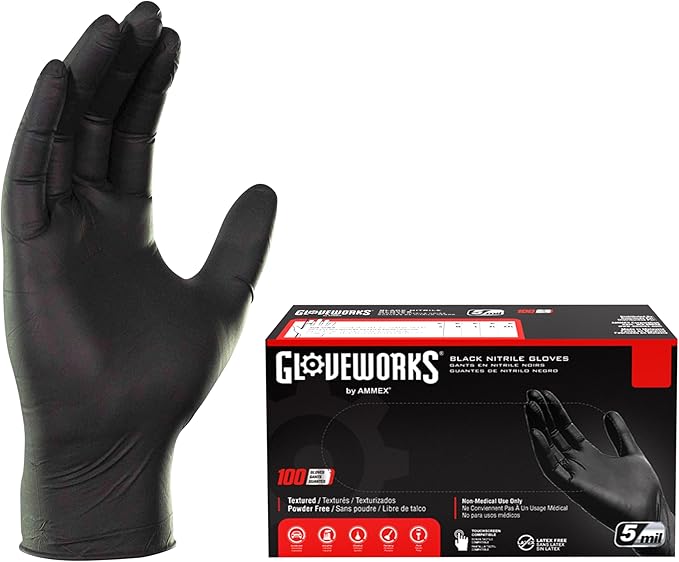
Best nitrile gloves
5+ Mil Nitrile Gloves
Industrial-grade 5 mil or 8 mil nitrile, 100-count box. Thickness matters: 3 mil food-prep gloves let resin permeate within 30-60 minutes. Do not substitute latex.
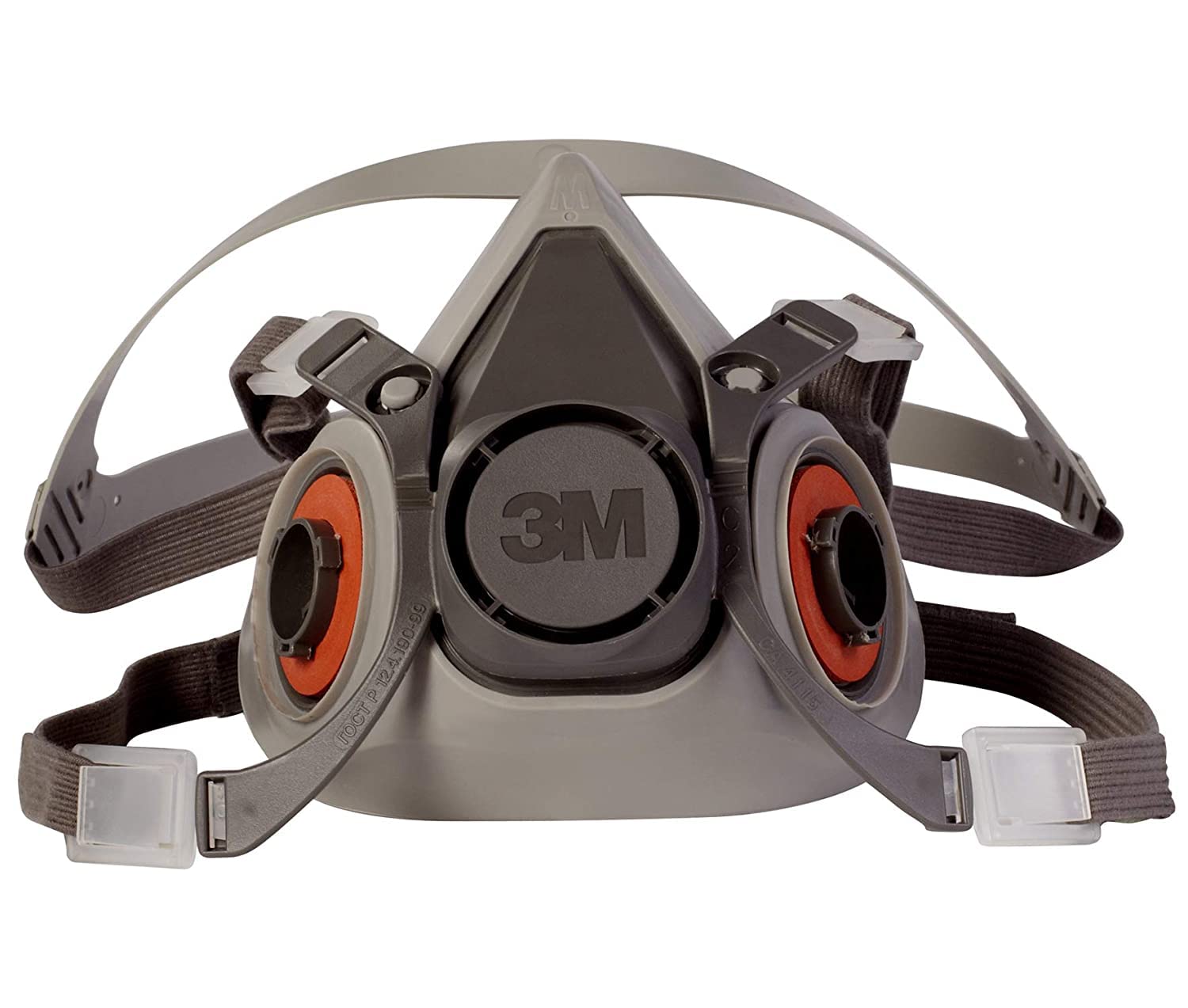
Best half-face respirator
3M 6200 with OV Cartridges
Half-face respirator with Organic Vapor cartridges. NIOSH-approved (TC-84A-0639 in the US; meets EN 140 in the EU/UK). Mask about $40, cartridges about $20 per pair. Write the open-date on each cartridge in marker and store in a sealed bag between sessions (cartridges last 6-12 months sealed but degrade quickly in open air, replace after roughly 40 hours of active use). Test the seal by inhaling with cartridges blocked: if you feel suction, the seal is good. Beards, glasses frames, or wrong sizing give false confidence.
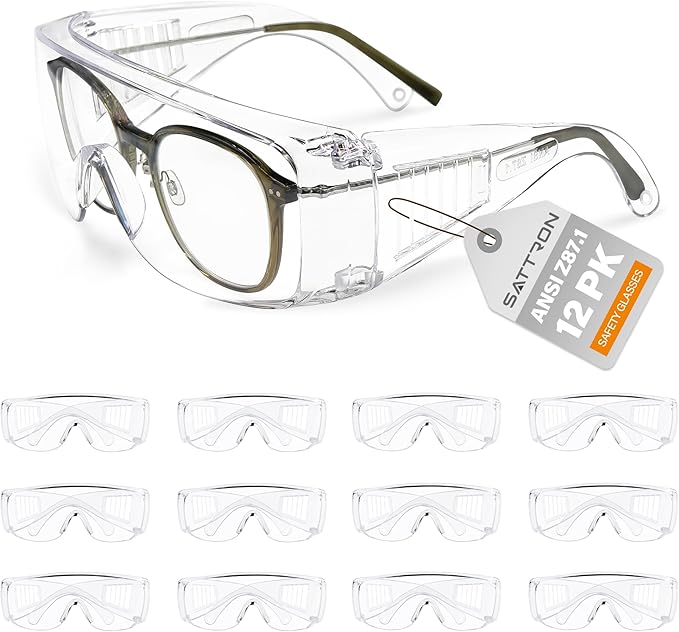
Best safety glasses
Chemical-Splash Safety Glasses
ANSI Z87.1 marked, indirectly vented (open vents let splash through), wraparound style. Verify a U6 UV rating on the lens for post-cure station use. About $10-25.
Fire safety
Four pieces of fire safety hardware, in order of priority. Start with the extinguisher and smart smoke detector; add the smart plug and carbon monoxide detector as your setup grows or if you run multiple printers.
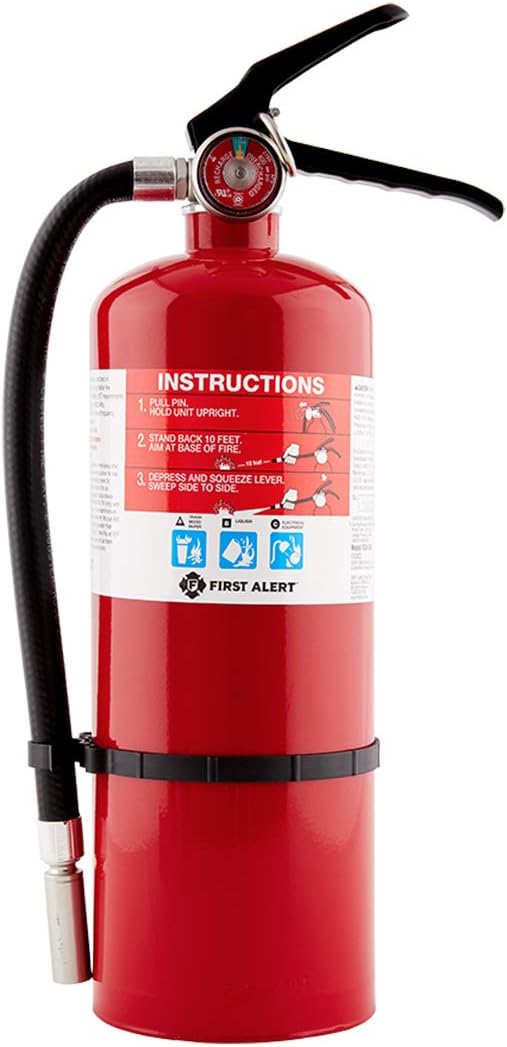
ABC fire extinguisher
5lb ABC Dry Powder
Wall-mounted, within arm’s reach. ABC covers ordinary combustibles, flammable liquids, and electrical fires. Never use water on a printer fire. About $40-70.
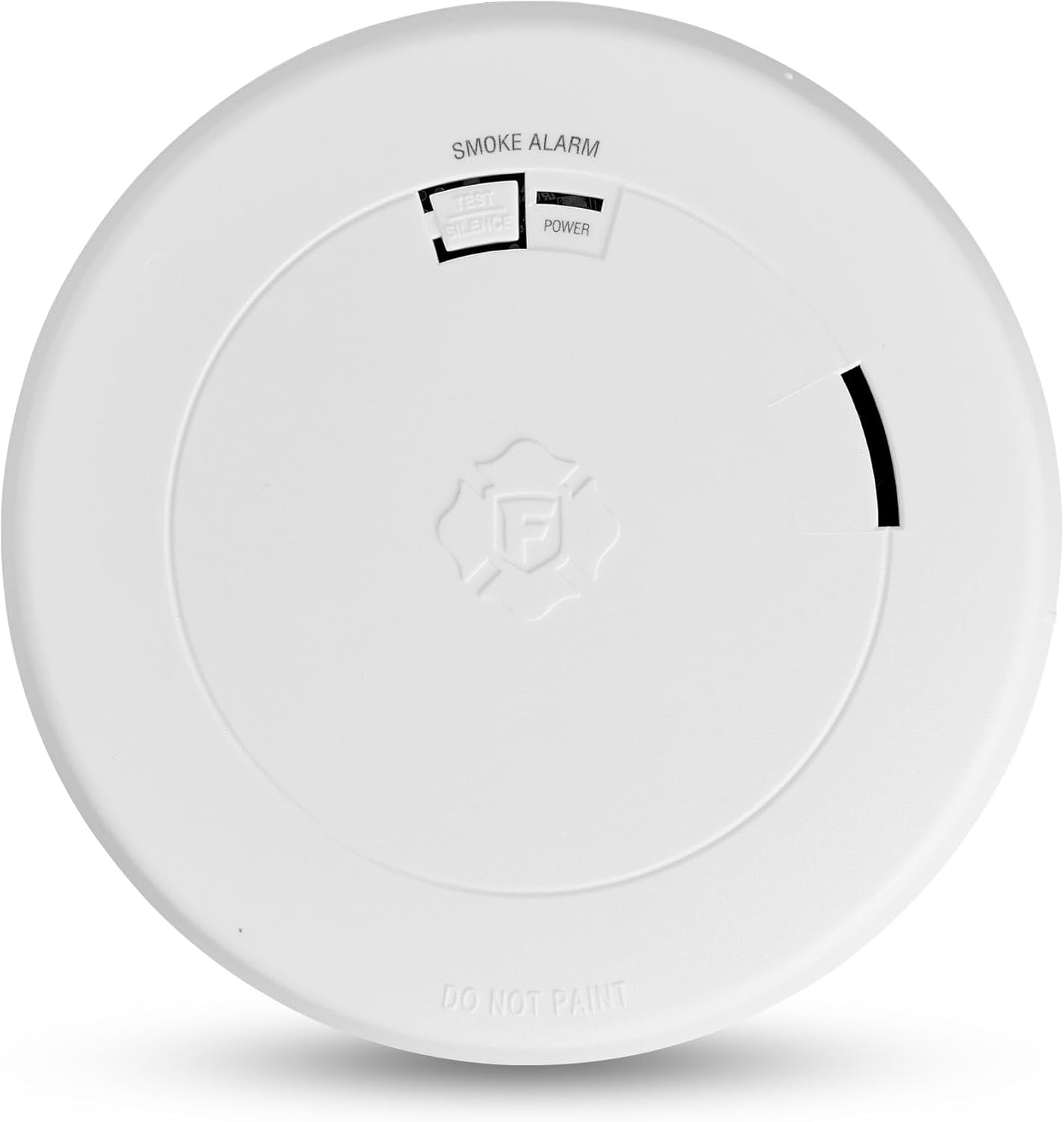
Smart smoke detector
First Alert Onelink
Wi-Fi smoke detector with phone alerts. Place on the ceiling within 3 metres of the printer but not directly over it. First Alert, Nest Protect, or X-Sense. $30-120.
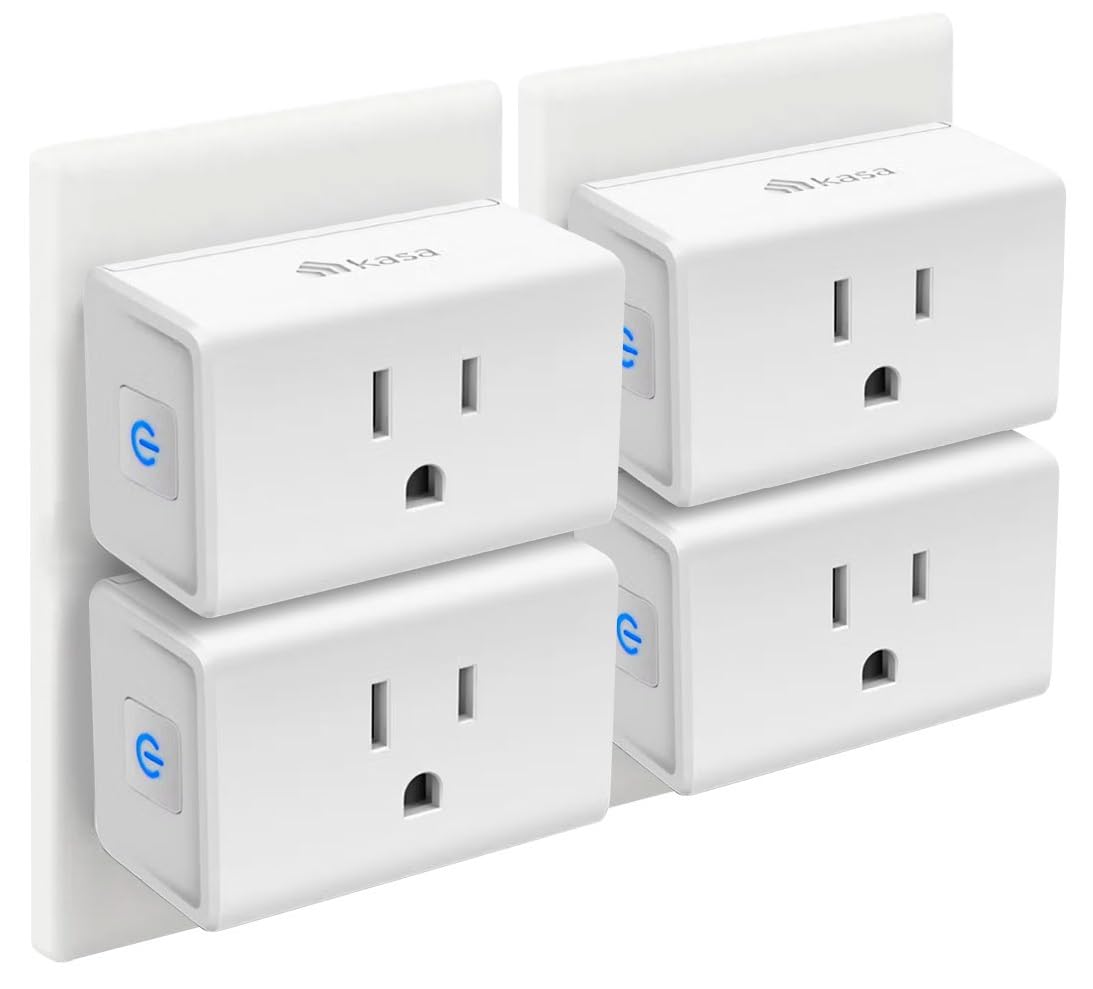
Smart plug
Kasa or TP-Link Tapo 15A
Wi-Fi smart plug on the printer’s power feed. Pair with the smoke detector via Home Assistant for remote shutoff from your phone. About $10-25.
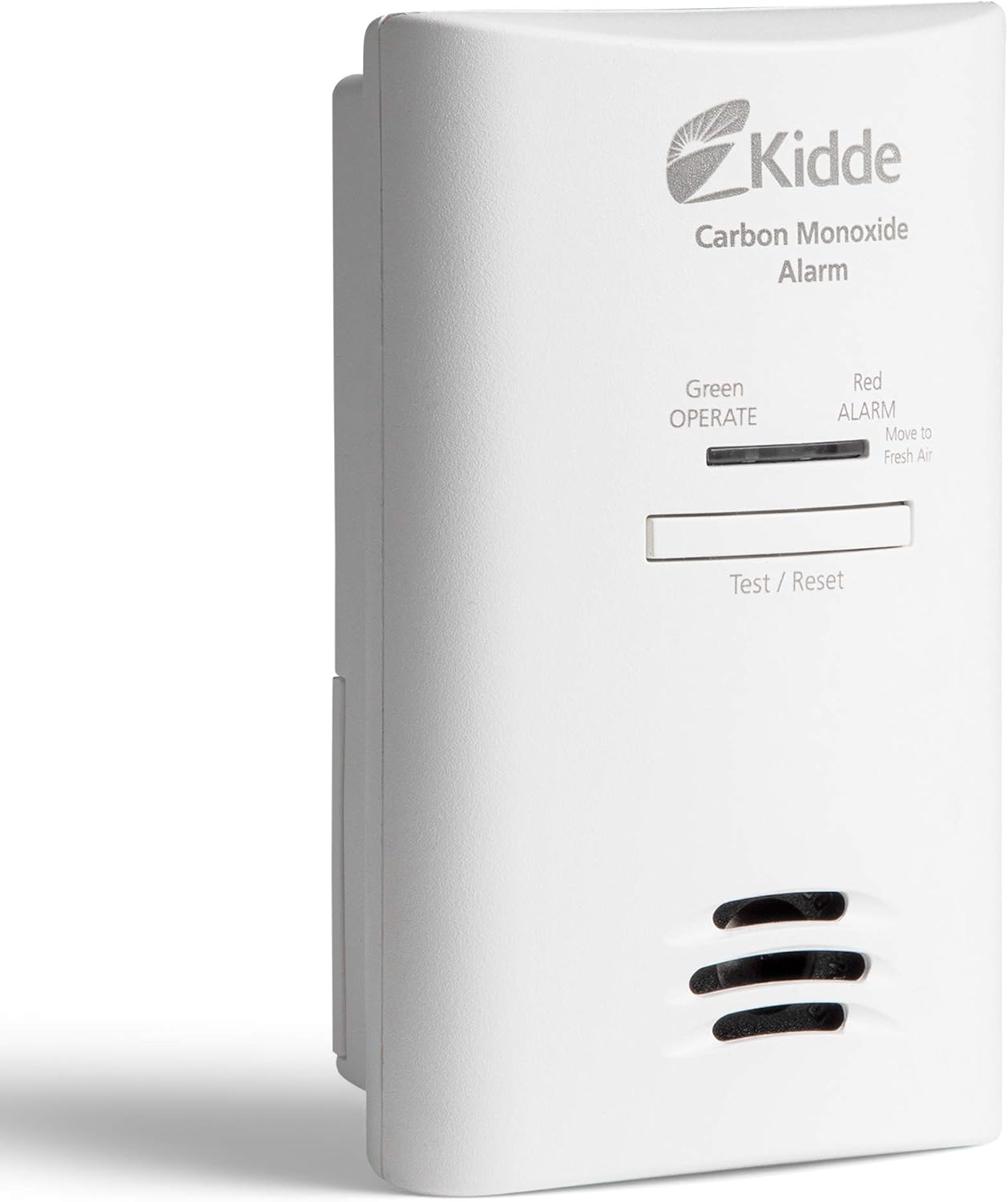
CO detector
Kidde or X-Sense CO Detector
Carbon monoxide detector for workshops with multiple printers or limited ventilation. Smouldering fires can produce CO before reaching open flame. About $20-50.
Workshop accessories
The consumables side of resin printing. Stock these once and you will go through them slowly. Having them on hand prevents the workflow shortcuts that lead to spills and bad cleanup.
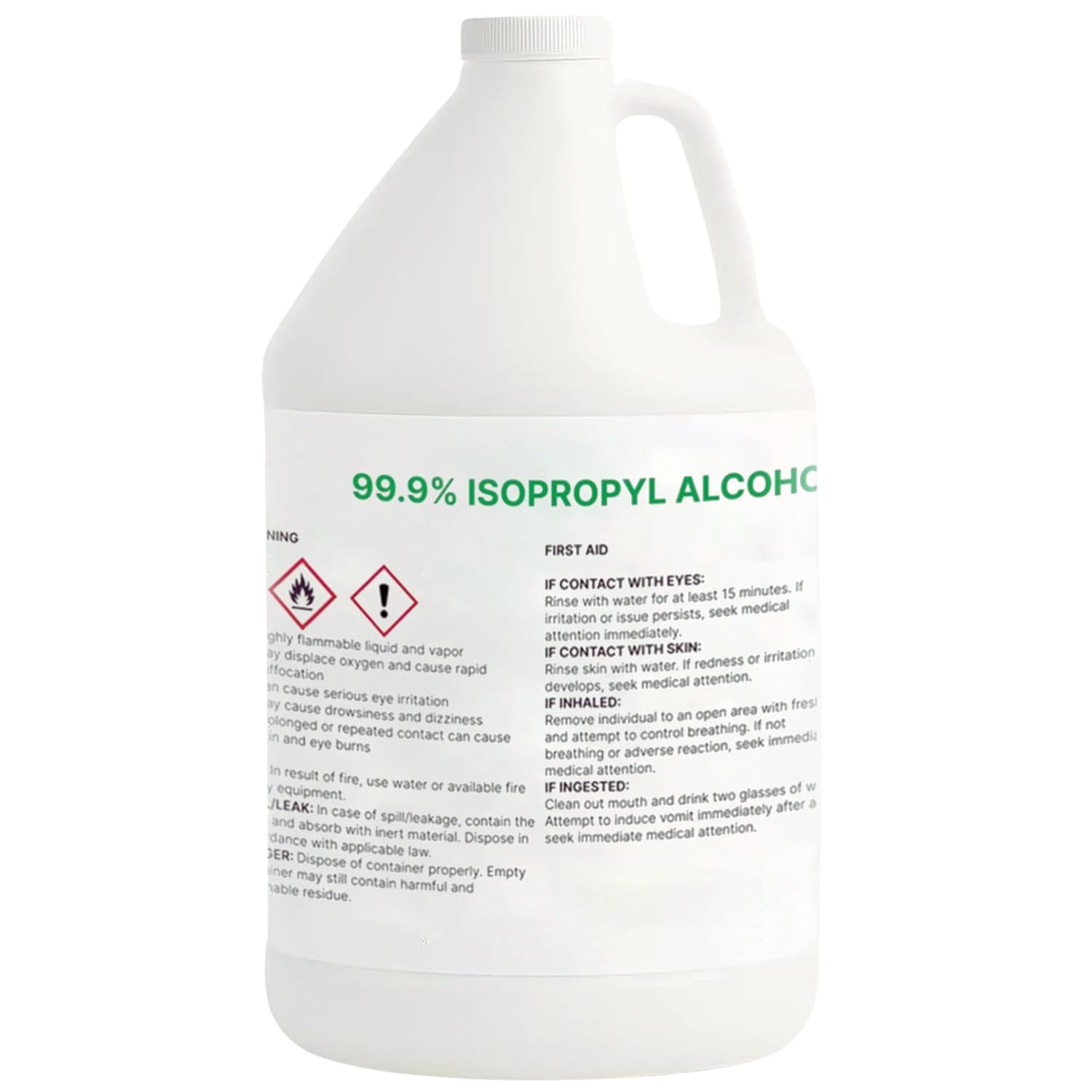
Best IPA
99% Isopropyl Alcohol (Gallon)
90+ percent IPA for cleaning resin parts. Gallon size is most economical. Keep in the sealed bottle; decant into a smaller squeeze-bottle for daily use. Never pour spent IPA down the drain.
Best shop towels
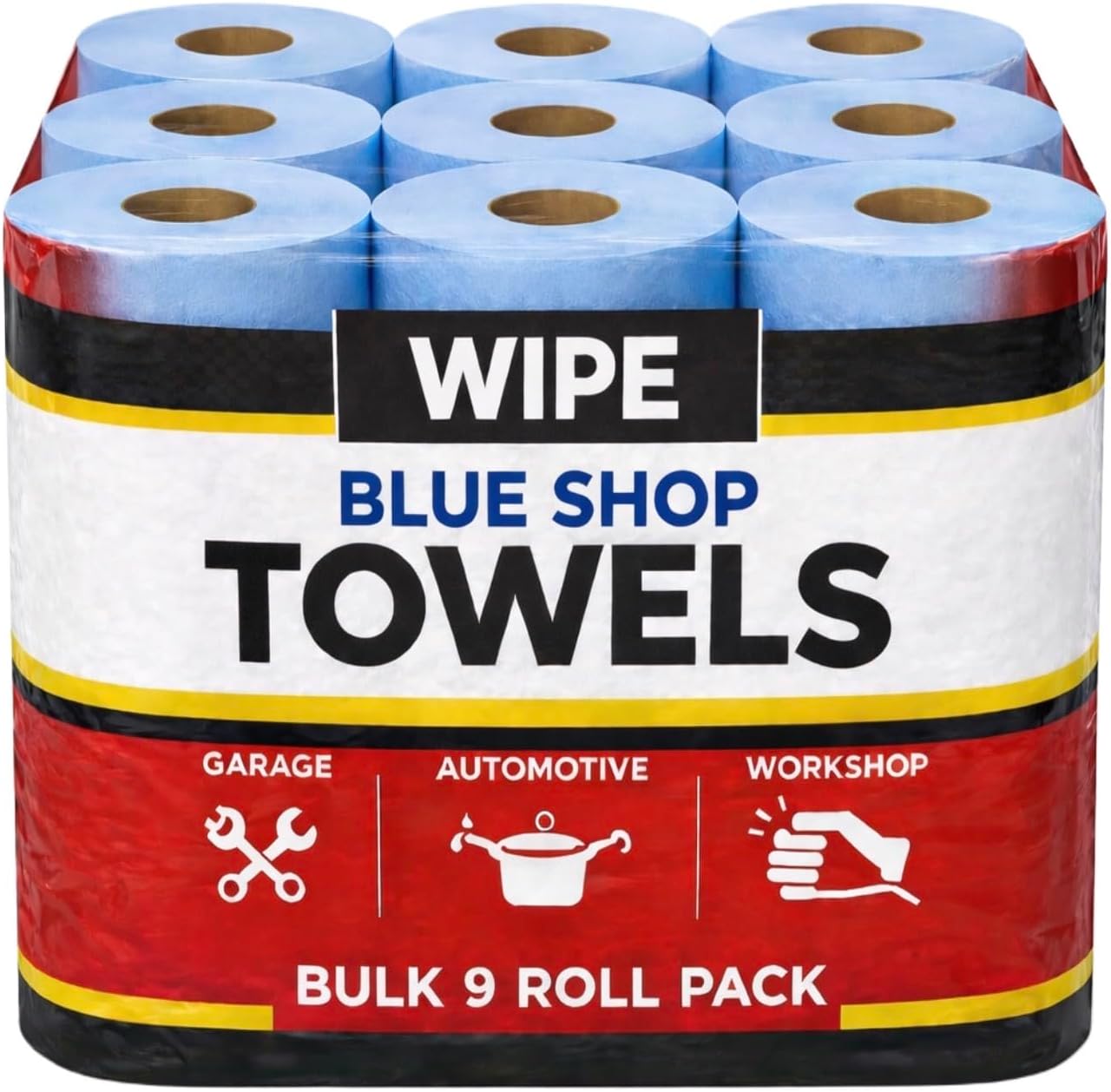
Lint-Free Shop Towels (Blue)
Blue shop towels in rolls are stronger than kitchen paper towels and won’t shred when wet with IPA or resin. Buy in bulk; you will go through more than you expect.
Best disposal container
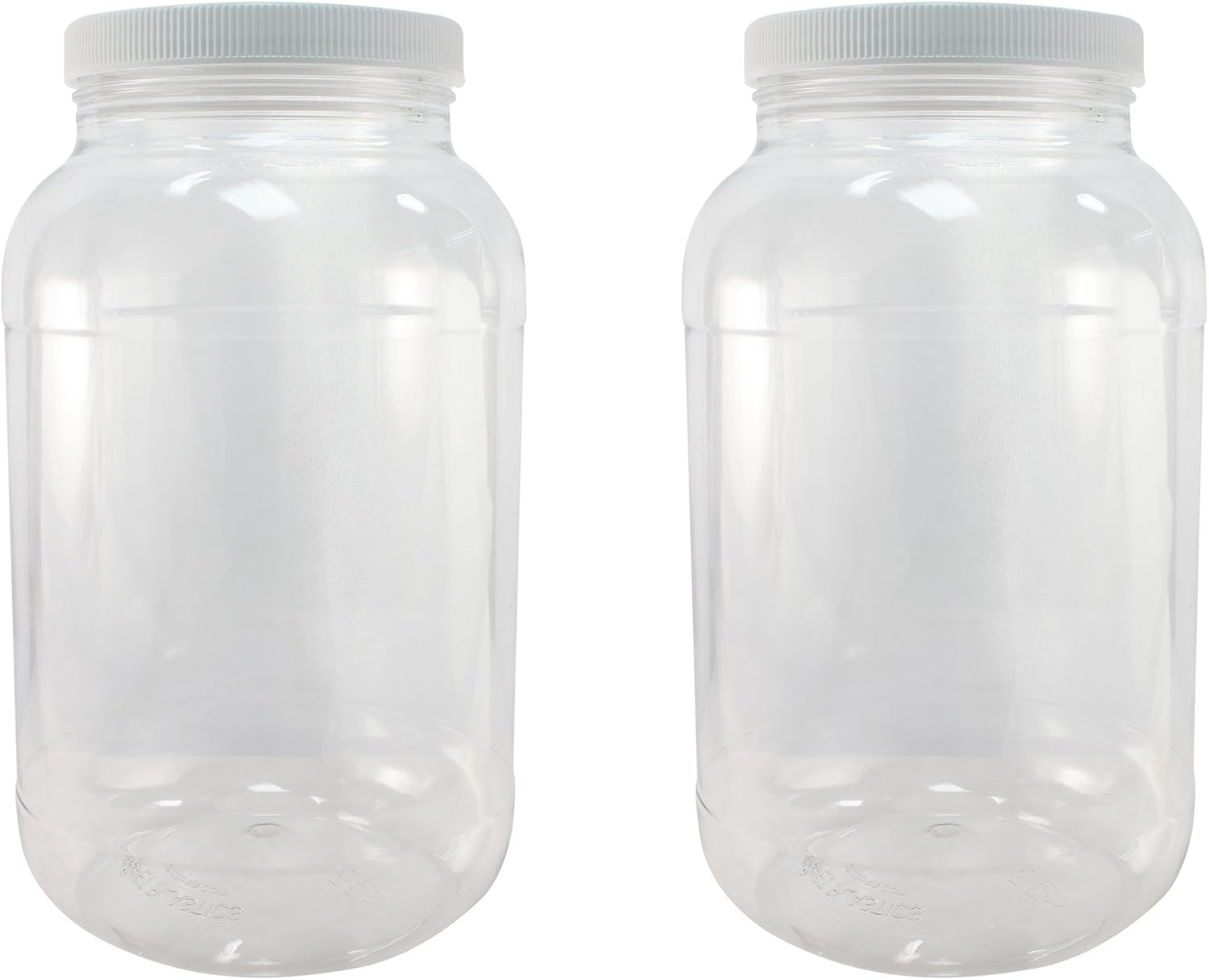
1-Gallon Screw-Top Plastic Jar
Sealed container for uncured resin waste: used FEP films, contaminated paper towels, gloves. The sealed lid prevents off-gassing. Label clearly. Take to a hazardous-waste collection point when full.
Frequently asked questions
Is 3D printing safe to do at home?
Yes, for the vast majority of home setups. 3D printing safety practice for FDM with PLA in a ventilated room is comparable in risk to running a desk lamp. Resin printing requires more care: dedicated workspace, ventilation routed outside, and PPE. High-temperature materials like ABS, ASA, nylon composites, and PEEK need enclosed printers with proper fume management. None of this is exotic; the precautions are similar to other workshop hobbies.
Are 3D printers safe around children?
FDM printers can be safe around children with appropriate supervision and an enclosed machine (which doubles as a physical barrier against the hot bed and hotend). Resin printers are not appropriate for unsupervised children under 13 because of the chemical-handling steps. The hazards to actively manage are the heated bed (60 to 110C, can cause second-degree burns), the hotend (180 to 410C), moving parts (gantries running at 300 to 600 mm/s), and any uncured resin in a resin workflow.
At what age can children start using a 3D printer?
Our broad guidance: ages 6 to 8 can press start on a pre-prepared print under direct adult supervision. Ages 9 to 12 can run their own prints with design and slicing prepared by an adult. Ages 13 and up can run an FDM printer end-to-end after appropriate training. Resin printing should wait until 13 at the earliest. These are not hard rules; match the printer’s hazards to the child’s ability to follow workshop discipline.
Are 3D printers safe around pets?
Cats are the main concern because they’re attracted to the warmth of a heated bed and will sit on it long enough to cause minor burns. An enclosed printer with the door closed prevents this. Dogs are less interested in the printer but will investigate failed prints; small printed parts are choking hazards. For open-frame printers, a closed-door room or a baby gate is the simple solution.
Can I leave a 3D printer running overnight or unattended?
3D printer fires are statistically rare and current firmware (Marlin Thermal Runaway Protection, Klipper verify_heater, Bambu and Prusa hardware-level cutoffs) catches the vast majority of failure modes. Many makers do run overnight prints, especially on validated machines from reputable brands. The pragmatic minimum for unattended printing is: a Wi-Fi smoke detector, a smart plug for remote shutoff, an ABC fire extinguisher, and camera monitoring with phone notifications. The fully cautious answer is “never unsupervised”. Pick a posture that matches your tolerance.
What kind of fire extinguisher do I need for 3D printer fires?
ABC-rated dry powder, 5lb (2.3kg) minimum, wall-mounted within arm’s reach. The ABC rating handles ordinary combustibles, flammable liquids, and electrical fires all in one. Never use a water extinguisher on a printer fire: the fire is electrical at root and water makes it worse. Check the pressure gauge quarterly; replace or recharge if it drops out of the green zone.
What should I do if I spill uncured resin on my skin?
Wash immediately with soap and warm water for at least 30 seconds. Do not use solvents (alcohol, acetone) to clean the area, because solvents drive resin deeper into the skin rather than removing it. For prolonged or repeated exposure you can develop a sensitisation reaction (contact dermatitis), which can become permanent and increasingly severe. If you notice any reaction, stop work, wash thoroughly, and improve your PPE before next session. If skin reactions persist, see a dermatologist.
Do I need eye protection for resin printing?
Yes. Chemical-splash-rated safety glasses (ANSI Z87.1 marked, indirectly vented, wraparound) are required for any direct work with the resin vat, IPA washing, or post-curing. Verify the glasses also carry a U6 UV rating if you use an open post-cure station. Uncured resin in the eye is the most common emergency-room resin-printing visit. Rinse with clean water or saline for at least 15 minutes and seek medical attention if exposure occurs.
What PPE do I need for FDM versus resin printing?
FDM in a well-ventilated room with PLA: no PPE strictly required, though safety glasses are sensible for any printer maintenance involving the hotend or nozzle change. FDM with ABS, ASA, nylon, or carbon-fibre composites in an enclosed printer: nothing required during printing if the enclosure handles fume management, but a half-face respirator with OV cartridges if you open the door mid-print. Resin printing: nitrile gloves (5+ mil), chemical-splash safety glasses, and a half-face respirator with OV cartridges for any extended session or post-processing work. Resin PPE is not optional.
Is IPA safe to handle for resin cleaning?
IPA is flammable and its vapours are heavier than air, so they pool near the floor and around electrical outlets. Use it in a ventilated space, keep the bottle sealed except when actively decanting, and store it away from heat sources and ignition points. Do not pour spent IPA down a drain (it can ignite in plumbing and is regulated as hazardous waste in many jurisdictions). The standard hobbyist disposal practice is to let spent IPA sit in a UV-exposed open container until the dissolved resin cures and settles out, then decant the clear IPA for reuse and dispose of the cured sludge as inert plastic. Beyond that, the practical risks are similar to handling any other flammable solvent.
How do I dispose of cured and uncured resin scraps?
Cured (fully UV-hardened) resin is inert plastic and can go in regular waste. Uncured resin in any form is hazardous waste in most US states and EU countries: empty resin bottles with residue, used FEP films, paper towels from cleanup, contaminated gloves, and IPA waste. The standard practice is to fully cure everything before disposal where possible (leave items in direct sunlight for several hours, or use a dedicated UV cure station) and bag what cannot be cured into a sealed labelled container for hazardous-waste collection.
What should I do if I smell strong fumes mid-print?
For FDM, strong fumes mid-print usually mean the filament is wrong, the temperature is too high, or the nozzle is clogged and the material is pyrolysing (burning rather than melting cleanly, which releases significantly more toxic compounds than normal printing). Stop the print, lower the temperature, and inspect. Persistent strong fumes from a normally well-behaved material suggest a worn nozzle or a counterfeit filament; replace one variable at a time. For resin, strong fumes usually mean the enclosure is not adequately venting; check that the duct is connected and the fan is running. Leave the room, increase ventilation, and only return with PPE on once the air clears. Smelling fumes during normal operation indicates the ventilation setup needs attention.
What should I do if I’ve been printing without proper safety setup?
You haven’t done permanent damage just by reading this article later than ideal. The correction depends on what you’ve been printing. PLA in your bedroom: move the printer out, open the window, you’re fine. ABS or ASA without an enclosure: monitor for symptoms (headaches, throat irritation), move the printer to a ventilated space, plan an enclosure. Resin without PPE: stop now, wash thoroughly, watch for skin or respiratory reactions over 48 hours, see a doctor if anything looks off, and get the full PPE kit before the next session. See the recovery section at the top of this page for the full triage.
Where can I ask follow-up safety questions?
The 3D printing community is unusually helpful on safety questions. Reddit r/3Dprinting and r/ResinPrinting have active moderators with relevant expertise and a strong culture of “share your setup, get safety feedback”. Discord communities for specific printer brands (Bambu Lab, Prusa, Elegoo) often have dedicated safety channels. For medical concerns related to exposure, see a doctor or call your local poison control centre rather than relying on forum advice. For institutional questions, your district’s CTE office (for schools), your insurance underwriter (for home), or the relevant local fire marshal (for workshops) are the authoritative voices.
Keep going
For the equipment and printers that pair with this safety setup, see our companion guides:
Beginner-friendly machines, including the enclosed picks that handle most safety questions out of the box.
If resin is your direction, start with the picks tuned for low-odour and apartment-friendly workflows.
Tents, rigid acrylic, furniture cabinets, and resin enclosures. The companion product guide to this article.
Move the IPA-heavy steps of resin printing into sealed chambers with built-in UV cure.
Side-by-side comparison of the two technologies if you’re still choosing which to start with.
Year-one cost breakdowns across four scenarios, including the safety equipment line items.
For terminology, see the 3D Printing Glossary. For the conceptual overview, see What is 3D Printing?