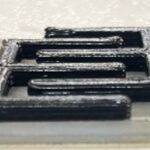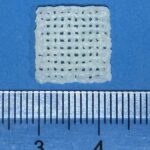

A startup born out of Oak Ridge National Laboratory is using binder jet 3D printing to turn recycled glass into coasters, decorative tiles, and architectural cladding — potentially diverting thousands of tons of material from landfills. Vitriform3D, co-founded by Alex Stiles, has developed a process that crushes waste glass bottles into a fine powder, then uses a robotic arm to spread the particles in layers while nozzles jet adhesive and ink to bind and color the material. The finished object is heated in an oven to set its final shape, much like pottery.
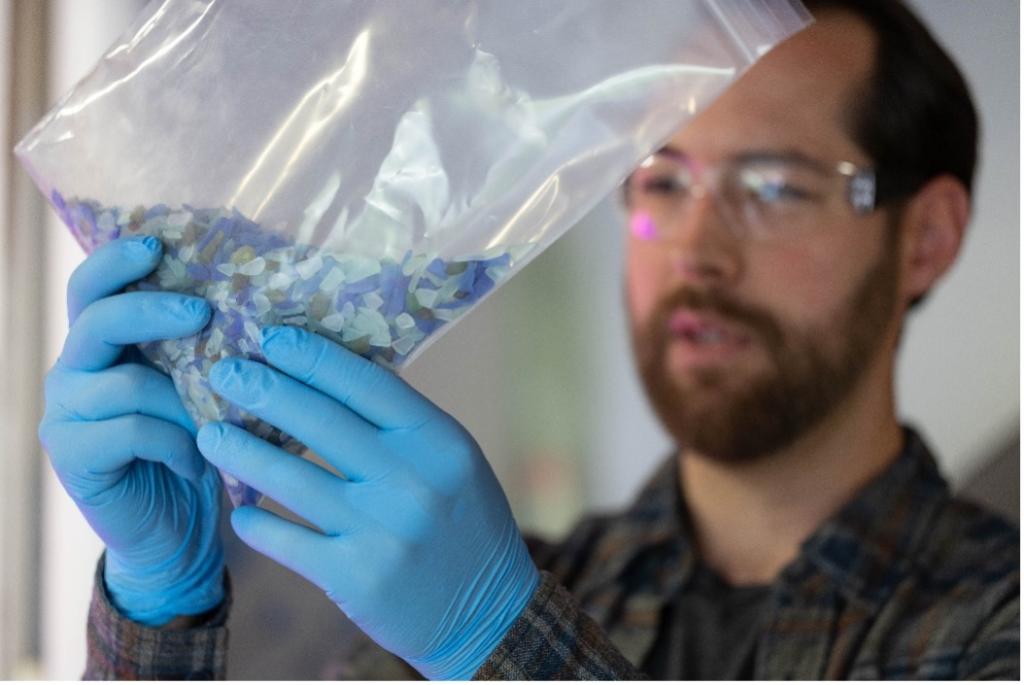
Binder jetting had previously been applied to metal, wood fiber, and sand, but crushed glass hadn’t been used as a feedstock before. The final product is classified as engineered stone, composed of 90 to 95 percent recycled glass waste and 5 to 10 percent binder polymer adhesive. “Essentially, you’re glueing the powdered glass together,” Stiles said.
Only one-third of glass waste in the U.S. gets recycled, according to Stiles. The economics don’t help: glass is heavy and expensive to ship, and manufacturers often find it cheaper to buy virgin sand than to process recycled material. There’s also a contamination problem at industrial scale. “If a recycling facility were to get a truckload of glass bottles and it had one coffee mug in it, that would shut down their entire production line for a day,” Stiles said.
Stiles and co-founder Dustin Gilmer developed the concept as University of Tennessee students working on a 3D printing project with ORNL researcher Tomonori Saito and IACMI — The Composites Institute. In 2022, the pair were selected for DOE’s Lab-Embedded Entrepreneurship Program node at ORNL, called Innovation Crossroads. The two-year program gave them funding, scientific expertise, and access to ORNL’s Manufacturing Demonstration Facility, where they modified printer software, tested adhesive-to-powder ratios, and refined adhesive formulas to improve strength and appearance. Gilmer has since become a University of Tennessee professor, while Stiles has continued pushing the technology forward.
Vitriform3D’s current collaboration with ORNL’s Building Technologies Research and Integration Center is focused on recycled glass cladding for exterior building walls. ORNL building technologies researcher Nolan Hayes is working with Stiles on the project. “Glass is extremely resilient, durable, and versatile. It’s fire-resistant and can withstand extreme weather conditions,” Hayes said. The planned cladding would combine glass, adhesive, and reinforcing fibers compressed into a flat base layer, with a separately printed surface veneer bonded on top to create raised geometric or swirling decorative patterns.
To build a supply chain, Stiles launched a separate company called Fourth & Glass to collect bottles from Knoxville residents each month. That operation has gathered tens of thousands of pounds of glass that would otherwise have gone to a landfill. After cleaning and sorting by color, Stiles sends remaining material to a large-scale crusher in Blount County, Tennessee, where it’s used in road development and county construction projects.
He’s also installing a 3D printer at Lawrence Technological University in Detroit, giving architecture students hands-on access to the technology. “This will be the first time that architecture students can really sink their teeth into what they could do with this technology,” Stiles said. The ORNL partnership, by contrast, is targeting industrial output. “If we had a massive printer, how many thousands of tons of glass can we turn into wall paneling?” he said.
Source: ornl.gov