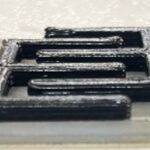

Scientists at the University of Colorado Boulder have used a bioluminescent single-celled algae called Pyrocystis lunula to 3D-print light-emitting structures that glow a strong cyan shade of blue, according to a paper published in Science Advances.
Researcher Giulia Brachi discovered that adding a slightly acidic solution to the algae triggered sustained light production. She’d originally tried replicating the mechanical stress of ocean waves to stimulate the organisms, but the algae weren’t responding. The acidic approach worked far better, inducing glowing for up to 25 minutes at a time. Brachi encapsulated the algae in a hydrogel — a water-based jelly-like substance — and used it to print several shapes, including a crescent moon, chosen as a nod to the organism’s appearance under a microscope.
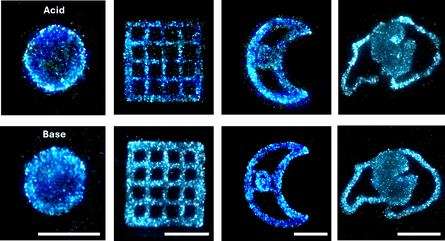
The light comes from a reaction between two compounds inside the algae: an enzyme called luciferase and a light-producing molecule called luciferin, both named after the Latin word for “light bearer.” Prof Wil Srubar, also of the University of Colorado Boulder, said the organisms are “pretty self-sustaining provided that they have access to seawater.”
Srubar suggested the technology could find use in glowsticks or glowing bracelets, but also in biosensors that glow when they detect toxins in the environment. Prof Chris Howe of the University of Cambridge, who wasn’t involved in the research, called it “a really interesting first step,” though he cautioned that “moving it from what works under controlled conditions in the lab to what works in the real world will be a challenge.” Howe also pointed out that for small battery-powered devices, switching to bioluminescence could meaningfully cut down on battery waste.
Not everyone is convinced the algae can hold up under the conditions used. Anthony Campbell, a professor emeritus at the University of Cardiff, said he’s skeptical the organisms could survive long in a solution with a pH of 4 — roughly as acidic as a tomato. “They don’t like it, it stresses them,” Campbell said.
Scientists still don’t know why Pyrocystis lunula evolved to produce light at all. One leading theory is that the flashes serve a defensive function, deterring predators. “To my mind, that’s a fairly plausible explanation — but it’s certainly not known for sure,” Howe said.
Source: theguardian.com