
Fleet Readiness Center East has delivered its first flight-certified metal 3D-printed parts to the U.S. Navy fleet, completing the qualification, production, and certification process in under six months — what the depot’s team lead says is the fastest such effort in Naval Air Systems Command history.
The three parts delivered in 2025 are a weapons pylon fitting for the AH-1Z Viper helicopter, a main landing gear repair fitting for the V-22 Osprey, and a blanking plate for the C-130 Hercules. FRCE delivered the pylon fitting to the H-1 Fleet Support Team first, in early 2025, with the remaining two following later in the year. The depot also used the equipment to produce specialized tooling for its own maintainers.
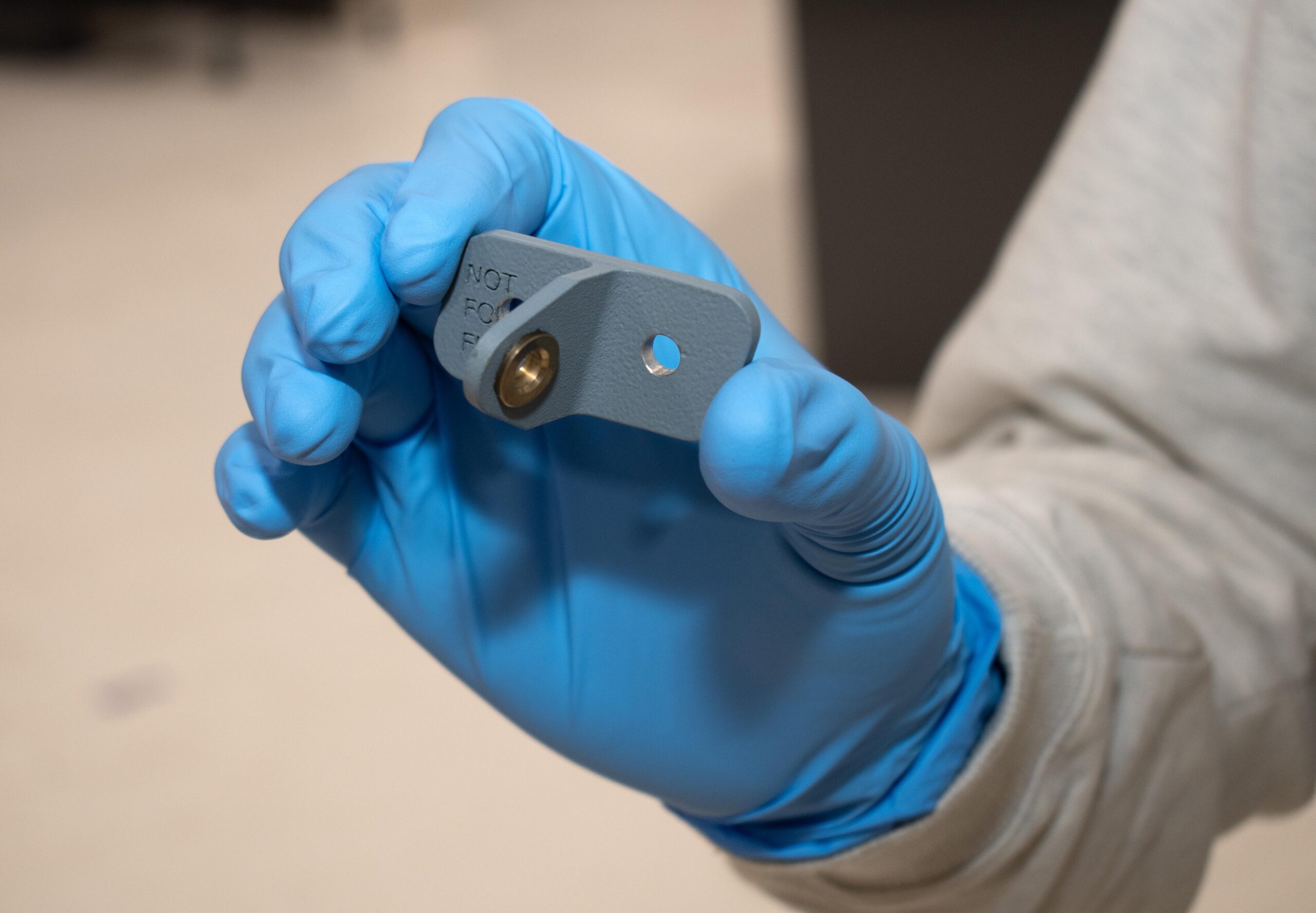
The process uses high-powered lasers to weld thin layers of aluminum powder into solid parts, layer by layer. It’s similar in concept to plastic filament 3D printing, but the output meets the same safety and quality standards as traditionally manufactured components. The six-month capability demonstration, completed in collaboration with the NAVAIR Additive Manufacturing Team and Fleet Support Teams, formally validated those standards.
Supply chain delays drove the V-22 landing gear fitting to the top of the list. “The fleet was having a hard time getting their hands on repair fittings for the V-22 main landing gear — it’s basically a doorstop for the landing gear door when it comes up,” the FRCE Additive Manufacturing Team lead said. “They turned to additive manufacturing and asked us if it was something we could make, so we took on that part, and a few others, as part of our capability demonstration. The goal is to give the fleet what they need when they need it, and we did just that.”
The team lead credited the speed of the effort to cooperation across multiple organizations. “We were challenged to complete the qualification, production and certification processes for these parts in six months, and we not only met but exceeded that standard,” the team lead said. “This is the fastest this sort of thing has ever been done within Naval Air Systems Command, and it shows that we are competitive with industry standards. This entire process has been a team effort between FRC East, our headquarters, the site in Lakehurst, and the Fleet Support Teams, working together to ensure these parts are ready and reliable for our troops.”
FRCE plans to expand the program to include stainless steel, which would allow it to produce a wider range of parts, including flight-critical components that aluminum can’t support.
Source: navair.navy.mil