
Engineering filaments are materials that go beyond standard PLA: they are chosen for what a printed part needs to survive, not just what is easiest to print. Heat, impact, UV exposure, chemical contact, repeated mechanical stress: each of these scenarios points to a specific material, and choosing the wrong one means your part fails in the field rather than in testing.
The honest starting point: PETG handles the vast majority of functional printing jobs without any hardware upgrades. Before spending money on nylon, ASA, or polycarbonate, the right question to ask is whether PETG would actually fail at the intended use. It usually would not. If the answer is genuinely yes: the part will see sustained heat above 70°C, prolonged UV exposure, aggressive chemicals, or loads that require nylon-class toughness, then escalating to a more demanding material is justified.
This guide covers every engineering filament category from PETG through polycarbonate, explains exactly what hardware each tier requires, and recommends the specific products the tech community consistently reaches for in each category. For flexible materials including TPU, see the Flexible Filaments guide in this series.
The hardware upgrade ladder
Each tier of engineering filament asks more of your printer. The table below shows exactly what you need before you start. Missing any one requirement produces poor results regardless of filament quality. Use the minimum tier that satisfies your application and no more.
| Tier | Materials | What your printer needs |
|---|---|---|
| 1: No upgrades | PETG, PCTG | Any standard FDM printer with a heated bed. Brass nozzle is fine. |
| 2: Hardened nozzle | PETG-CF, any CF or GF composite | Hardened steel nozzle. Carbon fiber destroys brass nozzles within hours. |
| 3: Enclosure + ventilation | ABS, ASA | Enclosed printer with ventilation to outside. Both emit styrene. Bed 90 to 110°C. |
| 4: Dryer + enclosure | Nylon PA12, CoPA | Filament dryer running during the print. Enclosed printer strongly recommended. All-metal hotend required (240°C+). |
| 5: High-temp dryer + CF nozzle | Nylon PA6, PA-CF | Dryer capable of 80°C+ (e.g. Sunlu FilaDryer E2). Hardened nozzle for CF. Enclosed printer. Dry 8 to 12 hours before every session. |
| 6: Heated chamber | Polycarbonate, PC-CF | Actively heated chamber at 45 to 65°C. Bed 100 to 120°C. 260 to 310°C hotend. Dry at 80°C for 6 to 8 hours before printing. Harden nozzle for CF variants. |
| 7: Industrial only | PEEK, PEI/Ultem, PPS | Dedicated industrial machines. 350 to 450°C hotend. Heated chamber at 100°C+. Not covered in depth on this page. |
Jump to menu
Quick picks by category
One standout recommendation per engineering filament type.
PETG: the default functional filament
PETG (polyethylene terephthalate glycol) is the right starting point for almost every functional print. It is significantly tougher than PLA, more chemically resistant, more heat-tolerant, and barely harder to print. Where PLA snaps under stress, PETG bends. Where PLA softens at 55°C, PETG holds to around 80°C. It prints without an enclosure, emits minimal fumes, and warps far less than ABS. The community shorthand for PETG is accurate: it has the ease of PLA and the durability of ABS, without either material’s main weakness.
Key properties across the category: tensile strength 50 to 60 MPa (comparable to ABS, higher than most people expect), glass transition 80 to 85°C, excellent moisture resistance, good chemical resistance to fuels, oils and mild acids. Transparent and translucent grades are available from most brands and transmit light at up to 88%, making PETG the go-to for covers, diffusers, and sight glasses.
One critical print note that catches many first-time PETG users: PETG bonds extremely aggressively to bare glass beds. Parts printed directly on a clean glass surface can fuse permanently and require destructive removal. Always use PEI sheet with a light release agent, or apply a thin barrier coating to any glass surface before the first layer. Removing a correctly prepared PETG print is easy; removing one that bonded to raw glass is not.
The difference between PETG brands is primarily dimensional consistency and layer adhesion rather than bulk mechanical properties. Most reputable PETG from established brands measures between 50 and 60 MPa in tensile strength. What separates premium from budget is diameter tolerance, batch consistency, and stringing behaviour. For display and prototyping, budget PETG is fine. For structural parts with tight-tolerance features, invest in a brand that publishes per-batch data.
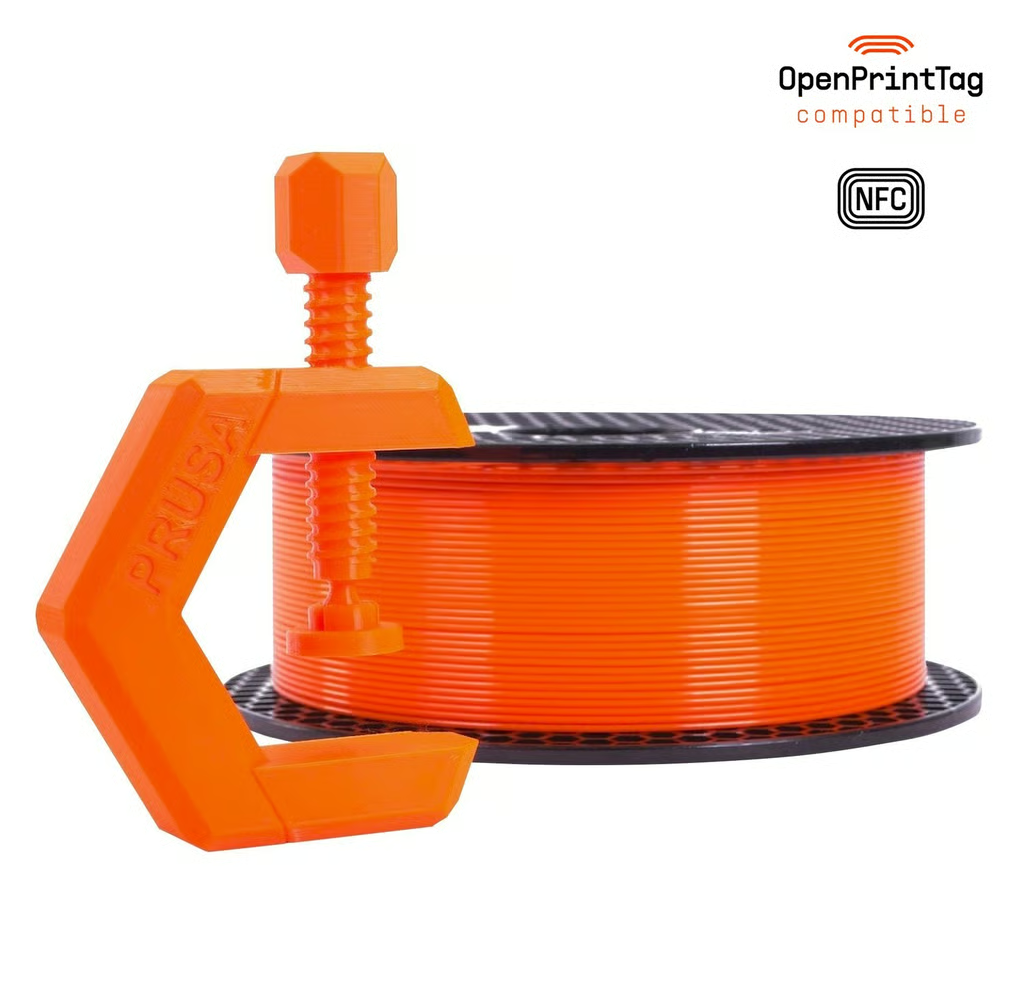
Prusament PETG
Prusa Research (Czech Republic) | 1.75mm | 1kg spools
Prusament PETG holds the tightest diameter tolerance in the consumer PETG category at plus or minus 0.02mm, manufactured in-house at Prusa Research’s facility in the Czech Republic. Every spool ships with a QR code linking to the specific production batch measurements, so you can verify exactly what you received. In independent community testing, Prusament PETG consistently achieves among the highest Z-axis tensile strength figures in the category, a result of superior interlayer bonding. For structural parts, load-bearing brackets, snap-fit enclosures, and any application where diameter drift would cause flow inconsistency across a long print, Prusament is the benchmark that other brands are measured against. Print temperature runs slightly hotter than budget alternatives (245 to 250°C is the typical sweet spot) so a PTFE-lined hotend that maxes at 240°C can struggle, and all-metal is recommended. Available direct from Prusa and via distributors globally.
Best for: Load-bearing functional parts, production runs where consistency across spools matters, any print with tight-tolerance features like press-fit inserts or threaded holes.
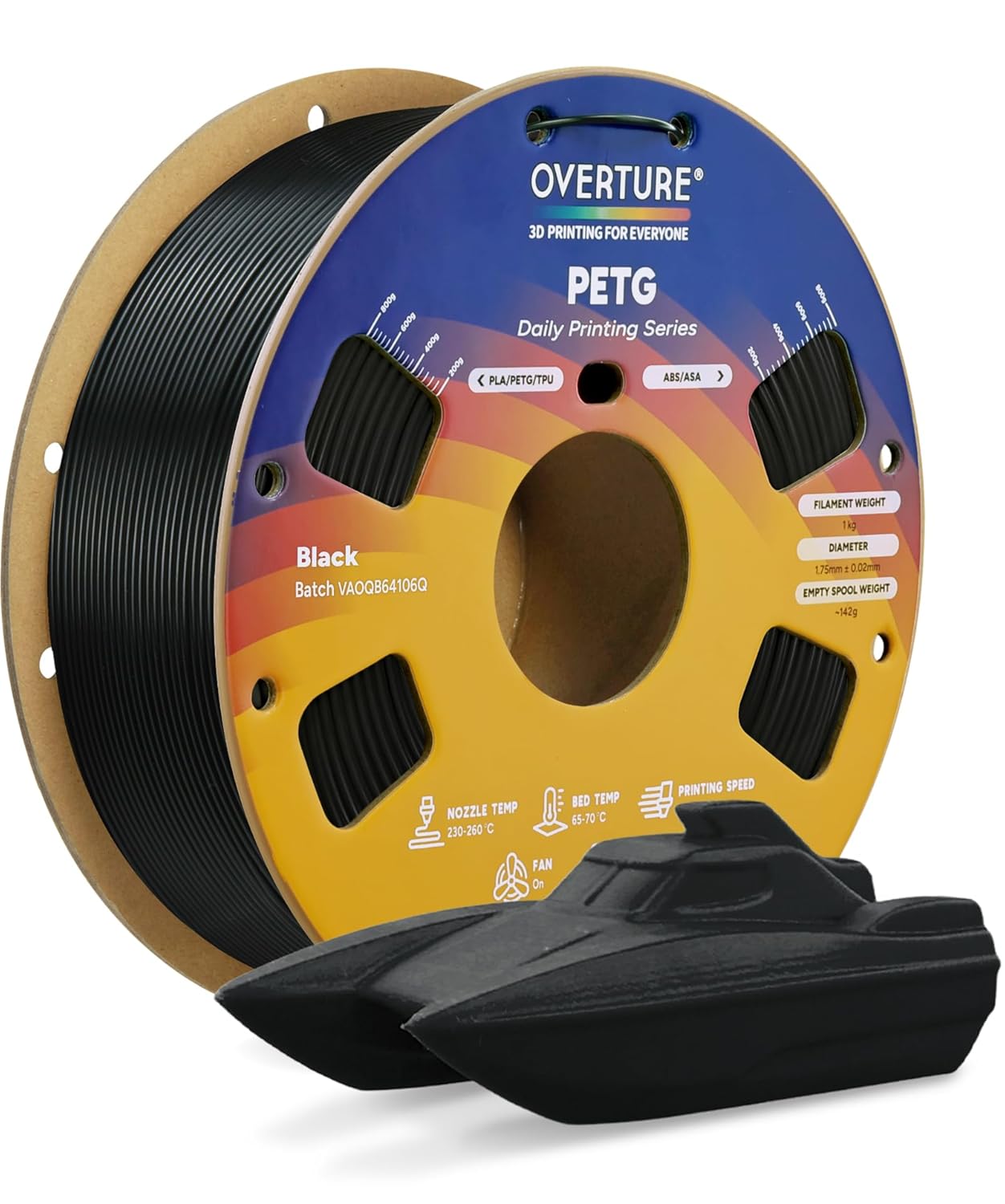
Overture PETG
Overture | 1.75mm | 1kg spools
Overture PETG is the most consistently recommended budget PETG in the 3D printing community and appears repeatedly in tested roundups as the go-to for users who want reliable performance without premium pricing. In independent testing across multiple review outlets, Overture PETG produces fewer first-layer failures than comparable budget alternatives, strings less than most at this price point, and feeds cleanly through both direct-drive and Bowden setups. Diameter tolerance is held to plus or minus 0.02mm on their standard PETG line, and the full mechanical winding process ensures tangle-free feeding from spool start to finish. The print temperature window is wide and forgiving (230 to 240°C works reliably across most printers), which matters for users who are still dialling in their machine. Available in an extensive colour range. For Bambu Lab AMS users: Overture is one of the brands most commonly cited as reliable in AMS multi-colour setups.
Best for: Beginners moving from PLA to PETG, everyday functional printing, Bowden printer users, anyone who wants solid PETG performance at half the cost of premium brands.
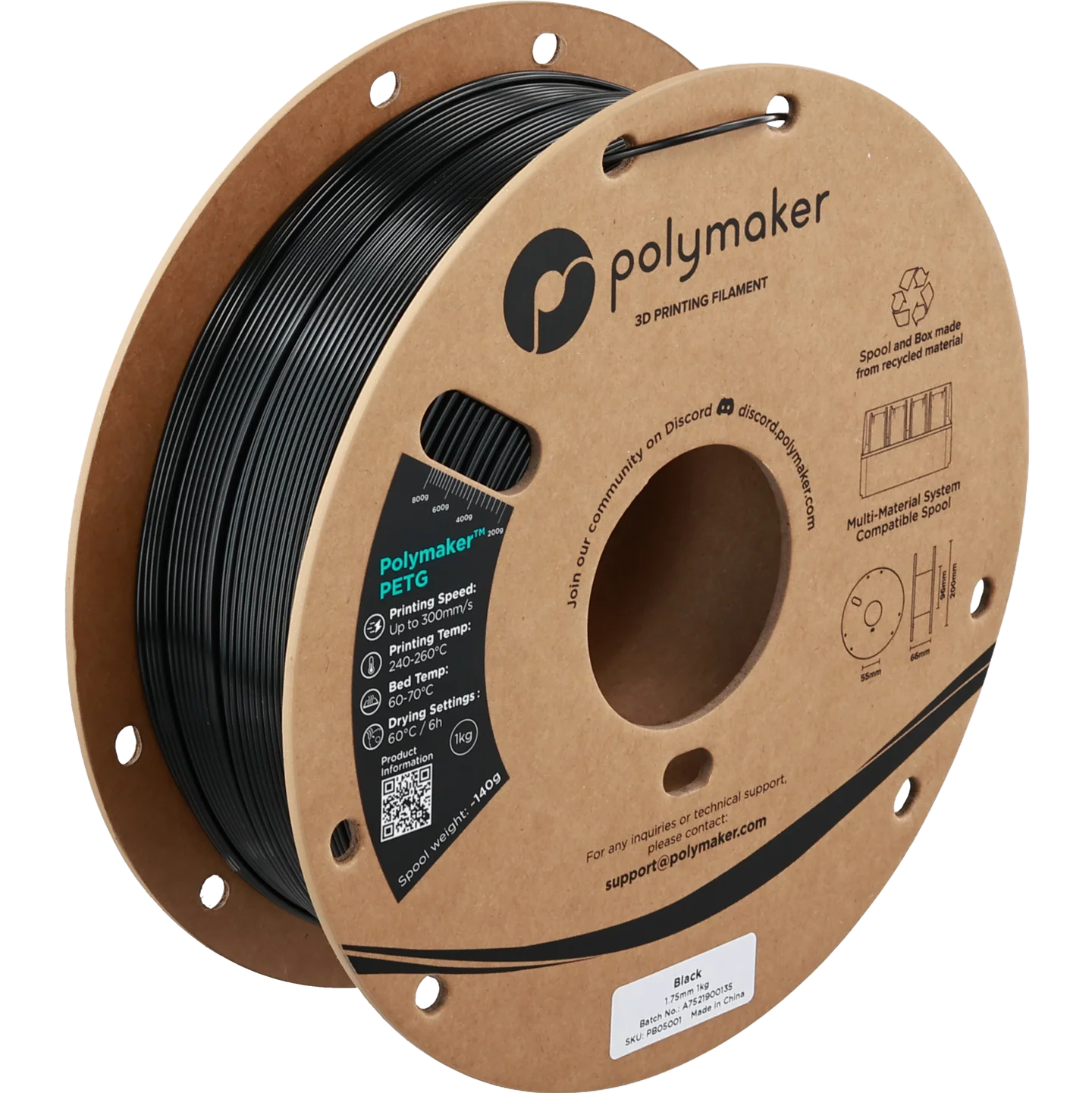
Polymaker PETG
Polymaker | 1.75mm | 1kg spools
Polymaker uses the Pantone Matching System for their colour formulations, which means Polymaker PETG colours are noticeably more accurate and consistent between spools than most competitors. Community testing of actual diameter measurements reveals that Polymaker’s real-world tolerances are tighter than their stated plus or minus 0.04mm spec: independent measurements show around 70% of filament sitting within plus or minus 0.01mm. QR-code batch tracking enables verification of received material. Polymaker PETG is certified for high-speed printing profiles on Bambu Lab printers, making it one of the most reliable third-party choices for AMS-based multi-colour workflows. Polymaker’s Jam-Free technology uses vibration-resistant compounds that reduce nozzle friction, which is particularly noticeable at speeds above 150mm/s. The PolyMax PETG variant (a separate SKU) adds nano-reinforcement for increased impact resistance when additional toughness is needed.
Best for: Bambu Lab AMS multi-colour printing, high-speed printer users, projects where colour accuracy between spools is important, users who want reliable PETG performance at below-premium cost.
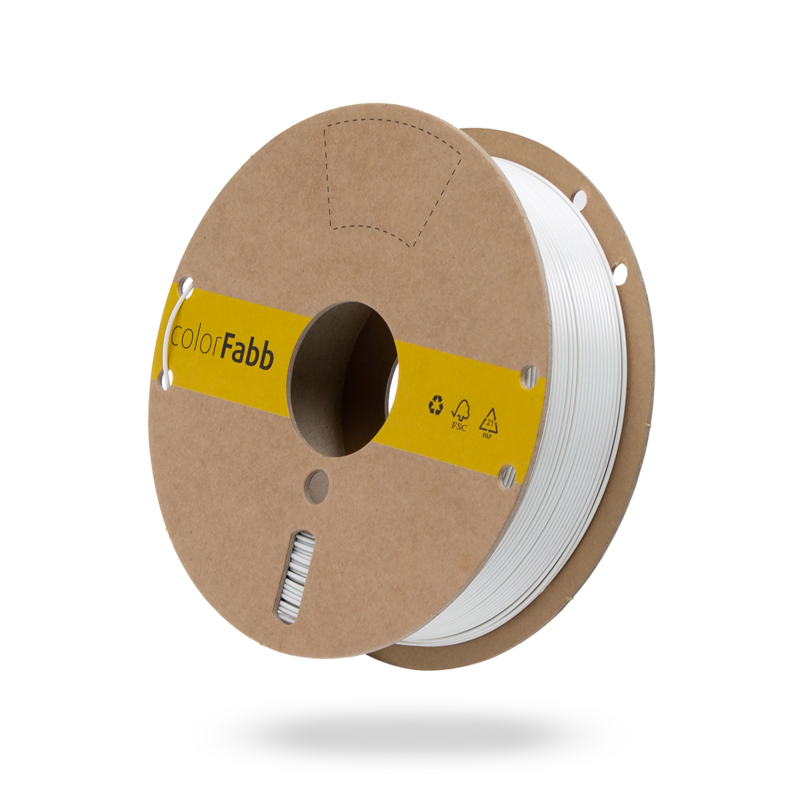
colorFabb PETG Economy
colorFabb (Netherlands) | 1.75mm and 2.85mm | 750g spools
colorFabb’s PETG Economy is their own self-described “pro user’s choice” for high-volume functional printing, a reliable PETG from a manufacturer that has been producing engineering-grade filament since 2012. The Dutch origin matters for European buyers: shorter supply chain, lower transport emissions, and faster restocking. Available in both 1.75mm and 2.85mm diameters, making it one of the few quality PETG options for Ultimaker owners and other 2.85mm-format machines. The black formulation in particular is frequently cited in community forums for its exceptionally deep, consistent colour and clean surface finish. colorFabb packages in their double-barrier metalized foil bag which provides among the best moisture protection of any filament packaging available. The foil construction is nearly impermeable to water vapour, which matters if you are buying and storing multiple spools at once. Print settings are similar to standard PETG across the range.
Best for: European buyers, Ultimaker and other 2.85mm printer users, high-volume PETG printing where bulk multi-spool storage is needed, anyone who values the quality credentials of a long-established European filament manufacturer.
High-speed PETG: the HF variant
PETG HF (High Flow) is a reformulated PETG with lower melt viscosity, meaning it flows through the nozzle faster and more easily at the same temperature. The practical result: print speeds of 200 to 300mm/s are achievable without the stringing, oozing, and surface inconsistency that standard PETG produces at those speeds. For Bambu Lab, Voron, and other CoreXY printer users who run high-speed profiles, HF formulations are the correct PETG to load.
Important context: the lower viscosity that makes HF fast also slightly reduces toughness versus standard PETG. Bambu’s own data shows PETG HF has lower impact resistance than their standard PETG Basic. For functional parts where maximum strength matters and print speed is not the priority, stick with standard PETG. For high-volume, speed-first printing, HF is the right choice.
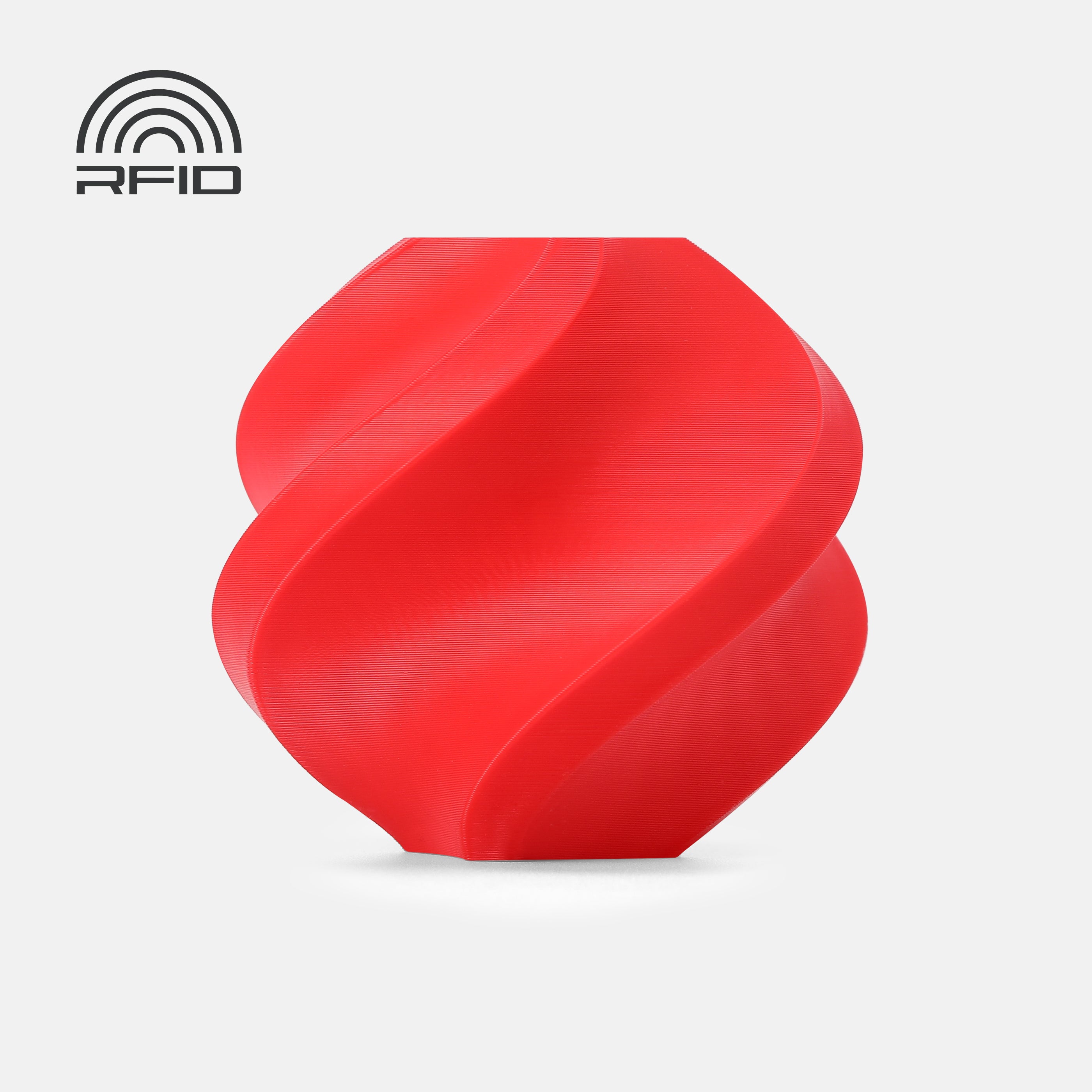
Bambu Lab PETG HF
Bambu Lab | 1.75mm | 1kg spools
Bambu Lab PETG HF was developed specifically to run at the high speeds Bambu machines are built around, with a default print speed in Bambu Studio that is twice that of standard PETG profiles. The high-flow reformulation eliminates the oozing and clumping that plagues standard PETG at 200mm/s and above, and the matte finish scatters light in a way that hides the ringing artifacts that become visible at speed on glossy surfaces. RFID chip enables automatic parameter detection on AMS-equipped machines. Community users report that PETG HF prints almost as easily as PLA at high speeds, with no first-layer drama and minimal stringing on properly dried spools. Dry at 65 to 75°C for 8 to 12 hours before use, as PETG HF is more moisture-sensitive than standard PETG due to its formulation, and wet spools produce stringing that settings alone will not fix. For the majority of Bambu Lab users printing brackets, enclosures, and functional parts quickly, PETG HF is the default filament choice in 2026.
Best for: Bambu Lab AMS users running high-speed profiles, high-volume printing where time matters, functional parts where matte surface finish is preferred over gloss.
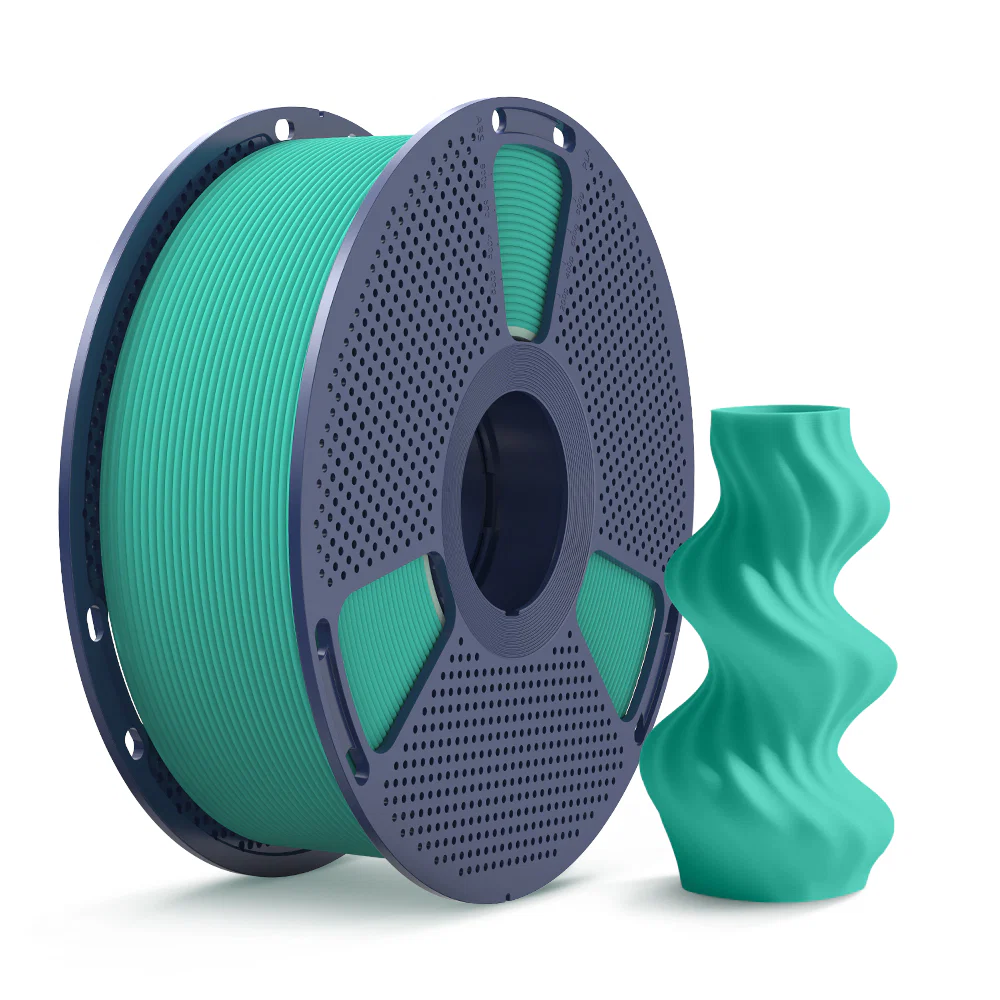
SUNLU High Speed Matte PETG
SUNLU | 1.75mm | 1kg spools
SUNLU’s High Speed Matte PETG is the most-cited non-Bambu alternative for high-flow printing, appearing in multiple community comparisons against Bambu PETG HF. The Wevolver 2026 PETG guide specifically calls out SUNLU High Speed Matte PETG as engineered for higher flow rates and faster printing while delivering a matte surface that hides layer lines. Community testing on the Bambu forum has noted that SUNLU’s HF formulation and spool architecture closely match Bambu PETG HF, and side-by-side prints show comparable surface quality at 200mm/s speeds. The matte finish is consistent across the range and significantly more refined than glossy PETG at high speed. Diameter tolerance sits at plus or minus 0.03mm, adequate for high-speed printing where exact tolerances matter less than at low speeds. Available at a meaningfully lower price per kilogram than Bambu’s own HF line, making it the practical choice for users on Voron, RatRig, or other CoreXY machines without RFID infrastructure.
Best for: Voron, RatRig, and other non-Bambu CoreXY users who want high-speed PETG without Bambu pricing, anyone who wants matte finish at high speed on any open-source printer.
PETG-CF: stiffness upgrade, one mandatory nozzle swap
Adding chopped carbon fibre to PETG delivers up to 2.5 times greater stiffness than standard PETG, meaningfully better dimensional stability, reduced warping on larger parts, and a distinctive matte black finish. The trade-off: carbon fibre is abrasive, and it destroys brass nozzles. Independent tests have documented visible brass nozzle erosion after as little as 8 hours of PETG-CF printing. A hardened steel nozzle costs around $10 to 25 and will outlast hundreds of hours. This is the one mandatory upgrade before printing any carbon fibre filament.
One important caveat on PETG-CF: the carbon fibre that makes it stiffer also makes it more brittle. PETG-CF is worse than standard PETG at absorbing impact or surviving flex loading. For parts that need to bend, snap together, or withstand drops, stay with standard PETG. PETG-CF is for structural rigidity applications where stiffness is the goal and brittleness is acceptable.
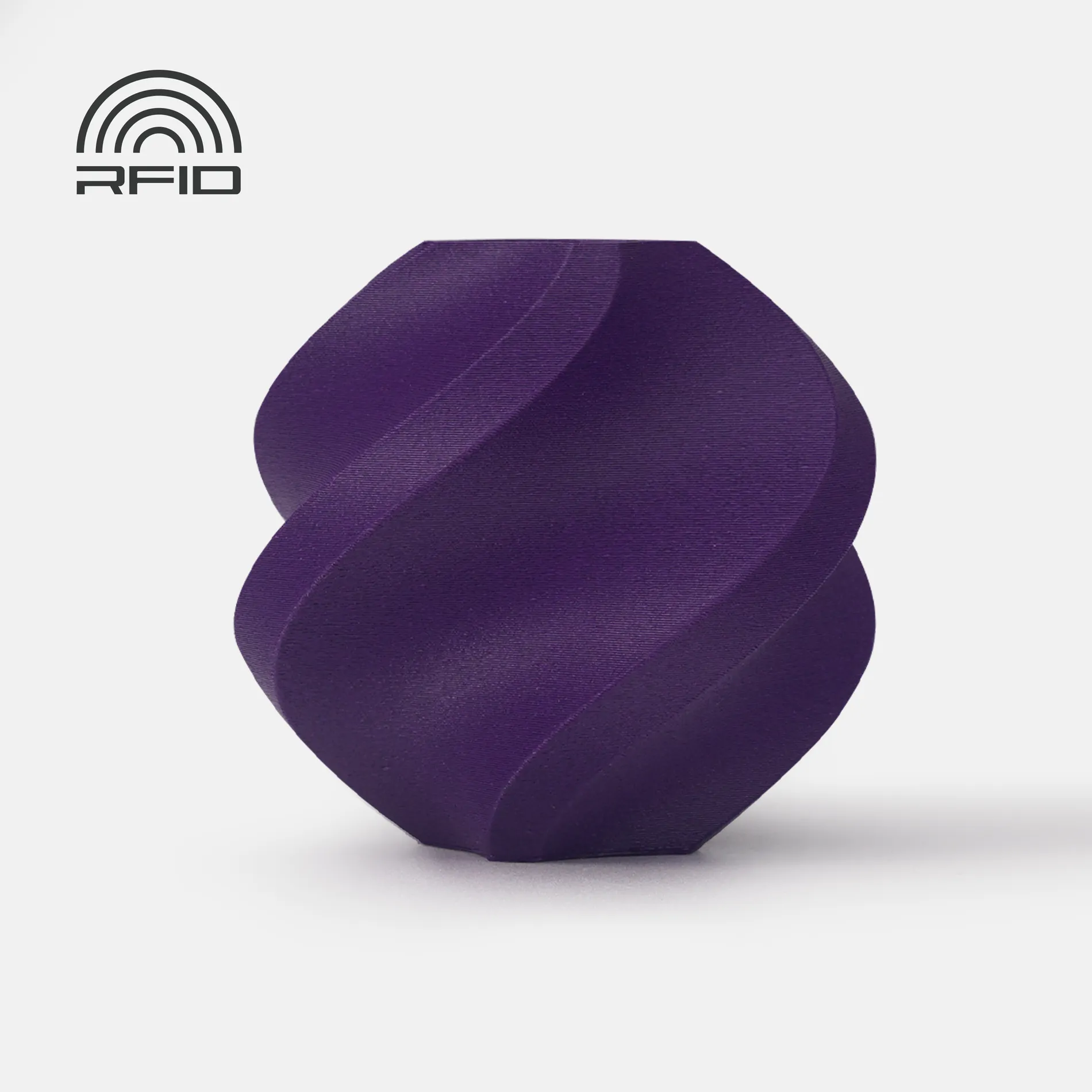
Bambu Lab PETG-CF
Bambu Lab | 1.75mm | 1kg spools
Bambu Lab PETG-CF ships with pre-configured slicer profiles for all Bambu printers including the X1 Carbon, P1S, and H2D. The RFID chip in the spool enables automatic material detection on compatible machines, removing the need to manually set parameters, which matters with CF filaments where temperature precision affects layer bonding quality. The material delivers genuine structural rigidity with low warping on enclosed Bambu machines. Community users printing drone frames, structural brackets, and enclosure panels consistently cite Bambu PETG-CF as the most fuss-free entry into carbon fibre printing. Important: swap to a hardened steel nozzle before loading. Do not run PETG-CF through a standard brass nozzle. Feed directly from a dry box rather than through the AMS for best results on long prints, as CF filaments can be more sensitive to moisture-induced degradation than standard PETG.
Best for: Bambu Lab printer owners who want structural CF parts with minimal setup friction, drone frames, rigid enclosures, and structural brackets where stiffness outweighs impact resistance.
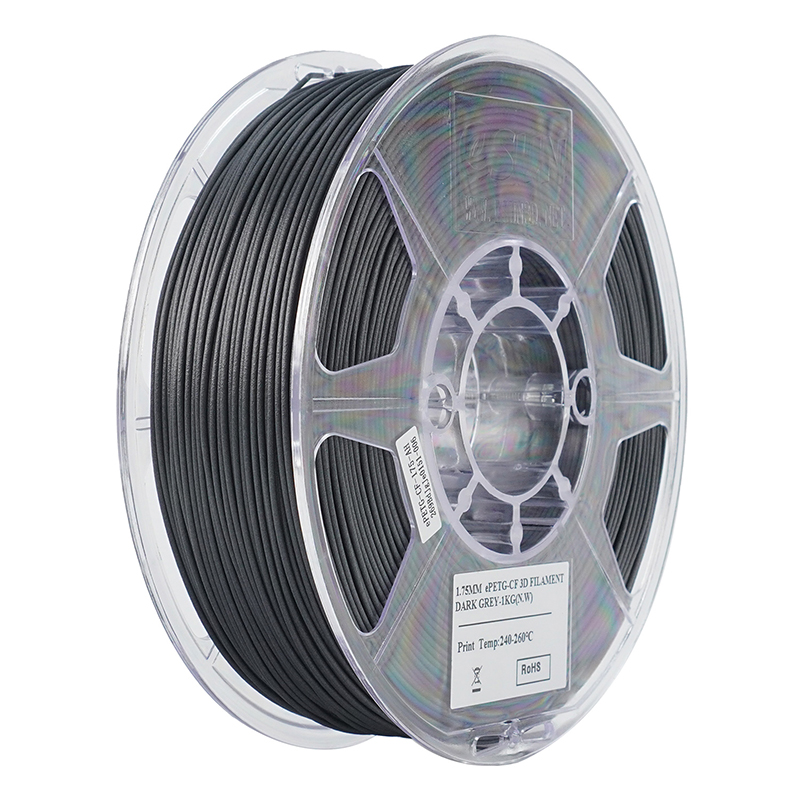
eSUN ePETG-CF
eSUN | 1.75mm | 1kg spools
eSUN is the largest filament manufacturer globally and their ePETG-CF brings genuine carbon fibre reinforcement to a competitive price point. The material delivers real stiffness gains over standard PETG and prints reliably on most modern enclosed desktop printers with a hardened nozzle installed. Dimensional accuracy is good for the price bracket at plus or minus 0.03mm and the filament comes vacuum sealed with desiccant, which matters for CF filaments that need to stay dry. For users on the ADP Industries farm test, eSUN PA-CF (their nylon CF variant) was the choice for structural drone components that survive flight loads and vibration. The same production quality applies to the PETG-CF line. If you are buying your first spool of carbon fibre filament and want to learn the workflow before committing to more expensive PA-CF or PC-CF, eSUN ePETG-CF gives you the CF experience at accessible pricing.
Best for: First-time CF filament users, structural parts on non-Bambu printers, budget-conscious engineering printing where CF properties are needed without premium pricing.
PCTG: the tougher PETG upgrade
PCTG (polycyclohexylene dimethylene terephthalate glycol) is a glycol-modified copolyester in the same material family as PETG, but made from a different base polymer: Eastman Tritan copolyester rather than the standard PET resin PETG uses. The difference in the base chemistry produces a material that is, in almost every measurable way, better than PETG at the same hardware tier. No enclosure is needed. Standard brass nozzle is fine. No filament dryer is required. It prints at the same temperature range as PETG. But the resulting parts are tougher, the layer adhesion is dramatically better, and the surface finish is more refined.
In independent testing by CNC Kitchen, PCTG achieved around 24 kJ/m2 impact strength, placing it far above both PLA and PETG and roughly on par with ABS, but without the enclosure requirement, styrene fumes, or warping behaviour that ABS demands. The practical implication: for impact-critical functional parts that do not need the heat resistance of ABS, PCTG can replace ABS while printing as easily as standard PETG.
Layer adhesion is the other standout property. PETG is known for aggressive bonding to glass beds, a problem rather than a feature. PCTG’s adhesion behaviour is better controlled and its Z-axis layer bonding is among the strongest of any non-engineering filament. Parts printed standing behave much more predictably than PETG equivalents.
The current limitations: PCTG does not come in as many colours as PETG, it costs roughly 30 to 60% more per kilogram, and brand availability is more limited. The four major vendors (Fiberlogy, Spectrum, 3D-Fuel, and 3DJake) all use the same Eastman Tritan base resin, which means datasheets and print profiles are broadly interchangeable between them. This is a rare case where brand-switching does not require re-tuning your slicer.
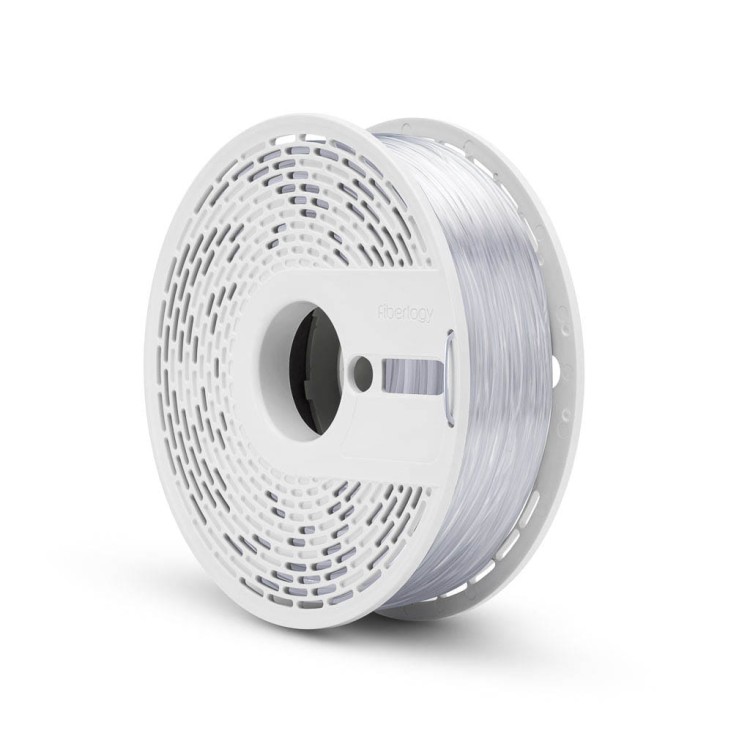
Fiberlogy PCTG
Fiberlogy (Poland) | 1.75mm | 750g and 1kg spools
Fiberlogy PCTG is the most widely cited PCTG brand in European 3D printing communities and the reference product CNC Kitchen pointed to for EU buyers in their PCTG review. It uses Eastman Tritan copolyester base resin, which is the industry standard for PCTG quality. The base transparent version carries FDA and EU food-contact certifications, making Fiberlogy PCTG one of the few engineering-capable filaments cleared for food-contact applications, relevant for anyone printing kitchen tools, storage fittings, or medical-adjacent parts. Diameter tolerance is consistently tight in independent community testing. The product range includes unfilled transparent and opaque versions, plus PCTG+CF (carbon fibre) and PCTG+GF (glass fibre) composites for users who need additional stiffness while staying in the PCTG chemistry. Print at 240 to 260°C with a 70 to 80°C bed. No enclosure or dryer required, though keeping the spool sealed with desiccant between sessions is recommended as PCTG can absorb moisture over long periods.
Best for: European buyers who want a well-tested PCTG reference brand, food-contact applications requiring FDA and EU certification, users who may later want to upgrade to PCTG+CF or PCTG+GF composites within the same brand family.
3D-Fuel Pro PCTG
3D-Fuel (USA) | 1.75mm | 1kg and 4kg spools
3D-Fuel is currently the primary North American manufacturer of PCTG filament after Essentium’s closure under Nexa3D’s restructuring. The company stepped in specifically to fill that gap, and their Pro PCTG line was developed to match Essentium’s specifications so that existing PCTG users could switch without re-tuning their settings. Manufactured in Fargo, North Dakota using the same precision extrusion equipment architecture as Prusa Research uses for Prusament, and using Eastman Tritan copolyester as the base resin. PrusaSlicer includes built-in profiles for 3D-Fuel materials, making it one of the few third-party PCTG brands with first-class slicer support. Available in 25 colour options and offered in 4kg spools for print farm users, representing the largest spool format available in the PCTG category. US domestic production means faster shipping and more predictable restocking for North American buyers than import-dependent alternatives.
Best for: North American buyers, Prusa printer owners who want PrusaSlicer native profiles, print farms who need large-spool PCTG, anyone who previously used Essentium PCTG and needs a drop-in replacement.
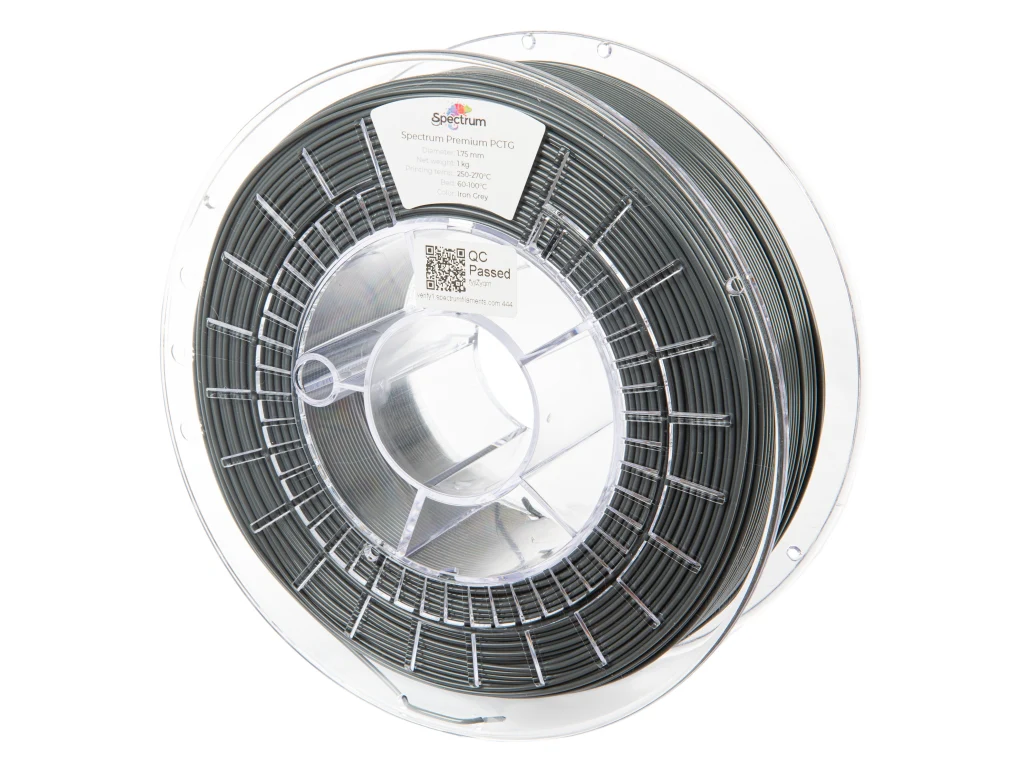
Spectrum PCTG
Spectrum Filaments (Poland) | 1.75mm | 1kg spools
Spectrum PCTG is the price-competitive European PCTG option and is consistently recommended alongside Fiberlogy in community comparisons. Both Spectrum and Fiberlogy use the Eastman Tritan copolyester base resin, and a direct comparison of their technical data sheets in the Prusa forum shows the specifications are essentially interchangeable. This means Spectrum PCTG performs identically to Fiberlogy PCTG in practice, making it the sensible choice when Spectrum’s pricing or colour availability is more favourable. Distributed widely through 3DJake across Europe and available on Amazon in multiple markets. PrusaSlicer includes native profiles for Spectrum filaments. The community discussion on the Prusa forum notes that Spectrum PCTG often comes in cheaper than Prusament PETG despite being a materially superior filament, which makes the upgrade decision straightforward for any user already buying Prusament for quality reasons.
Best for: Users who want PCTG’s material advantages at a price close to premium PETG, Prusa printer owners, European buyers who order through 3DJake, anyone switching from Prusament PETG and wanting to stay at a similar price point.
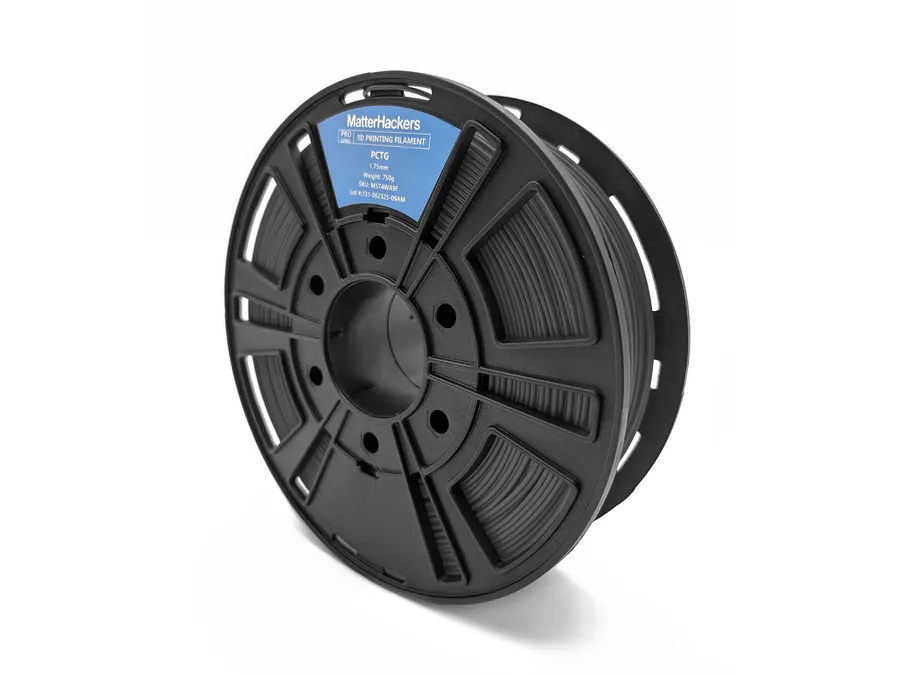
MatterHackers PRO Series PCTG
MatterHackers (USA) | 1.75mm | 750g spools
MatterHackers PRO Series PCTG is the strongest homebrand PCTG option for US buyers who want fast domestic shipping and a well-documented quality process. Like Fiberlogy and Spectrum, it uses Eastman Tritan copolyester as its base resin. What distinguishes the PRO Series is MatterHackers’ own manufacturing controls: diameter is measured continuously during production using a 3-axis laser system at 40Hz, achieving the same plus or minus 0.02mm tolerance as Prusament. Each spool is vacuum-sealed and moisture absorption is specified at below 0.1%, which is the lowest figure quoted by any PCTG brand tested. No enclosure or dryer is required for printing. Print behaviour is functionally identical to Fiberlogy and Spectrum, and slicer profiles for any of those brands transfer directly. Moisture absorption under 0.1% also means PRO Series PCTG is more forgiving of imperfect storage conditions than standard PETG. The main limitation versus Fiberlogy is that no composite variants (CF or GF) are available in the PRO Series PCTG line, and no food-contact certification is listed.
Best for: US buyers who want fast domestic shipping and tightly measured PCTG, users already ordering from MatterHackers, anyone who needs the lowest moisture absorption spec available in the PCTG category.
ABS: heat resistance and acetone smoothing
ABS (acrylonitrile butadiene styrene) defined functional desktop FDM printing for a decade. Its heat deflection temperature sits around 85 to 100°C depending on formulation, it can be chemically smoothed with acetone vapour to produce surfaces rivalling injection moulding, and it is the material LEGO manufactures with (relevant if you are printing LEGO-compatible parts where dimensional compatibility matters). These remain genuinely unique capabilities that no other common FDM material matches.
The honest framing before recommending ABS: for most users who think they want ABS, ASA is the better choice. ASA offers the same heat resistance, the same acetone smoothing capability, the same print workflow, and adds UV stability that ABS entirely lacks. If you are printing parts for outdoor use, or parts that will see sustained sunlight, skip directly to the ASA section below.
ABS has two genuine remaining use cases where it is specifically the right answer: when you need the acetone smoothing workflow in a wider colour range than ASA offers, and when you need LEGO-spec dimensional compatibility. For everything else, PETG handles moderate-heat indoor applications and ASA handles outdoor or high-UV environments more effectively.
Hardware requirements: enclosed printer is not optional for parts larger than fist size. ABS warps aggressively in open-air conditions. Both ABS and ASA emit styrene fumes and ultrafine particles during printing. Ventilation to the outside is not a preference, it is a safety requirement. Fan cooling is typically kept off or minimal with ABS to prevent layer separation from thermal shock.
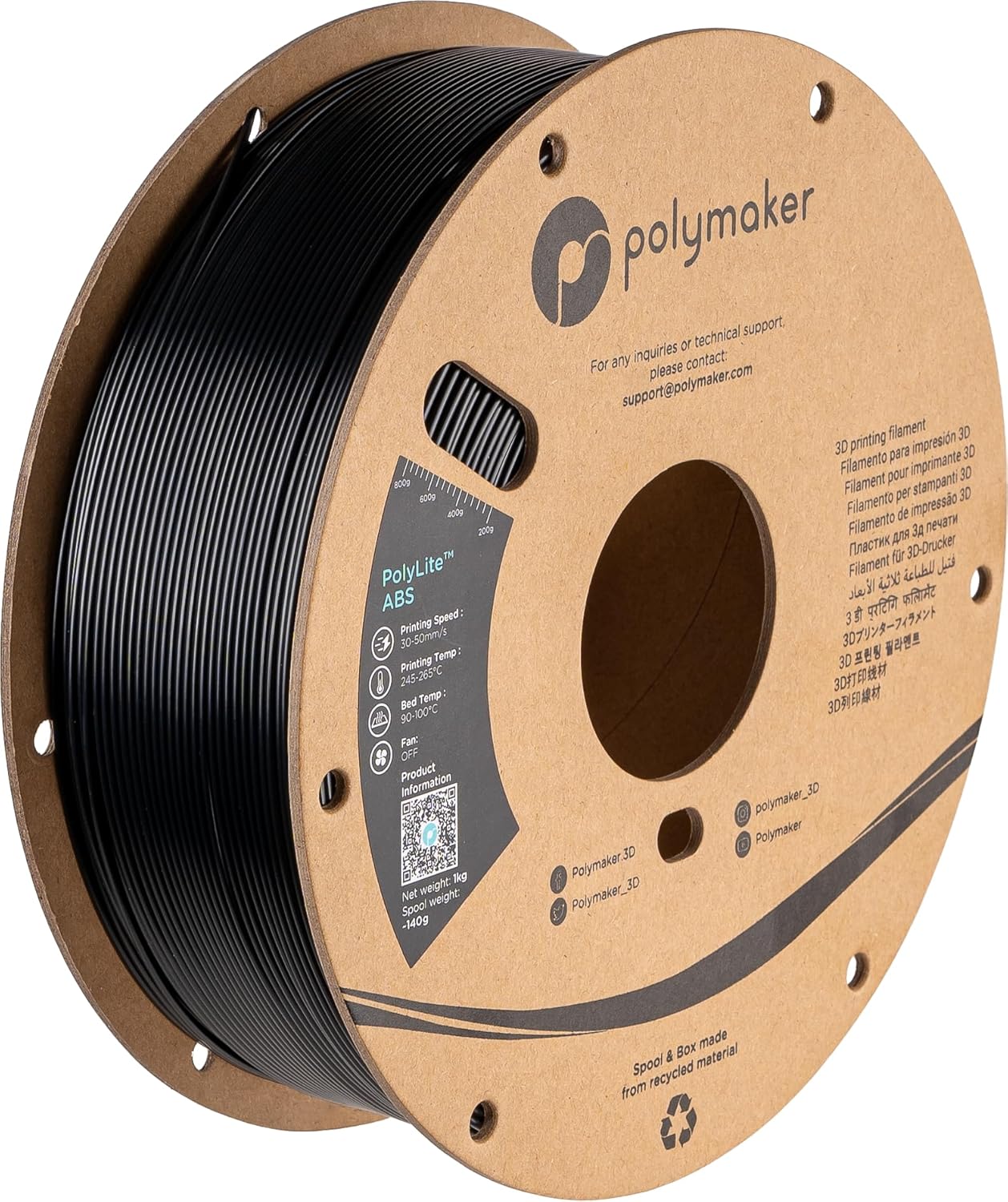
Polymaker PolyLite ABS
Polymaker | 1.75mm | 1kg spools
PolyLite ABS is Polymaker’s most consistently recommended consumer ABS and the name that appears most frequently across 2025 and 2026 buyer guides when a specific ABS brand is called out. The formulation uses a specialty bulk-polymerized ABS resin that Polymaker states has significantly lower volatile content than traditional ABS resins, which means less odour and lower styrene emission per print session, without sacrificing the mechanical properties that make ABS worth choosing. Print temperature runs 245 to 265°C with a 90 to 100°C bed. The material is acetone-smoothable for post-processing and acetone-weldable for joining printed sections. Polymaker explicitly notes that small parts (smaller than fist size) can be printed without an enclosure on an open-frame printer at 260°C nozzle and 90°C bed. For larger, structurally critical parts, an enclosed printer is strongly recommended.
Best for: Acetone post-processing and vapor smoothing, LEGO-compatible prints requiring precise dimensional tolerances, mechanical parts and enclosures needing heat resistance up to 95°C.
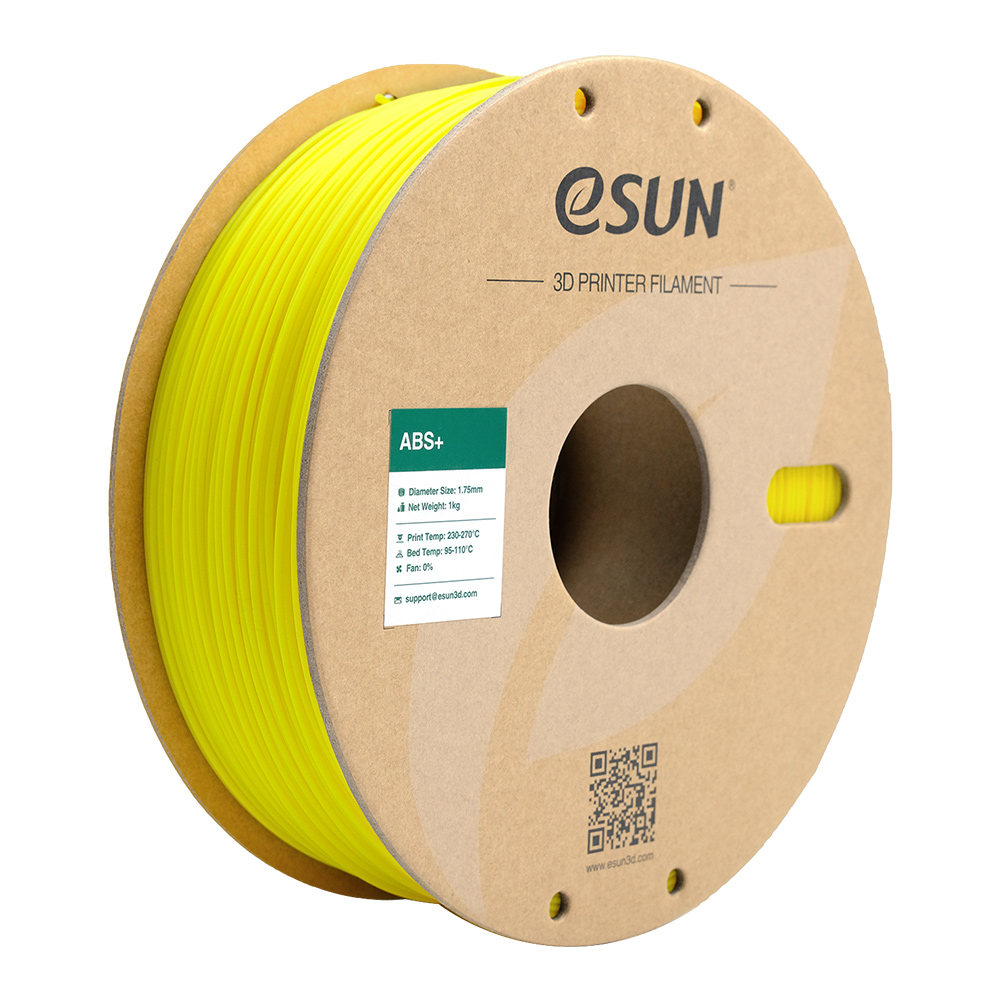
eSUN ABS+
eSUN | 1.75mm | 1kg spools
eSUN ABS+ is a toughened ABS formulation with additives that reduce warping and improve surface finish compared to standard ABS. It is consistently cited as one of the easiest ABS variants to print with, and the matte black finish in particular is frequently praised in community reviews. The trade-off is worth knowing before you buy: ABS+ is a blend rather than pure ABS, and community testing across multiple forums consistently finds that its layer adhesion is lower than standard ABS at equivalent print settings, and its heat deflection temperature is slightly lower than pure ABS. For parts where maximum heat resistance or maximum layer strength is the priority, PolyLite ABS or a pure ABS formulation is the better choice. For users who want the easier workflow and surface appearance of ABS+ and can accept the reduced mechanical ceiling, eSUN ABS+ delivers solid results at a price that makes large-volume printing practical. Print at 255 to 260°C with a 100°C bed and an enclosed printer for best layer adhesion.
Best for: High-volume ABS printing where warping management matters more than maximum layer strength, enclosed Bambu printer users printing mid-size functional parts, anyone who finds standard ABS warping too frustrating.
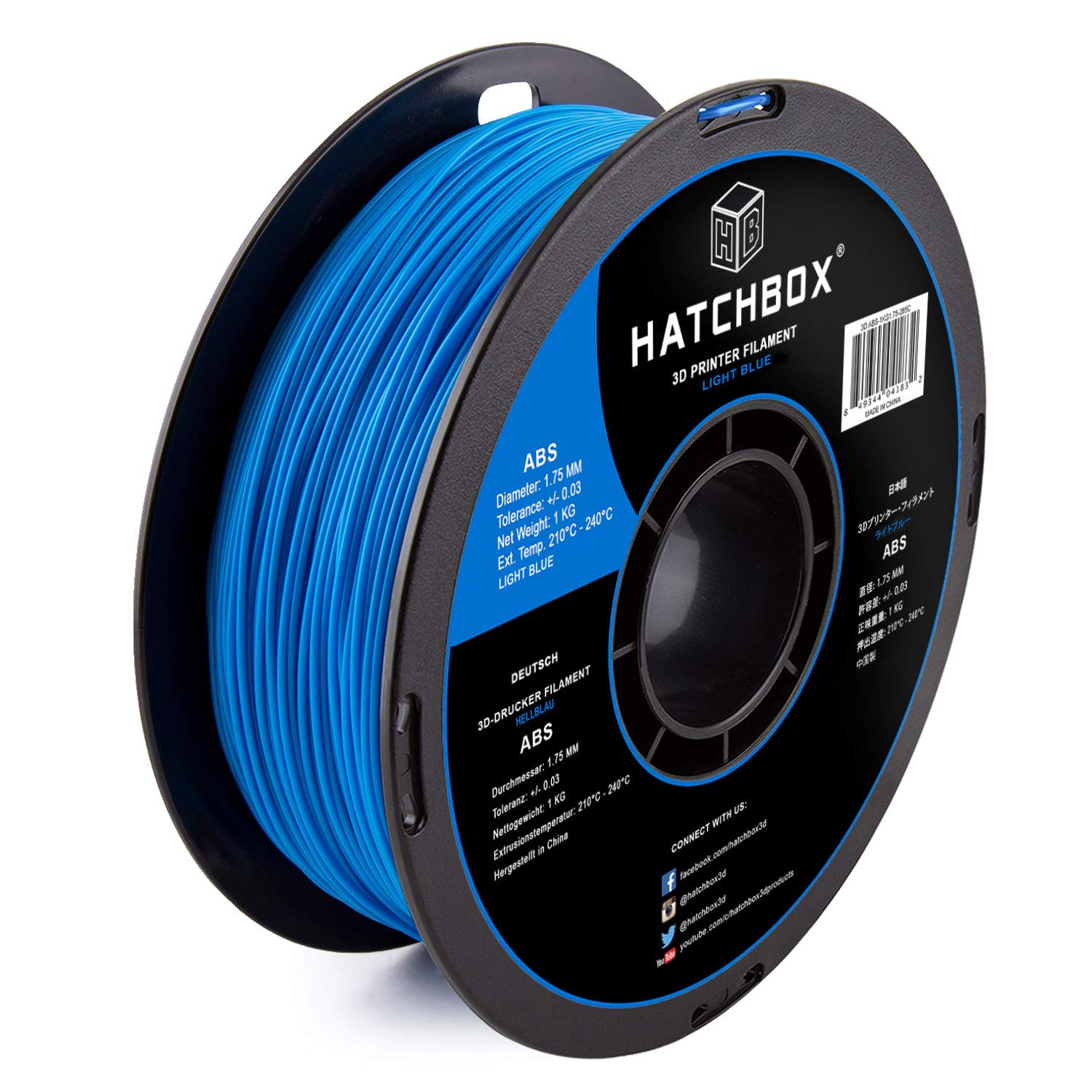
Hatchbox ABS
Hatchbox | 1.75mm | 1kg spools
Hatchbox ABS has been a community staple for years and continues to perform reliably in 2026. It is a pure ABS formulation rather than an ABS+ blend, which means it retains the full heat deflection performance and layer adhesion of standard ABS alongside the acetone smoothing capability. Compared to ABS+ variants, Hatchbox ABS delivers better Z-axis strength on properly tuned prints. The trade-off is the expected ABS warping behaviour. This is standard ABS and needs to be treated like standard ABS: enclosed printer, no fan cooling, careful first-layer temperature management. Hatchbox offers a wide colour selection on Amazon and stock is reliably available. In the benchmark comparison that 3DFilamentPrice.com ran on Hatchbox vs eSUN PETG, Hatchbox’s ABS showed solid and consistent results. For makers who want genuine ABS properties (not ABS+ blend compromises) at accessible pricing, Hatchbox is the well-tested choice.
Best for: Users who want pure ABS properties at the lowest possible price point: full acetone solubility, maximum layer adhesion, LEGO-spec dimensional compatibility, without paying a premium brand price.
ASA: the outdoor workhorse
ASA (acrylonitrile styrene acrylate) is what most users should print when they think they want ABS. The chemistry is nearly identical with one critical substitution: where ABS uses butadiene rubber as its impact modifier, ASA uses acrylic ester rubber. Butadiene contains double bonds that UV radiation attacks, causing the well-known ABS yellowing and embrittlement after outdoor exposure. The acrylic ester in ASA has no such vulnerability. The result is a material that outdoor UV resistance rankings across tested databases consistently place in a different class from ABS, PETG, and PLA.
Real-world datasheet numbers: ASA tensile strength around 40 to 47 MPa (higher than ABS’s mid-30s), HDT 85 to 102°C depending on brand and test method, excellent chemical resistance to oils, acids, and alkalis. The Filabase database comparing over 880 filaments confirms the UV resistance ranking: ASA is definitively better than PETG which is better than ABS which is better than PLA for sustained outdoor exposure.
Hardware requirements match ABS: enclosed printer, ventilation, 240 to 260°C nozzle, 90 to 110°C bed. The same styrene fumes that make ABS a ventilation requirement are present in ASA. If you are already printing ABS successfully, switching to ASA for outdoor parts is trivial: same printer settings, same enclosure, same bed preparation.
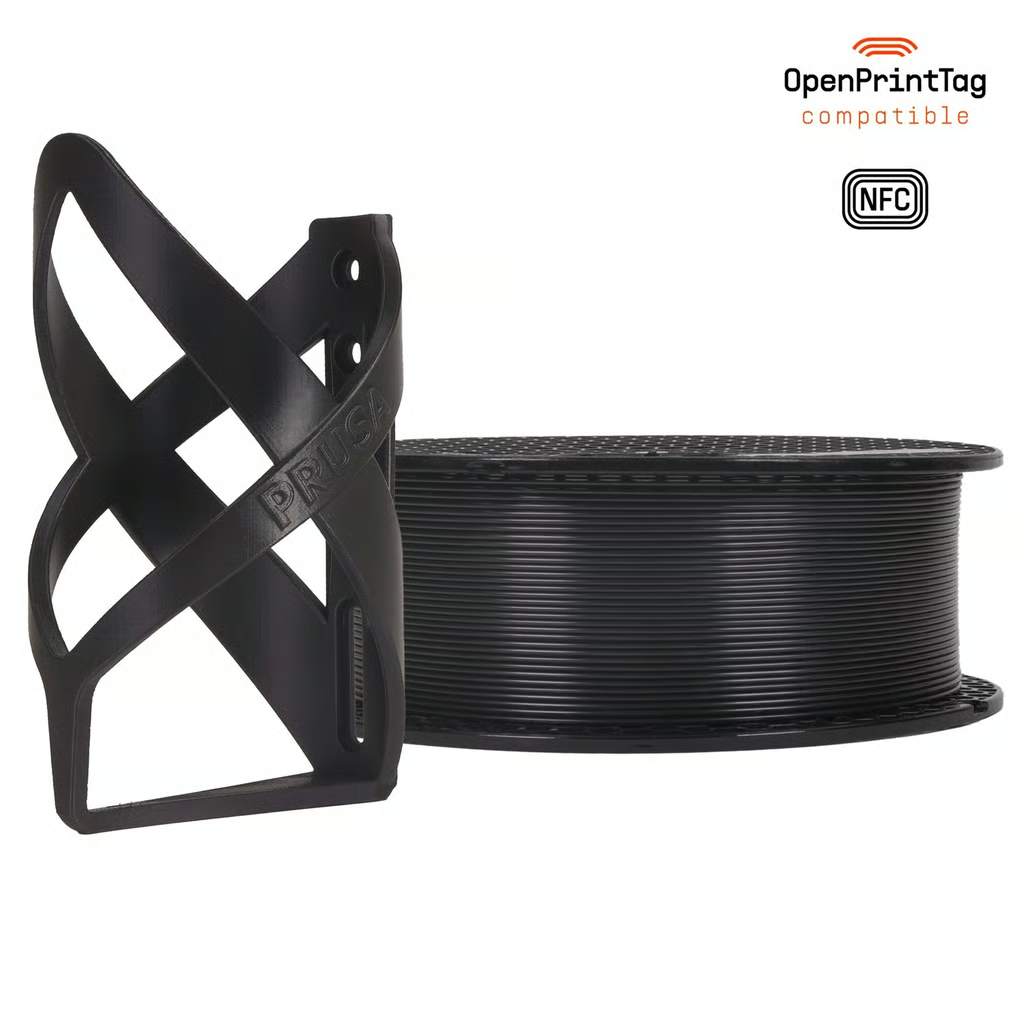
Prusament ASA
Prusa Research (Czech Republic) | 1.75mm | 0.85kg spools
Prusament ASA delivers the same batch-traceable quality control that makes Prusament PLA and PETG the benchmark for their categories. Tensile strength of 42 MPa and an HDT of 93°C at 0.46 MPa are backed by published datasheet figures rather than marketing claims. The colour range is notably broader than most ASA competitors. Prusament ASA is available in vivid yellows and oranges that are specifically used for outdoor visibility applications (drone arms, safety markers, garden tool handles) where colourfast UV-stable pigment matters as much as the polymer. Each spool ships with QR-code batch traceability. Print temperature of 260°C nozzle with a 105 to 110°C bed places it at the hotter end of the ASA range, so confirm your hotend is all-metal before starting. Note on spool weight: Prusament ASA spools are 0.85kg rather than 1kg because ASA has a lower density than PLA or PETG. The volume of material is equivalent to a standard 1kg PLA spool.
Best for: Outdoor parts, automotive exterior applications, garden tools, drone components, high-visibility safety applications, any application where colour stability in UV is as important as mechanical performance.
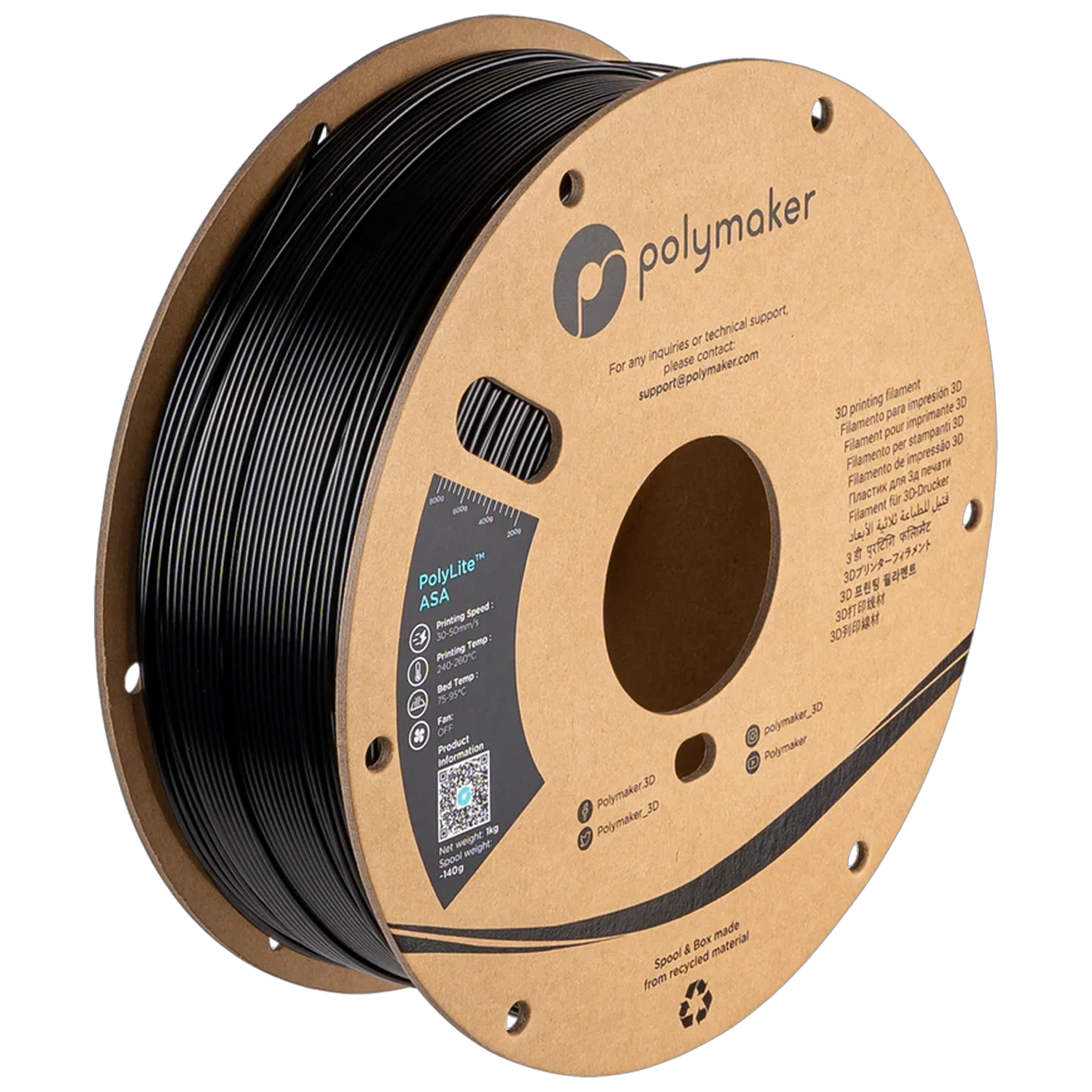
Polymaker ASA
Polymaker | 1.75mm | 1kg spools
Polymaker ASA uses Warp-Free technology, the same formulation approach that makes their PolyLite ABS significantly more manageable than competing ABS brands. In practice, this means reduced corner lifting and layer separation on printers with marginal enclosures, making it the most recommended ASA for users who are trying the material for the first time or printing on an enclosed printer where the chamber temperature is passive rather than actively controlled. Published HDT of 102.6°C at 0.46 MPa (per Filabase dataset) is among the highest in the consumer ASA category, meaningfully above Prusament’s 93°C. Tensile strength of 38.6 MPa is slightly below Prusament’s 42 MPa but remains well within the functional range for most applications. Print temperature sits at 240 to 260°C with a 90 to 100°C bed, which is achievable on more printers than Prusament’s 260°C nozzle requirement.
Best for: First-time ASA users, printers with passive rather than active enclosure heating, outdoor parts where maximum HDT (not maximum colour range) is the priority.
Bambu Lab ASA
Bambu Lab | 1.75mm | 1kg spools
Bambu Lab ASA is developed specifically for the enclosed P1S and X1 Carbon machines and ships with pre-configured Bambu Studio profiles that cover nozzle temperature, bed temperature, fan speed, and print speed without manual tuning. For Bambu printer owners moving from PLA or PETG to their first ASA print, this removes the largest friction point: guessing at settings for a new material category. The material itself delivers solid UV stability and thermal performance consistent with the ASA category. Bambu’s ASA is recommended on the P1S and X1C with AMS for single-material printing. Note that ASA printing should use the exhaust fan to vent fumes externally rather than recirculating through the filter, as ASA styrene emissions require external venting. For multi-colour ASA printing, be aware that purging ASA through the AMS generates waste that contains styrene. Plan the print environment accordingly.
Best for: Bambu P1S and X1 Carbon users printing outdoor-use functional parts, anyone who wants the simplest possible entry to ASA printing with pre-configured machine profiles.
Nylon: toughness, fatigue resistance, and self-lubrication
Nylon (polyamide, PA) is the material you reach for when a part needs to survive abuse rather than just handle load. Gears, living hinges, snap-fit connectors, cable management clips, wear-prone jigs, anything that will be repeatedly flexed or will slide against another surface. These are nylon’s native territory. The self-lubricating property of nylon is genuinely unique in the engineering filament category and cannot be replicated by PETG or ABS.
The critical operational constraint that defines working with nylon: every nylon type is hygroscopic, and wet nylon is a serious print quality problem. Nylon absorbs moisture from the ambient air and when that moisture reaches a 250°C+ nozzle it vaporises instantly, creating microscopic bubbles in the melt. The result is the characteristic rough, fuzzy, weak prints that have burned many first-time nylon users. The fix is not settings: it is drying. Dry nylon before every print session at 70 to 80°C for 6 to 12 hours depending on type, and ideally feed directly from a sealed dry box during the print. This is not optional. PA6 can absorb up to 3% of its weight in atmospheric water; PA12 absorbs up to 0.5%. Both need to be dry before printing.
The four nylon sections below cover the main types in ascending order of print difficulty: PA12 (easiest, most stable), CoPA (engineered blends for maximum printability), PA6 (toughest, most demanding), and PA-CF (carbon fibre reinforced, for peak stiffness).
Nylon PA12: the beginner-friendly nylon
PA12 (polyamide 12) absorbs moisture at around 0.5% of its weight, approximately six times less than PA6. This lower hygroscopicity means PA12 is more forgiving of imperfect drying, warps less aggressively, and maintains more consistent dimensional properties between dry and humid environments. Print temperatures are lower than PA6 (typically 240 to 260°C nozzle), which means more printers can handle it without hotend modifications. Tensile strength lands at 45 to 55 MPa for FDM-printed parts, broadly comparable to ABS but with dramatically better fatigue and wear resistance.
PA12 is the recommended starting point for anyone new to nylon. The mechanical gap between PA12 and PA6 is real but smaller than the gap in printability. For most functional nylon applications (gears, hinges, brackets, wear surfaces), PA12 will deliver the required properties with significantly fewer print failures than PA6.
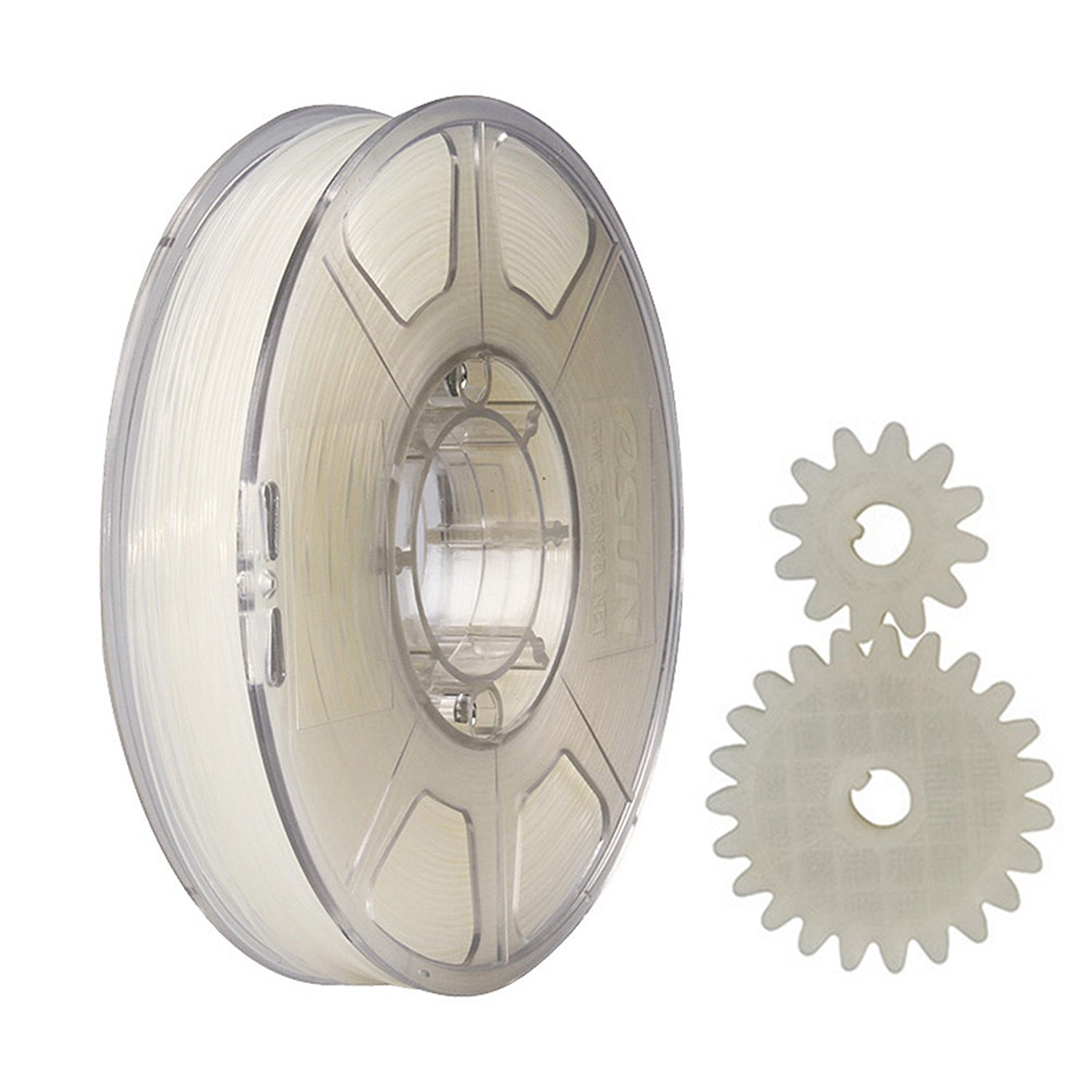
eSUN ePA12
eSUN | 1.75mm | 1kg spools
eSUN ePA12 is the most accessible pure PA12 option on Amazon and delivers genuine PA12 properties at a price point that makes first-time nylon printing affordable. The PA12 formulation has the lowest moisture absorption in the eSUN nylon lineup, making it the most forgiving of the range for users still developing their drying workflow. Layer adhesion is excellent for a consumer PA12 and the material prints well on enclosed desktop printers with an all-metal hotend in the 240 to 260°C range. Dry thoroughly at 70 to 80°C for 8 hours before printing and keep the spool in a sealed dry box during the print. For Bambu Lab users, feed directly from a dry box rather than through the AMS for multi-hour PA12 prints to avoid humidity pickup during the session.
Best for: First nylon prints, gears, hinges, wear-prone functional parts, users who want PA12 properties at budget pricing.
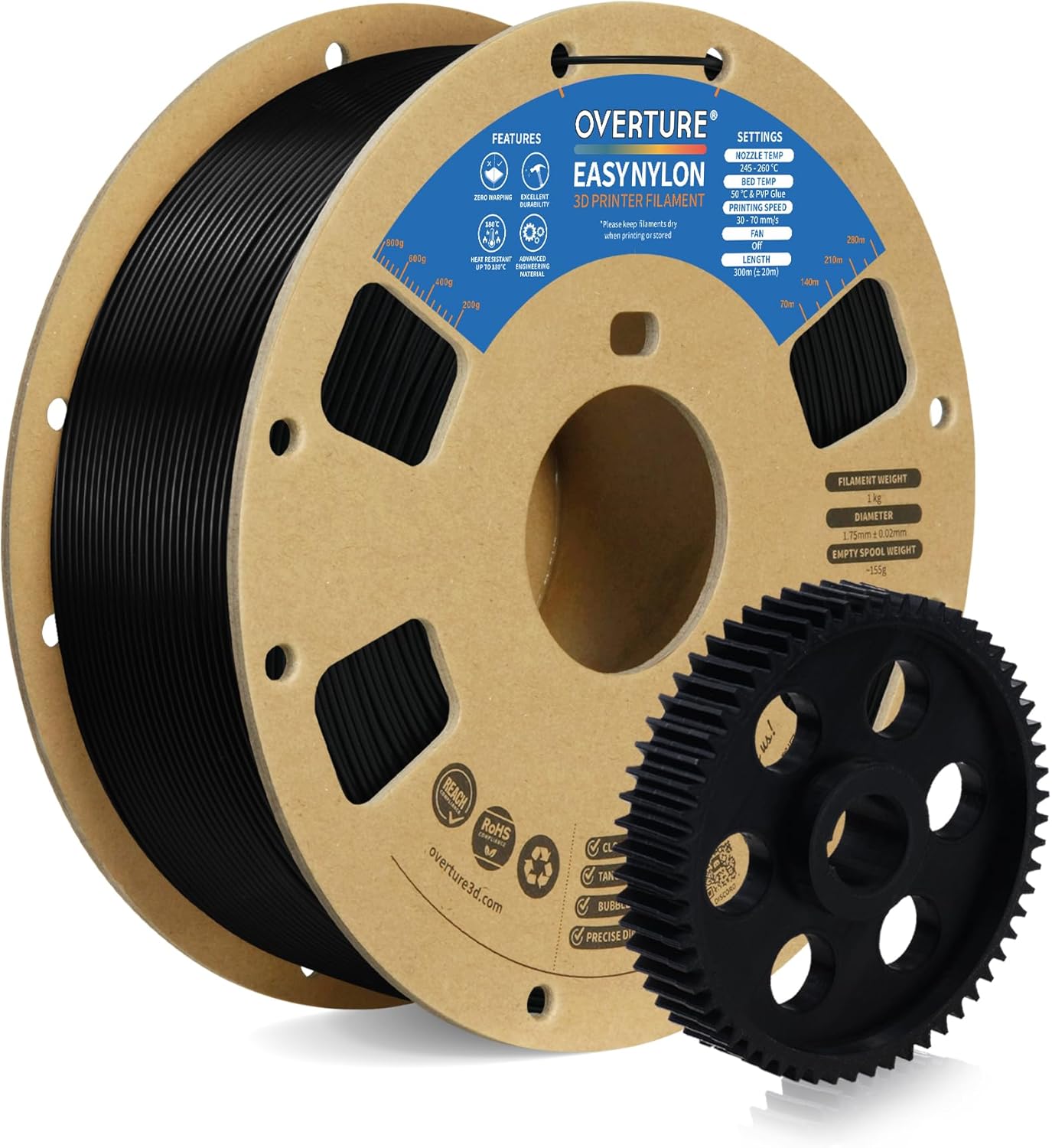
Overture Easy Nylon
Overture | 1.75mm | 1kg spools
Overture Easy Nylon is specifically formulated for printability rather than maximum mechanical performance. It uses a co-polyamide blend that reduces warping and moisture sensitivity compared to pure PA12, making it the most recommended starting nylon for users who are printing nylon for the first time or who have had frustrating experiences with nylon warping in the past. In the 3DTechValley roundup, it is called out as the best budget nylon option: consistent results, lower failure rate than standard PA12, and a forgiving temperature window. It does not match the raw tensile or fatigue performance of pure PA6 or CoPA in demanding applications, but for light-duty functional parts: cable clips, light-duty hinges, decorative structural elements. It delivers solid nylon-class results with a much gentler learning curve. Comes vacuum sealed with desiccant from the factory.
Best for: Users trying nylon for the first time, light-duty functional parts where printability matters more than peak mechanical performance, Bowden printer users.
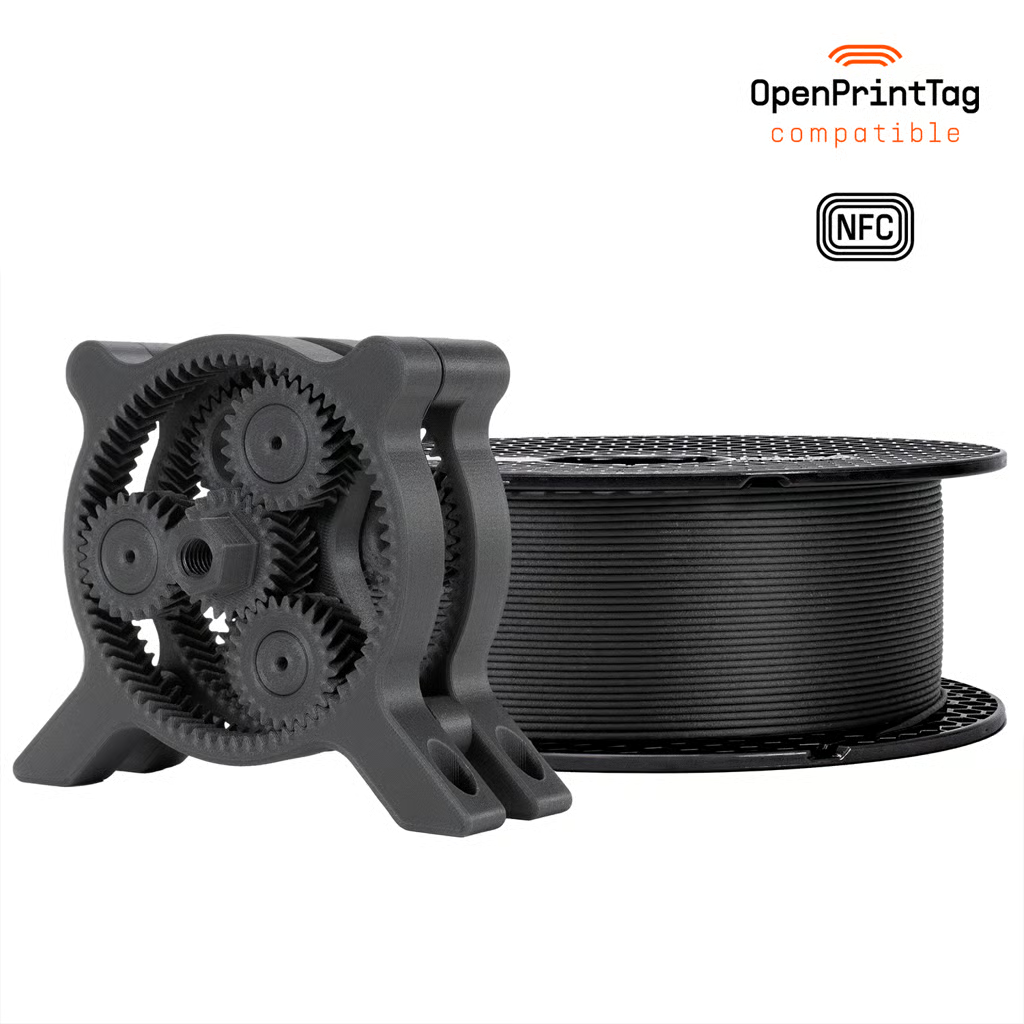
Prusament PA11
Prusa Research (Czech Republic) | 1.75mm | 1kg spools
PA11 (polyamide 11) is derived from castor oil rather than petroleum, making it the only bio-based nylon in this guide. Prusa manufactures it in-house under the Prusament quality system, which means every spool carries the same per-batch traceability and tight diameter tolerance (plus or minus 0.04mm) that defines the Prusament brand. PA11’s mechanical profile sits between PA12 and PA6: better flexibility and impact resistance than PA12, less moisture sensitive than PA6, and noticeably tougher under repeated flexing than either. This makes it the nylon of choice for parts that need to survive repeated impact rather than just bear static load: living hinges, cable routing clips, snap buckles, and similar high-cycle fatigue applications. Print temperature is similar to PA12 at around 220 to 260°C depending on variant.
Best for: Living hinges, snap buckles, high-cycle fatigue applications, users who want bio-based nylon with verified production quality, Prusa printer owners.
Nylon PA6: maximum nylon toughness
PA6 (polyamide 6) is the toughest of the common nylon types. It has higher impact resistance than PA12 and PA11, and its mechanical properties under stress, particularly resistance to sudden loading, are the reason PA6 is the base polymer in engineering applications from automotive to textiles. CNC Kitchen’s direct bending comparison found PA6-CF almost twice as rigid as PA12-CF, which gives a sense of the performance gap between the two nylon families.
The demanding side: PA6 can absorb up to 3% of its weight in moisture, almost a full shot glass per spool. Wet PA6 produces dramatic print quality problems. Drying at 80 to 90°C for 8 to 12 hours is required before every print session, and a filament dryer running during the print is strongly recommended for print runs longer than one or two hours. Warping is more aggressive than PA12 without an enclosure. Print temperature of 250 to 280°C means PTFE-lined hotends are excluded entirely. All-metal is mandatory.
If this is your first nylon, start with PA12 or CoPA instead. PA6 rewards the user who has already learned the nylon workflow with a filament dryer and a reliable enclosed printer. Approaching PA6 cold is a recipe for wasted material.
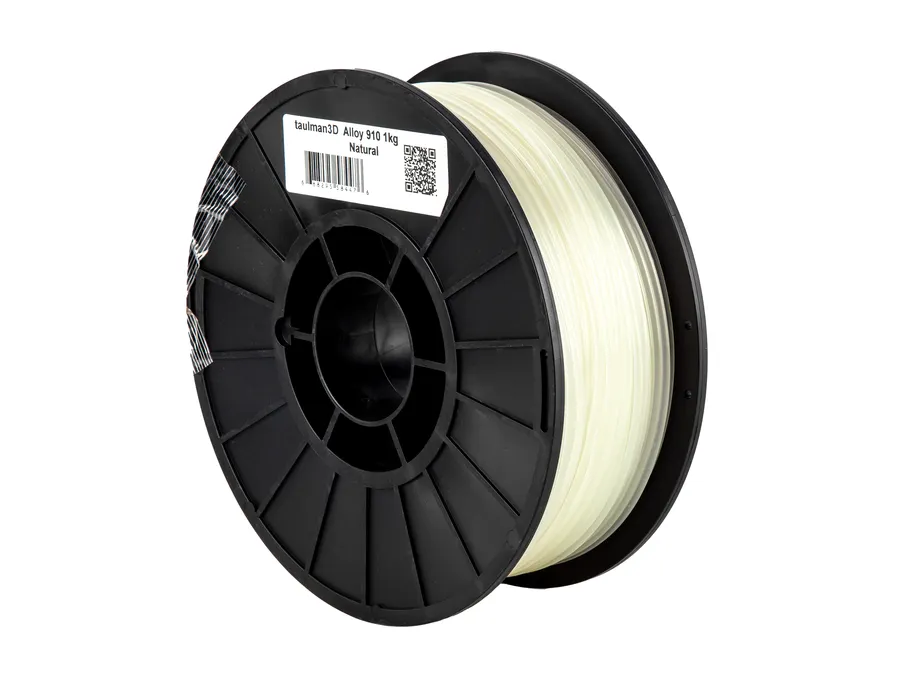
Taulman 910 Nylon
Taulman 3D | 1.75mm and 2.85mm | 450g spools
Taulman 910 is a co-polyamide blend that has been the community benchmark for maximum-strength FDM nylon for over a decade. The 3DTechValley nylon guide specifically calls it out as excellent for gears that need maximum strength, and Taulman themselves publish tensile strength data that places 910 above most consumer nylons. The alloy formulation delivers very strong interlayer bonding compared to pure PA6, which is the most practically important property for FDM parts under load. A part’s real-world strength depends on Z-axis layer adhesion as much as raw material tensile strength. Available in both 1.75mm and 2.85mm, making it one of the few quality high-strength nylon options for Ultimaker owners. Print at 245 to 255°C with a 45°C bed and garolite or PEI with glue for adhesion. Dry thoroughly before every session.
Best for: High-load gears and mechanical parts, structural connectors requiring maximum nylon toughness, Ultimaker and other 2.85mm printer users, engineers who have found standard PA6 too hygroscopic.
Bambu Lab PA6-CF
Bambu Lab | 1.75mm | 1kg spools
Bambu Lab PA6-CF is a carbon fibre reinforced PA6 engineered specifically for the X1 Carbon and P1S and is the most commonly cited nylon for structural drone components, robotic arms, and load-bearing brackets in the Bambu ecosystem. The ADP Industries farm team specifically uses eSUN PA-CF for structural drone components, noting that “parts printed in PA-CF survive flight loads, vibration, and thermal cycling.” Bambu’s own PA6-CF variant offers the same material class with the advantage of perfectly tuned Bambu Studio profiles and RFID detection. Hardened nozzle is mandatory. Feed from a filament dryer running at 80°C rather than through the AMS for all PA6-CF prints. Do not skip the drying step. Wet PA6-CF produces the characteristic rough, bubbly surface that is a sign of moisture vaporising in the nozzle.
Best for: Bambu Lab users printing structural engineering parts: drone components, robotic joints, jigs and fixtures, where PA6’s stiffness and heat resistance are required alongside CF’s rigidity.
CoPA: engineered nylon blends for everyday printing
Co-polyamide (CoPA) blends combine PA6 and PA66 chemistry in a formulation specifically engineered to solve the two main problems with traditional nylon: warping and moisture sensitivity. The result is a nylon that absorbs significantly less moisture than pure PA6, warps less aggressively on enclosed desktop printers, and delivers mechanical properties that are more than adequate for the vast majority of engineering applications.
The 3DTechValley nylon roundup calls CoPA the most user-friendly nylon available and puts it at the top of the P1S nylon recommendations. For most users printing nylon for gears, connectors, and functional parts, CoPA should be the first nylon they try, before PA12, before PA6, because it was specifically designed to be printable on the printers most people actually own.
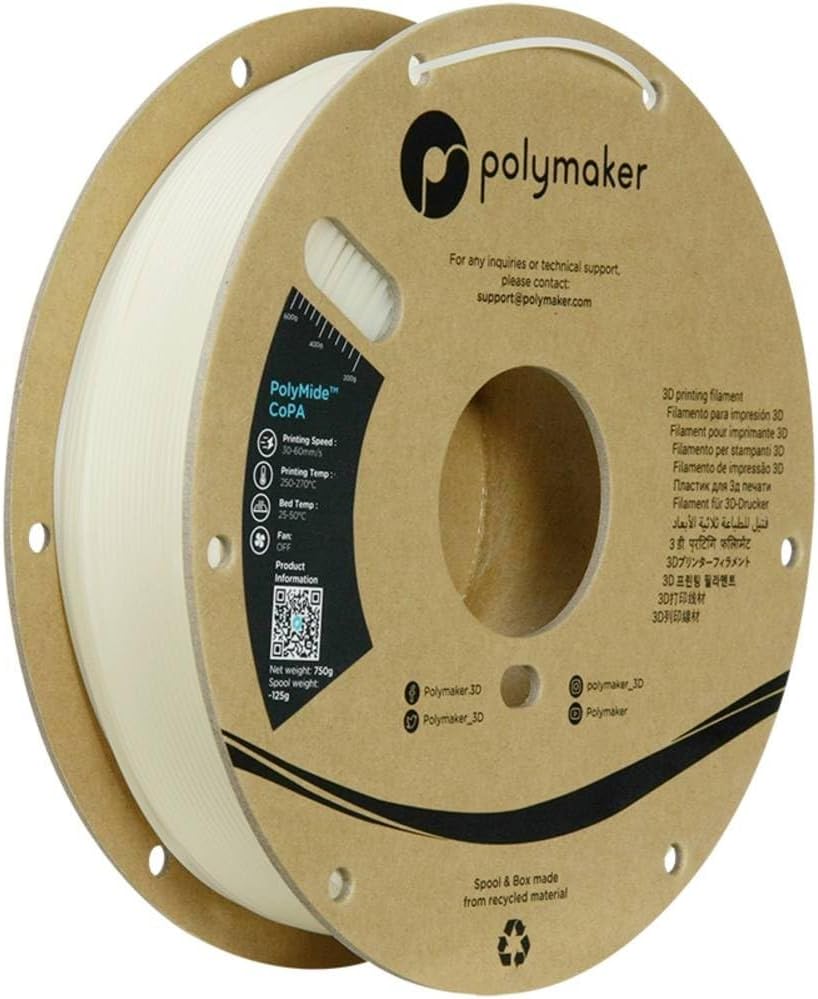
Polymaker PolyMide CoPA
Polymaker | 1.75mm | 750g spools
PolyMide CoPA is the nylon that multiple independent roundups in 2025 and 2026 place at the top of the consumer nylon category for most users. It blends PA6 and PA66 chemistry using Polymaker’s Warp-Free technology, which solves one of the root causes of nylon warping at the material level rather than relying purely on enclosure temperature to compensate. Vicat softening temperature of 180°C is the highest in the CoPA category, meaningfully above standard PA12, which opens up functional applications near heat sources. Moisture absorption is lower than pure PA6, making it more forgiving of imperfect drying. It prints at 250 to 265°C, within reach of most modern enclosed desktop printers, and adheres well to PEI and garolite with appropriate preparation. The ADP Industries and Makers101 roundups both recommend CoPA for gears, brackets, pipe connectors, and engineering parts where nylon’s fatigue resistance is required without PA6’s difficult handling.
Best for: The majority of engineering nylon applications: gears, brackets, connectors, and pipe fittings on any machine, users who want maximum nylon printability with minimal enclosure requirements.
Bambu Lab PAHT-CF
Bambu Lab | 1.75mm | 1kg spools
PAHT-CF is clarified in the 3DTechValley nylon guide as a PPA-based (polyphthalamide) high-temperature nylon rather than a standard PA6 or PA12 blend. A distinction that matters because PAHT-CF offers substantially higher heat resistance than conventional nylon, maintaining structural integrity at temperatures that would soften standard PA6. It is listed as the best-in-class performance nylon for Bambu machines and is specifically built for the P1S and X1 Carbon. For Bambu users who need to step beyond standard CoPA or PA6 into genuinely high-heat functional applications: under-bonnet automotive parts, parts near electronics that run hot, engineering components in warm industrial environments. PAHT-CF represents the ceiling of what consumer Bambu machines can produce. Hardened nozzle required. Feed from a dry box.
Best for: Bambu Lab users who need the maximum heat and structural performance available on a consumer enclosed machine, under-hood automotive parts, industrial fixtures exposed to continuous heat above 150°C.
Nylon PA-CF: stiffness, strength, and dimensional stability
Carbon fibre reinforced nylon sits at the top of the consumer engineering filament hierarchy for structural performance. The carbon fibre strands within the nylon matrix act as microscopic reinforcement, dramatically increasing stiffness and dimensional stability compared to unfilled nylon. CNC Kitchen’s comparison found PA6-CF to be almost twice as rigid as PA12-CF in bending tests. For lightweight structural parts: drone frames, robotic components, jigs, fixtures. This combination of nylon toughness with CF stiffness is what traditionally drove engineers towards metal brackets and injection-moulded parts.
Two important caveats on PA-CF: first, a hardened steel nozzle is mandatory, as carbon fibre destroys brass nozzles very quickly. Second, carbon fibre adds stiffness but reduces the impact resistance of the base nylon. For parts that need to flex or absorb sudden impacts, unfilled CoPA or PA6 will actually outperform PA-CF. CF is the answer when you need rigidity and dimensional stability, not when you need toughness under impact.
Moisture management remains as critical for PA-CF as for unfilled nylon. Dry at 80°C for 8 to 12 hours before printing and feed from a dry box during the print session.
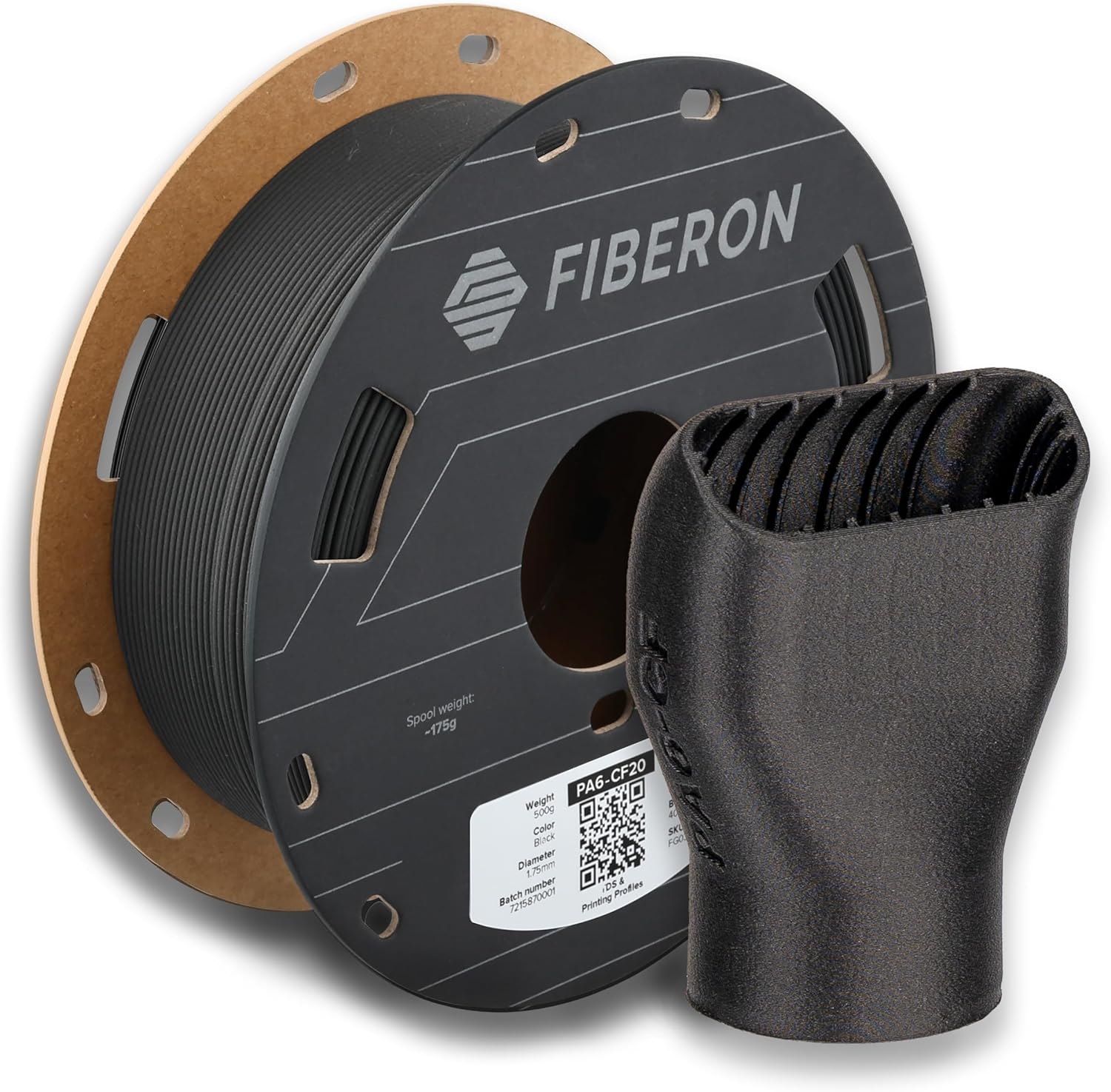
Polymaker Fiberon PA6-CF20
Polymaker | 1.75mm | 500g spools
Polymaker’s Fiberon PA6-CF20 is described by Dreaming3D as “the premium CF recommendation: engineering-grade carbon fibre nylon with Polymaker’s production consistency applied to the most demanding consumer filament category.” With 20% carbon fibre loading by weight in a PA6 base, it delivers the highest stiffness of the mainstream consumer PA-CF options. The Fiberon product line from Polymaker applies their quality control system (Jam-Free technology, precise diameter tolerance, batch consistency) to what is genuinely a demanding filament category. PA6-CF has serious warping tendency and needs a good enclosure managed well. Print at 260 to 280°C with a 60 to 90°C bed. Anneal the printed part immediately after printing for best dimensional stability. Leave it in the heated enclosure as it cools rather than opening the door and allowing rapid temperature change.
Best for: End-use structural parts, drone frames, robotic components, jigs and fixtures requiring peak stiffness in the PA-CF category, users upgrading from PA12-CF who need higher rigidity.
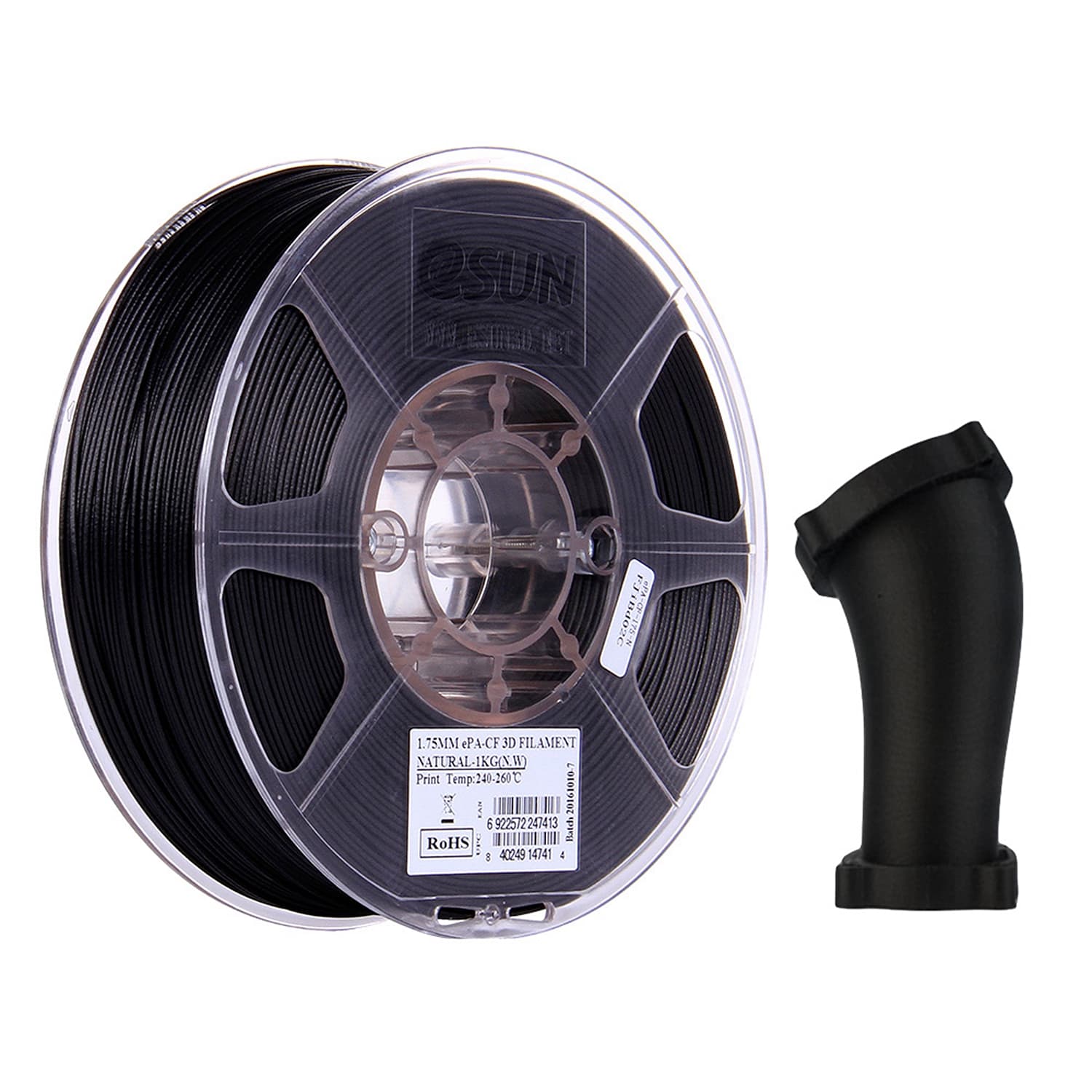
eSUN ePA-CF
eSUN | 1.75mm | 1kg spools
eSUN ePA-CF is the budget recommendation for carbon fibre nylon and is specifically cited by the ADP Industries farm team as their choice for structural drone components that survive flight loads, vibration, and thermal cycling. The Dreaming3D 2026 guide calls eSUN CF-nylon “the value engineering tier: genuine CF-nylon mechanical properties at a price significantly below premium brands.” It delivers real PA-CF performance rather than a merely decorative CF appearance. At roughly half the cost of Polymaker’s Fiberon line per kilogram, it opens genuine structural engineering printing to users who are not yet ready to commit premium pricing to a filament category they are still learning. Hardened nozzle required. Full drying protocol before every session.
Best for: Budget-conscious users who need genuine CF-nylon structural performance, structural parts on non-Bambu printers, anyone who wants PA-CF properties at budget pricing.
Polycarbonate: the highest impact strength in consumer FDM
Polycarbonate (PC) holds two properties that no other common FDM material can match: the highest impact strength in the consumer filament category, and natural optical clarity that transmits light at up to 90%. Its glass transition temperature of around 145 to 150°C makes it the go-to material when ABS or ASA at 100°C is not enough: electronic enclosures near hot components, lighting fixtures, automotive parts near heat sources.
The hardware reality: printing polycarbonate properly requires an actively heated chamber running at 45 to 65°C, a bed at 100 to 120°C, a nozzle at 260 to 310°C, and aggressive moisture management (dry at 80°C for 6 to 8 hours before every print session, and use a dry box during printing). A PTFE-lined hotend maxes out around 240°C and cannot print PC. All-metal is mandatory.
The 2025 to 2026 period has meaningfully improved the accessibility of PC printing. Modern PC blends like PolyMax PC and Prusament PC Blend run at 250 to 280°C rather than 300°C and print reliably on mid-range enclosed printers like the Bambu P1S without industrial hardware. If you have an enclosed printer with a capable hotend and a disciplined drying routine, PC printing is achievable. If you do not, no amount of technique will compensate.
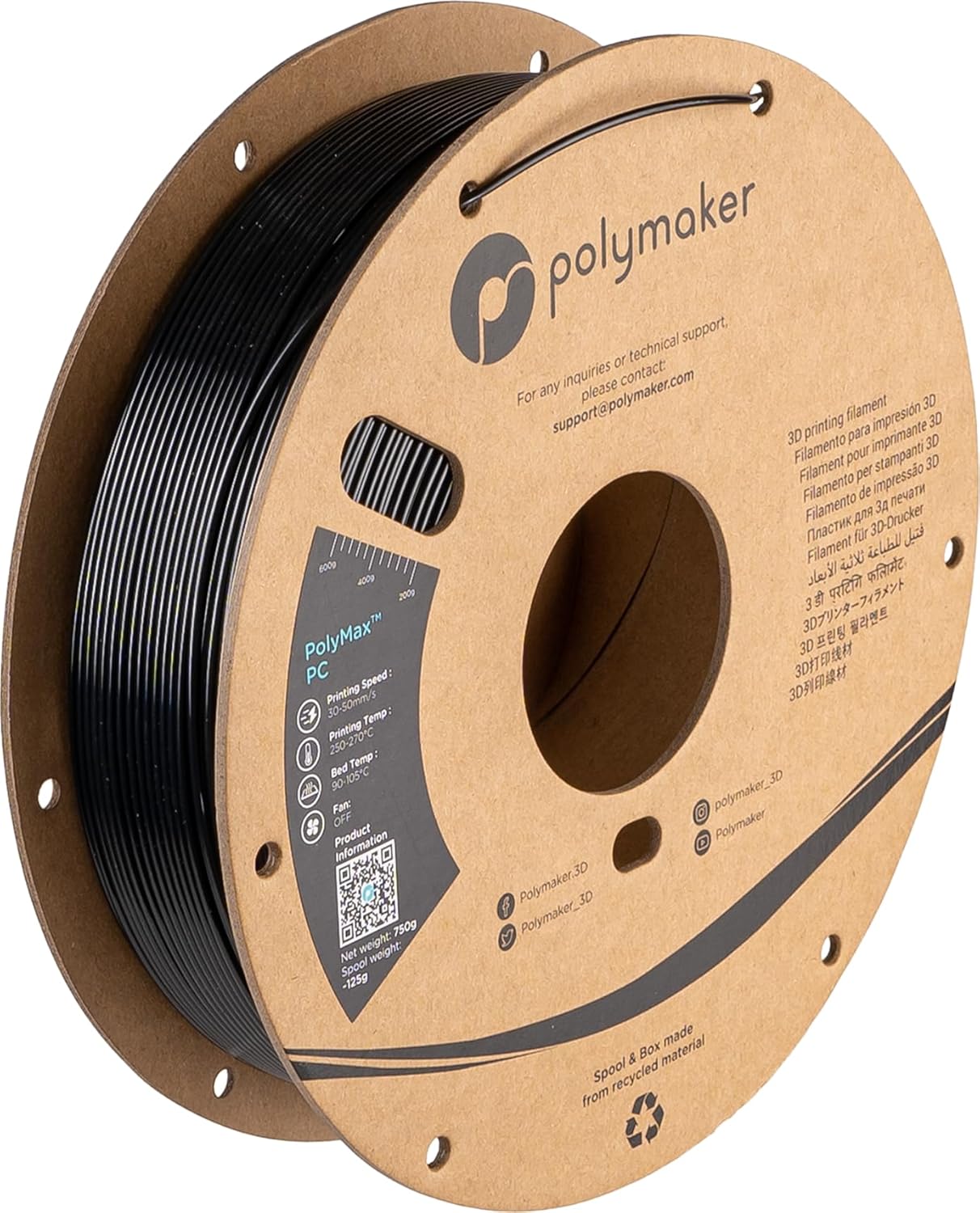
Polymaker PolyMax PC
Polymaker | 1.75mm | 750g spools
PolyMax PC is the product most cited by 3DTechValley, 3DPut, and the broader tech blog community as the single best polycarbonate filament for a mid-range enclosed printer. The 3DTechValley polycarbonate guide explicitly states it as the answer to “which is the best polycarbonate 3D printer filament for a mid-range enclosed printer.” Polymaker’s engineering of this PC blend specifically addresses PC’s two main failure modes: it runs at 260 to 280°C rather than 300°C+, and its Nano-reinforcement technology reduces the aggressive warping that causes delamination and corner lifting on consumer enclosures. The impact strength is among the highest in the consumer filament category. Anneal the printed part immediately after printing. Either keep it in the heated chamber as it cools, or transfer it directly to a 90°C oven for 2 hours, to relieve internal stresses that accumulate during printing.
Best for: High-impact structural enclosures, electronics housings near heat sources, optical covers and diffusers, any application requiring the toughest printable thermoplastic on a consumer machine.
Prusament PC Blend
Prusa Research (Czech Republic) | 1.75mm | 1kg spools
Prusament PC Blend is the PC recommendation for users who prioritise predictable, repeatable results over any other variable. The 3DTechValley polycarbonate guide identifies it as the choice for predictable results and notes that “Prusament PC Blend will give you the most predictable and repeatable results” for first-time PC printing. The same per-batch traceability and tight tolerance control that defines Prusament’s PLA and PETG lines carries through to the PC Blend. Print temperature sits in the 250 to 270°C range, fractionally below PolyMax PC, which reduces the barrier for printers where 280°C is at the edge of hotend capability. Dry at 80°C for 6 to 8 hours minimum before every print. The Prusa XL and MK4S with the appropriate hotend are the natural home for this material, but it prints reliably on other well-calibrated enclosed machines as well.
Best for: Users who value consistent results above all else, Prusa XL and MK4S owners, production runs of PC parts where per-batch QR traceability matters.
Bambu Lab PC
Bambu Lab | 1.75mm | 1kg spools
For Bambu Lab X1 Carbon and P1S users, Bambu’s own PC filament is the lowest-friction entry to polycarbonate printing: load the spool, select the Bambu Studio PC profile, and print. The RFID chip enables automatic parameter detection and the pre-configured profiles cover the hotend, bed, and chamber temperature management that PC requires. Quality is good and consistency is reliable according to the 3DTechValley polycarbonate guide, which calls it the best starting point for Bambu users even if it is not the highest-performance PC in the category. The Bambu P1S’s passive enclosure is usable for small to medium PC parts; for larger PC prints, the actively heated chamber of the X1 Carbon, X1E, or H2D is significantly more reliable. Do not skip drying, as even with optimised profiles, wet PC produces poor results.
Best for: Bambu Lab machine owners printing their first PC parts, users who want pre-configured PC without manual profile tuning, high-speed PC printing on Bambu enclosed machines.
PEEK, PEI/Ultem, and PPS: the industrial tier
These materials exist and perform remarkably, but they require hardware that is not consumer-accessible without significant investment. PEEK (polyether ether ketone) prints at 360 to 400°C and requires a chamber temperature of 120°C or higher. PEI/Ultem prints at 340 to 380°C. PPS (polyphenylene sulphide) is slightly more accessible at 300 to 350°C but still requires chamber temps around 100°C. None of these can be printed on mainstream consumer machines without substantial modification or dedicated purchase of industrial-grade hardware.
The one accessible gateway in 2026: Bambu Lab’s PPS-CF Advanced Filament is designed for the professional H2D and related machines with active chamber heating. For Bambu users who genuinely need PPS-class chemical resistance and thermal stability, this is the most achievable route on current consumer-adjacent hardware.
Practical advice: Before pursuing PEEK or PEI, confirm that polycarbonate (HDT 140°C+) genuinely cannot meet the specification. Most applications that engineers initially assume require PEEK actually work fine with PC or PA-CF when the part is designed correctly. PEEK is the right answer for continuous high-heat exposure, aggressive chemical environments, and medical or aerospace certification requirements, not for “I need something stronger than ABS.”
Engineering filament comparison: all materials at a glance
| Material | Nozzle (°C) | Bed (°C) | Enclosure | HDT approx. | Tensile (MPa) | Hardened nozzle | Dryer needed | Price tier |
|---|---|---|---|---|---|---|---|---|
| PETG | 230 to 250 | 70 to 85 | No | 63 to 80°C | 50 to 60 | No | No | Low |
| PCTG | 240 to 260 | 70 to 80 | No | 80 to 85°C | 52 to 58 | No | No | Mid |
| PETG-CF | 240 to 260 | 70 to 85 | Recommended | 65 to 80°C | 55 to 70 | Yes | No | Mid |
| ABS | 245 to 265 | 90 to 110 | Required | 85 to 100°C | 30 to 40 | No | No | Low |
| ASA | 240 to 260 | 90 to 110 | Required | 85 to 103°C | 38 to 47 | No | No | Low |
| Nylon PA12 | 240 to 260 | 60 to 80 | Recommended | 70 to 90°C | 45 to 55 | No | Yes | Mid |
| CoPA | 250 to 265 | 70 to 90 | Recommended | Vicat 180°C | 50 to 60 | No | Yes | Mid |
| Nylon PA6 | 250 to 280 | 70 to 100 | Required | 80 to 100°C | 55 to 70 | No | Yes (80°C+) | Mid-High |
| PA-CF | 260 to 280 | 70 to 100 | Required | 90 to 120°C | 60 to 80+ | Yes | Yes (80°C+) | High |
| Polycarbonate | 260 to 310 | 100 to 120 | Active chamber | 140 to 150°C | 55 to 70 | No* | Yes (80°C) | High |
* PC-CF variants require hardened nozzle. HDT values are approximate and vary by brand and test method. Tensile strength quoted for XY orientation at 100% infill.
Frequently asked questions
Where to go next
Engineering filaments ask more of your hardware: an all-metal hotend, usually an enclosure, a hardened nozzle for carbon fibre, and a filament dryer for nylon and PC. Before committing to a material, check our best 3D printers guide for enclosed, all-metal machines. New to the basics? Start with what is 3D printing, and keep the 3D printing glossary handy for terms like HDT, hygroscopic, and annealing. Because ABS, ASA, and nylon emit fumes at high nozzle temperatures, read our 3D printing safety guide on ventilation first. For tested product picks, see our Best PETG Filament guide and Best ABS and ASA Filament guide.
Some links on this page are affiliate links. If you buy through them we may earn a small commission at no additional cost to you. This never affects which products we feature or how we rank them.