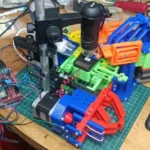

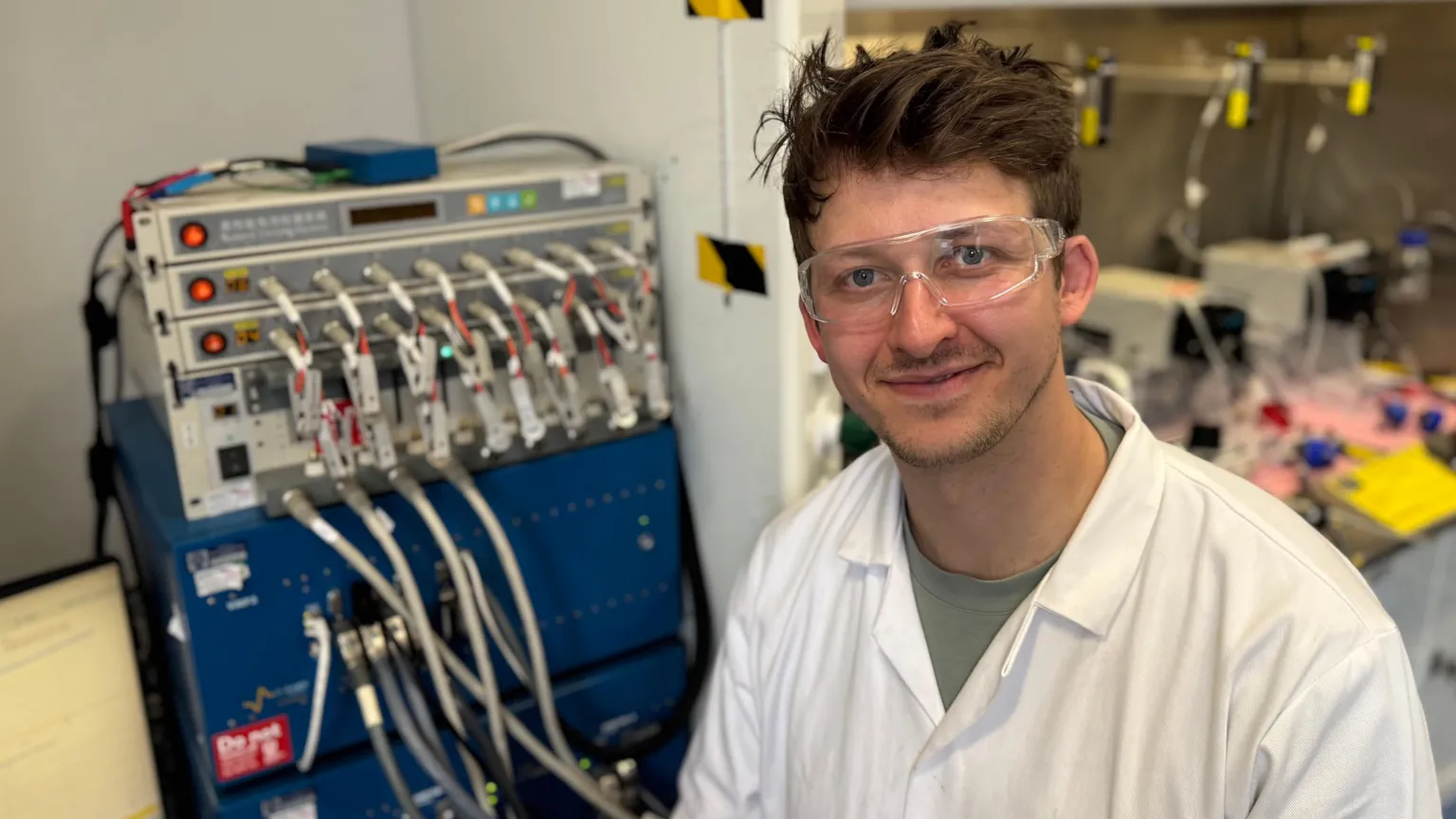
A post-doctoral researcher at Queen’s University Belfast has developed a 3D-printed flow battery that costs roughly £74 to build and is now being used by scientists around the world to standardize renewable energy storage research. Dr. Hugh O’Connor designed the cell after discovering that a commercial flow battery for his PhD research would cost between £2,000 and £3,000.
“I started 3D-printing them and I made lots of little tweaks. After a lot of trial and error, eventually these started to work really well,” O’Connor said. The battery uses iron rather than vanadium, the metallic element found in most flow batteries. Vanadium is only produced in a few places around the world and is more economically volatile than iron, making it a persistent barrier to scaling up the technology.
O’Connor briefly considered selling the design to fellow researchers before deciding to release it to the international research community for free. “We kind of saw it as an opportunity to grow our network rather than make a small amount of money, and we feel like it can really benefit this technology,” he said. The kit’s roughly ten components, including 3D-printed flow pieces, a membrane, gaskets, electrodes and current collectors, come with a step-by-step assembly guide that O’Connor describes as “Ikea-style.”
Dr. Josh Bailey, an Illuminate Fellow at QUB’s School of Chemistry and Chemical Engineering, is co-leading studies that use O’Connor’s cell across multiple institutions worldwide. The lack of standardized equipment has long hampered flow battery research, meaning results from different labs can’t be reliably compared. Using identical hardware changes that. “We really honestly believe that flow batteries can be accelerated by these reproducibility studies and that the technology can be deployed more quickly if we’re all using the same standards,” Bailey said.
Flow batteries store energy in liquids rather than the solid electrodes used in lithium-ion batteries, making them well-suited to storing large amounts of renewable energy for use when the sun isn’t shining and the wind isn’t blowing. Better storage would also reduce the frequency with which wind turbines are switched off to protect the grid during periods of low demand. O’Connor and Bailey are now testing larger stacks of the printed cells to assess how the technology might scale to industrial applications. “Having the single cell, the stack and the system really gets us on the innovation track to see how far can we push the chemistries that we’re working on,” Bailey said.
Source: bbc.com