
Cologne designer Kevin Noki has built ADHD ONE, a 3D printed brick phone that takes calls for your iPhone and does almost nothing else.
The name stands for Anti Distraction Handset Device, and the joke is only half a joke. Noki looked at how hard smartphones have become to put down and answered with an object straight out of the 1980s, complete with a physical keypad, a small screen and an unmistakably chunky silhouette. Where most new gadgets compete on features, this one is designed to offer fewer of them.
The idea is simple. ADHD ONE does not replace the phone in your pocket. It pairs with an iPhone over Bluetooth, and the iPhone’s Do Not Disturb settings decide which contacts are allowed to ring through. The iPhone can then sit in a drawer or another room, as long as it stays within Bluetooth range, while the handset on the desk handles calls. There is no cellular connection of its own, so the brick only ever does the one job a phone was originally for.
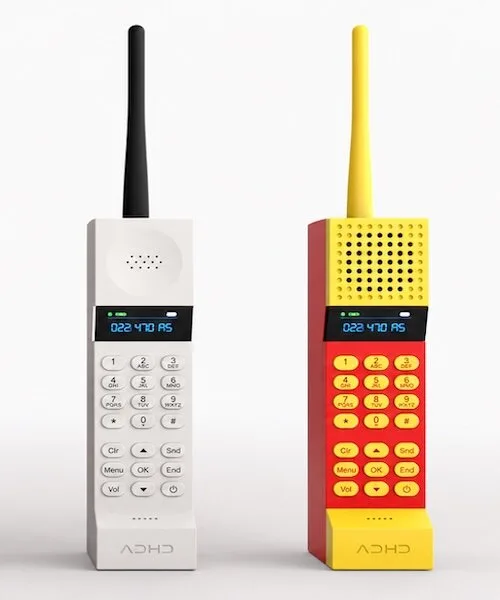
Behind the retro shell sits current hardware. A Qualcomm based Bluetooth module carries call audio to and from the iPhone, a Raspberry Pi Pico runs the device, and a small OLED display, microphone, speaker and rechargeable battery share a custom circuit board tucked inside the housing.
That housing is where the design work shows. Noki modeled the enclosure in Autodesk Fusion and printed its parts, borrowing the visual language of early mobile phones with heavy proportions, a prominent antenna and tactile buttons in place of smooth glass. The 19 key keypad is the obvious nod to the era, and the details are meant to be swapped. Builders can choose between Classic, Holes and Stripes speaker grilles and Retro, Slim and Screw antennas, and an alternative shell drops the antenna altogether, at some cost to the brick phone charm.
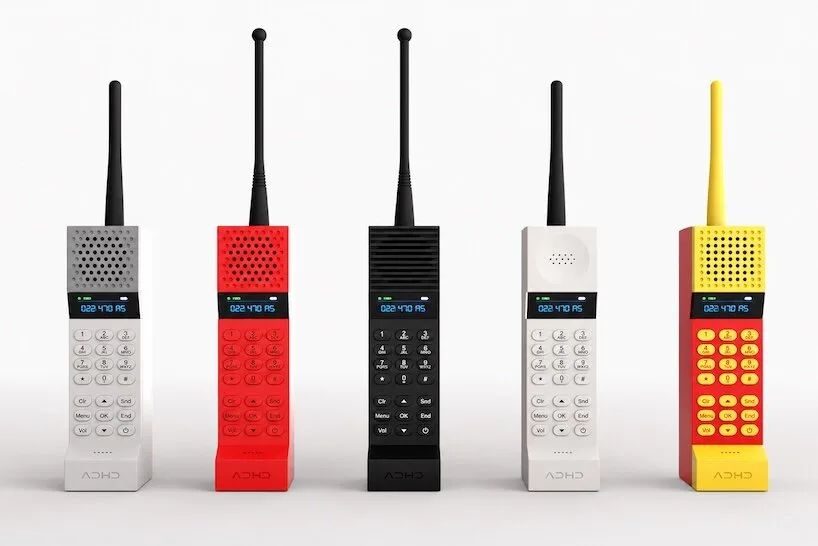
Anyone who wants one has to make it. Noki sells the DIY build files on his website for €29.99. The package covers printable STL files for the housing, back panels, internal frame, display cover, battery holder and keypad, plus ready to flash firmware, Gerber files for ordering the board, a bill of materials and a quick start guide. Editable CAD, PCB design files and firmware source are not included, and the files are licensed for personal use only. A physical DIY kit is listed on the site but is not yet available.
What makes the project appealing is less the electronics than the gesture. ADHD ONE sits somewhere between nostalgia piece, design experiment and a practical answer to a very modern habit. It does not pretend to free anyone from the smartphone, and it makes no attempt to recreate the independence of a real 1980s mobile. Instead it changes how you physically meet a device you already own, turning a call into something you pick up with your whole hand.
There is an obvious irony in designing, printing and wiring a brand new gadget just to use another one less. That may be exactly the point.
Source: designboom