
NormaCore has open-sourced Lamp, a fully 3D-printed robotic desk lamp that nods, turns and tracks like a tiny character, for roughly $140 to $160 in parts.
Meet NormaCore Lamp! 💡
A 3D-printable robotic desk lamp with 5 DOF, powered by ST3215 servos.
Build your own 👇https://t.co/1vyrA0k8Es#robotics #3Dprinting pic.twitter.com/XMvuQPUSCU
— NormaCore (@norma_core_dev) October 14, 2026
The clip shows what the project is really about. The lamp swivels on its base, folds and stretches its arm, then tilts and rolls its shade with the kind of fluid, slightly expressive motion people know from Pixar’s hopping desk lamp. It is a small robot first and a light second.
Five ST3215 bus servos do all the work, the same motors NormaCore uses on its ElRobot arm. Chaining them on a single serial bus keeps the wiring to one cable running up the arm, which goes a long way toward making the build feel approachable rather than fiddly. The finished lamp stands about desk-lamp height, and a set of steel bolts in the base gives it enough ballast to stay put when the arm swings out.
Everything structural comes off the printer. A full set of seventeen parts takes around two days of print time, with a PETG disc acting as the window in the shade. Nothing in the set calls for exotic material or tricky support work, so any well-tuned desktop machine should handle it.
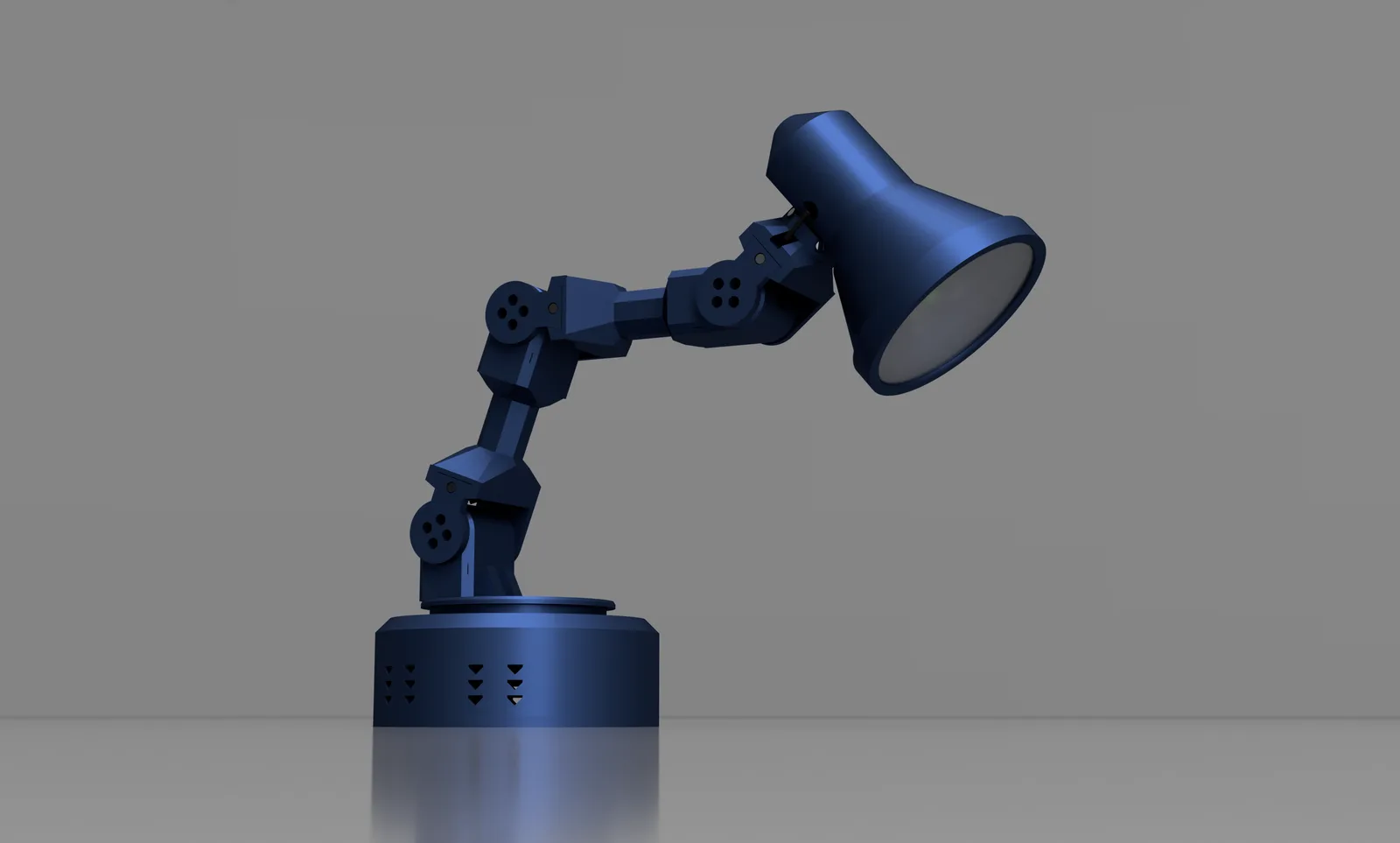
Builders choose between two personalities. The simple version hides a servo adapter in the base and takes orders from a computer over USB, which suits anyone who wants to script motion or plug the lamp into a larger robotics setup. The LED version moves that adapter into the head alongside an ESP32 camera board and a ring of addressable LEDs, then serves its own browser interface over WiFi with sliders, light effects and a simple program editor.
The clever part is that both versions share the same printed arm, motors and ballast. Someone can start with the cheaper USB build and later upgrade the head without reprinting a single structural part, turning a desk toy into a networked light whenever they feel like it.
Assembly is the familiar robot-kit routine of numbering the motors, stacking the arm from the base upward and parking it in a straight pose before powering up, so the controller knows where zero is.
What makes Lamp worth a look is how much of the project is out in the open. The repository carries editable CAD as well as print files, profiles, firmware and simulation assets, so the lamp can be remixed, tested virtually or used as a cheap platform for experimenting with expressive motion. For makers curious about robotics, it is a friendlier entry point than a full arm, and for robotics people it is a reminder that a weekend print and five servos can carry a surprising amount of personality.
Source: NormaCore on GitHub