
Oak Ridge National Laboratory and its partners won a 2026 ACE Award for a 3D-printed mandrel that dissolves in water. The tool forms linerless Type V tanks for hydrogen and other high-pressure gases.
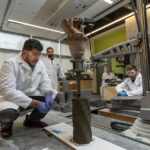
The temporary polymer form is printed at large format, then carbon fiber is wound around it. After the vessel cures, water washes the mandrel out and a gas barrier coating goes on the hollow composite tank. The vessels store hydrogen, compressed natural gas, nitrogen and helium for aerospace, defense, transportation and energy.
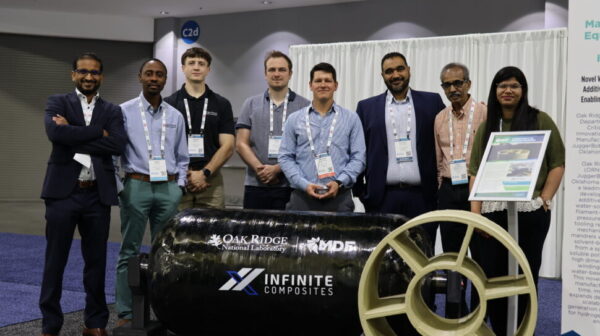
Type V vessels are all-composite and have no internal liner, which cuts weight and removes a common failure point, but making and removing the internal tool has been the hard part. The printed mandrel replaces metallic or collapsible tooling, can skip solvent-based removal, shortens lead times and lets shops print large or complex shapes more freely.
“Type V linerless composite pressure vessels represent the next frontier in lightweight, high-pressure gas storage, but their manufacturing remains extremely challenging, particularly when it comes to producing and removing complex internal tooling,” said Ahmed Arabi Hassen, group leader for composites innovation at ORNL. “Our water-soluble, 3D-printed mandrels represent an important step toward overcoming this barrier and enabling scalable, cost-effective manufacturing of Type V vessels.”
ORNL worked with Infinite Composites, JuggerBot 3D and Oklahoma State University on the project, which took the Equipment and Tooling Innovation category at CAMX. The lab’s share of the work ran at DOE’s Manufacturing Demonstration Facility, with support from the Advanced Materials and Manufacturing Technologies Office and the Office of Critical Minerals and Energy Innovation.
Source: Oak Ridge National Laboratory