
Engineers at the FAMU-FSU College of Engineering have 3D printed wind-tunnel models of low-rise buildings with wave-shaped walls and roofs. The deepest waves cut peak wind pressure by 40% to 60%.
On a flat wall or a pitched roof, wind peels off the leading edge and rolls into a strong vortex at the corners, where hurricanes pull roofs apart. Rounding those corners, sloping the walls, or building them thicker can help. Those changes are expensive, and they are hard to add once a building is up. The FAMU-FSU models use a face of rounded hills and valleys instead.
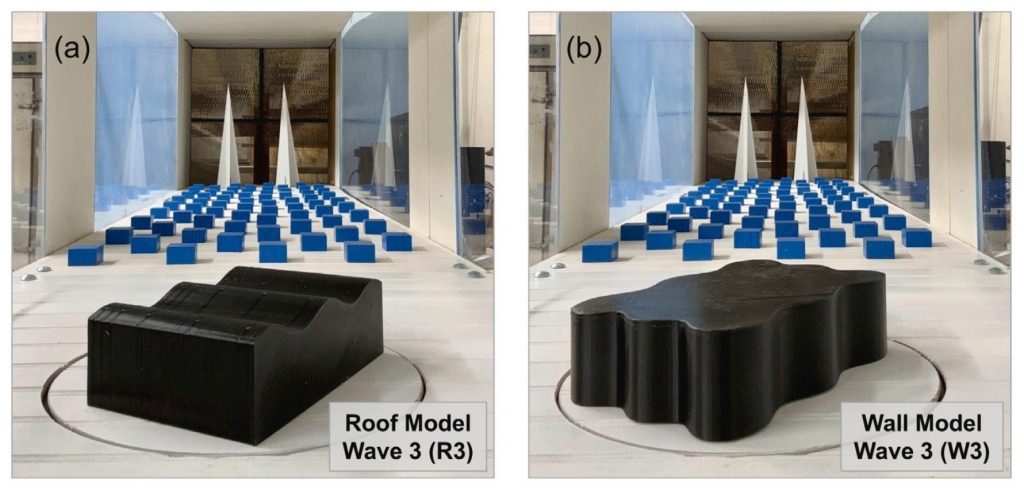
The waves were 5% to 10% of the building height. The team measured surface pressure in the college wind tunnel and compared the shapes with a flat model. The deepest wave, at 10% of the height, did the most. Peak pressure near roof and wall corners fell 40% to 60% from several wind directions.
“Changing a building’s shape can significantly reduce the intensity of wind forces it has to withstand,” said Pedro Fernández-Cabán, an assistant professor of civil engineering at the college and a co-author of the study. “These nonconventional building shapes reduce the damage from worst-case severe weather scenarios.”
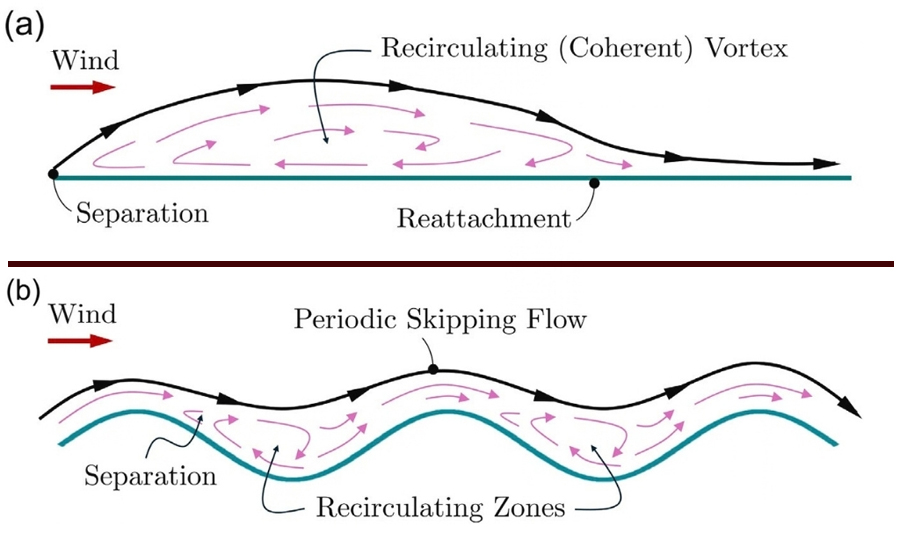
On the wavy surface the wind does not hold one large vortex. It skips from crest to crest, leaving smaller pockets of spinning air in the troughs. That breaks up the suction that gathers at a sharp corner.
The group is now measuring the flow around the envelopes, not only the pressure on the surface. They also plan computer models of the air, to tune the wave and to try shapes the tunnel has not tested yet. Associate professor Qian Zhang, doctoral student Arezoo Bakhshizadeh, and alumnus Peter Tsouroukdissian co-authored the work, which is published in Engineering Structures. Florida State University and the college supported the study.
Source: news.fsu.edu