
Small-format scanning is where detail wins over coverage: roughly 10mm to 300mm, capturing jewellery and rings, coins, miniatures and figures, electronics housings, dental models, small mechanical parts, action figures. The deciding spec at this size is usually resolution rather than headline accuracy, the smallest detail the scanner can actually pull out of the object. This guide breaks down 13 scanners across Revopoint, 3DMakerpro, Shining3D, and Creality, with prices, the honest workflow trade-offs (handheld vs turntable), and which surface treatments you can skip with which scanner.
Independently researched. 14 years of 3D printing and 3D scanning coverage at 3DPrinting.com, including hands-on reviews of the 3DMakerpro Seal and the Mole. Some of the links on this page are affiliate links, and we never recommend a scanner we would not buy ourselves. Prices shown are approximate (the ~$ figure), researched on 2026-06-01, and vary by bundle, sale period, and region; click through to the manufacturer for current pricing.
Our top picks
The fast answer by job. Tap a card for the full breakdown below.
Jump to brand
What makes a scanner right for small objects
Three things decide it. The first is resolution, not accuracy. Most consumer scanner spec sheets lead with an accuracy figure, but on a 30mm earring or a 15mm screw the deciding number is resolution: the smallest detail the scanner can pull out of the object. A 0.05mm-accuracy scanner with 0.16mm resolution will miss engraved text and surface texture; a 0.01mm-accuracy scanner with 0.05mm resolution will capture them. Read the comparison table’s Resolution column harder than the Accuracy column for jewellery, dental, and detailed mechanical work.
The second is light source matched to surface. Blue structured light (MINI 2, Seal pair) is the default for detail and metallic-friendly capture; near-infrared (Mole, Moose Lite) is gentler on skin if you also scan people. The hardest small-format surface is polished chrome and gold; even the best scanner wants a thin matte coat there. Dark and matte-metallic surfaces are handled marker-free by the hybrid laser scanners (POP 4) and the INSPIRE 2’s IR-laser mode.
The third is workflow: handheld vs turntable. Handheld scanners (the bulk of this page) let you walk around the object and catch every angle by hand; they need a steady arm and a feature-rich subject to track on. Desktop turntable workflows (EinScan SE V2) park the object on a calibrated rotator and let the scanner do consistent passes hands-off, which is faster and more repeatable for small mechanical parts, dental models, and jewellery, but worse for irregular pieces you cannot mount.
Three practical limits the spec sheets don’t mention. Most scanners on this page have a 10mm to 15mm minimum object size and need 100mm to 250mm of working clearance above the object, which matters when scanning a ring on a turntable. For sub-10mm work (gemstone seats, watch movements, micro components) you need industrial-tier picks like the Artec Micro II from our professional scanner guide. And polished gold, silver, and chrome always want a thin matte spray; AESUB Blue vanishing spray is the workflow standard.
Revopoint
Revopoint covers small-format twice over: the MINI 2 is a purpose-built precision tool for tiny objects (10mm to 500mm with 0.02mm point precision), and the POP 3 Plus, INSPIRE 2, and POP 4 are versatile handhelds that reach from small into medium.
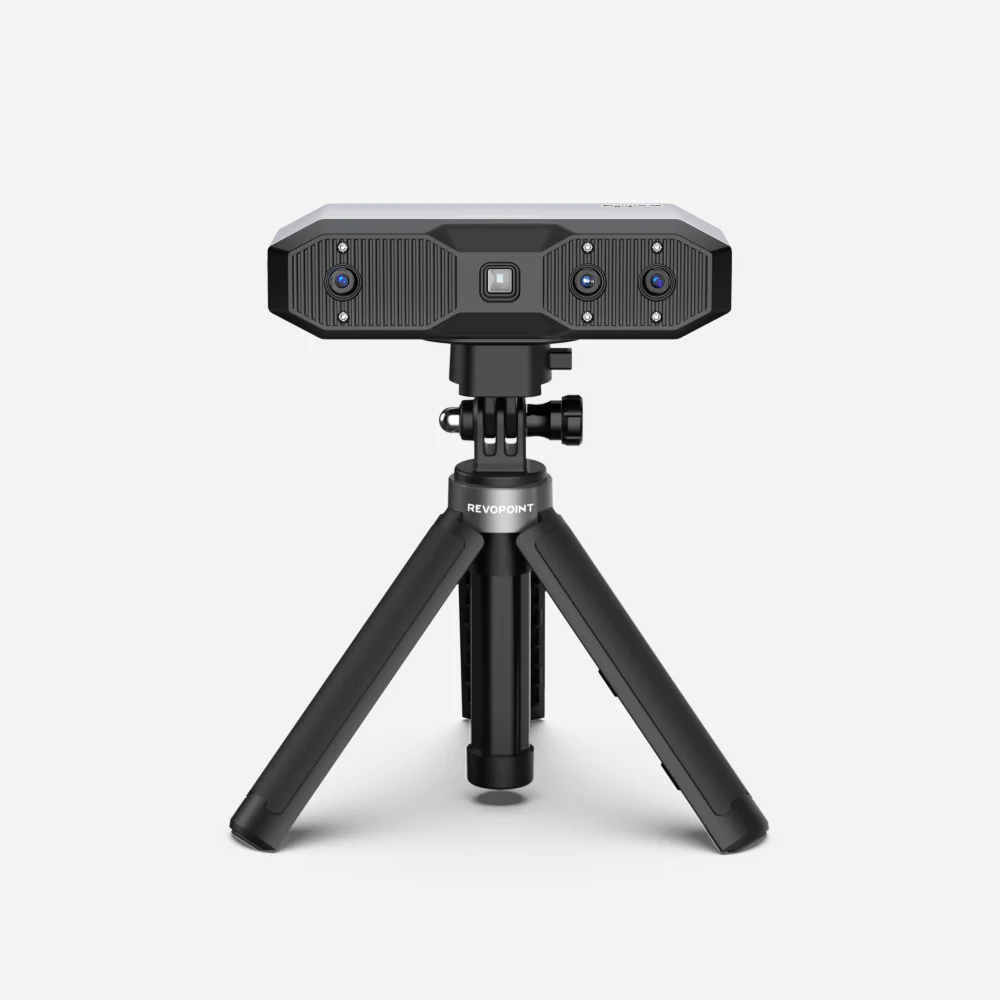
Revopoint MINI 2
Best for: the small-format sweet spot. The MINI 2 is Revopoint’s purpose-built precision scanner for objects from 10mm to 500mm, with dual cameras, blue structured light, and 0.02mm point precision. Single-capture FOV scales from 52 x 64mm at 120mm working distance up to 168 x 132mm at 250mm, so you can sit close for jewellery detail or step back for a small figure without changing tools.
Price: ~$829 (approximate; varies by bundle, sale period and region, click through for current pricing)
- Point precision 0.02mm; single-frame accuracy 0.05mm
- Dual-camera blue structured light; 16 fps
- Object range 10 to 500mm; FOV scales with distance

Revopoint POP 3 Plus
Best for: a versatile all-rounder that stretches up from small into medium. The POP 3 Plus uses dual-camera infrared structured light with optical zoom and an advanced calibration board, handling small tabletop objects cleanly while still reaching mid-size work. The POP 4 below is the hybrid laser+NIR successor, now in pre-order, if you want the step up.
Price: ~$619 (approximate; varies by bundle, sale period and region, click through for current pricing)
- Point precision 0.04mm; single-frame accuracy 0.08mm
- Dual cameras with optical zoom; 18 fps
- Indoor and outdoor; full color
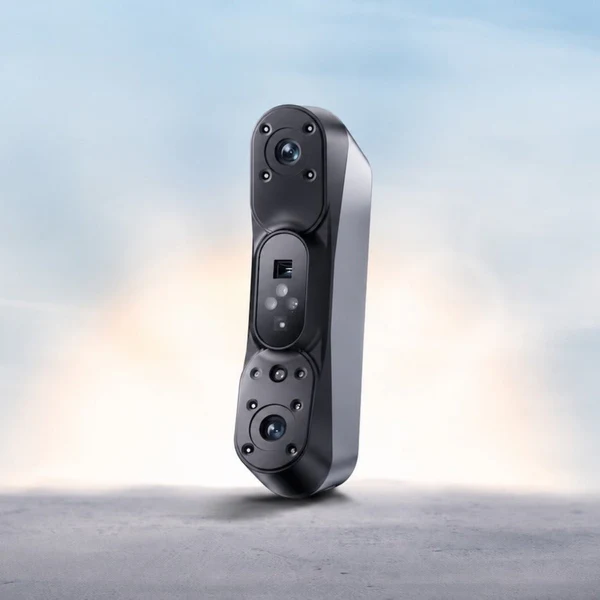
Revopoint POP 4
Best for: the newest Revopoint hybrid in the workshop. The POP 4 brings blue laser plus near-infrared in five scan modes, so it reads dark and reflective small parts where the POP 3 Plus needs spray. The Kickstarter campaign closed in May 2026 and pre-orders are now open directly through Revopoint.
Price: ~$755 pre-order (10% off the $839 regular price; click through for current pre-order details and bundle options)
- Hybrid blue laser + NIR; five scan modes
- 5500 mAh battery grip; up to 4 hours per charge
- Outdoor capable to 100,000 lux; 3D Gaussian Splatting export
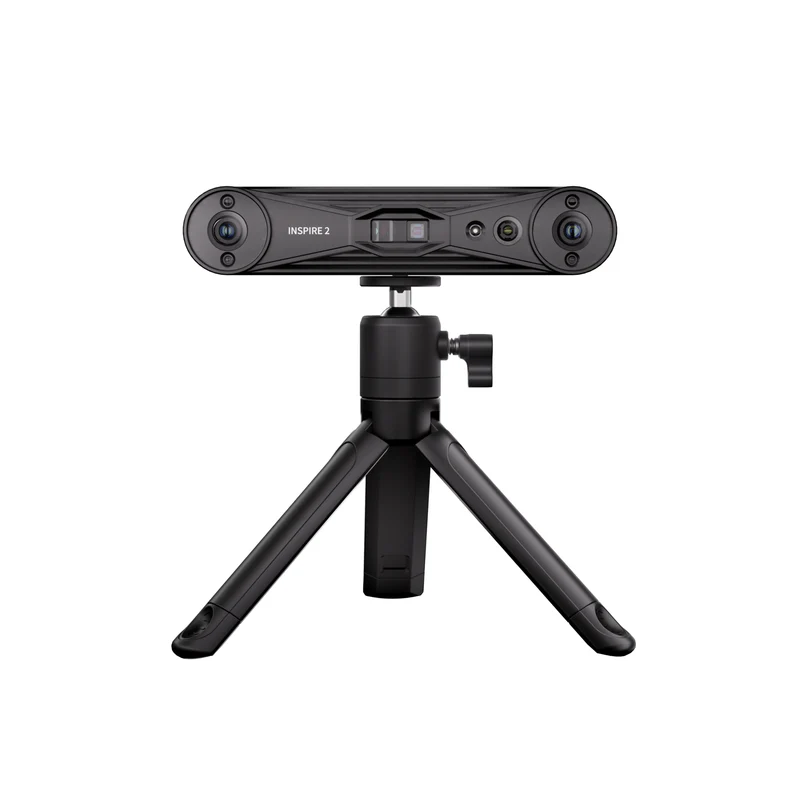
Revopoint INSPIRE 2
Best for: an entry-level scanner that doesn’t crumble in sunlight. The INSPIRE 2 combines infrared structured light with an 11-line IR laser mode, bringing metrology-class surface handling to a $300 scanner. The laser mode handles dark and metallic surfaces without spray, and the outdoor rating (20,000 lux) means it works on a window-lit bench where most consumer scanners can’t.
Price: ~$549 (approximate; varies by bundle, sale period and region, click through for current pricing)
- Point precision 0.03mm; single-frame accuracy 0.05mm
- Dual mode: structured light + 11-line IR laser
- Outdoor rated to 20,000 lux; Wi-Fi 6; 190g
3DMakerpro
3DMakerpro is the only brand on this page hitting 0.01mm consumer precision (the Seal pair), and is also the home of the Mole’s NIR people-friendly light. The Moose and Moose Lite are real medium-format tools that overlap into the upper end of small-format.

3DMakerpro Seal
Best for: precision at hobby money. The Seal is the first sub-$1,000 consumer scanner to hit 0.01mm point accuracy, with blue structured light, an aluminum body, and 24-bit color. Built for small detailed parts (10 to 300mm): jewellery, dental models, electronics, miniatures, action figures. The standout small-format pick if you can stretch past the budget options. We have a full hands-on review.
Price: ~$699 (approximate; varies by bundle, sale period and region, click through for current pricing)
- Accuracy 0.01mm; resolution 0.05mm
- Blue structured light; aluminum body
- Object range 10 to 300mm; 24-bit color

3DMakerpro Seal Lite
Best for: precision per dollar. The Seal Lite keeps the Seal’s blue-structured-light DNA but drops to a plastic body and 0.02mm accuracy at half the price. For small parts where 0.02mm is plenty (which is most home and prosumer work), nothing else at this price offers comparable detail.
Price: ~$359 (approximate; varies by bundle, sale period and region, click through for current pricing)
- Accuracy 0.02mm; resolution 0.07mm
- Blue structured light; 225g
- Object range 10 to 300mm

3DMakerpro Mole
The pick when: you scan small objects AND occasionally need to step up to people or larger work. The Mole uses near-infrared light that is safe and comfortable around skin (good for faces, hands, half-bodies) and covers 15mm up to 1.5m. It is on our medium guide too: real home is medium, but the bottom of its range fits genuine small-format work.
Price: ~$649 (approximate; varies by bundle, sale period and region, click through for current pricing)
- Accuracy 0.05mm; resolution 0.1mm
- NIR light source; markerless; color (Luxury kit)
- Object range 15 to 1500mm; comfortable on people
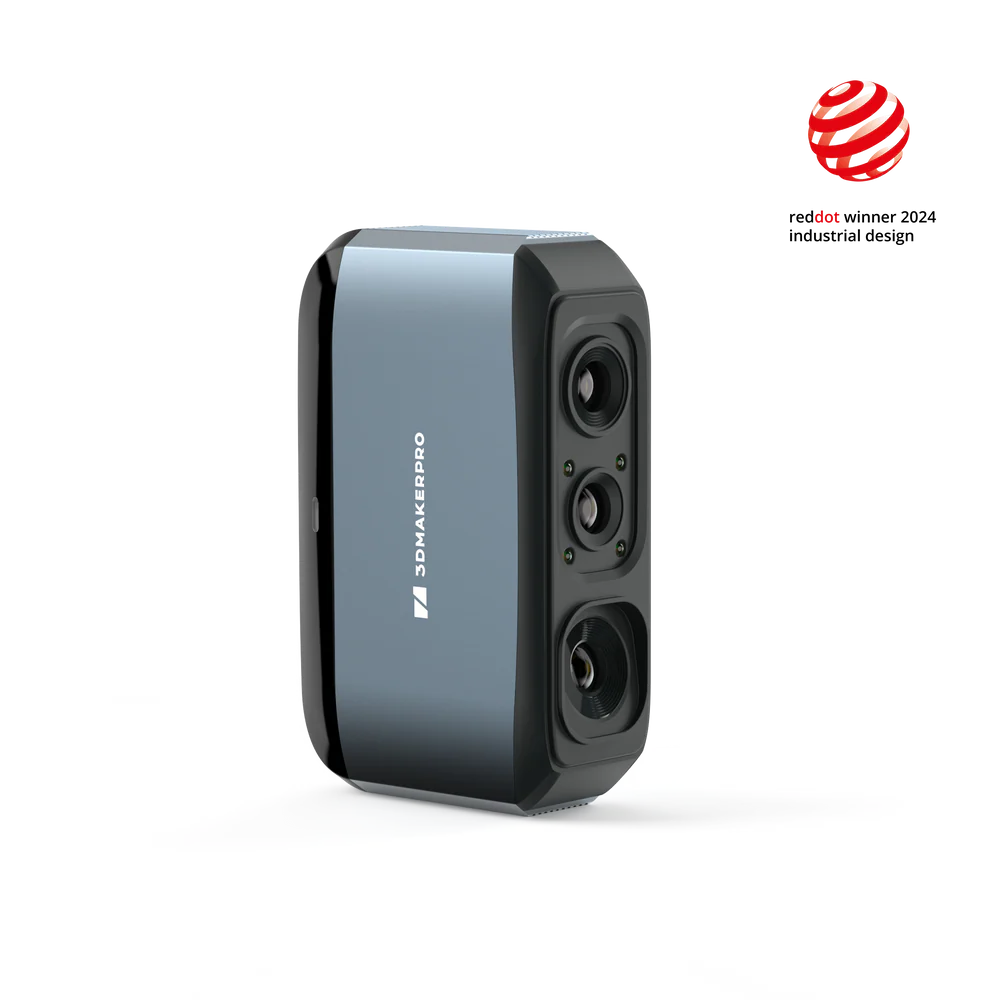
3DMakerpro Moose
Best for: medium-format work that also covers small. The Moose is 3DMakerpro’s flagship medium scanner with AI visual tracking and 24-bit color, and it does reach down to small objects. Honest framing: this is really a medium-format tool that overlaps into small at the upper end. Its real home is the medium guide; for true small-format work, the Seal pair are the better picks.
Price: ~$699 (approximate; varies by bundle, sale period and region, click through for current pricing)
- Accuracy 0.03mm; resolution 0.07mm
- Blue LED structured light; AI visual tracking
- Object range 15 to 1500mm; 24-bit color
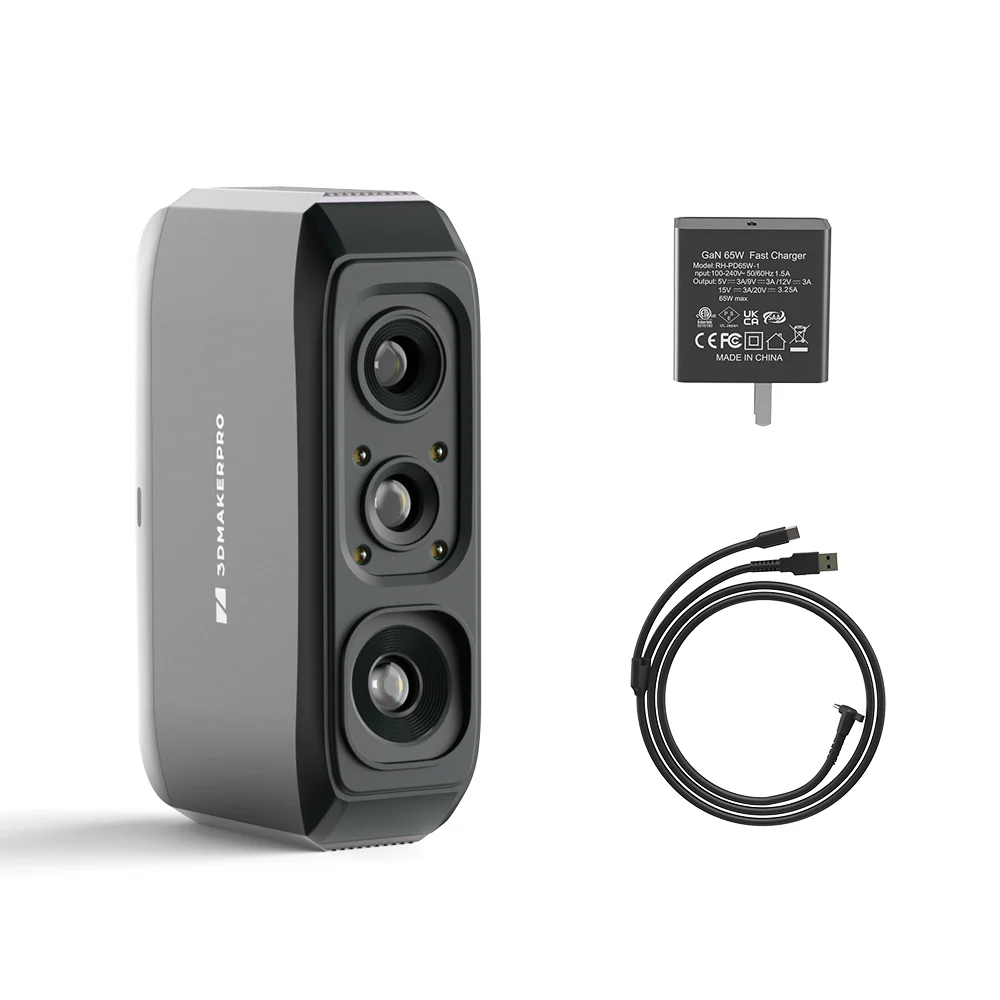
3DMakerpro Moose Lite
Best for: the cheapest 3DMakerpro entry. The Moose Lite swaps blue light for NIR and drops to mono texture output, hitting 0.05mm accuracy at meaningfully less money. Same overlap caveat as the Moose: real home is the medium guide; for true small-format detail, look at Seal Lite first.
Price: ~$399 (approximate; varies by bundle, sale period and region, click through for current pricing)
- Accuracy 0.05mm; resolution 0.10mm
- NIR light source; AI visual tracking
- Object range 15 to 1500mm; mono texture
Shining3D / EinScan
Shining3D’s EinScan line is the desktop-turntable answer to small-format scanning: more workflow than handheld, easier to learn, and backed by Shining3D’s two decades of pro 3D-scanning engineering. The EinScan SE V2 is the consumer entry; the SP V2 is the step up for designers and digital-content work.
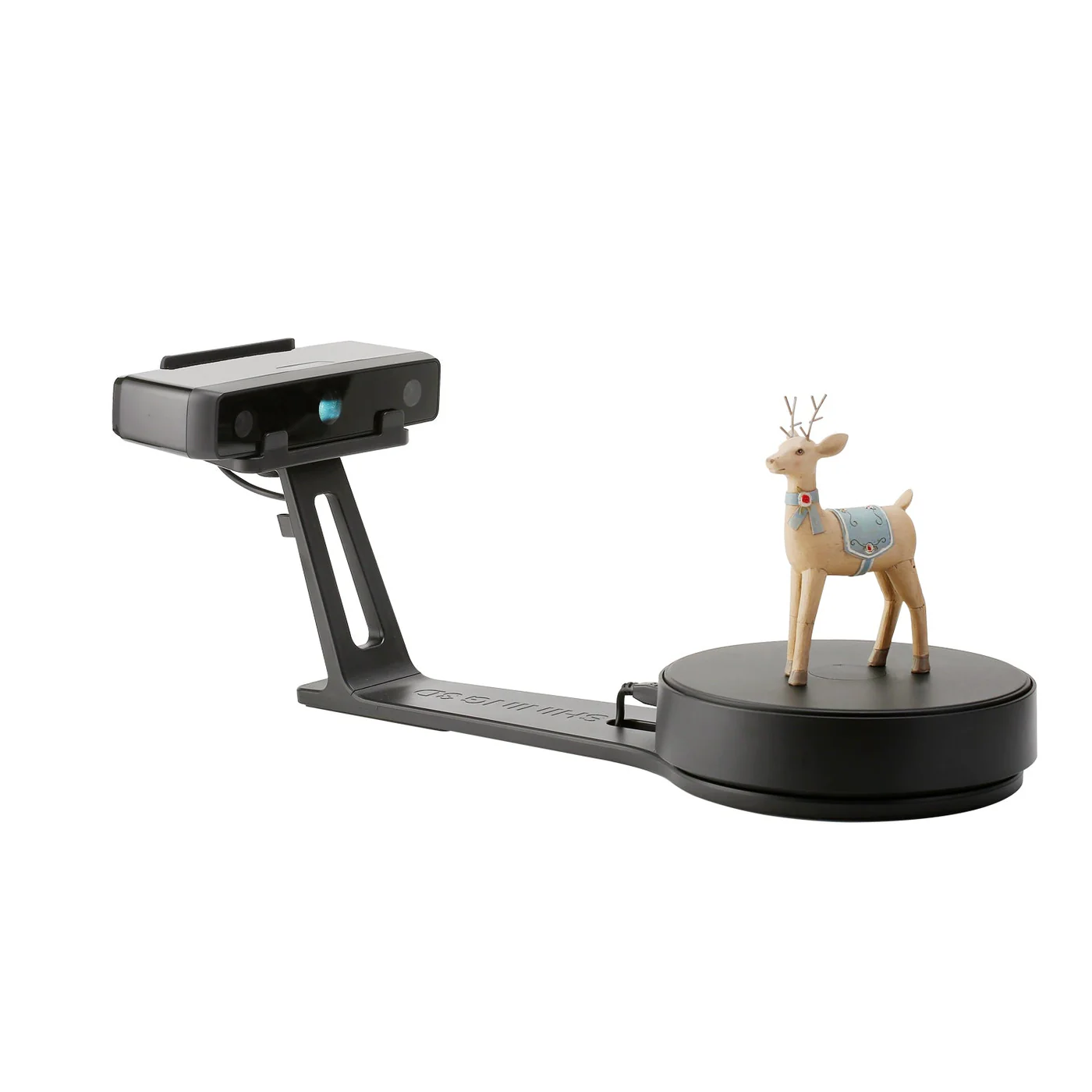
EinScan SE V2
Best for: a fully bench-mounted small-format workflow with an automatic turntable, from Shining3D’s pro pedigree. The EinScan SE V2 sits the scanner head on a tripod and rotates the object on a calibrated turntable; you press scan and walk away. Easier to learn than any handheld at this price, and capable for design, training, and 3D-printing small-to-medium objects. The pricier EinScan SP V2 (the next card) is the step up if you outgrow the SE.
Price: ~$1,199 (approximate; varies by bundle, sale period and region, click through for current pricing)
- Accuracy 0.1mm; desktop turntable workflow
- Auto-scan turntable + manual tripod modes
- From Shining3D (EinScan/Einstar parent); SP V2 is the step up
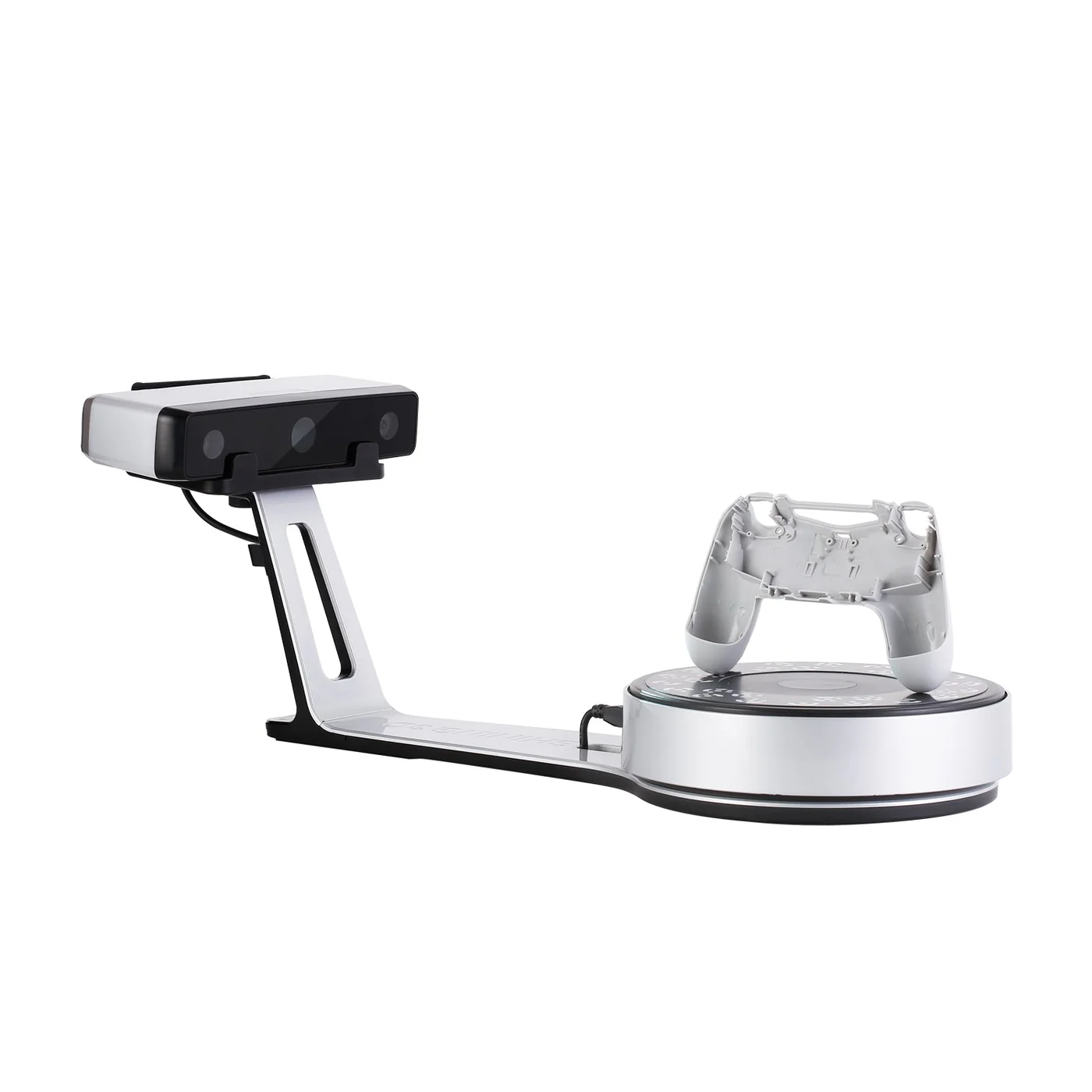
EinScan SP V2
Best for: the step up from the EinScan SE V2 for designers, prosumers, and small-shop reverse engineering. Single-shot accuracy of 0.05mm, a 360-degree auto-scan in under 45 seconds, and a 200 x 150mm single-capture window. Two modes (Fixed Scan with turntable, and Fixed Scan without turntable for objects up to 1.2m), full texture capture, and the EXScan S workflow on Windows or macOS. Ships with Solid Edge SHINING 3D Edition for scan-to-CAD. For dental, the SP V2’s 0.05mm accuracy is the realistic floor for crown and inlay work, where the SE V2’s 0.1mm sits at study-cast and orthodontic-model level.
Price: ~$2,399 (approximate; varies by bundle, sale period and region, click through for current pricing)
- Single-shot accuracy 0.05mm; point distance 0.17 to 0.2mm
- 360-degree auto-scan under 45 seconds; 200 x 150mm capture; up to 1.2m without turntable
- EXScan S (Windows and macOS); Solid Edge SHINING 3D Edition included
Creality
Creality’s Ferret pair (SE, Pro) all share the same 0.1mm accuracy and lightweight 105g form factor; what differs is connectivity and capture style. The SE is the cheapest and USB-only; the Pro adds Wi-Fi 6.
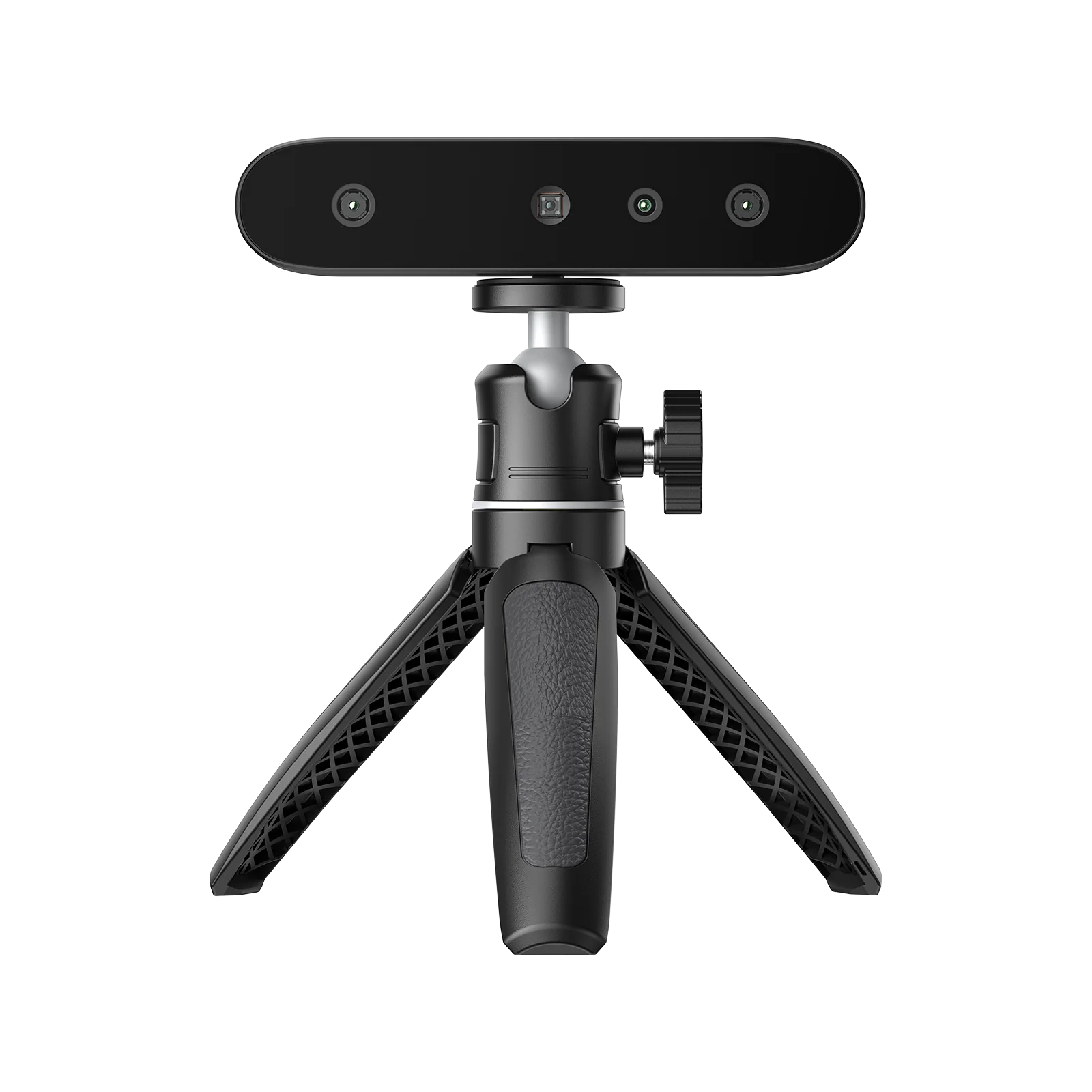
Creality CR-Scan Ferret SE
Best for: the cheapest serious scanner on the page. The Ferret SE is a desktop-focused entry that punches well above its price, with anti-shake one-shot 3D imaging and the ability to scan dark or metallic objects without spray. Connects via USB-C to Windows or Mac (no mobile support), and gives you the cleanest plug-and-scan setup in the Creality lineup. Note the bracket: the Ferret SE starts at 150mm object size, so it fits action figures, busts, and palm-size parts; for ring or coin-scale detail the Seal Lite is the cheapest pick that captures real detail.
Price: ~$199 (approximate; varies by bundle, sale period and region, click through for current pricing)
- Accuracy 0.1mm; resolution 0.16mm; 30 fps
- Anti-shake one-shot 3D; no spray on dark/metallic
- USB-C to Windows or Mac; 105g
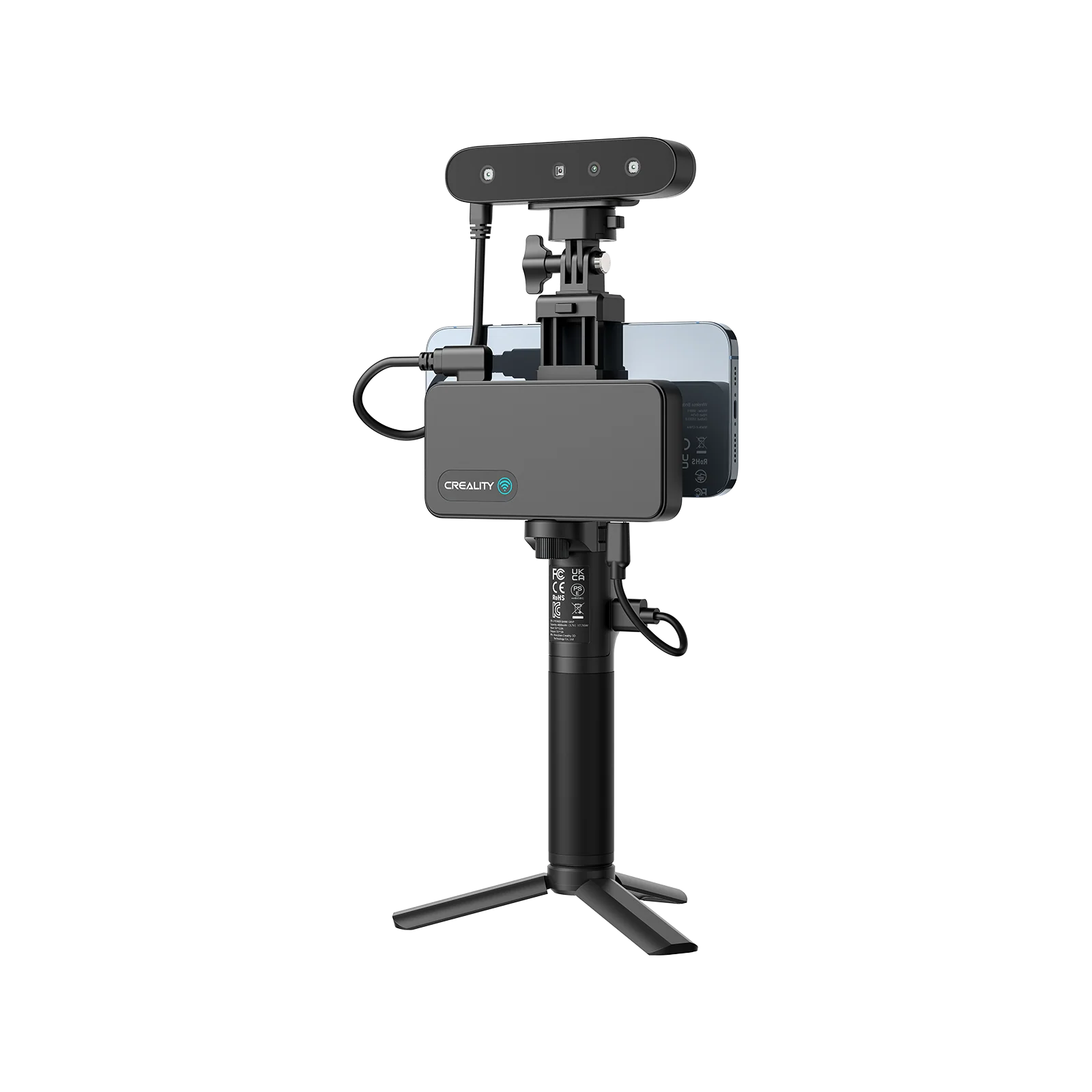
Creality CR-Scan Ferret Pro
Best for: the Ferret with the wireless workflow the original needed. The Ferret Pro adds Wi-Fi 6 scanning, anti-shake technology, the ability to scan black or metal objects without spray, and full-color 3D models. One-click operation and lightweight at 105g, the best Creality Ferret variant for users who don’t want to be tethered. Same bracket caveat as the SE: starts at 150mm, so not a jewellery-scale tool.
Price: ~$359 (approximate; varies by bundle, sale period and region, click through for current pricing)
- Accuracy 0.1mm; resolution 0.16mm; 30 fps
- Wi-Fi 6 wireless; anti-shake; no spray on dark/metallic
- One-click operation; 105g
Small-format scanners compared
Every pick on the specs that decide small-format work. Scroll sideways on a phone. Click any scanner name to jump to its detail card. Prices are approximate.
Reading the table: On small objects, the Resolution column matters as much as Accuracy. All numbers are manufacturer specs and vary in the real world with operator, surface, and registration method. Prices are approximate as of 2026-05-28 and vary by bundle, sale period, and region; click through for current pricing.
When your object is bigger than this guide covers
Above 300mm, several picks on this page (Mole, Moose, Moose Lite, INSPIRE 2, POP 3 Plus, POP 4, the Ferret family) already reach into the medium bracket, but they share that page with scanners purpose-built for it. For furniture, prototypes, helmets, and half-body work see our best 3D scanners for medium-sized objects guide. For cars, sofas, full body, and architectural pieces see our best 3D scanners for large objects guide. For metrology-grade inspection work see the best professional 3D scanners guide.
How to choose a small-format scanner
Start with what you are scanning and how big it really is. For sub-100mm objects (rings, coins, miniatures, electronics) the Seal at 0.01mm and the MINI 2 at 0.02mm point precision are the picks that capture the detail you actually want. For 100mm to 500mm pieces (action figures, small mechanical parts, small dental work) the MINI 2’s wider FOV at longer working distance and the Seal Lite’s value bracket both work. For larger work bleeding into medium-format, the Moose / Moose Lite cross over here, but their real home is the medium guide.
Pick the workflow next. Handheld is the default and gives you the most flexibility. Desktop turntable (EinScan SE V2) is faster and more repeatable when objects are mountable; it is also the easiest workflow to learn. For users who want a one-click handheld with no laptop tether, the Ferret Pro adds Wi-Fi 6 to the otherwise USB-tethered Ferret family.
Think about surface. Matte and feature-rich objects scan easily on any structured-light pick. Dark or polished surfaces want the INSPIRE 2’s IR-laser mode, the POP 4’s hybrid laser, or a thin matte coat as a fallback. People scanning favours infrared light: the Mole here, or the Einstar VEGA on the medium guide.
Finally, software; our 3D scanner software guide covers the whole chain in depth. The realistic prosumer pipeline is the scanner’s bundled suite (Revo Scan for Revopoint, JMStudio for 3DMakerpro, Creality Scan for Creality, EXScan for Einstar / Shining3D) doing the capture and alignment, mesh cleanup in Meshmixer or Blender, then export to your 3D printing slicer or basic CAD (Fusion 360, FreeCAD, Onshape). For hobby reverse-engineering you can stop there. For industrial inspection step up to paid suites such as Geomagic or Control X, but most small-format buyers do not need them.
Where to go next
For the full picture across all brackets and price tiers, start with our complete 3D Scanner Buyer’s Guide 2026. Scanning bigger? Companion bracket guides: medium-sized objects, large objects, and professional and industrial. For the software pipeline see our 3D scanner software guide; for the buy-or-hire decision see 3D scanning service vs buying a 3D scanner. Hands-on impressions in our 3DMakerpro Seal and Mole reviews. Planning to print what you scan? Start with the best 3D printers of 2026.
Frequently asked questions
What size objects count as “small-format,” and how do I know I am in this bracket?
On this page, small-format covers objects roughly 10mm to 300mm with an emphasis on detail capture: jewellery and rings, coins, miniatures and figures, electronics housings and connectors, dental models, small mechanical parts and prototypes, action figures. Several scanners here stretch up into the medium bracket (100mm to 1500mm); those are clearly framed as crossover tools, and their real home is our medium guide.
Do I need a turntable, or can I scan small objects handheld?
Either works. Handheld scanners (MINI 2, Seal pair, Ferret family) give you maximum flexibility and let you scan objects you cannot easily put on a turntable. Desktop turntable scanners like the EinScan SE V2 trade flexibility for an easier workflow: place object, press scan, walk away. For jewellery, dental, and small mechanical-part repeatability the turntable workflow is usually faster and cleaner; for irregular shapes or one-off pieces, handheld wins.
Why does resolution matter more than accuracy on small objects?
Accuracy tells you how close to true a single measurement is; resolution tells you the smallest detail the scanner can capture. On a 30mm earring or a 10mm coin, a scanner with 0.05mm accuracy but 0.2mm resolution will miss the texture and engraved detail that make the scan useful. The Seal at 0.01mm accuracy and 0.05mm resolution wins on small detailed objects precisely because both numbers are tight. Watch the resolution column in the comparison table.
Can I scan jewellery, coins, or small reflective objects without spray?
It depends on the scanner and the surface. Polished gold or silver and chrome are still the worst surfaces for any consumer scanner; a thin matte spray (or AESUB vanishing spray) is the honest answer. Blue-laser and hybrid laser+IR scanners (POP 4) handle dark or matte-metallic surfaces marker-free; the INSPIRE 2’s IR-laser mode also reads dark surfaces unsprayed. For highly polished jewellery, plan to spray.
Can I scan a person’s face or hand at this resolution?
Yes, but pick the right scanner. The 3DMakerpro Mole uses near-infrared light that is safe and comfortable on skin and captures faces and hands well; the Einstar VEGA on our medium guide is similar at a larger scale. Avoid blue-laser scanners on people; the light is harsher to look at, and the working distance is wrong for faces. If your work is mostly people scanning, the Mole and VEGA are your picks.
What is the cheapest scanner that actually captures detail at jewellery scale?
The honest answer is around $349: the 3DMakerpro Seal Lite at 0.02mm accuracy and 0.07mm resolution. The Creality Ferret SE at ~$199 is cheaper but its 0.1mm accuracy and 0.16mm resolution will miss engraved detail on small objects. Below the Seal Lite you are buying a scanner for shape capture, not jewellery-grade detail.
Can my phone or a free app do this?
For very small objects: not really. Apps like Polycam and Scaniverse work surprisingly well on furniture-scale and room-scale subjects, but their LiDAR sensors and photogrammetry pipelines are not built for sub-centimetre detail. For a 30mm pendant or a 10mm screw, a dedicated scanner is the answer. For visualization of larger objects, phone scanning is often enough before buying.