
Castable resin exists for one moment: the burnout. A printed pattern goes into investment plaster, the kiln takes it to several hundred degrees, and the resin must vanish, completely, gradually, and without swelling, leaving a cavity that molten metal fills perfectly. Get that right and a desktop printer replaces hours of wax carving; get it wrong and you learn why this is the one resin category where discipline matters more than the bottle.
This guide covers the castables that earn their place on a jeweller's bench, from the forgiving all-rounder to the wax-loaded formulas for heavy pieces and the professional cartridge workflow. It is a small, high-stakes category, so we kept the list short and the burnout advice long. For the wider material landscape, start at our 3D printer resin guide; for the machines, the best resin 3D printers.
Jump to menu
Our top castable resin picks at a glance
How lost-wax casting works with printed patterns
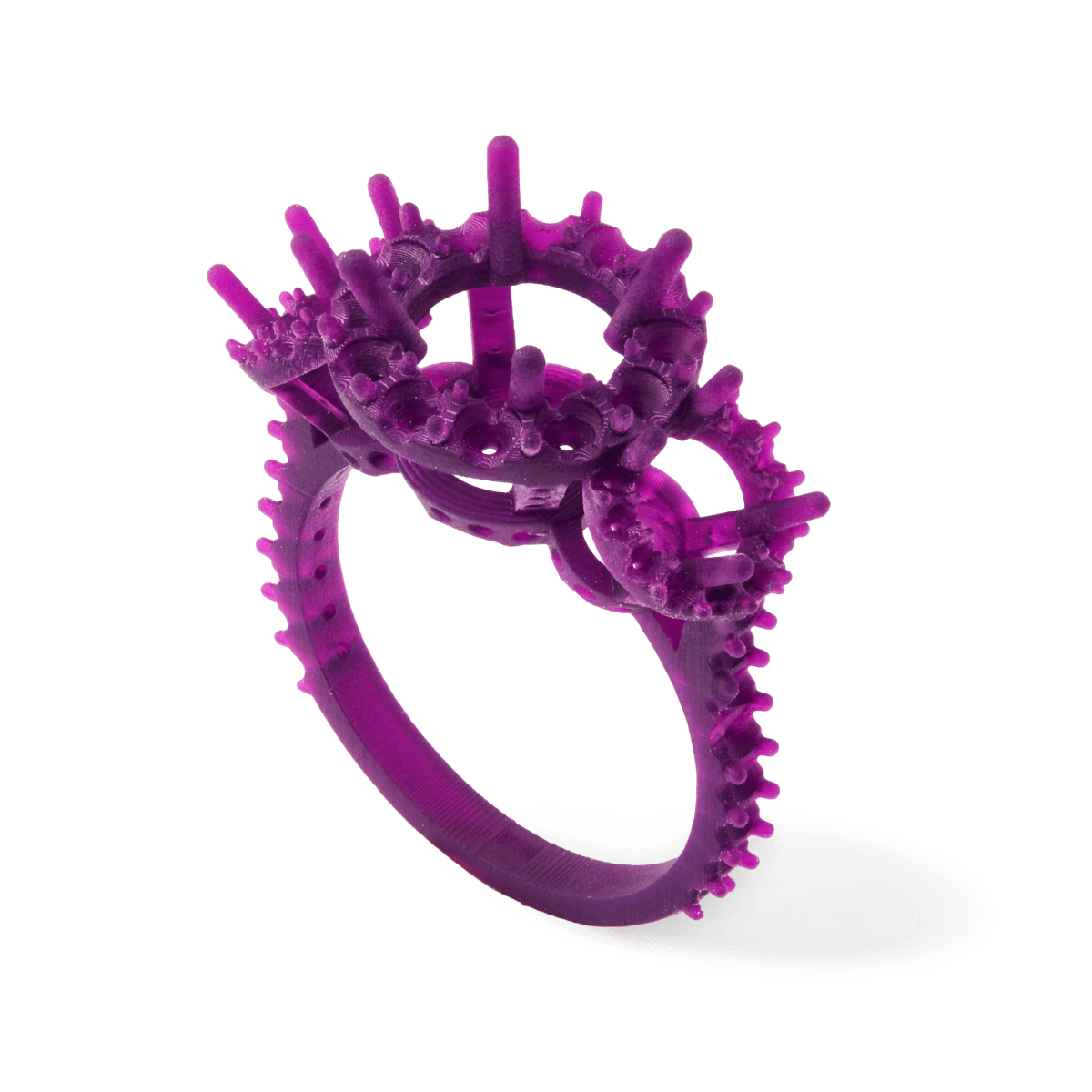
The process is the same one jewellers have used for millennia, with the printer replacing the wax carver. You print the piece in castable resin, attach sprues, and invest it in plaster. The kiln then burns the pattern out on a controlled temperature ramp, leaving a perfect cavity, and molten metal is cast into the void. The finished piece reproduces every printed detail, which is both the promise and the warning: surface quality, layer lines, and dimensional errors all cast in metal.
What separates a castable from every other resin is behaviour under heat. It must burn to almost nothing, because ash becomes porosity in the metal surface, and it must expand gently, because thermal expansion inside a rigid mould cracks the investment. The wax content is the main lever: wax-loaded formulas behave closest to traditional carving wax and are kindest on thick pieces, while pure-polymer castables print firmer and sharper but demand a stricter kiln schedule.
The best castable resins compared
Prices are per litre and approximate; they vary by bottle size, sale period and region, so click through for current pricing. One shopping note: some product links open a brand's US store; every brand here also runs regional stores, so if the landing page does not match your region, use the store's own region or country switcher and your cart carries on from there.
The castable picks
Six bottles cover the bench: the forgiving default, the two wax-loaded Phrozen grades, the trade benchmark, and the two Formlabs materials that split the professional workflow between heavy pieces and fine filigree.
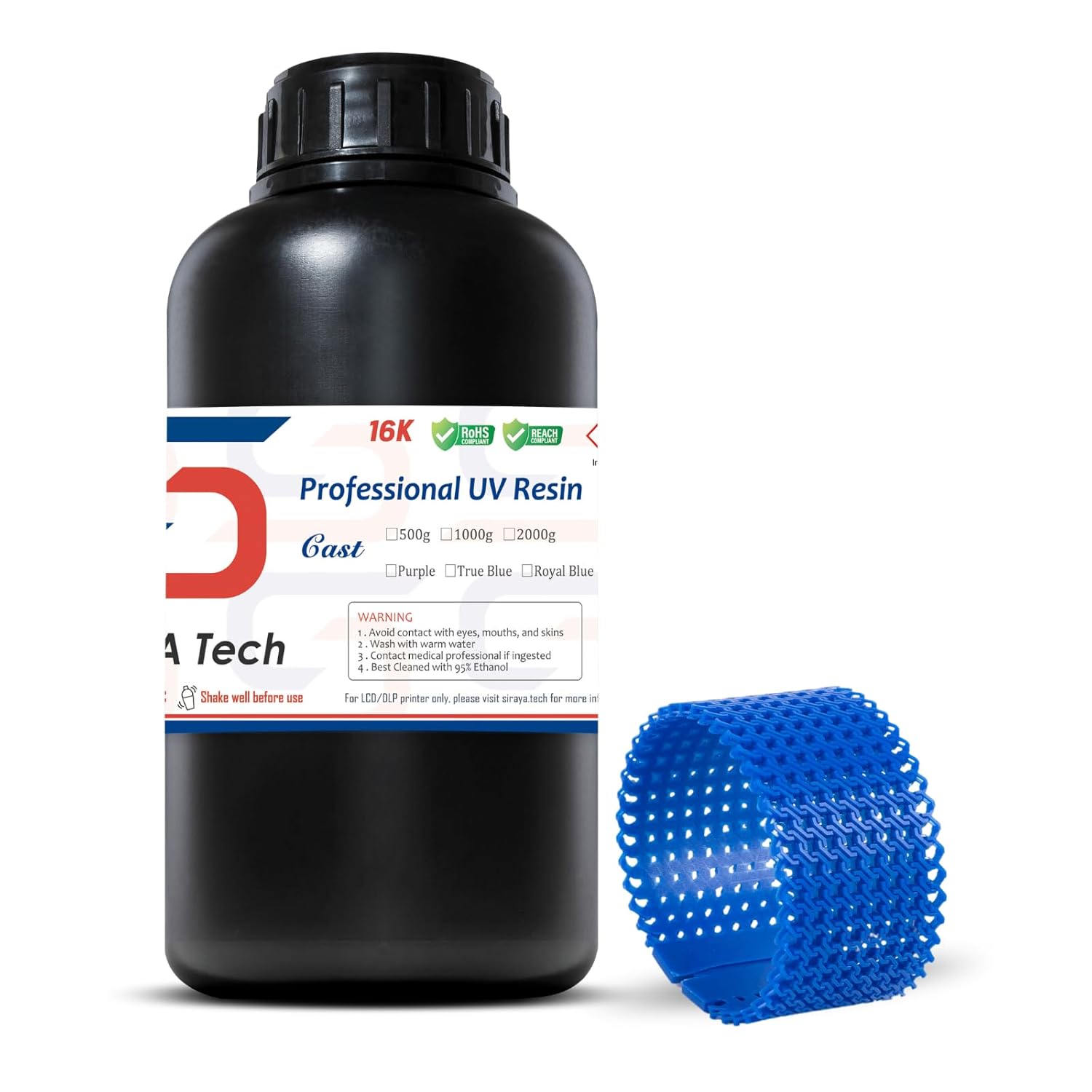
Siraya Tech Cast (Royal Blue)
Best for: the widest range of casting work without the fuss. Cast is a wax-based formula built around forgiving burnout: minimal ash, reliable results on both delicate filigree and thicker signet-style pieces, and, unusually for a castable, no demands for a bone-dry room or special additives to print well. The Royal Blue variant prints the easiest of the line, with strong plate adhesion and clean resolution. For a jeweller adding printing to the bench, this is the least painful place to start.
Price: ~$50/L (approximate; varies by bottle size, sale period and region, click through for current pricing)
- Clean burnout with minimal ash on thin and thick pieces alike
- Forgiving to print; no special environment needed
- Wax content means gentler handling of green (uncured) prints
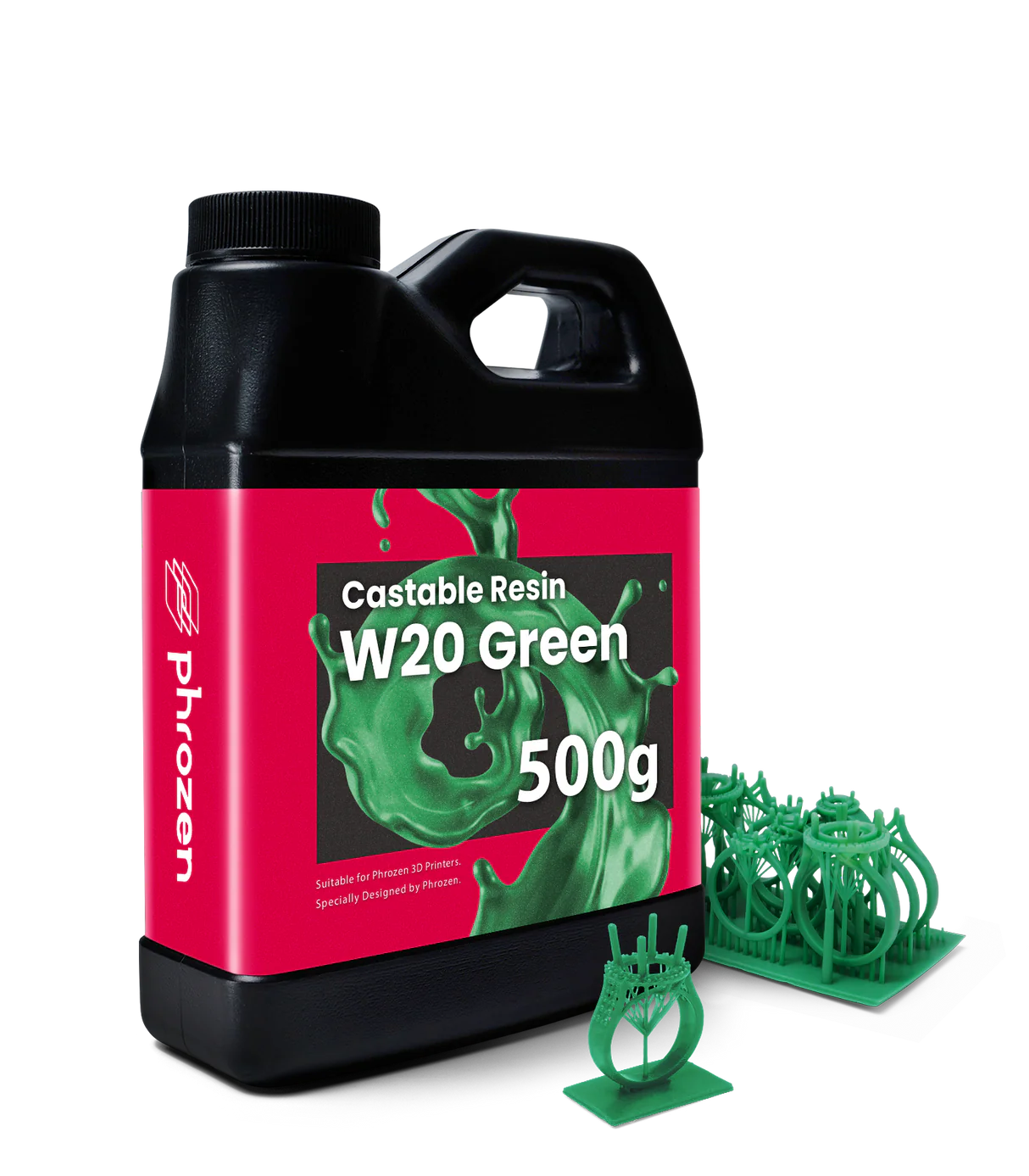
Phrozen Wax-Like Castable W20
Best for: stepping into wax-loaded casting without fighting the material. The W20 formula carries a 20 percent wax load, enough that burnout behaves close to jeweller's wax, gradual and gentle on investment, while the green print stays noticeably firmer and easier to support than the heavy wax loads. It is the wax-loaded bottle that prints most like a normal castable, which makes it the sensible first step before committing to the softer, waxier W40 below.
Price: ~$60/L (approximate; varies by bottle size, sale period and region, click through for current pricing)
- Wax-like burnout with a firmer, easier-printing green state
- The gentlest entry into wax-loaded casting
- For the thickest pieces, step up to the W40
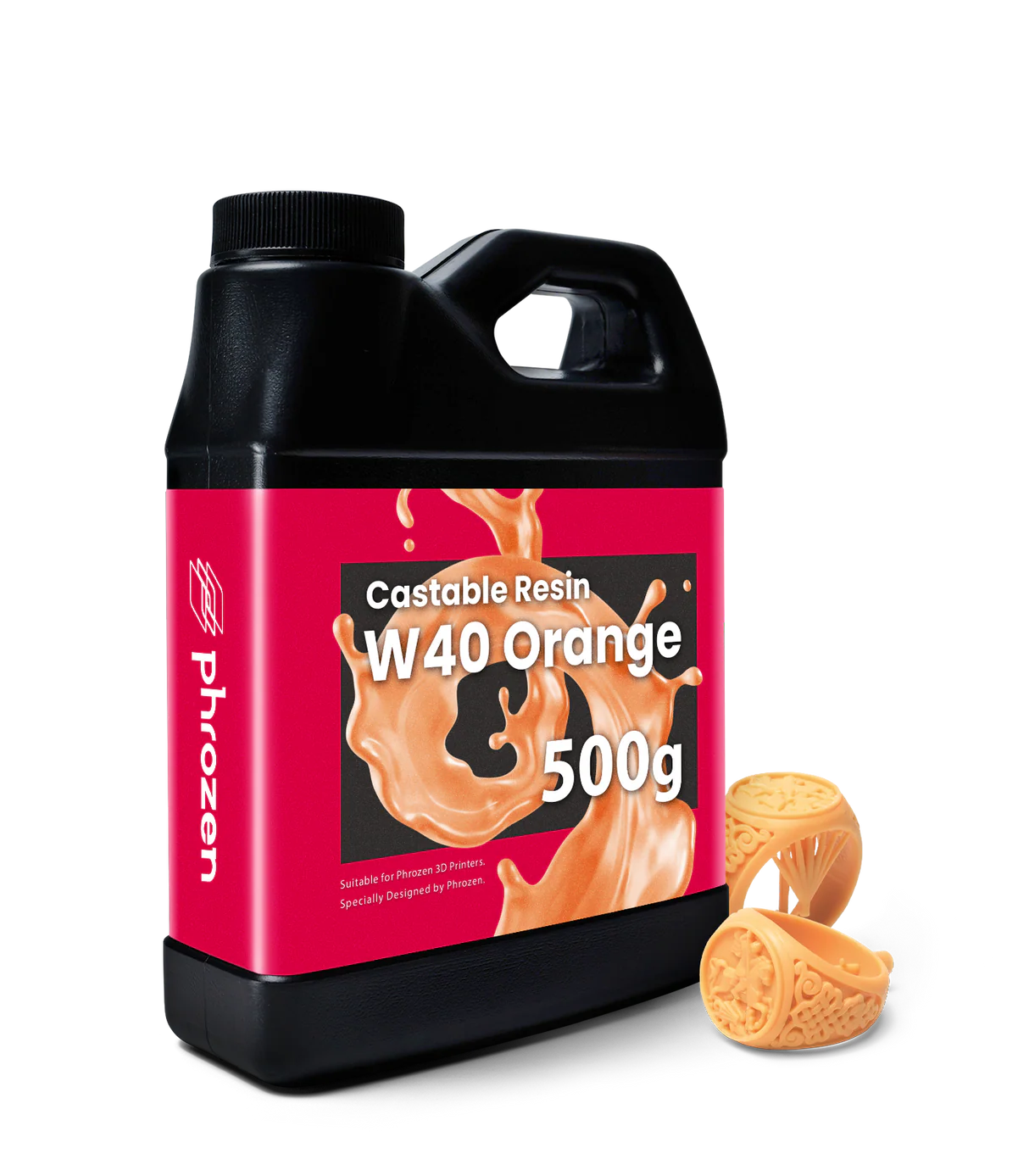
Phrozen Wax-Like Castable W40
Best for: the heaviest pieces and traditionalist casting houses. At a 40 percent wax load, the highest in the consumer market, W40's burnout behaves closest to actual jeweller's wax: gradual, predictable, and gentle on investment, which is exactly what chunky signets, bracelet sections, and heavy rings need to avoid trapped ash and cracked moulds. The price of all that wax is the softest green state on this page, so support generously and handle unwashed prints with real care.
Price: ~$65/L (approximate; varies by bottle size, sale period and region, click through for current pricing)
- 40 percent wax, the closest consumer burnout to real wax
- The safe choice for the thickest, heaviest pieces
- Softest green state here; supports and handling need care
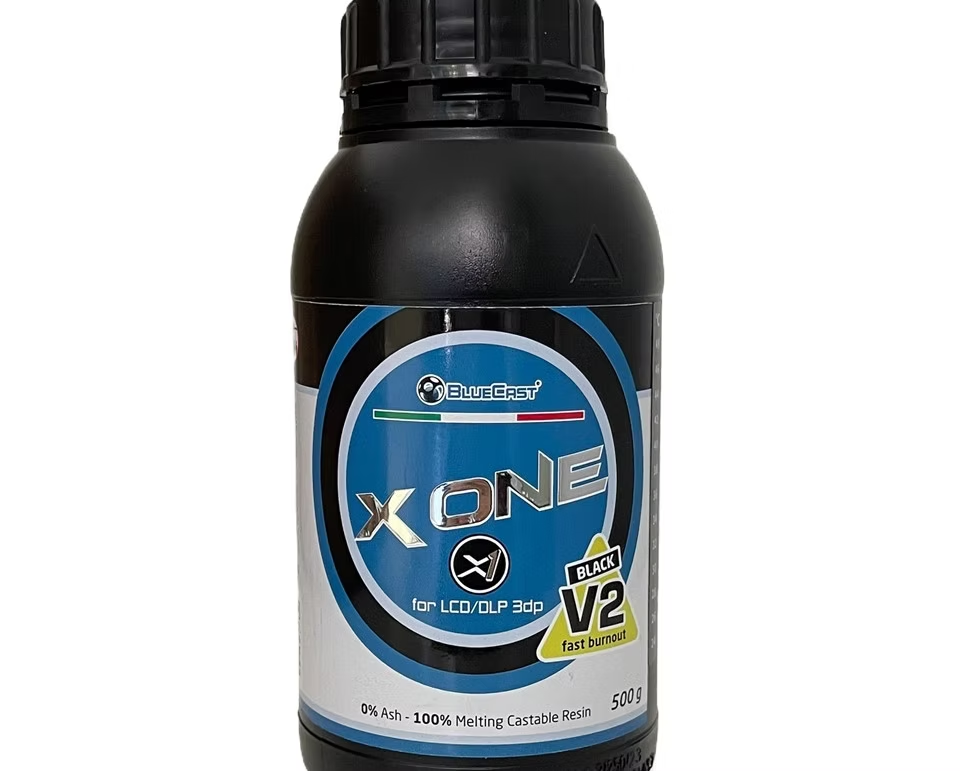
BlueCast X-One
Best for: production jewellery where a failed cast costs real money. BlueCast built its name inside the trade rather than the hobby, and X-One is the resin casting houses know on sight: engineered for direct casting with standard investment and burnout cycles jewellers already run, sharp detail on prongs and pavé work, and batch consistency treated as a specification. It costs the most here and cares more about your burnout discipline than the hobby bottles do.
Price: ~$70/L (approximate; varies by bottle size, sale period and region, click through for current pricing)
- Trade-standard reputation; casting houses know it
- Sharp detail on prongs, pavé, and fine filigree
- Premium price; expects a disciplined burnout cycle
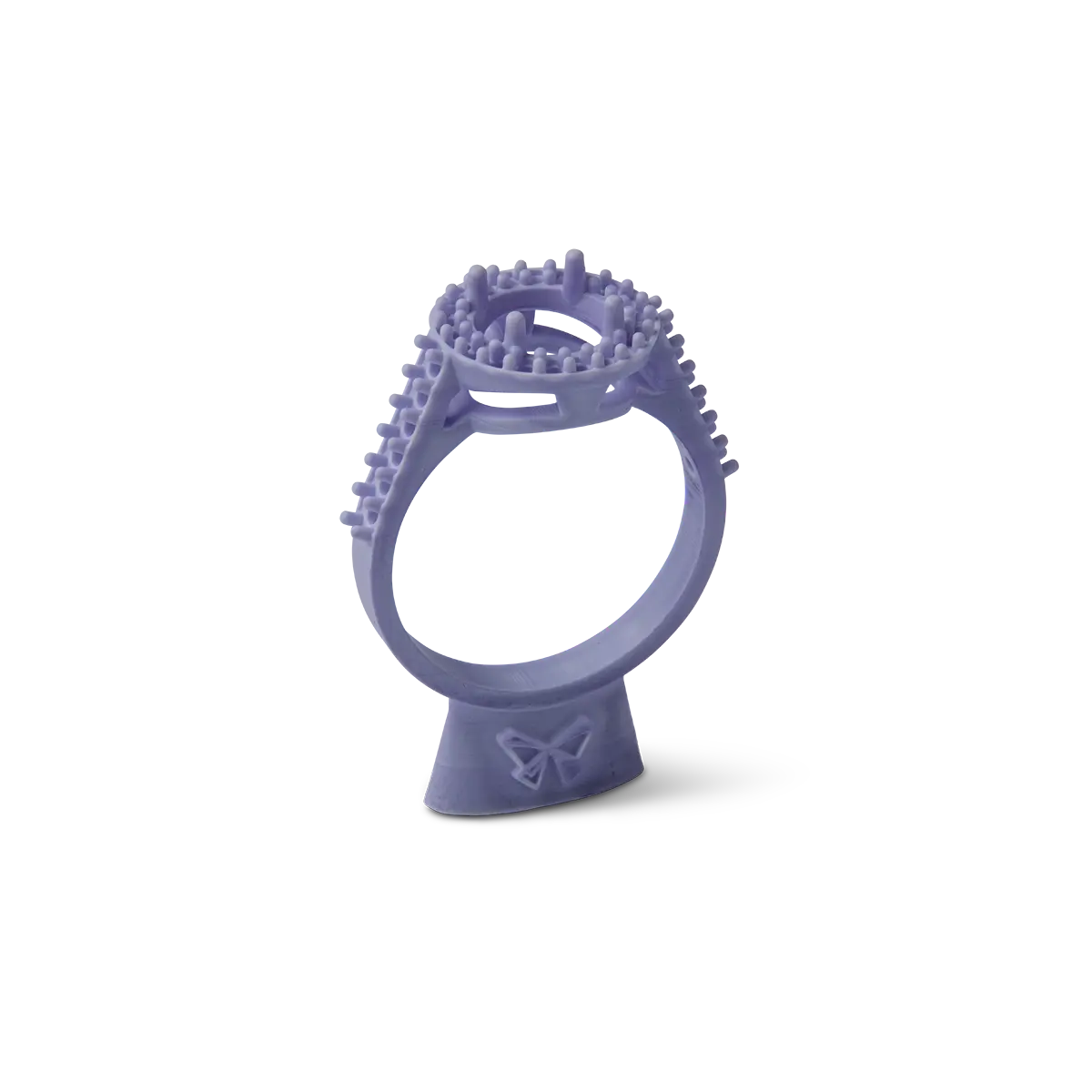
Formlabs True Cast Resin (Form 4)
Best for: studios running Form 4 hardware and dental labs. True Cast is the current Formlabs casting material: a wax-filled formula with a specified 0.03 percent ash content, low thermal expansion, and clean burnout on parts up to 5 mm thick, backed by published, validated schedules that remove the trial-and-error that eats silver and investment elsewhere. It handles medium to heavy jewellery and small engineering components; for fine wire filigree, Formlabs still points to its lighter Castable Wax Resin. Form 4 printers only, priced accordingly.
Price: ~$199/L (approximate; varies by bottle size, sale period and region, click through for current pricing)
- Wax-filled with a specified 0.03 percent ash content
- Validated schedules; repeatable across operators and machines
- Form 4 only; fine filigree goes to Castable Wax Resin instead
Formlabs Castable Wax Resin
Best for: the thinnest work on the bench. Castable Wax is Formlabs' filigree specialist: 20 percent wax with a measured zero ash content, and unusually high green strength, so ultrafine wire structures and delicate lattices hold their shape from plate to investment without post-curing. Where True Cast covers medium and heavy pieces, this is the bottle for the work a carving tool cannot touch. It runs on the full Form range, Form 2 through Form 4, which also makes it the Formlabs castable for older machines.
Price: ~$299/L (approximate; varies by bottle size, sale period and region, click through for current pricing)
- Zero measured ash; the clean-burnout benchmark
- High green strength holds wire filigree without post-cure
- Thin work only; heavy pieces belong with True Cast
Burnout, supports, and sizing: where castings are won
Three disciplines decide results more than brand choice. First, the burnout schedule: follow the manufacturer's ramp exactly, including the holds; every shortcut shows up as ash or a cracked mould. Second, supports and orientation: support on surfaces you can polish, never across pavé fields or hallmarking flats, and print green patterns gently, since wax-loaded resins are soft off the plate. Third, sizing: dial in a scale factor with test casts, because print shrinkage and metal shrinkage stack. Jewellers who send patterns to a casting house should say which resin the pattern uses and include the schedule; houses run different cycles for wax-loaded and polymer castables.
Handling is standard resin practice, gloves, ventilation, cured waste, covered in our 3D printing safety guide. A wash and cure station helps, with one castable-specific caveat: follow the manufacturer's cure guidance precisely, since several castables want minimal or no post-cure before investing.
Explore the resin guides
This guide is part of our resin series. The 3D printer resin hub maps every type and how to choose; the sibling guides cover the best resin for miniatures, the best tough and ABS-like resins, the best water-washable resins, and the best flexible resins. For the hardware side, see the best resin 3D printers and the best wash and cure stations.
Frequently asked questions
Can I cast with standard resin instead of castable resin?
No, and trying is expensive. Standard resins leave ash and expand aggressively when heated, which cracks the investment mould and ruins the casting. Castable resins are formulated to burn out completely at controlled rates with almost no residue, which is the entire property you are paying for.
What does wax-loaded mean, and do I need it?
Wax-loaded castables blend real wax into the photopolymer, typically 20 to 40 percent, so the burnout behaves like traditional jeweller's wax: gradual, gentle on the mould, and reliable on thick cross-sections. Pure polymer castables can hold slightly sharper detail and print firmer, but demand stricter burnout discipline. Thin filigree tolerates either; heavy pieces favour wax.
Do I need a special printer for castable resin?
No. Every pick here except the Formlabs cartridge runs on ordinary consumer MSLA printers, the same machines covered in our resin printer guide. What castables do demand is calibration care: patterns must be dimensionally accurate, since every error prints, casts, and lands on the finished ring.
How important is the burnout schedule?
It is most of the game. Each castable publishes a temperature ramp, hold times, and peak temperature; follow it exactly, because shortcuts leave ash and fast ramps crack investment. If a casting house does your burnout and pour, tell them which resin the pattern is printed in and hand over the manufacturer schedule.
How do I get ring sizes to come out right?
Account for double shrinkage: the resin shrinks slightly on printing and curing, then the metal shrinks on cooling. Most jewellers print test patterns, measure the cast result, and apply a scale factor, usually a fraction of a percent, in the slicer. Once dialled for your resin, investment, and metal, sizes repeat reliably.
Can I use these resins for dental casting?
The workflow is the same lost-wax process, and the wax-loaded picks, especially the Formlabs option with its validated schedules, are widely used for crowns, copings, and partial frameworks. Dental work layers regulatory and biocompatibility requirements on top, so labs should verify the specific resin is cleared for the intended indication in their market.