
NTU researchers have 3D-printed a small bone scaffold that fights infection in the days after surgery and keeps supporting new blood vessels and new bone for weeks after that.
A large gap in bone, left by injury, infection, or the removal of a tumour, often will not close on its own. Surgeons usually fill it with bone taken from somewhere else in the same patient. That means a second operation, and the amount of bone they can take is limited. The printed implant is meant to cover the early infection risk and the later bone growth in one piece.
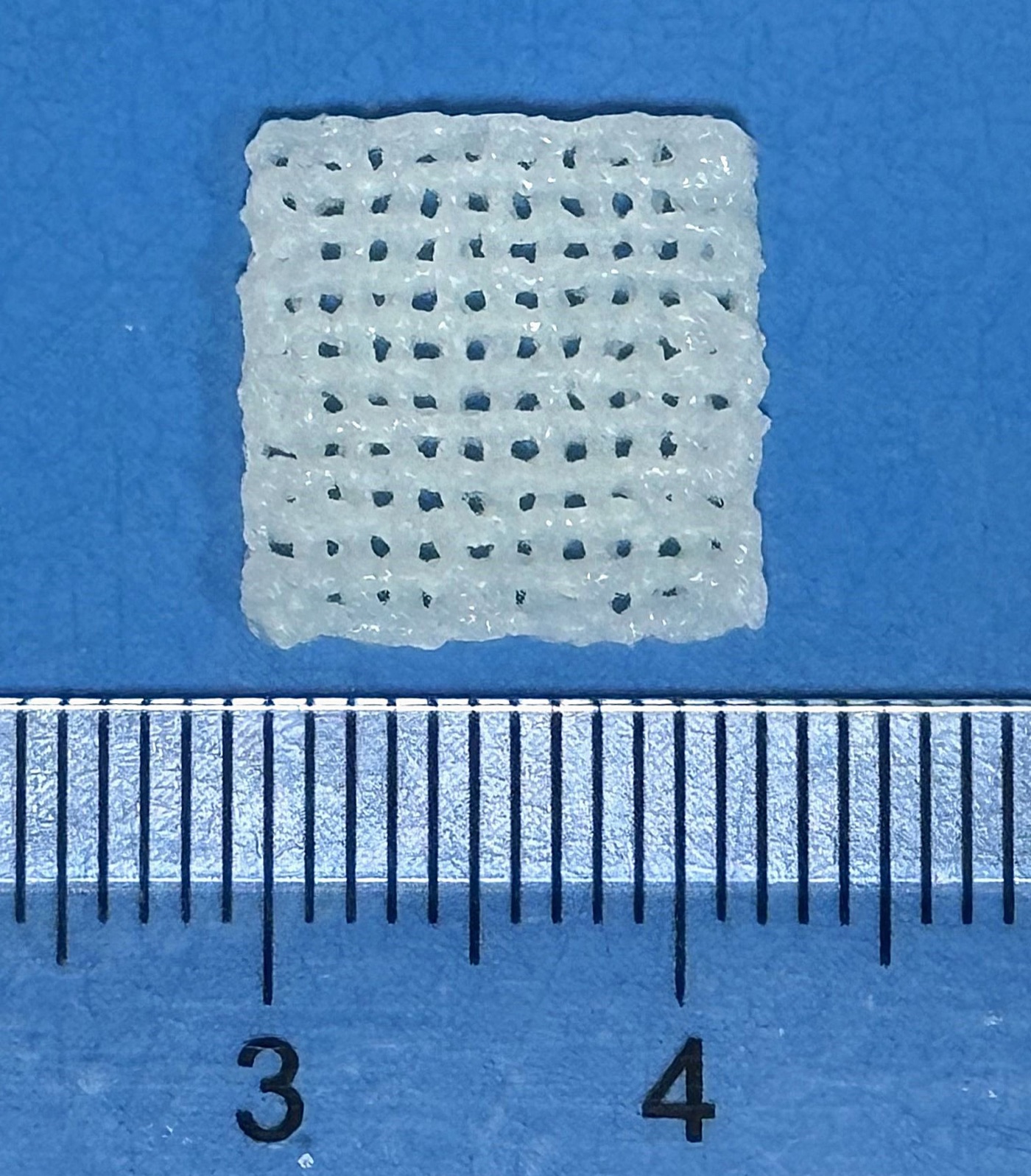
The scaffold is a soft gel of gelatin and sodium alginate, printed as an open grid a little over a centimetre across. Copper ions sit in the gel. The antibiotic amoxicillin sits inside porous hydroxyapatite beads mixed into the same ink. Both come out quickly at first, then more slowly over the following weeks. The fast release covers the period when infection risk is highest. The slower release continues while vessels and bone are still forming.
Copper on its own gave only moderate protection against bacteria. Paired with amoxicillin, the scaffold killed far more E. coli and Staphylococcus aureus than either ingredient alone. The antibiotic stops bacteria from building their cell walls. The copper ions damage the outer membrane. The same low dose of copper also encourages blood vessels to form and supports the bone-building activity of bone marrow stem cells.
In lab tests, the full scaffold prompted endothelial cells to migrate and form tube-like structures, and it produced the highest levels of several markers of bone formation. In rats, over eight weeks, it grew the most new bone and the most new blood vessels in a skull defect, with new bone extending inward from the edges. That animal study did not include a deliberate infection.
The porous beads were added to carry the drug and to help bone form. They also made the printed gel stronger and slower to break down than the gel on its own. Getting the ink to print took repeated changes to the recipe, temperature, pressure, and speed. It had to flow through a fine nozzle and still hold its shape when it landed.
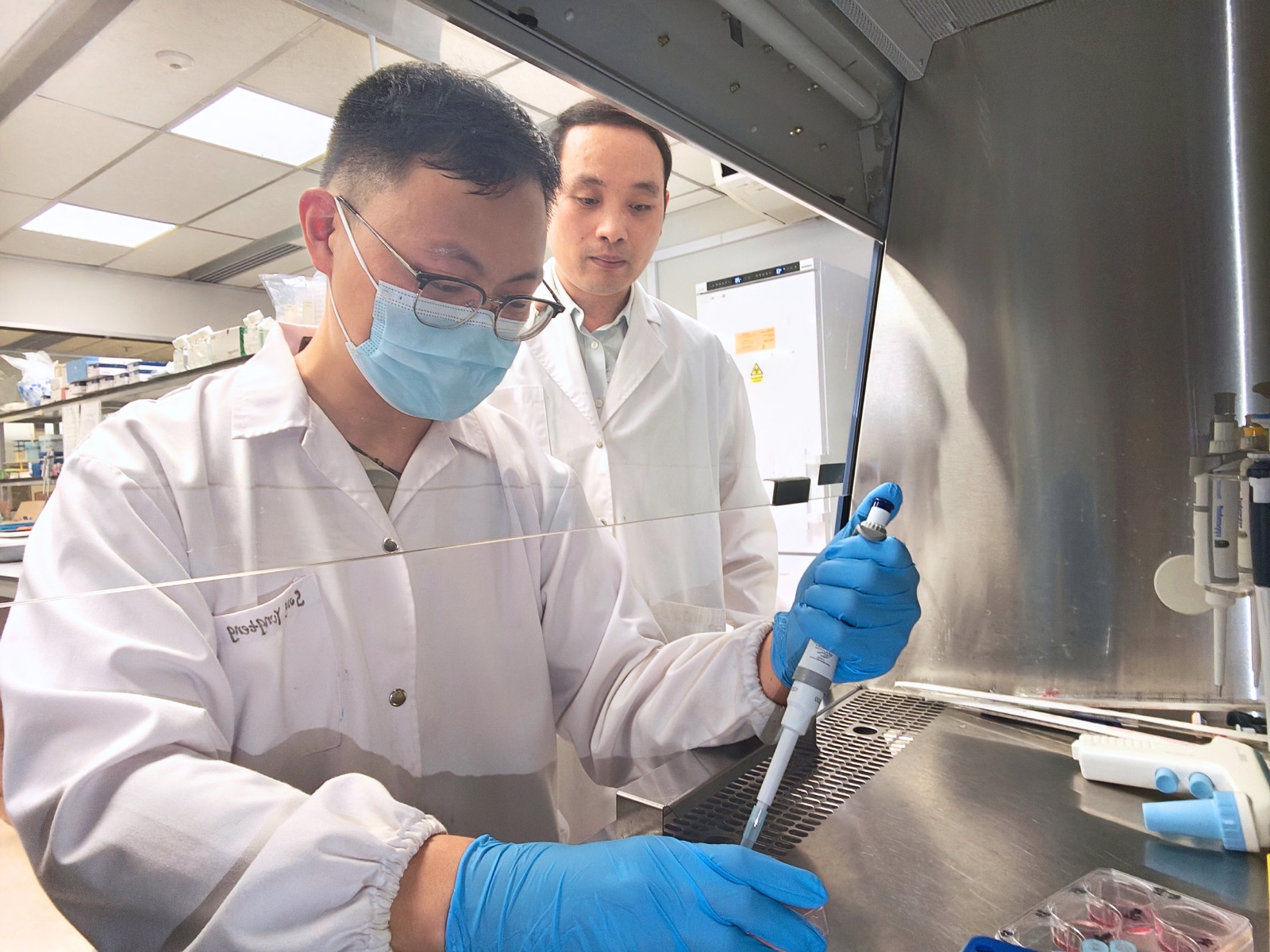
Yongteng Song is the first author. Associate Professor Changjin Huang leads the group in NTU’s School of Mechanical and Aerospace Engineering. The work is an early proof of concept. Longer studies, tests in infected defects and in larger animals, a way to manufacture the scaffolds, and regulatory approval would still be required before any clinical use.
The paper, “3D-printed multifunctional composite scaffolds incorporating copper ions/amoxicillin/hydroxyapatite for synergistic antibacterial and vascularized bone regeneration,” is published in Materials Today Bio.
Source: ntu.edu.sg