
How much does 3D printing cost in 2026? About $200 to start with a credible printer, $20 to $50 per month to run, and $0.50 to $10 per typical print. First-year totals span $325 for a casual hobbyist on a budget FDM machine up to $8,500 for a small print farm with five printers running production daily. The actual number depends on your printer tier, your material mix, your print volume, and how much accessory and replacement-part overhead you build in.
Scope: this guide covers consumer and prosumer hardware from $150 to roughly $3,500. Industrial systems (SLS, MJF, production DLP, Stratasys and HP machines) are out of scope. All prices are US dollars unless otherwise noted.
3D printing costs at a glance
For the head-to-head FDM vs resin cost comparison at the entry tier, see our FDM vs Resin first-year cost breakdown.
Jump to a section
3D printer purchase costs
Consumer 3D printer prices in 2026 span four tiers. The credible entry-point has dropped to $150, and the $300-$600 band produces results that needed $2,000 machines five years ago.
Entry tier (under $300)
The price floor for a credible new printer. On the FDM side, the Bambu Lab A1 mini ($200), Bambu Lab A1 ($300), Creality Ender 3 V3 SE ($199), and Anycubic Kobra 3 Combo ($259) all ship with auto-bed-leveling, print speeds of 300-500mm/s, and forgiving setup. On the resin side, the Anycubic Photon Mono 4 ($169), Elegoo Mars 5 Ultra ($269), and Phrozen Sonic Mini 8K S ($299) are the consensus picks. Build volumes are modest (180-220mm for FDM, 150x77x160mm typical for resin) and capability per dollar is the strongest the market has ever shipped.
Hobbyist tier ($300-$1,000)
The largest price band in the market and where most serious hobbyists land. FDM options worth naming: Creality K1C ($549) and Bambu Lab P2S ($799 with AMS combo) lead the enclosed CoreXY picks, with the Prusa MK4S kit ($799) and Bambu Lab P1P ($699) close behind. Faster speeds, 220-256mm cube build volumes, enclosed chambers for engineering materials. On the resin side, the Elegoo Saturn 4 Ultra 16K ($549), Anycubic Photon Mono M5s Pro ($499), and Phrozen Sonic Mighty Revo 14K ($699) bring larger 9-10″ screens, 12K-16K resolution, and tilt-vat mechanisms that eliminate the worst first-month failure modes.
Prosumer tier ($1,000-$3,500)
Where serious users buy. FDM at this tier: Bambu Lab X1 Carbon ($1,199), Prusa Core One ($1,199), Bambu Lab H2D ($2,199 large-format dual-extruder), Creality K2 Plus ($1,499 large-format). These are high-end CoreXY machines with carbon-fibre composite support, dual filament systems, and dimensional repeatability you can build engineering assemblies against. Resin at the same tier: Anycubic Photon Mono M7 Max ($1,299), Phrozen Sonic Mega 8K V2 ($1,500-$2,800), and the Formlabs Form 4 ($3,499). The Form 4 carries FDA-cleared dental and medical resin support, which is the deciding factor for clinical use.
Professional and industrial (above $3,500)
Out of scope for this guide. Production FDM, industrial SLS (Formlabs Fuse 1+, EOS), HP Multi Jet Fusion, and Stratasys polyjet systems start at $5,000 and reach six figures. The cost analysis at this level is an ROI calculation against tooling, prototyping cycles, or small-run manufacturing rather than the hobby-and-prosumer ownership conversation this page is built for.
Representative picks across the range
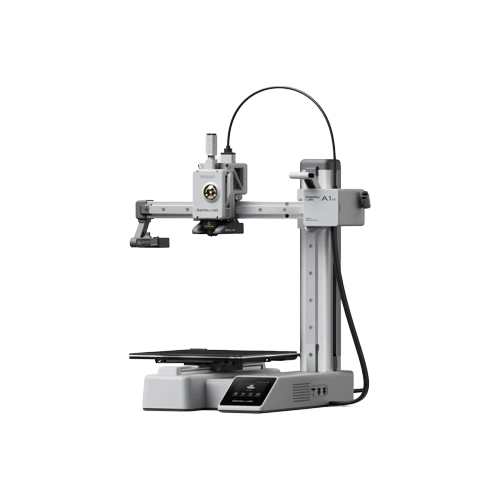
Entry FDM, $200
Bambu Lab A1 mini
180mm cube, auto-bed-leveling, AMS Lite multi-colour compatible. The cheapest credible new FDM purchase in 2026 and the consensus first printer.
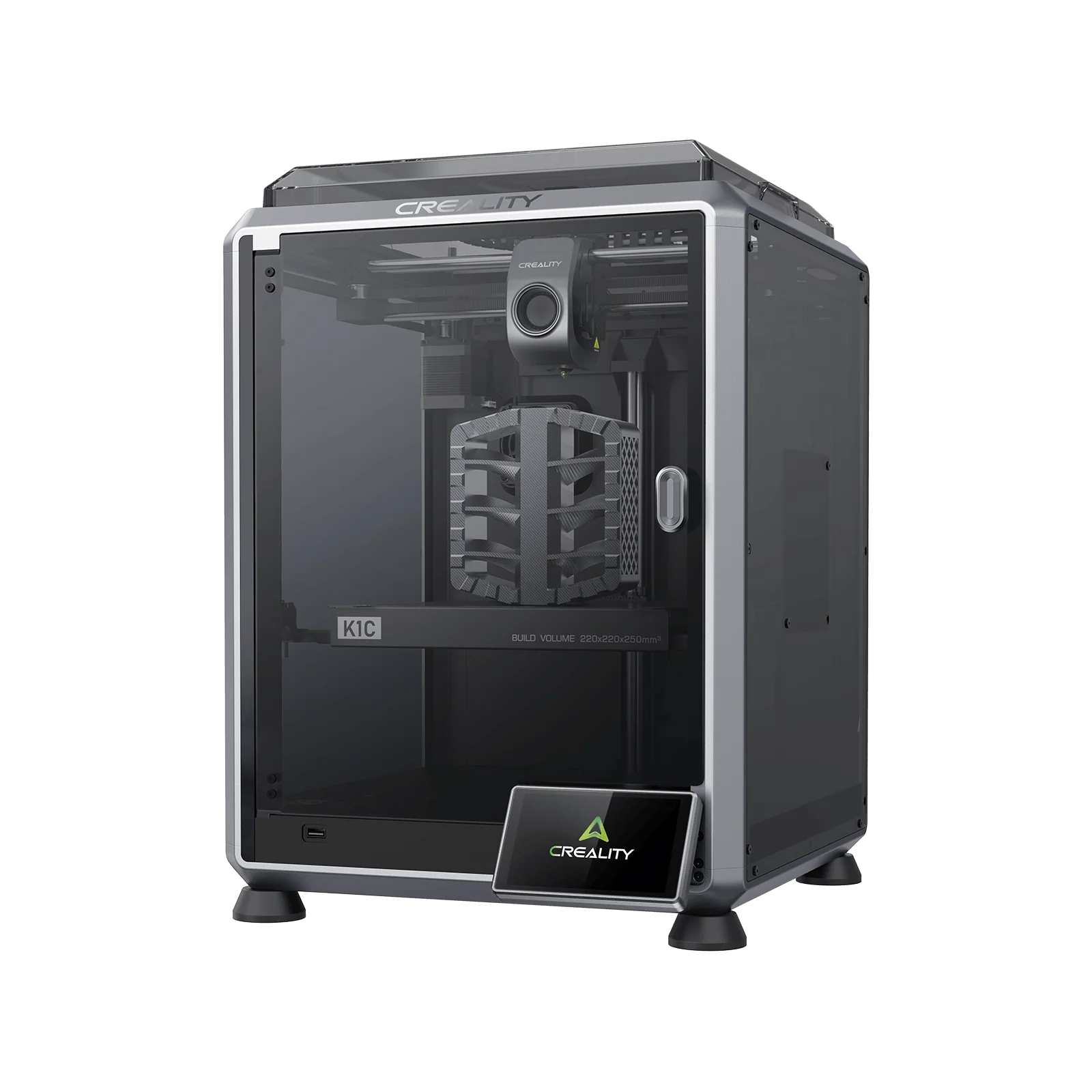
Hobbyist FDM, $549
Creality K1C
Enclosed CoreXY with hardened steel nozzle and activated-carbon filtration. Handles ABS, ASA, nylon, and carbon-fibre composites out of the box.
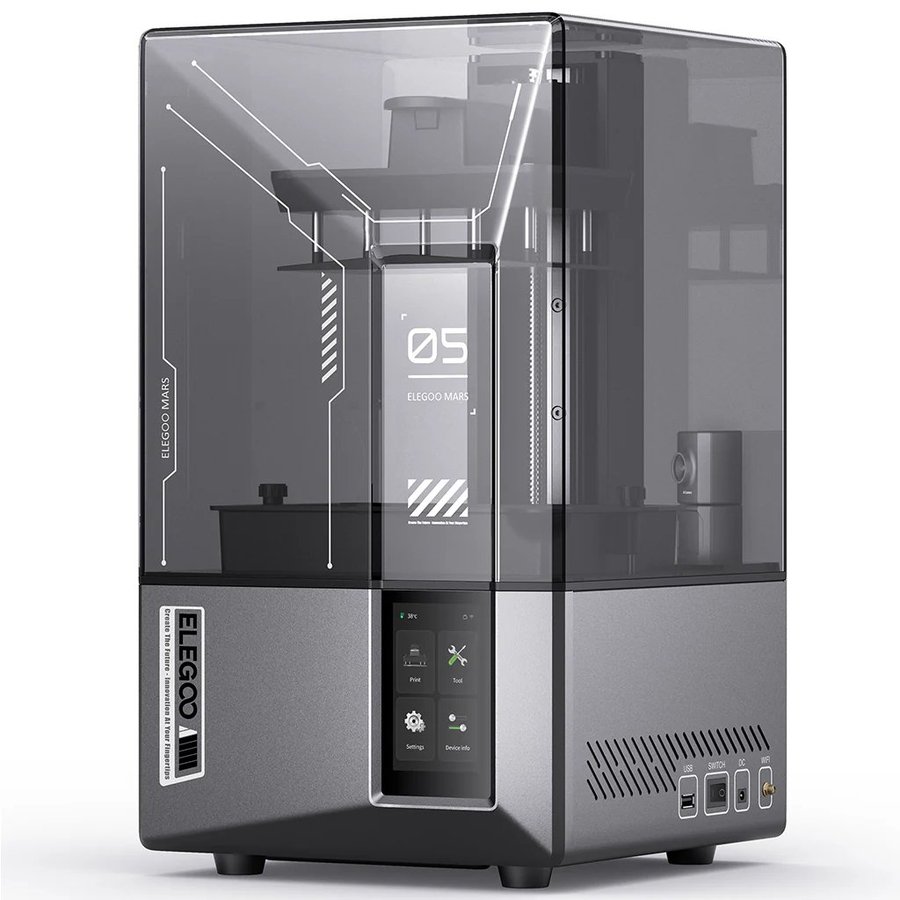
Entry resin, $269
Elegoo Mars 5 Ultra
9K resolution, tilt-vat mechanism (eliminates the biggest beginner failure mode), no manual leveling. The default resin starter pick for 2026.
For the full lineup across tiers, see our Best 3D Printers for Beginners guide for FDM and our Best Resin 3D Printers guide for resin.
Material costs
Material is the single biggest ongoing cost line for either technology. The good news is that PLA filament, the most common FDM material, has been getting cheaper, not more expensive. The less-good news is that specialty materials still command meaningful premiums.
Filament prices per kilogram (May 2026)
PLA runs $15-$30 per kilogram across major brands (Bambu Lab Basic, Polymaker PolyTerra, Sunlu, Hatchbox, eSUN). Store-brand and bulk PLA can dip to $12-$15 per kg with no meaningful quality drop on a modern auto-bed-leveling printer. PETG sits at $20-$30/kg. ABS and ASA are $25-$35/kg. Nylon climbs to $30-$60/kg, more for carbon-fibre and glass-fibre composites. TPU flexibles run $30-$50/kg. Industrial PEEK and PEI are $300-$500/kg and require a printer that consumer machines can’t match thermally.
Resin prices per litre (May 2026)
Standard resin runs $25-$50 per litre (Anycubic Standard, Elegoo Standard, Phrozen Aqua). Tough and engineering resins climb to $50-$80/L (Siraya Tech Tenacious, Anycubic ABS-Like Resin Pro 2). Castable jewellery resins are $80-$150/L. FDA-cleared dental resins are $200-$500/L, often $400-$500 for surgical-guide grade. Water-washable resins are priced like standard ($25-$50/L) but trade a bit of strength for the apartment-friendly cleanup workflow.
How much material a typical print uses
A typical 28-32mm tabletop miniature uses 5-15 grams of FDM filament or 5-15ml of resin. A medium functional FDM part (a 100mm bracket, a phone stand, a small gear assembly) runs 30-100g. A full helmet or large cosplay piece is 500g-2kg of FDM filament. A jewellery casting blank uses 1-5ml of castable resin. Add 10-20% for support material; budget another 10-20% for the print failures that any honest cost calculator includes.
The failure waste factor
First-print success rates on modern Bambu and Prusa FDM machines hover above 95% with default settings, so a budgeted 10% failure buffer is generous. Resin first-print success on entry-level machines runs 80-90% during the first month while you learn exposure and supports, climbing toward 95% with experience. Plan resin material at a 15-20% failure buffer in year one, dropping to 10% by year two. Costs of a failed print: the wasted material (usually $0.50-$5), the wasted time, and on resin, a cured layer stuck to the FEP that may need film replacement.
Cost per print, real numbers
Per-print cost depends on what you’re printing. The table below uses real-world settings and US average electricity at $0.17/kWh, per US Energy Information Administration monthly data. Material cost includes a 15% failure buffer.
The batch-printing economics on resin matter. A single resin miniature costs $0.45 in material; 50 miniatures filling the same plate cost $20 total, or $0.40 each. The layer time is fixed regardless of how many parts share the plate, so unit cost drops as you fill the build area. This is why miniature wargaming has gone heavily resin in 2026.
The per-print numbers above are material plus electricity only. Add $0.10-$0.30 per resin print for FEP wear, IPA, and the wash-cure cycle. FDM equivalents are smaller (nozzle wear, occasional build plate touch-ups) at $0.02-$0.05 per print.
Replacement parts and consumables
After the printer purchase and the spool or bottle, the second-largest cost line is the parts that wear out. The annual budgets below assume regular-but-not-heavy use; multiply by two for daily-use scenarios.
FDM consumables (annual budget: $50-$120)
- Brass nozzles, $2-$15 each, last 3-6 months under PLA use ($20-$40/year). Hardened steel nozzles ($20-$60) are required for carbon-fibre or glass-fibre composites and last indefinitely with non-abrasive filament.
- Textured PEI build plate, $20-$50, lasts 6-18 months before adhesion drops ($30/year).
- PTFE tubes, $5-$15 each, every 6-12 months on Bowden-style printers and longer on direct-drive ($15/year).
- Belts, gears, and the occasional hotend: $20-$60 every 1-3 years.
Resin consumables (annual budget: $200-$400)
- FEP films, $10-$15 each, replaced every 100-200 prints or every 1-3 months in regular use ($60-$100/year).
- LCD screens, $80-$150, replaced every 2,000-3,000 print hours or every 2-3 years of regular use ($40-$60/year amortised).
- IPA, $30 per gallon, used continuously for the wash step. Filter through a coffee filter and reuse to stretch a gallon to 6-12 months for hobby use ($60-$90/year).
- PPE replacements: nitrile gloves at $20 per 100-count box (2-4 boxes/year), respirator cartridges at $20 per pair (every 6-12 months of active use), safety glasses at $15-$25 (replaced as scratched). $50-$80/year total.
- Vat film, build plate touch-ups, miscellaneous: $20-$40/year.
Replacement timing
FDM owners replace something every six months. Resin owners replace something every quarter. Neither is a deal-breaker, but the resin cadence is faster than newcomers expect, and the cumulative consumables bill is the main reason a $549 resin printer’s true year-one cost lands closer to $850.
Accessories: optional, recommended, required
Software is free. Bambu Studio, OrcaSlicer, PrusaSlicer, Chitubox, and Lychee all download in minutes at no cost. Model files are free too. See our slicers guide for the software side and our free 3D model repositories guide for where to find designs.
FDM: optional, useful when you scale up
- Filament dryer, $30-$100. PLA tolerates moisture; nylon, PETG-CF, and TPU don’t. Worth it once you move beyond PLA. See our filament dryer guide.
- Enclosure, $80-$200, or built into machines like the K1C and P2S. Required for ABS, ASA, and nylon; useful for noise reduction in any setup. See our enclosure guide.
- Dry storage for filament, $20-$50 for a sealed box with desiccant. Skip until your collection passes 5-6 spools.
Resin: required, not optional
- Wash-and-cure station, $130-$200. Anycubic Wash and Cure 3.0, Elegoo Mercury Plus, Phrozen Cure. Automates the 20-30 minute manual wash and UV cure per print. See our wash-and-cure stations guide.
- PPE, $80 for the initial kit (nitrile gloves, splash-rated glasses, half-face respirator with Organic Vapor cartridges). Year-two consumables $50-$80.
- Ventilation, $30 for a window fan or $100-$300 for a ducted enclosure. Non-negotiable. See our 3D Printing Safety Guide for the full treatment.
First-year cost worked examples
Four scenarios at different scales, from casual hobby through small print farm. Each starts from zero, lists every line item, and shows what year two onward looks like once the initial setup is in place. A scope note for the commercial scenarios (3 and 4): the costs below cover printing-side spending only. Etsy or Shopify fees, payment processing, shipping and packaging, and business operations time add another 15-30% on top of these figures in real-world commercial use.
Scenario 1
Casual hobbyist: 1-2 prints per week, PLA only
Bambu Lab A1 mini: $200
PLA filament (4 spools at $20): $80
Spare nozzles, glue stick, scrapers, basic tools: $30
Electricity (about 6 print-hours/week at $0.17/kWh): $15
Optional: dry box and silica gel: $25
Year one total: about $325 to $350
Year two onward: $120-$180 per year in materials, replacement nozzles, and electricity. The printer itself lasts 3-5 years before a hotend or major part swap comes due.
In practice this looks like desk toys, replacement parts for household items, and the occasional gift. PLA is forgiving, the A1 mini is set-and-forget, and the budget covers every part you’ll actually need.
Scenario 2
Weekly creator: 5-10 prints per week, FDM plus occasional resin
Bambu Lab A1: $300
Anycubic Photon Mono 4 (entry resin): $169
Wash-and-cure station: $130
Filament (10 spools mixed PLA/PETG, average $22): $220
Resin (3L standard at $40): $120
PPE for resin (gloves, respirator, glasses): $80
IPA (3 gallons at $30): $90
FEP films (5 replacements): $60
Dry box, nozzles, tools: $50
Electricity: $50
Year one total: about $1,270
Year two onward: $500-$700 per year covering materials, FEP, IPA, PPE replacements, and electricity. Add specialty filaments and tough resin as projects expand.
The day-to-day reality is a hobby that produces output: miniatures for a tabletop campaign, terrain pieces, cosplay accessories, gifts, items sold on Etsy or at local markets. Two technologies cover most of what comes up.
Scenario 3
Small business: 2 enclosed printers, daily multi-hour runs
Two Bambu Lab P2S Combo units: $1,600
Engineering filament (25 kg mix PETG, PETG-CF, ASA): $600
Spare nozzles, hardened steel for CF, build plates: $200
Fume extractor for the workspace: $300
Smart plugs and smoke detector for unattended runs: $60
Electricity (about 6-8 hours/day per printer): $150
Year one total: about $2,910
Year two onward: $1,200-$1,800 per year in materials, consumables, and electricity, scaling with print volume.
Most setups at this level run Etsy or local-market production, do replacement-part runs for clients, or prototype small mechanical assemblies. Two printers cover redundancy and allow real batch production. Operators in this scenario report part-time monthly revenue of $500-$3,000 within their first year.
Scenario 4
Small print farm: 5 printers, production runs daily
Five Bambu Lab P2S Combo units: $3,995
Bulk filament (60 kg PLA + 20 kg PETG): $1,400
Spare nozzles including hardened steel for CF, plus build plates: $400
Industrial fume extractor (BOFA 3D PrintPRO 3 or equivalent): $800
Smart plugs, smoke detectors, GFCI outlets for unattended runs: $150
Monitoring: USB cameras and a small NUC for OrcaSlicer cluster: $300
Workspace upgrades (shelving, electrical, ventilation): $1,000
Electricity (5 printers, 8 hours/day at $0.17/kWh): $400
Year one total: about $8,450
Year two onward: $2,500-$3,500 in materials, consumables, and electricity. Expect to replace one LCD-free part (hotend, build plate, or extruder gear) per year across the fleet.
At this scale you’re running a real operation. Etsy or Shopify production with capacity to fill bulk orders, plus contract manufacturing for local clients who need replacement parts or small mechanical assemblies in batches. Five printers cover redundancy and let you batch orders without bottlenecking on a single machine. Part-time monthly revenue at this volume runs $3,000 to $8,000 by industry reports; full-time operators with sales channels in place push higher.
Starter budget caveat: the $8,450 above is the floor. Real production-scale operators land closer to $10,500-$13,000 in year one once they account for dedicated 20A electrical work, backup gear and spare filters, and the reality that 80 kg of filament is a 3-4 month supply at full production rather than a year’s worth.
If you already own a printer
If you’re not starting from zero, the year-one cost question is different. Three paths, with the net cost over a year:
- Stay with what you have. $100-$300 in materials and consumables. The right call when the current printer covers your projects.
- Add a second printer of the same type. $300-$800 net, including printer purchase plus materials, minus the savings on shared accessories. The right call when throughput is the bottleneck.
- Upgrade and sell the old one. $400-$900 net, calculated as new printer minus eBay resale of the existing machine (which recovers 35-50% of original retail for 18-24 month old machines). The right call when capability is the bottleneck: an enclosed chamber for engineering materials, a dual extruder, or a faster machine for production.
The decision turns on whether your bottleneck is throughput or capability. Rarely both, which is why doubling-up tends to beat upgrading for most hobby users until the throughput question is settled.
Service bureau alternative
If you only need a handful of prints per year, buying a printer doesn’t pencil out. Online service bureaus (JLC3DP, PCBWay, Shapeways, Treatstock, MakeXYZ) print on demand and ship. The 2026 pricing landscape:
- FDM, $0.05-$0.15 per gram plus $3-$10 setup per part. A 100g part lands at $8-$25 before shipping.
- Resin, $0.20-$0.50 per gram plus the same $3-$10 setup. A 10g miniature lands at $5-$10.
- SLS, MJF, and metal printing are only accessible through bureaus for hobbyist budgets, at $1-$10 per cubic centimetre.
Break-even maths
A $200 Bambu A1 mini recoups its cost against service-bureau prices at 25-40 prints, depending on average part size and the bureau’s setup fees. A $549 K1C recoups at 60-100 prints. A $269 Elegoo Mars 5 Ultra recoups at 100-150 resin prints. Below one print per week, service bureaus win on price. Above two prints per week, ownership wins. The middle range is genuinely close; either choice is defensible.
Hidden costs, and how to keep them down
Four lines that don’t appear in standard cost calculators:
- Time. First-time owners spend 10-20 hours in month one on slicer settings, support strategies, and bed-adhesion troubleshooting. After that, plan 15 minutes of attention per FDM print and 30-40 minutes per resin print, mostly post-processing.
- Workspace. A dedicated bench or wire shelf ($40-$300) plus dry filament storage past 5-6 spools ($50-$120 for a desiccant cabinet). Resin printing additionally needs light-blocking sealed storage for liquid bottles.
- Failed prints. Already in the per-print numbers as a 10-20% material buffer, but new budgets routinely miss it. The 20% end is closer to first-month resin reality.
- Cosmetic finishing. Sanding sticks, primers, paints. Optional, but $30-$100 for a starter kit if you’re printing to display or sell.
How to keep costs down
Six interventions that move the year-one cost line meaningfully:
- Buy filament in bulk. A 5-pack of name-brand PLA at $80 averages $16/kg, down from $22-$25/kg for single rolls.
- Filter and reuse IPA. A coffee filter and an overnight settle stretches a $30 gallon through 3-4 wash cycles.
- Build a DIY enclosure. An IKEA Lack table conversion costs $30-$50 in materials and matches a $150 commercial enclosure for fume containment.
- Buy refurbished. Bambu’s refurbished store and Creality’s outlet section run 20-30% off list. eBay carries the same risk profile as any used purchase.
- Cure failed resin prints. Pour failures into a shallow tray and UV-cure them solid for trash disposal instead of treating the liquid as hazardous waste each time.
- Tune the slicer. Reducing supports and over-extrusion saves 5-15% material on most prints, which compounds across a year of regular printing.
Frequently asked questions
How much does a 3D printer cost for beginners?
A credible entry-level 3D printer for beginners costs $150 to $300 in 2026. The Bambu Lab A1 mini at $200 is the consensus best first FDM printer; the Elegoo Mars 5 Ultra at $269 is the equivalent for resin. Below $150 you risk no-name brands with poor community support; above $300 you’re paying for capability a beginner often doesn’t need on day one. Bambu A1 mini, Bambu A1 ($300), and Elegoo Mars 5 Ultra are the three default beginner picks.
How much does it cost per 3D print?
For a typical hobby part: a small FDM print (50g of PLA) costs about $1.20 in material and electricity, a medium FDM part (250g PETG) costs about $6.75, and a single resin miniature costs about $0.45 plus a smaller per-print overhead for IPA, FEP wear, and PPE. Resin printed in batches comes down to about $0.40 per miniature when you fill the build plate. The cost per print is heavily dependent on part size and material choice; specialty materials (carbon-fibre filaments, tough resin, dental resin) cost 2-5 times the standard.
How much electricity does a 3D printer use?
A typical hobby FDM printer draws 50-300 watts during a print, averaging about 0.1-0.2 kWh per hour. At the 2026 US average electricity rate of $0.17 per kWh, that’s $0.02-$0.03 per hour. A 5-hour print costs about $0.10-$0.15 in electricity. A heavy hobbyist running prints 4 hours a day for a year pays about $25-$45 in additional electricity. Resin printers draw less during active printing (50-100W for the UV array plus stepper motors) but the wash-and-cure station adds a small fixed cost per print.
Is 3D printing cheaper than buying products?
Sometimes, usually not for mass-produced consumer goods. A 3D-printed phone case at $3-$8 in material and a few hours of print time may match the price of a mass-produced one but rarely beats it. 3D printing wins on the long tail: replacement parts, custom-fit components, prototypes, items that aren’t manufactured at scale, or modifications for existing products. The economics favor 3D printing when the alternative is “doesn’t exist at retail” or “costs $40 to buy” rather than “$5 at Amazon”.
How much do 3D printer materials cost?
PLA filament runs $15-$30 per kilogram in 2026, PETG and ABS are $20-$35/kg, nylon and engineering composites are $30-$60/kg, and industrial materials like PEEK are $300-$500/kg. Resin pricing: standard resin is $25-$50 per litre, tough and engineering resins are $50-$80/L, castable resins are $80-$150/L, and FDA-cleared dental resins reach $200-$500/L. A typical 1 kg filament spool yields 30-50 small hobby parts; a 1L resin bottle yields about 50-100 miniatures.
Is resin printing more expensive than filament?
Per kilogram of cured plastic, yes. Per print of equivalent quality, it depends. Single small parts cost more on resin than FDM; batch prints of small parts (10+ miniatures at once) often cost less per unit on resin because the layer time is fixed regardless of how many parts share the build plate. The bigger cost difference is accessory and consumable overhead: resin requires a wash-cure station ($130), PPE ($80 first year), IPA ($60-$90/year), and FEP replacements ($60-$100/year). For a full head-to-head, see our FDM vs Resin 3D Printing guide.
What hidden costs should I budget for?
The most commonly missed items in beginner budgets: failed prints (10-20% material waste in year one), workspace setup (a workbench or shelf, dry storage for filament), cosmetic finishing supplies (sanding sticks, primers, paints), replacement parts within year one (a nozzle or build plate touch-up), and the time investment of learning the slicer. None of these is a deal-breaker, but a budget that ignores them is unrealistic. A good rule of thumb: add 15-25% to your visible-cost budget for the first year.
How long until a 3D printer pays for itself?
Against service-bureau alternatives: a $200 Bambu A1 mini recoups against typical online-printing pricing at 25-40 prints. A $549 Creality K1C recoups at 60-100 prints. A $269 Elegoo Mars 5 Ultra recoups at 100-150 resin prints. Most casual hobbyists hit these thresholds within 3-6 months. If you’re printing less than one part a week, a service bureau may be cheaper than ownership; if you’re printing more than two parts a week, ownership wins.
Do 3D printers use a lot of electricity?
No. A typical hobby printer draws 50-300W during active printing, comparable to a laptop or a desktop PC. At 2026 US average rates of $0.17/kWh, a heavy hobbyist printing 4 hours/day adds about $25-$45 to a yearly electricity bill. Heated build chambers on prosumer machines like the Bambu H2D run higher (350-500W), still modest in absolute terms. A 3D printer running 24/7 for a month uses less electricity than a typical refrigerator over the same period.
How much does resin cost per print?
Standard resin at $40/L works out to $0.04 per ml. A typical 10ml miniature costs about $0.40 in material plus $0.10-$0.30 in IPA, FEP, and PPE overhead, for about $0.50-$0.70 per print. A batch of 50 miniatures filling the build plate uses about 500ml of resin ($20) plus modest accessory overhead, working out to about $0.40 per miniature. Tough and engineering resins double these numbers; dental and castable resins triple or quadruple them.
What’s the cheapest 3D printer that’s actually good?
The Bambu Lab A1 mini at $200 is the consensus floor for a credible new FDM printer in 2026. Auto-bed-leveling, AMS Lite multi-colour, a 180mm cube build volume, and a first-print success rate above 95% with default settings. For resin, the Anycubic Photon Mono 4 at $169 is the price floor; the Elegoo Mars 5 Ultra at $269 adds a tilt-vat mechanism that eliminates the biggest beginner failure mode and is generally recommended over the Mono 4 if your budget stretches that far. Below the $150 floor, you’re in no-name-brand territory with weaker community support and shorter useful lives.
How much does a 3D printer cost to maintain per year?
For FDM, expect $50-$120 per year in nozzles, build plate replacements, PTFE tubes, and occasional belt or hotend touch-ups under regular hobby use. For resin, expect $200-$400 per year covering FEP films, eventual LCD screen replacement, IPA, PPE consumables, and vat-film touch-ups. Heavy daily users will double these numbers. The maintenance line is one of the most-missed budget items by new owners; the printer itself is only about 50-70% of true first-year cost.
Is 3D printing a good hobby for the money?
The $200-$300 entry cost is comparable to a midrange gaming console or a half-decent guitar. Per-print costs are pennies. The output is functional. The learning curve in 2026 is gentler than it has been at any point in the technology’s history, and the hobby scales as your interest scales. Start with PLA, move into engineering filament or resin if your projects pull you there. The hobby tax of failed prints, accessories, and replacement parts is real but modest. Most owners report the printer producing more useful output than they expected within the first six months.
How do I calculate the cost of a specific print?
Most slicers (Bambu Studio, OrcaSlicer, PrusaSlicer, Cura, Chitubox) display the material weight and print time when you slice a model. Multiply the weight in grams by your filament cost per kilogram divided by 1000 (so $25/kg PLA at 50g = $1.25 in material). Multiply the print time in hours by your printer’s wattage divided by 1000 multiplied by your electricity rate (so 3 hours at 150W at $0.17/kWh = $0.08 in electricity). Add a 10-20% failure buffer and the small overhead per print for replacement-part wear. Most slicers also estimate cost directly if you enter your material price into the printer profile.
Keep going
Once you’ve decided on a budget, the best budget 3D printers guide ranks the $169 to $399 tier machine by machine, and our companion guides cover the picks and the technology decision:
Full FDM lineup across price tiers, with deep buyer’s-guide context for each pick.
Entry to professional resin, including dental and large-format machines.
The technology decision paired with this cost guide. Eight factors, head-to-head, with worked first-year cost at entry tier.
PPE and equipment costs in context. Required reading for resin and engineering-filament work.
For the conceptual overview of what 3D printing is, see What is 3D Printing? For terminology, see the 3D Printing Glossary.