
Flexible resin is the category where the material is the function. Nobody prints a gasket for its looks: the part exists to bend, grip, stretch, or seal, and the resin's Shore hardness number decides whether it can. That number runs from semi-flexible formulas that behave like tough nylon down to true elastics you can squash between two fingers, and picking the right point on that scale matters more here than brand loyalty ever will.
This guide sorts the flexible field by exactly that scale, five picks from firm to soft, with the printing discipline that keeps soft parts soft. Flexible resins are also the hardest category to print well, so the settings section earns its place. For the wider material landscape, start at our 3D printer resin guide; if your parts should merely survive abuse rather than bend by design, the best tough and ABS-like resins is your page.
Jump to menu
Our top flexible resin picks at a glance
Shore hardness, explained fast
Shore hardness is the softness scale, and flexible resins live on two of its ranges. The D scale covers firm materials: Shore 65D is semi-flexible, a part that holds its shape but bends and survives impacts, like a hard hat's shell flexing. The A scale covers rubbery materials: 80A feels like a shoe heel, 70A like tyre rubber, and 55A like a firm eraser you can squash. Lower numbers mean softer, harder to print, and usually pricier.
Two more words matter on spec sheets. Elongation is how far the material stretches before tearing, and rebound is how fast it returns; a soft resin with slow rebound feels dead, while a true elastic snaps back. The picks below state where each bottle lands, because a grip, a hinge, and a wristband each want a different point on the map.
The best flexible resins compared
Prices are per litre and approximate; they vary by bottle size, sale period and region, so click through for current pricing. One shopping note: some product links open a brand's US store; every brand here also runs regional stores, so if the landing page does not match your region, use the store's own region or country switcher and your cart carries on from there.
The flexible picks
Five bottles, firm to soft. Every one of them punishes over-curing, so read the settings section before the first print.
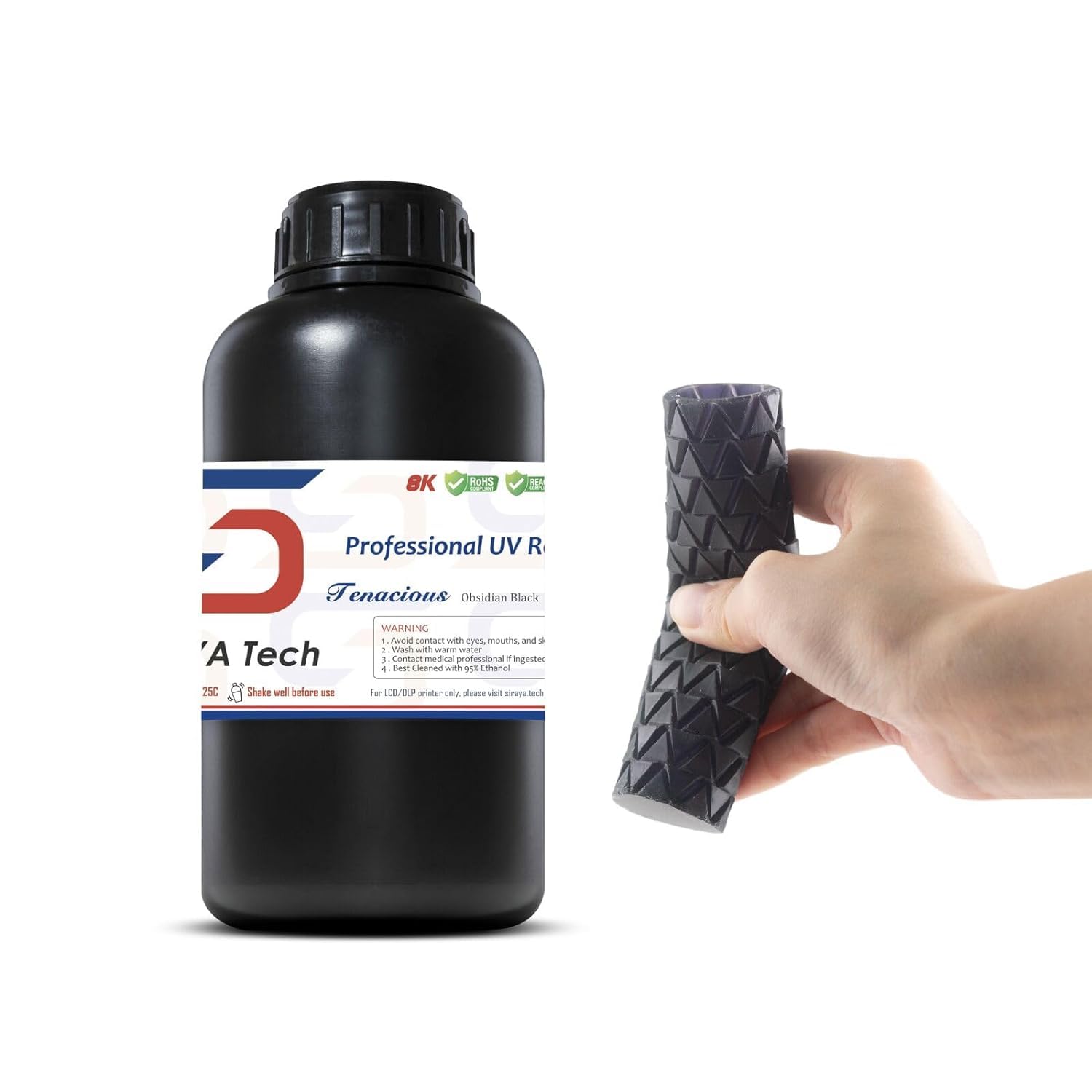
Siraya Tech Tenacious
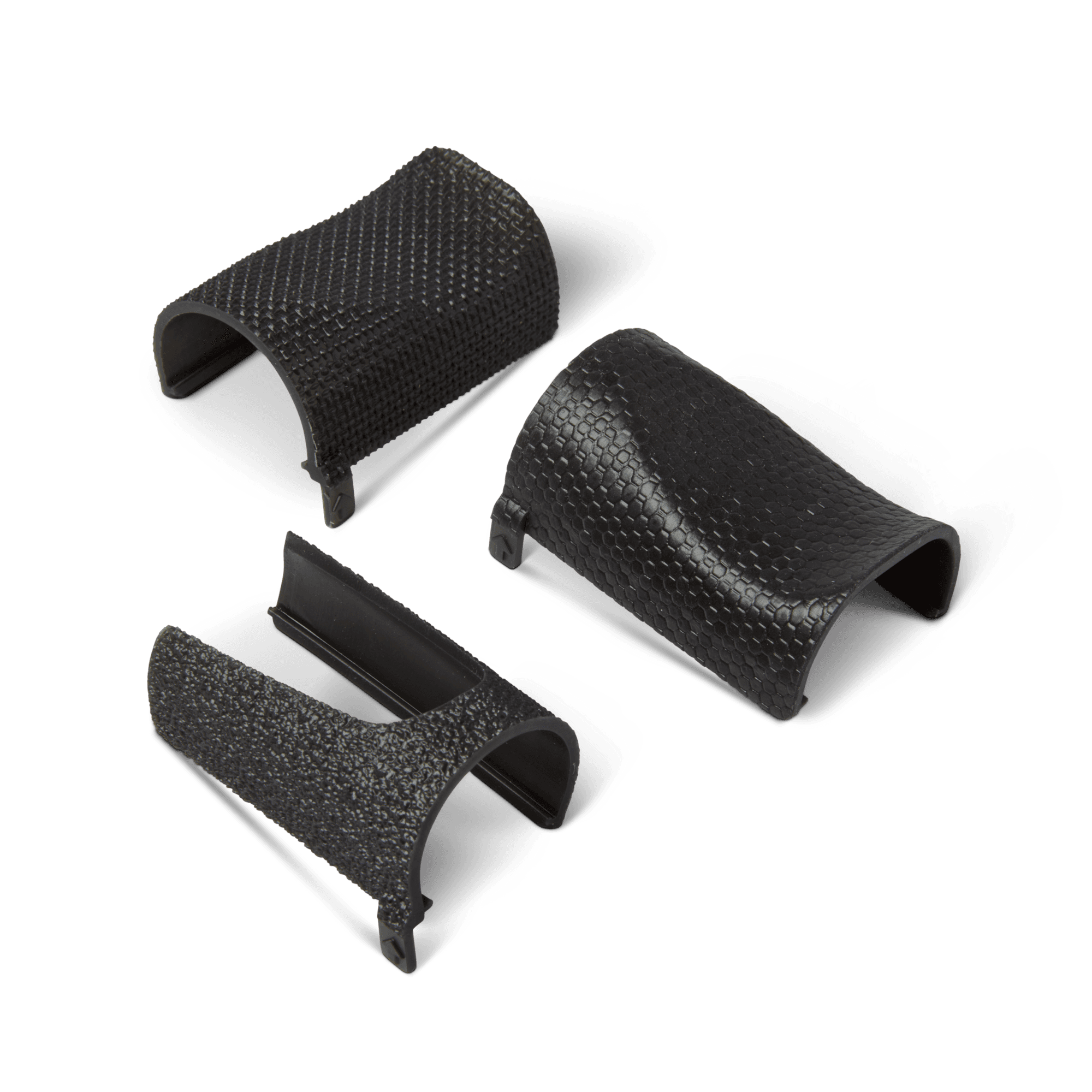
Best for: the flexible resin most workshops actually need. At Shore 65D, Tenacious is semi-flexible rather than rubbery: parts hold their shape but bend under stress and shrug off impacts, with roughly 70 percent elongation and class-leading impact numbers. That makes it the pick for living hinges, snap-together parts, and bumpers, and doubles as the hobby's favourite mix-in for toughening rigid resins, a trick our miniatures guide covers. If you want visibly rubbery parts, step down to the softer picks below.
Price: ~$40/L (approximate; varies by bottle size, sale period and region, click through for current pricing)
- Semi-flexible 65D: holds shape, absorbs impact
- About 70 percent elongation; excellent impact resistance
- Doubles as the classic mix-in for rigid resins
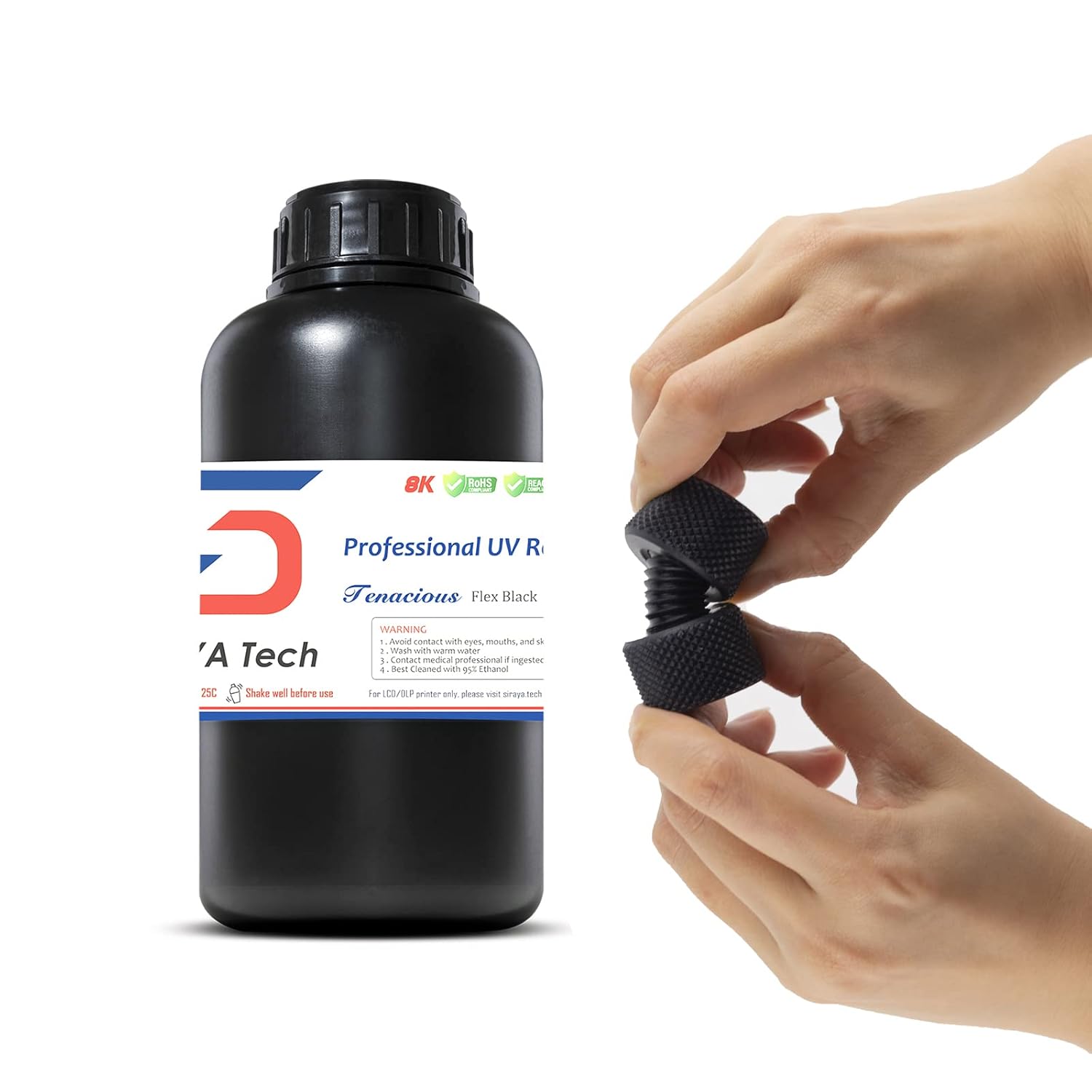
Siraya Tech Tenacious Flex (70A)
Best for: parts that should feel like rubber. Tenacious Flex drops to Shore 70A, the territory of shoe soles and tyre rubber, with a faster rebound than most consumer flexibles, so grips grip, bumpers bounce, and seals conform. It keeps Siraya's printability, but the usual soft-resin rules apply: gentle supports, thicker walls, and restraint in post-cure, since UV over-exposure stiffens soft parts fast.
Price: ~$45/L (approximate; varies by bottle size, sale period and region, click through for current pricing)
- Genuine rubber feel at Shore 70A with quick rebound
- Grips, bumpers, wearables, conforming seals
- Needs soft-resin care: gentle supports, short cures
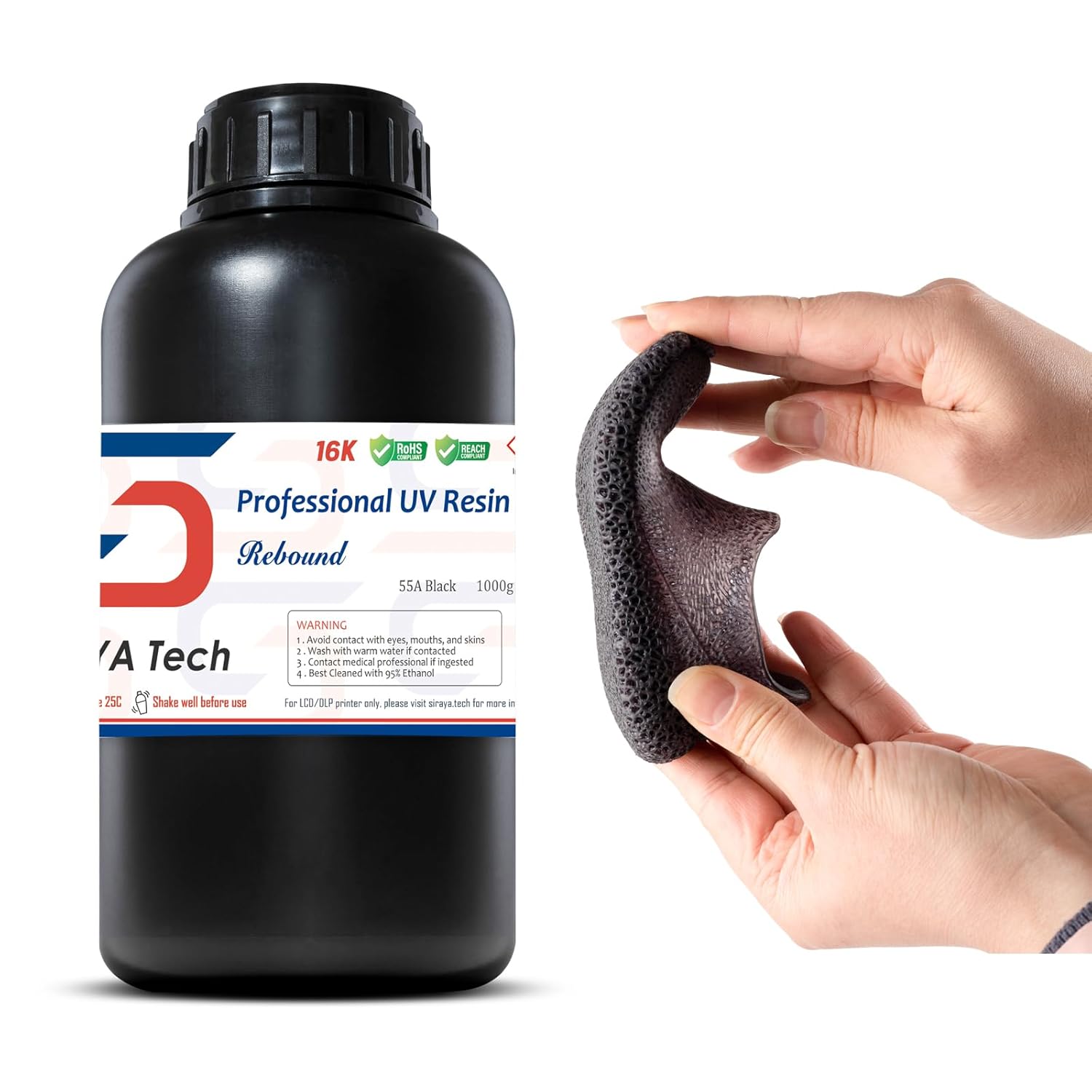
Siraya Tech Rebound 55A
Best for: parts that stretch and snap back. Rebound is the elastic end of the range: Shore 55A, soft enough to squash between fingers, with the fast return that separates true elastics from merely soft resins that deform lazily. It suits wristbands, seals, grips with real squish, and cushioning inserts. Printing demands the most care of anything on this page: thick walls, minimal supports, and patience.
Price: ~$55/L (approximate; varies by bottle size, sale period and region, click through for current pricing)
- True elastic behaviour: stretch, squash, fast return
- Softest practical consumer pick at Shore 55A
- The most demanding print settings in this guide
Formlabs Flexible 80A Resin V2
Best for: engineering work that needs datasheet numbers rather than guesswork. The V2 formulation doubled tear strength and elongation over its predecessor, reaching 230 percent elongation at break, and it comes with the validated, repeatable behaviour Formlabs cartridges are bought for. It simulates rubber gaskets, seals, and grips well enough to make production decisions from. Formlabs printers only, at professional pricing.
Price: ~$199/L (approximate; varies by bottle size, sale period and region, click through for current pricing)
- 230 percent elongation and doubled tear strength in V2
- Validated datasheet numbers for engineering decisions
- Formlabs ecosystem only; professional price
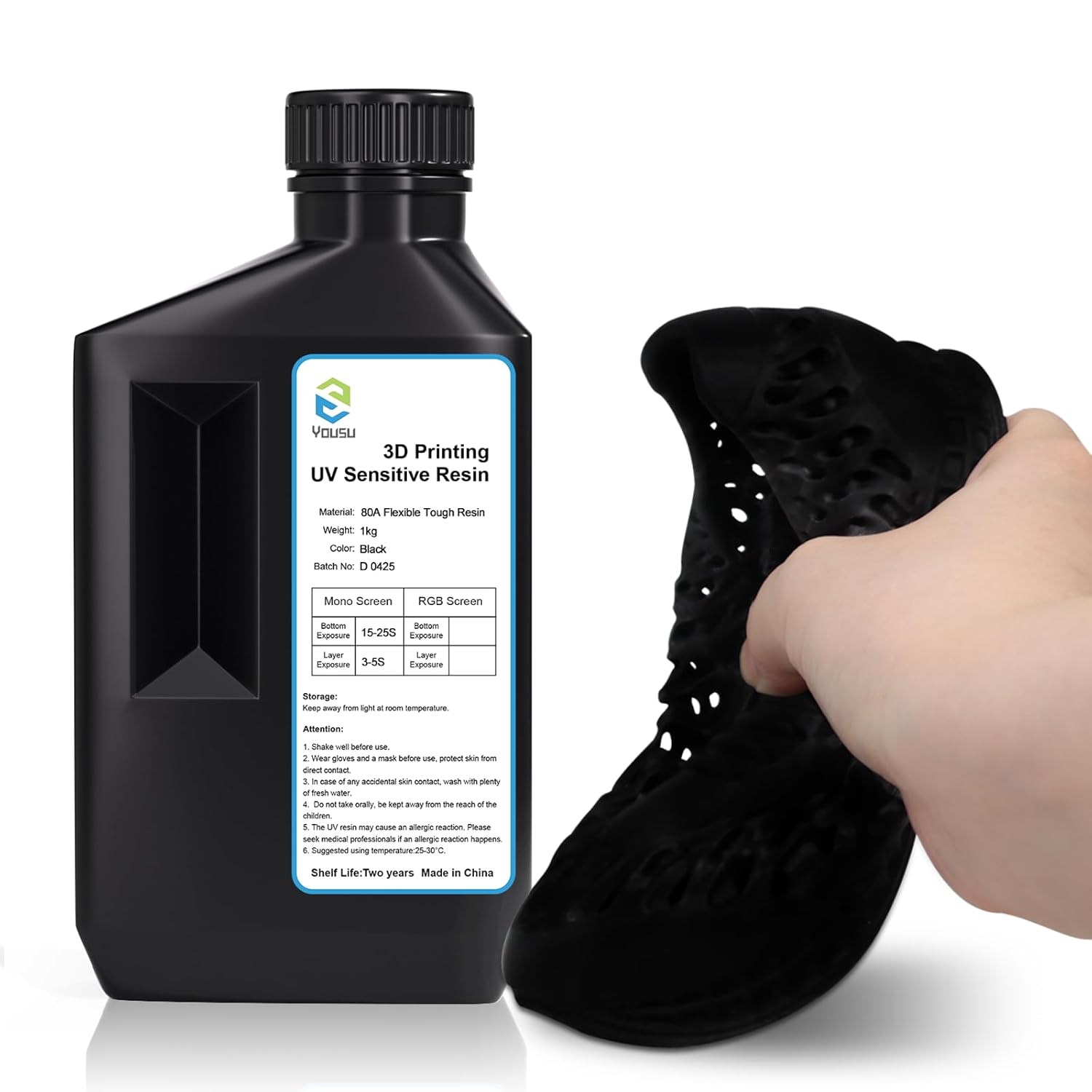
YOUSU Flexible 80A
Best for: finding out what flexible resin can do without committing real money. YOUSU's 80A prints a convincing rubber-like part at a price closer to standard resin than to the specialist flexibles, which makes it the sensible first bottle for experimenting with gaskets, feet, and grips. Consistency and rebound sit below the Siraya picks, and that is the deal at this price.
Price: ~$30/L (approximate; varies by bottle size, sale period and region, click through for current pricing)
- Cheapest credible route into rubber-like printing
- Shore 80A covers most casual flexible uses
- Batch consistency and rebound below the specialists
Printing flexible resin well
Flexible resins break the habits standard resin teaches. Walls need thickness, 2 mm or more, because thin soft walls tear and warp; supports want generous coverage but fine tips, since heavy contact points scar soft surfaces; lifts want slowing down, because soft layers peel hard off the film. Wash gently and briefly, dry completely, and then the golden rule: cure in short bursts. UV is what stiffens these materials, so every unnecessary minute of post-cure trades away the softness you bought. Test flexibility between cure rounds and stop when the part behaves.
Handling is unchanged: uncured flexible resin is a sensitiser like every other bottle, so gloves, ventilation, and cured-waste disposal per our 3D printing safety guide. A wash and cure station with a timer is the easiest way to keep those short cures consistent.
Explore the resin guides
This guide is part of our resin series. The 3D printer resin hub maps every type and how to choose; the sibling guides cover the best resin for miniatures, the best tough and ABS-like resins, the best water-washable resins, and the best castable resins. For the hardware side, see the best resin 3D printers and the best wash and cure stations.
Frequently asked questions
How flexible is flexible resin, really?
It spans a range, which is what the Shore numbers are for. At 65D parts are semi-flexible: they hold shape and bend under force. At 80A they feel like a shoe heel; at 70A like tyre rubber; at 55A soft enough to squash. Nothing at consumer prices reaches the floppy softness of cast silicone, so match expectations to the number, not the word flexible.
Flexible resin or tough resin: which do I need?
Ask what the part does in normal use. If it should hold its shape and only give way gracefully under abuse, that is tough resin territory. If bending, gripping, stretching, or sealing is the function itself, you want flexible. The two families meet in the middle at semi-flexible 65D, which is why our overall pick appears in both conversations.
Do flexible resins need different print settings?
Yes, more than any other category. Expect longer exposures, slower lift speeds, heavier reliance on thick walls (most formulas want 2 mm or more), and supports placed generously but with fine tips, since soft parts tear at contact points. Dry parts completely after washing, and keep post-cures short: UV exposure is what stiffens soft resins.
Can I print gaskets and seals that actually work?
For prototypes and light duty, yes: printed seals conform well and one-off gaskets for enclosures and cases work. For long service, know the limits: photopolymers age under UV and heat, compress permanently over time, and lose flexibility as they continue curing in daylight. For a part that lives in an engine bay, treat the print as the pattern and the final part as cast silicone or a real rubber.
Why did my flexible print turn stiff?
Over-curing, almost always. Flexibility comes from an incompletely rigid polymer network, and every extra minute of UV keeps building that network, so a long post-cure or a sunny windowsill quietly turns rubber into plastic. Cure in short bursts, test between rounds, and store flexible parts away from direct sun.
Can I mix flexible resin into other resins?
Yes, and it is one of the best tricks in resin printing: 20 to 30 percent of a semi-flexible like Tenacious into a rigid resin adds impact resistance while keeping most of the detail. Match UV wavelengths, mix thoroughly, and run an exposure test. Our miniatures guide covers the blend recipes the tabletop community relies on.