
Standard resin has one famous weakness: it shatters. Drop a bracket, flex a clip, or over-tighten a printed thread and the part gives way all at once, because the crisp, glassy cure that makes resin beautiful also makes it brittle. Tough and ABS-like resins fix exactly that. They cure with enough give to bend before breaking, survive drops and snap-fits, and turn a resin printer from a model-maker into a machine that produces working parts.
This guide compares the tough bottles worth buying, from budget ABS-likes to engineering-grade formulas, including the high-strength and heat-resistant picks for parts that work hot or under load. Each pick states what it trades away, because toughness always costs something, usually a touch of detail or stiffness. For the full resin landscape, start at our 3D printer resin guide; if your tough parts are gaming miniatures, the best resin for miniatures handles that job specifically.
Jump to menu
Our top tough resin picks at a glance
What tough and ABS-like actually mean
The property that separates these resins from standard formulas is elongation at break: how far the material stretches before it fails. Standard resins give up at a few percent, which is why they shatter; tough and ABS-like formulas stretch 20 to 40 percent, so the same knock bends the part and it springs back. “ABS-like” is a feel claim, the cured part handles like injection-moulded ABS plastic, not a chemistry claim; it is still a photopolymer, with lower heat tolerance than real ABS.
The family splits along a second axis: tough versus high-strength. Tough resins absorb energy by flexing, which is what snap-fits, clips, hinges, and anything that gets dropped actually need. High-strength and heat-resistant engineering resins go the other way, maximising stiffness and dimensional stability at the cost of impact resistance, for jigs, moulds, and parts that carry load while warm. Pick by failure mode: if parts break from impacts, go tough; if they bend or slump when they should not, go rigid.
One habit matters more with these resins than any other type: do not over-cure. A long UV bath crosslinks away exactly the flexibility you bought, leaving a part as brittle as standard resin. Cure in short increments, and test a sacrificial part if you are unsure. A wash and cure station with a timer makes that discipline automatic.
The best tough resins compared
Prices are per litre and approximate; they vary by bottle size, sale period and region, so click through for current pricing. One shopping note: some product links open a brand’s US store; every brand here also runs regional stores, so if the landing page does not match your region, use the store’s own region or country switcher and your cart carries on from there.
The tough and ABS-like picks
Seven bottles cover the field, from the default value choice to specialist blending partners and the bulk workhorse. All of them wash and cure like a standard resin.
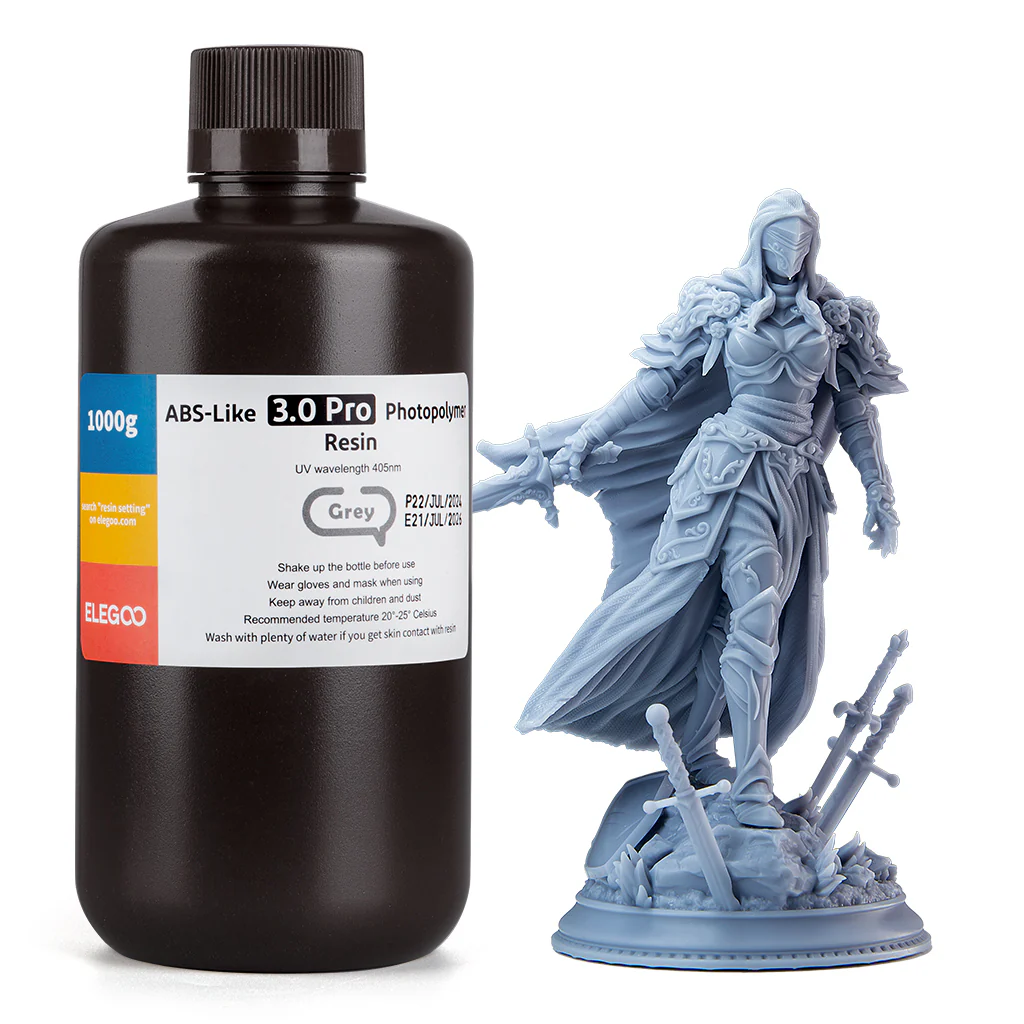
Elegoo ABS-Like Resin 3.0 Pro
Best for: the default tough resin for most printers. The 3.0 Pro generation delivers real impact resistance and a measure of heat tolerance at standard-resin money, prints predictably on the profiles built into every slicer, and is stocked everywhere Elegoo sells. Parts flex before they break, snap-fits work, and detail stays close enough to standard resin that functional prints look clean. Unless a specific property below pulls you elsewhere, start here.
Price: ~$27/L (approximate; varies by bottle size, sale period and region, click through for current pricing)
- Tough-resin durability at standard-resin cost
- Slicer profiles everywhere; effortless to dial in
- Heat tolerance is modest; see the engineering picks for hot parts
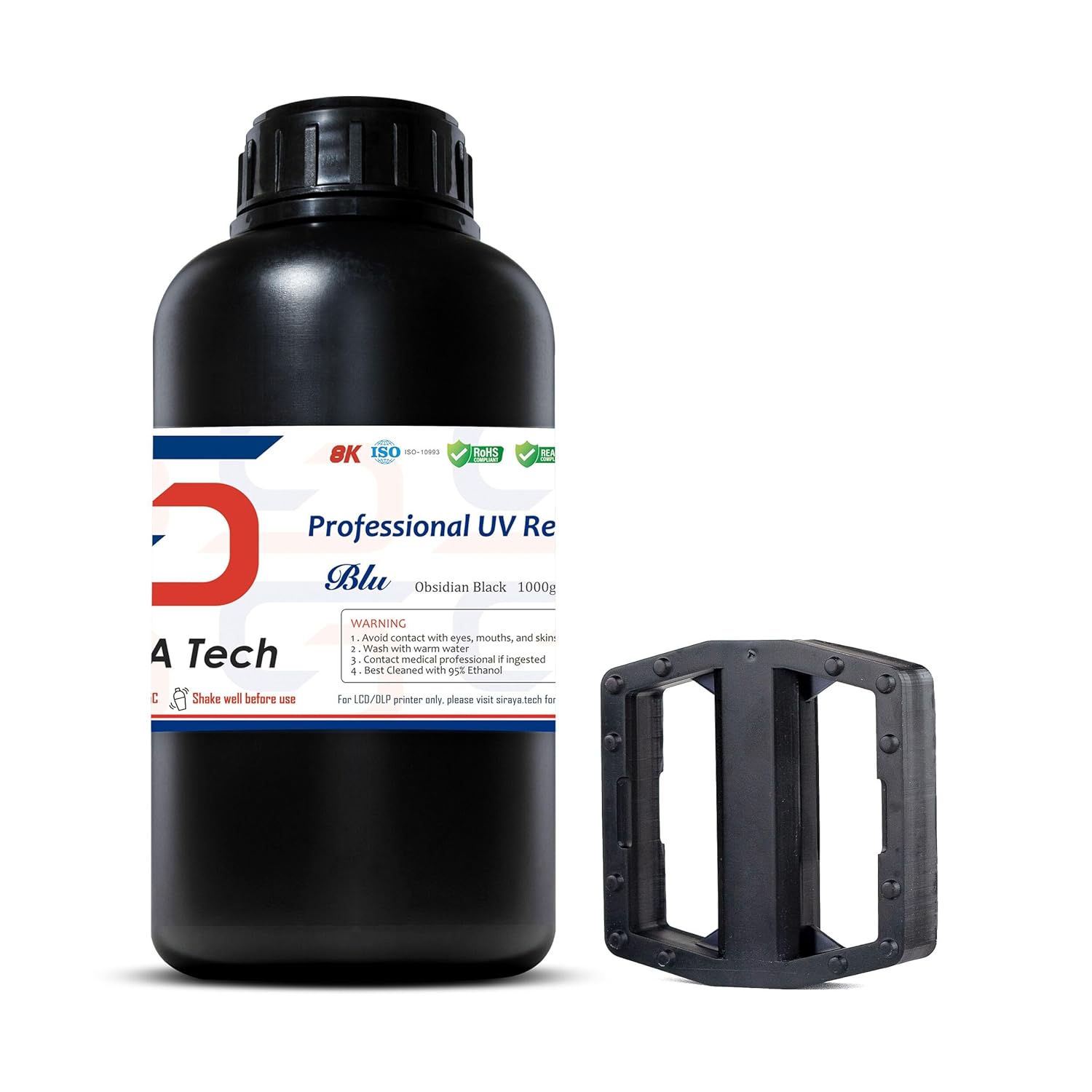
Siraya Tech Blu
Best for: parts that take genuine abuse. Blu remains the community reference for impact strength in a consumer bottle: it absorbs drops and knocks that crack ordinary ABS-like resins, machines and taps cleanly, and its slight flex protects thin features during handling. It is also the classic blending base, and it holds more detail than its toughness suggests, which is why it shows up in our miniatures guide too.
Price: ~$30/L (approximate; varies by bottle size, sale period and region, click through for current pricing)
- Reference impact strength among consumer tough resins
- Slight flex protects thin parts; taps and drills well
- Costs a little more than the value ABS-likes
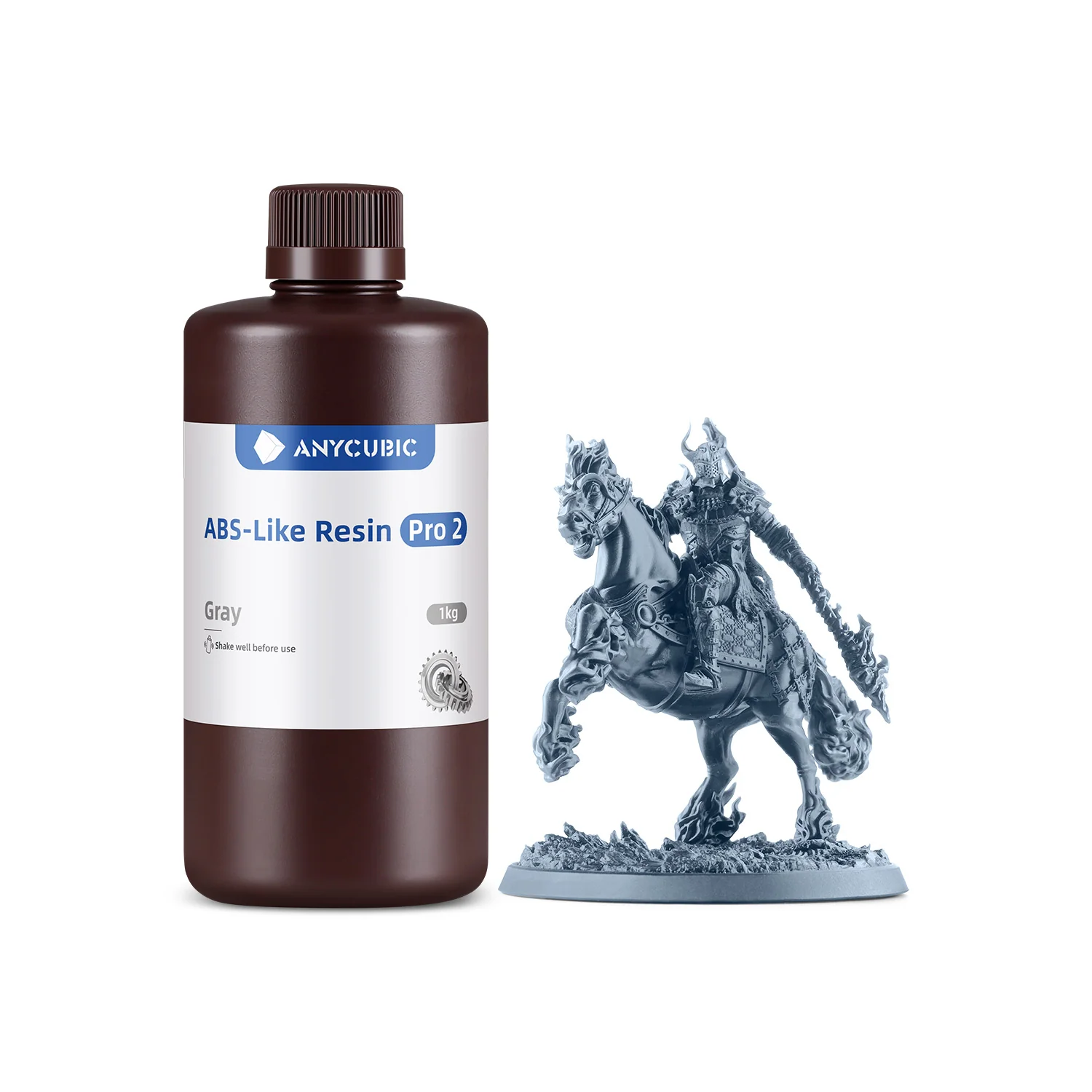
Anycubic ABS-Like Resin Pro 2
Best for: stretchy, drop-proof parts on a mid-range budget. Pro 2 roughly doubled the elongation of Anycubic’s previous ABS-like formula, to a rubbery 35 to 40 percent at break, so parts bend a long way before anything gives. Odour is low, flow is good in cold rooms, and it behaves well on non-Anycubic printers too. Edges come out a touch softer than the Elegoo, which is the price of that stretch.
Price: ~$25/L (approximate; varies by bottle size, sale period and region, click through for current pricing)
- Class-leading elongation; parts deform instead of shattering
- Low odour and easy flow, prints well across brands
- Slightly softer detail than stiffer ABS-likes
US store →EU store →Global store →
Anycubic ships from regional stores; pick the store that matches your delivery address so pricing, tax and shipping are correct.
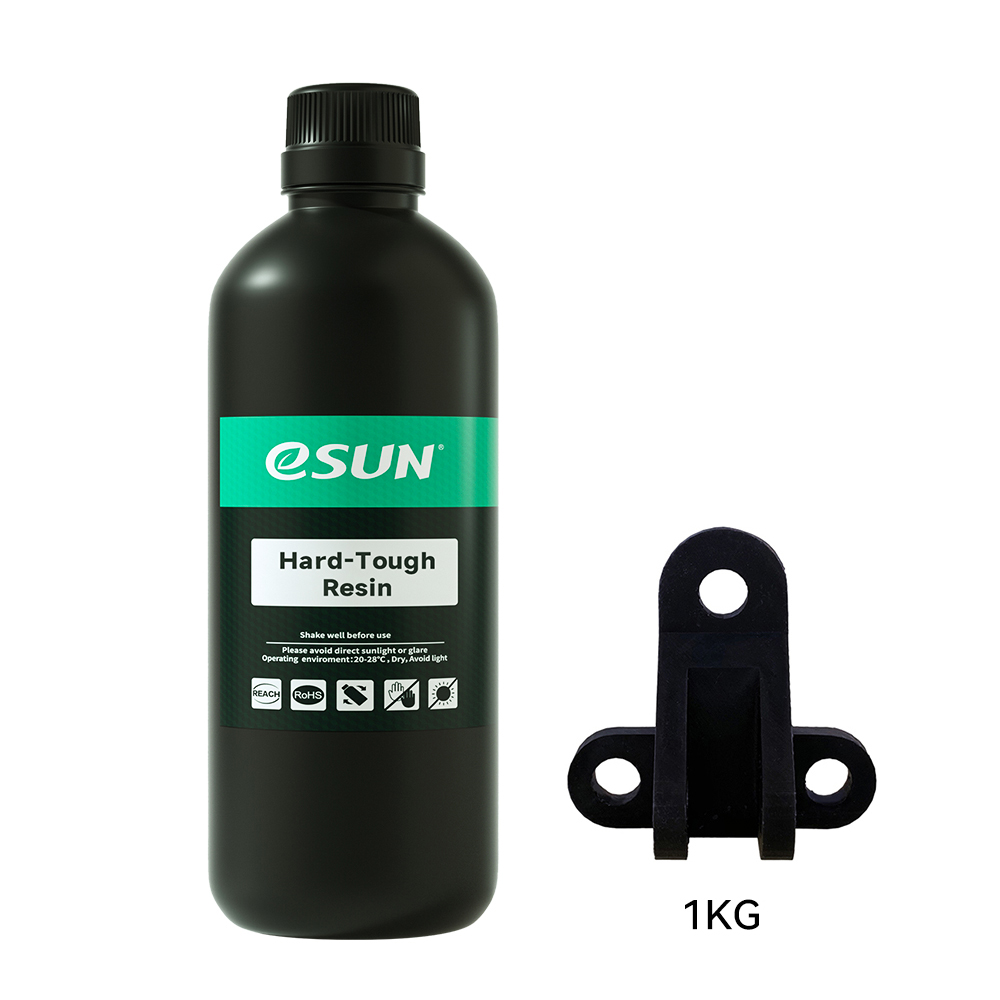
eSUN Hard-Tough
Best for: big functional prints that need strength through the whole cross-section. Hard-Tough cures harder than the stretchy ABS-likes, closer to an injection-moulded feel, which suits brackets, enclosures, and tool bodies where you want stiffness plus impact resistance rather than bend. It is a long-time favourite for RC and workshop parts, and bulk bottles keep the per-litre cost sensible for large prints.
Price: ~$30/L (approximate; varies by bottle size, sale period and region, click through for current pricing)
- Stiff-plus-tough balance suits brackets and enclosures
- Injection-moulded feel on chunky parts
- Less forgiving than stretchy formulas on very thin walls
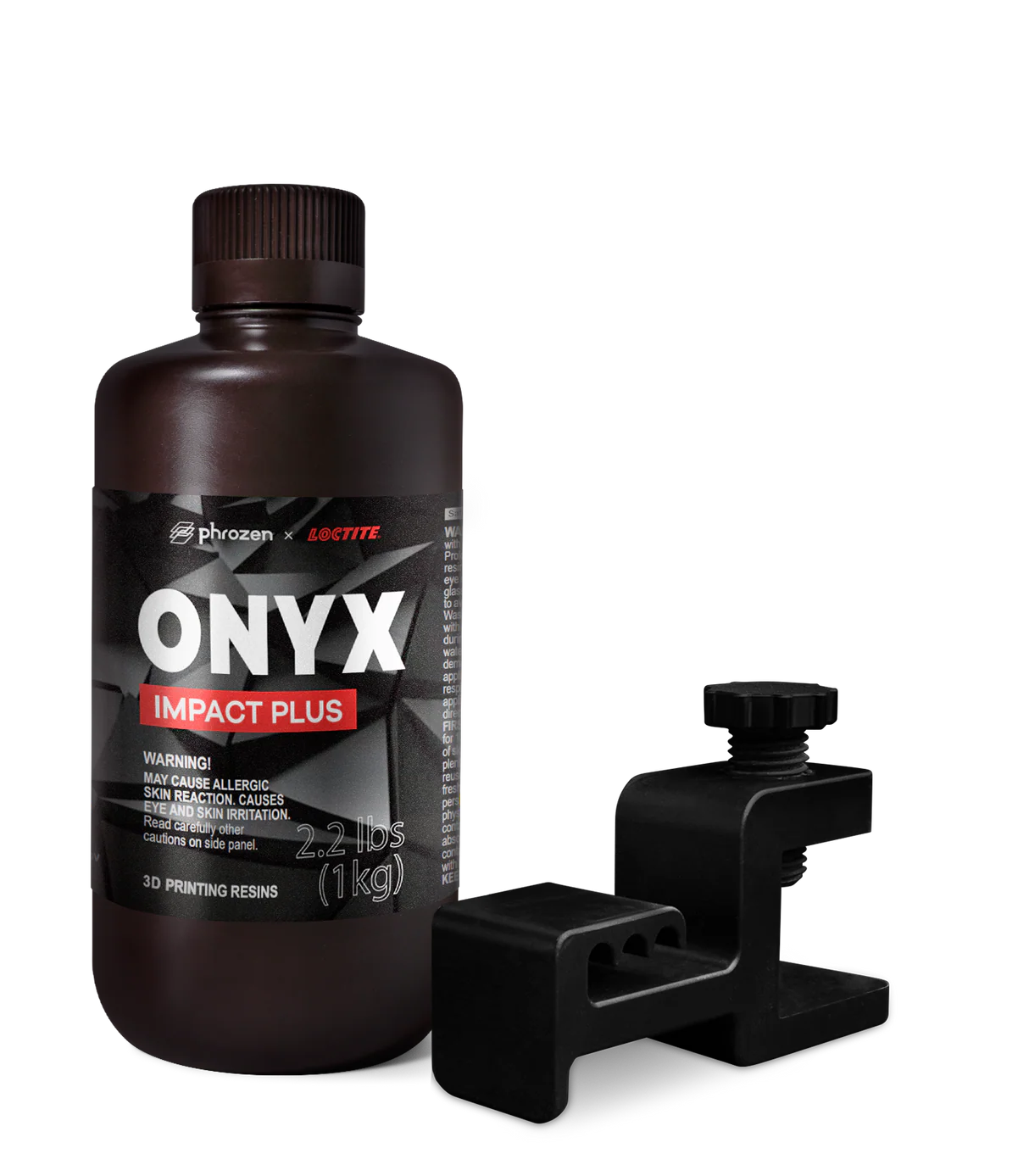
Phrozen Onyx Impact Plus
Best for: toughening a detail resin without giving up its surface. Onyx Impact Plus, developed with adhesives giant Loctite, is the tough half of Phrozen’s own published mixing recipe: blended into Aqua-Gray 8K it produces strong, detailed hybrids, and printed neat it is a capable dark tough resin in its own right. If your bottle shelf already leans Phrozen, this is the durability partner that matches their exposure profiles.
Price: ~$45/L (approximate; varies by bottle size, sale period and region, click through for current pricing)
- Co-developed with Loctite; the official partner for Phrozen detail-resin mixes
- Strong neat prints with a clean matte black finish
- Premium price; overkill if you do not blend
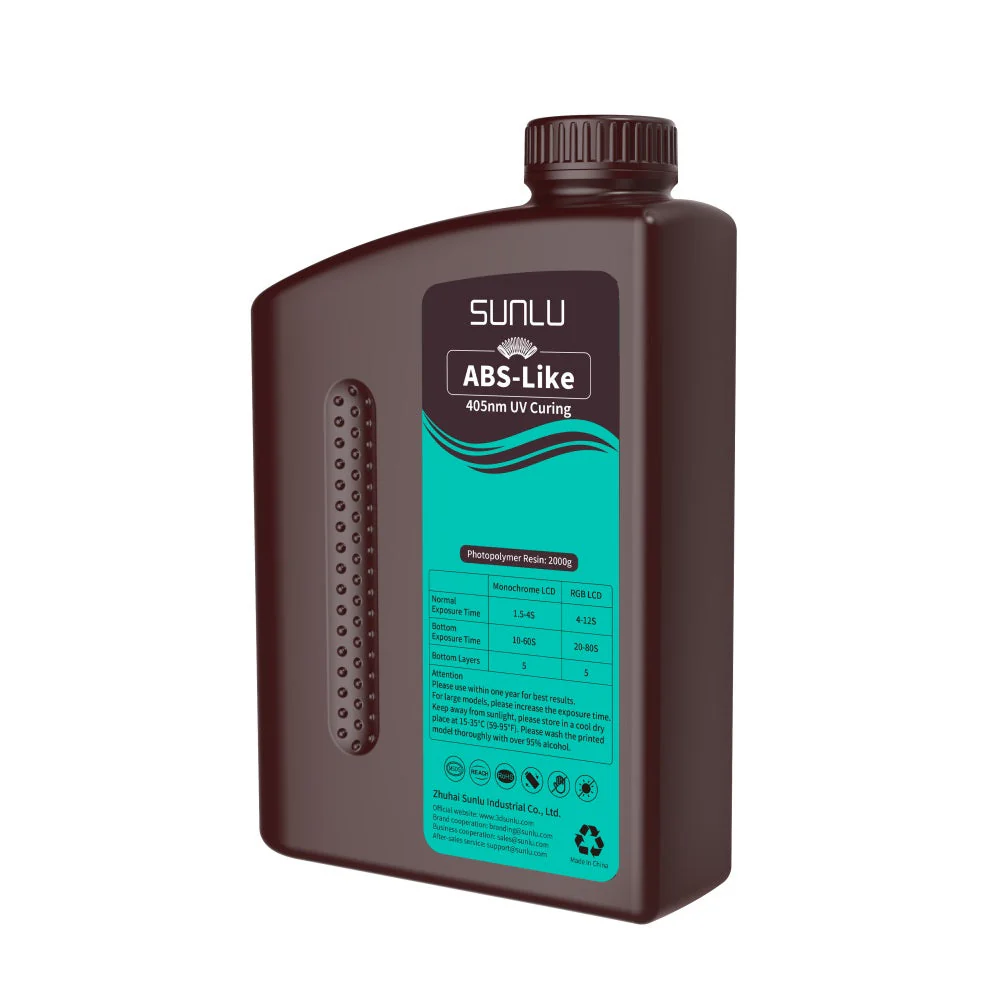
Sunlu ABS-Like
Best for: giving every print a safety margin without thinking about cost. Sunlu’s ABS-like adds meaningful drop resistance over standard resin at a price that competes with the cheapest bottles on the market, which makes it the easy answer for prototypes, fixtures, and everyday prints that just should not snap. Toughness sits below the picks above; for the money, nothing complains.
Price: ~$18/L (approximate; varies by bottle size, sale period and region, click through for current pricing)
- Cheapest meaningful durability upgrade over standard resin
- Fine daily driver for prototypes and fixtures
- A tier below the premium toughs in impact and consistency
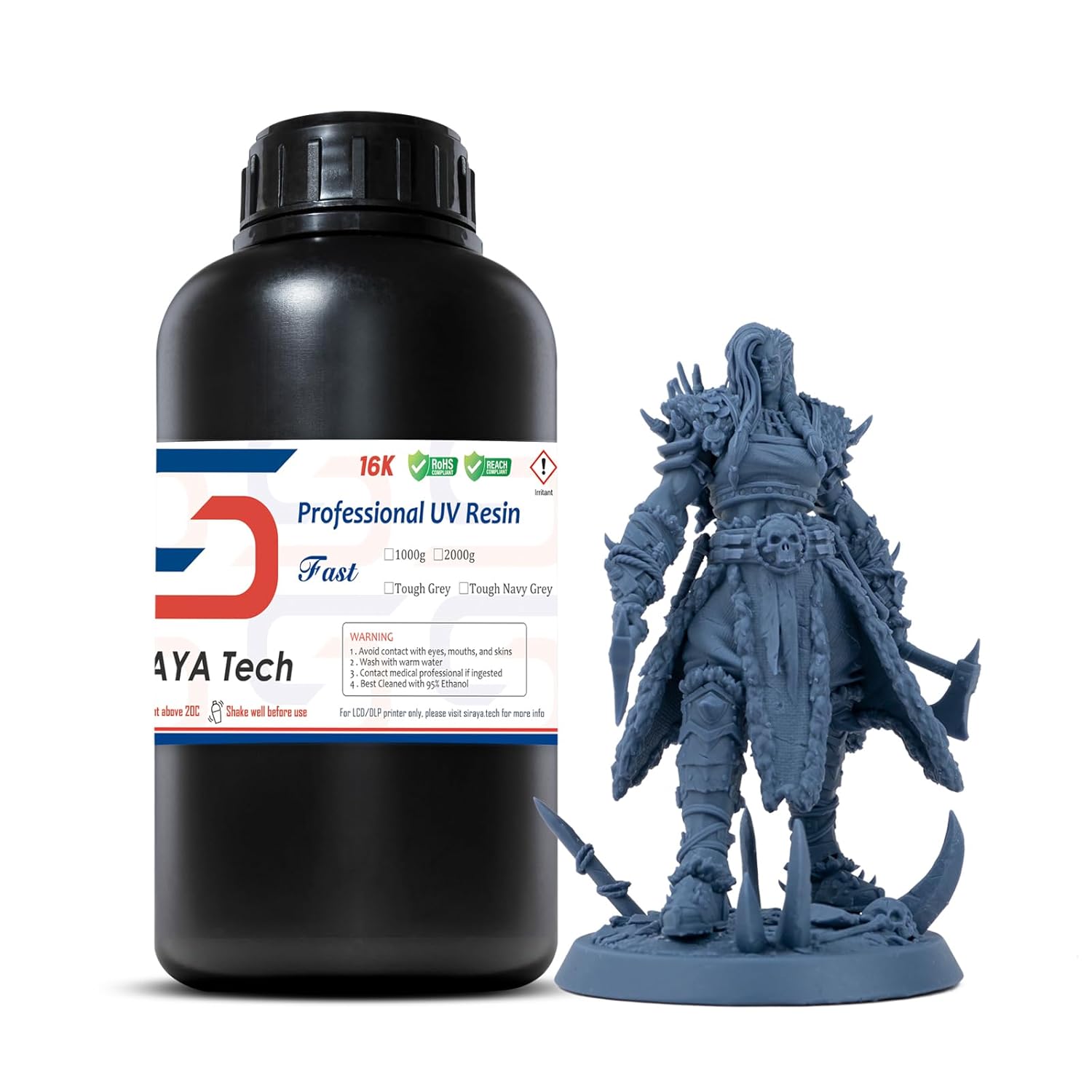
Siraya Tech Fast Tough (Navy Grey)
Best for: printing tough parts by the plateful. Fast Tough keeps the short exposures and forgiving nature that made the original Fast one of the most-bought resins in the hobby, and adds roughly 50 percent more impact resistance. Short exposure times pair naturally with the current generation of fast tilt-vat printers, the matte navy grey surface flatters detail, and multi-kilo bundles push the per-litre price toward budget territory. It is the bottle for people who print every day and want toughness without ceremony.
Price: ~$30/L (approximate; varies by bottle size, sale period and region, click through for current pricing)
- Short exposures; a natural match for fast tilt-vat printers
- About 50 percent tougher than the original Fast formula
- Bulk bundles make it a value buy; toughness sits below Blu
High-strength and heat-resistant picks
The engineering end of the family trades impact resistance for stiffness, dimensional stability, and heat tolerance. These are the bottles for jigs, moulds, and parts that work warm; treat their brittleness as a design constraint, not a flaw.
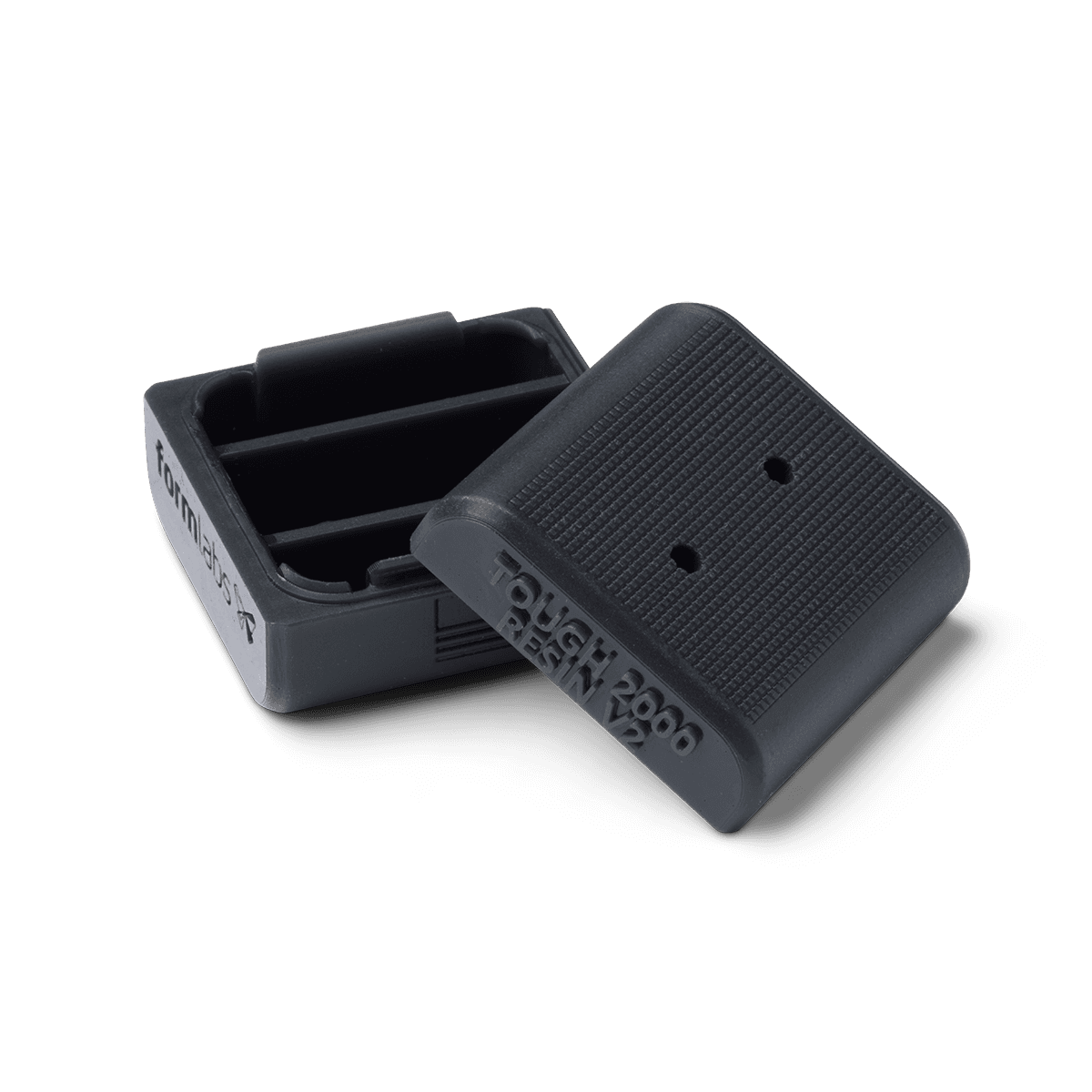
Formlabs Tough 2000 Resin V2
Best for: engineering prototypes that must behave like production ABS. Tough 2000 V2 on the Form 4 is the professional benchmark for simulating tough thermoplastic parts: validated mechanical data, cartridge repeatability, and parts stable enough for jigs, housings, and functional testing that informs real tooling decisions. It runs only on Formlabs hardware and costs several consumer bottles per litre, which is the price of certainty. If stiffness matters more than impact, its Rigid 10K sibling covers the glass-filled end of the range.
Price: ~$175/L (approximate; varies by bottle size, sale period and region, click through for current pricing)
- Validated, datasheet-backed toughness for engineering work
- Cartridge workflow gives repeatable results run after run
- Formlabs printers only; priced for professional budgets
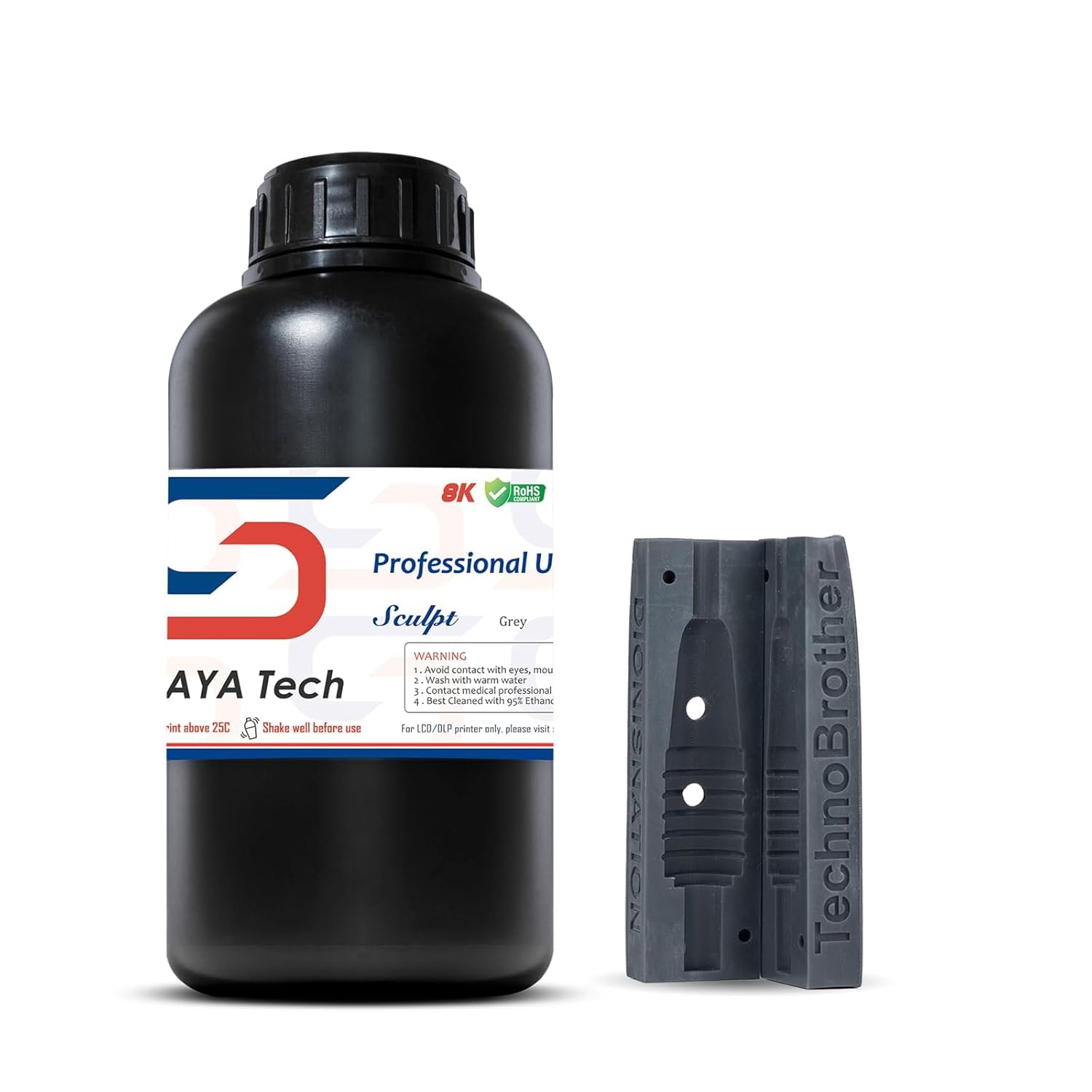
Siraya Tech Sculpt
Best for: parts that carry load while hot. Sculpt is the consumer route to real heat deflection: it stays rigid and dimensionally stable up to a rated 180 degrees C, which covers vacuum-forming bucks, moulds, and under-hood brackets that would slump in any ABS-like. It is stiff rather than tough, so treat it as an engineering material, and Siraya’s drillable Build resin is the sibling to reach for when parts need machining after printing.
Price: ~$40/L (approximate; varies by bottle size, sale period and region, click through for current pricing)
- Rated to 180 C; holds shape under heat and load
- High precision; suits moulds, bucks, and fixtures
- Stiff and brittle by design; not an impact resin
How to choose a tough resin
Match the bottle to the way your parts fail.
- Parts crack or shatter on impact? A tough or ABS-like resin: the value pick for everyday parts, the impact specialist when abuse is the norm, the high-elongation bottle when parts must bend a long way.
- Parts flex or slump when they should hold firm? You need stiffness, not toughness: the hard-tough pick for room-temperature parts, the engineering resins when heat is involved.
- Printing miniatures that get played with? That is its own discipline, covered pick by pick in our best resin for miniatures guide.
- Need bend as the function, not the failure mode? Gaskets, grips, and wearables belong with the best flexible resins, rated by Shore hardness.
Handling rules do not change with toughness: uncured resin is a skin sensitiser, so nitrile gloves, eye protection, and ventilation apply to every bottle here. Our 3D printing safety guide covers the setup once, properly.
Explore the resin guides
This guide is part of our resin series. The 3D printer resin hub maps every type and how to choose; the sibling guides cover the best resin for miniatures, the best water-washable resins, the best castable resins, and the best flexible resins. For the hardware side, see the best resin 3D printers and the best wash and cure stations.
Frequently asked questions
Tough resin vs standard resin: what is the real difference?
Elongation. Standard resin stretches only a few percent before it snaps, which is why parts shatter; tough and ABS-like resins stretch 20 to 40 percent, so the same impact bends the part instead of breaking it. You trade a small amount of edge sharpness and pay slightly more per litre for that resilience.
Is ABS-like resin the same as real ABS?
No. ABS-like describes the feel of the cured part, toughness and a little flex that resembles injection-moulded ABS, but chemically it is still a photopolymer. It does not match real ABS for heat resistance or long-term fatigue, so for parts that live in hot or highly stressed environments, look at the engineering picks or an FDM print in actual ABS.
Tough resin or flexible resin: which do I need?
Tough resin is for rigid parts that must survive impacts: brackets, clips, housings. Flexible resin is for parts whose job is to bend, grip, or seal, like gaskets and wearables. If the part should hold its shape in normal use and only flex in an accident, you want tough. If it flexes every time it is used, you want our flexible resin guide.
Do tough resins need different print settings?
Slightly. Most want marginally longer exposures than a standard resin, and all of them punish over-curing: a long UV bath embrittles exactly the flexibility you paid for, so post-cure in short increments. Run an exposure calibration when you open the first bottle, and keep supports a touch heavier since tough resins peel harder from the film.
Are tough resins less detailed than standard resins?
A little, and it rarely matters for their job. The additives that give toughness soften edge sharpness by a small margin, which disappears on functional parts and painted models. If you are printing display miniatures where crispness is everything, use a high-detail standard resin or a blend; that split is exactly why our miniatures guide exists.
What is the best tough resin for functional parts?
For most people, Elegoo ABS-Like 3.0 Pro: real durability at standard-resin cost with painless printing. Step up to Siraya Tech Blu when impact resistance is the whole point, to Anycubic Pro 2 when you want maximum bend, and to Formlabs Tough 2000 when the part is an engineering prototype that has to behave like production ABS.
What about heat resistance?
Regular tough and ABS-like resins soften well below 100 degrees C, so they are wrong for anything that runs hot. That is the engineering family: Siraya Tech Sculpt stays rigid to a rated 180 degrees C, and Formlabs offers High Temp and Rigid grades on Form printers. See the high-strength and heat-resistant section above.