
Miniatures are the hardest test you can set a resin. A 28 mm figure carries sub-millimetre detail, spear shafts thinner than a toothpick, and, if it is destined for the table rather than the shelf, a lifetime of being grabbed, dropped, and rattled around a foam case. No single bottle is best at all of that, because the properties fight each other: the crispest resins are brittle, and the toughest resins soften fine edges. The right pick depends on whether your minis are painted showpieces, gameplay workhorses, or both.
This guide sorts the current market by that decision: tough resins for tabletop play, detail-first resins for display and painting, the value and budget bottles that punch above their price, and the easy-cleanup option for shared spaces. Every pick comes from printing and handling actual miniatures, with the settings advice that makes more difference than the brand choice. New to resin types in general? Our 3D printer resin guide maps the whole landscape, and if you are still choosing hardware, start with the best resin 3D printers, or go straight to the tabletop-ranked picks in our best 3D printers for miniatures guide.
Jump to menu
Our top miniature resin picks at a glance
Detail versus durability: the miniature resin trade-off
Every miniature resin decision comes down to one question: does this model get played with? Standard high-detail resins cure hard and glassy, which is what gives crisp faces and sharp panel lines, and it is also why a dropped standard-resin mini loses its sword arm. Tough and ABS-like resins cure with a little flex, so thin parts bend through support removal and survive the table, at the cost of very slightly softer edges that all but disappear under primer and paint.
The practical split: shelf and cabinet pieces get a detail-first standard resin, gameplay armies get a tough resin or a mini-specific formula, and painters who do both keep one bottle of each. There is also a third path the community swears by: blending. Mixing 20 to 30 percent of a flexible or tough resin into a standard bottle keeps most of the crispness while adding real survivability; Siraya Tech’s Tenacious exists largely as a mix-in for exactly this, and Phrozen publishes its own recommended mixes. Blend resins that share a wavelength, and run an exposure test on the first plate.
If your parts still snap no matter the bottle, the fix is usually deeper in the durability family: the best tough and ABS-like resins guide covers the heavy-duty grades that trade more detail for near-unbreakable parts.
The settings that matter for minis
Brand choice gets the attention, but three settings decide more of the result than the bottle does.
- Layer height: 0.03 to 0.05 mm is the miniature sweet spot. Going finer than 0.03 mm doubles print time for detail you cannot see under paint; coarser than 0.05 mm shows as stepping on smooth armour.
- Exposure: calibrate per bottle with a test print before the first army. Over-exposure is the classic miniature killer, it fattens fine detail and welds supports on; under-exposure loses edges and weakens parts. Every colour of every resin cures differently, so retest when you switch.
- Supports and anti-aliasing: light supports with 0.1 to 0.25 mm tips on thin detail, medium supports on the torso and base, model tilted 30 to 45 degrees. Anti-aliasing on smooths skin and cloth; some painters switch it off for hard-edged mechanical models.
After printing, wash gently and cure briefly. Miniatures need only a few minutes of UV; long cures make thin parts brittle again, which quietly undoes everything the tough resin bought you. A wash and cure station makes both steps repeatable.
The best miniature resins compared
Prices are per litre and approximate; they vary by bottle size, sale period and region, so click through for current pricing. Detail and durability are relative ratings from printing miniatures, not lab figures. One shopping note: some product links open a brand’s US store; every brand here also runs regional stores, so if the landing page does not match your region, use the store’s own region or country switcher and your cart carries on from there.
Best resins for tabletop gameplay
These resins keep most of a standard resin’s detail but let thin weapons and banners survive support removal, transport, and the occasional drop. If your minis get handled, start here.
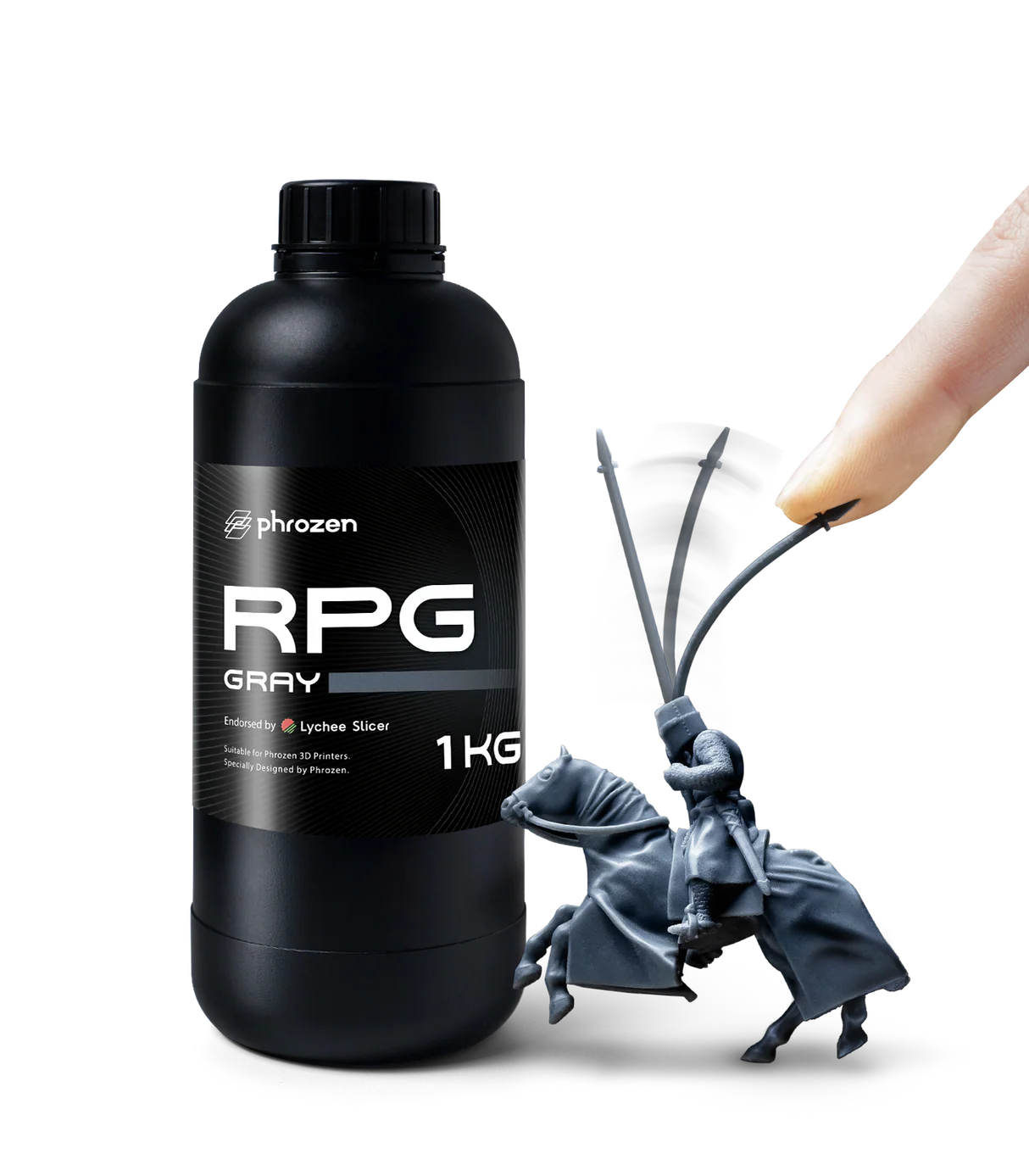
Phrozen RPG Resin
Best for: gameplay miniatures printed the way the designer intended, straight off the supports. RPG Resin is one of the few bottles engineered specifically for tabletop figures rather than adapted from a general formula: it prints support tips down to a hair-fine 0.08 mm so removal leaves almost no scarring, holds 8K-class surface detail, and cures with enough flex that spear shafts bend and spring back. For wargaming armies that live in a case and hit the table weekly, this is the current benchmark.
Price: ~$40/L (approximate; varies by bottle size, sale period and region, click through for current pricing)
- Purpose-built for minis: high flex with 8K-level surface detail
- Ultra-fine support tips mean less cleanup and fewer scars
- Costs more than general tough resins and is overkill for shelf pieces
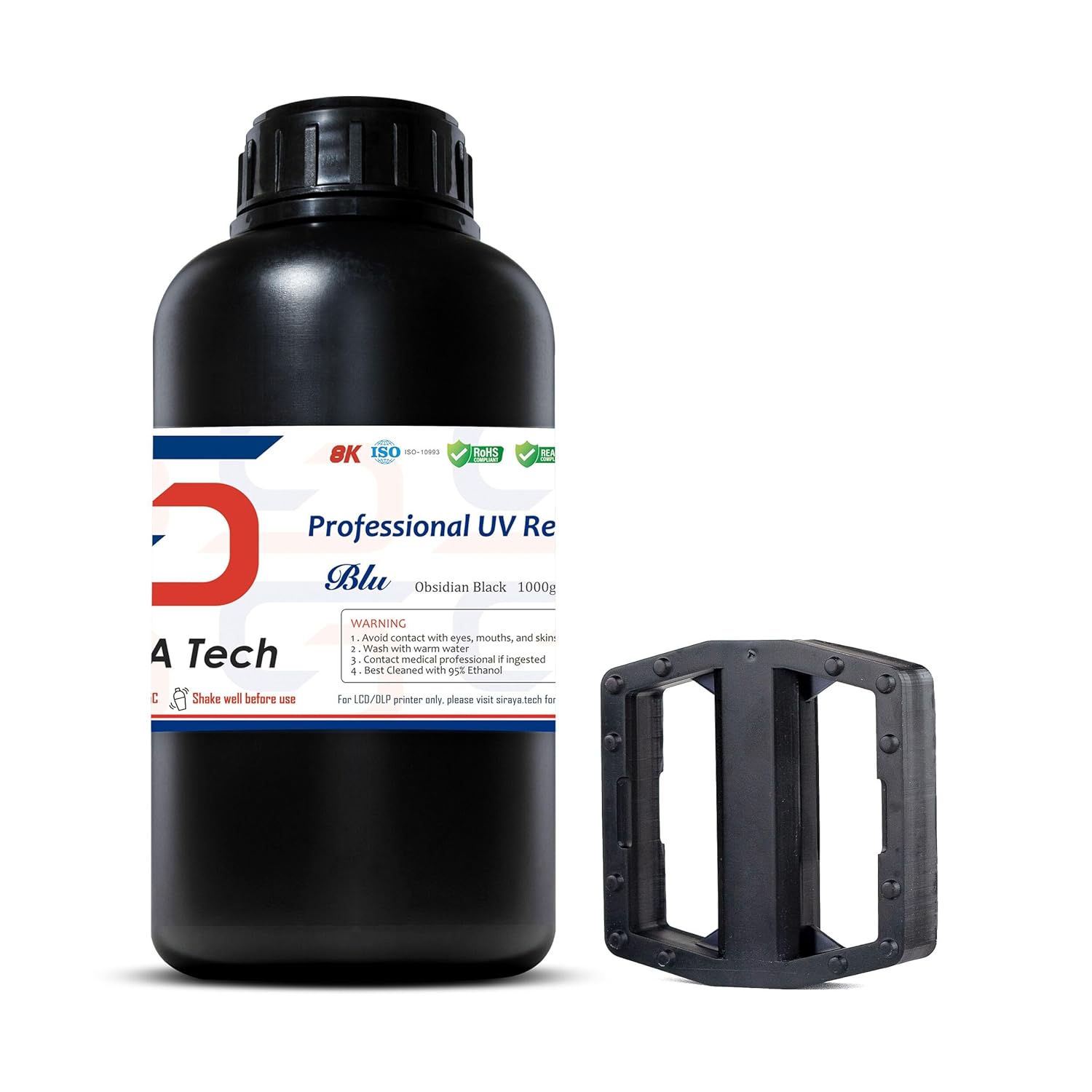
Siraya Tech Blu
Best for: the one bottle most miniature printers should own. Blu is the community’s default tough resin because it threads the needle: noticeably better impact resistance than most ABS-like resins, yet detail sharp enough that a painted model gives nothing away. Its slight flex lets thin spears and antennae bend through support separation that would snap them in standard resin, and it mixes cleanly with standard resin or Tenacious when you want to tune the balance yourself.
Price: ~$30/L (approximate; varies by bottle size, sale period and region, click through for current pricing)
- Tough with a touch of flex; thin parts survive support removal
- Detail close to standard resin once painted and based
- Blends well with standard resin or Tenacious for tuned durability
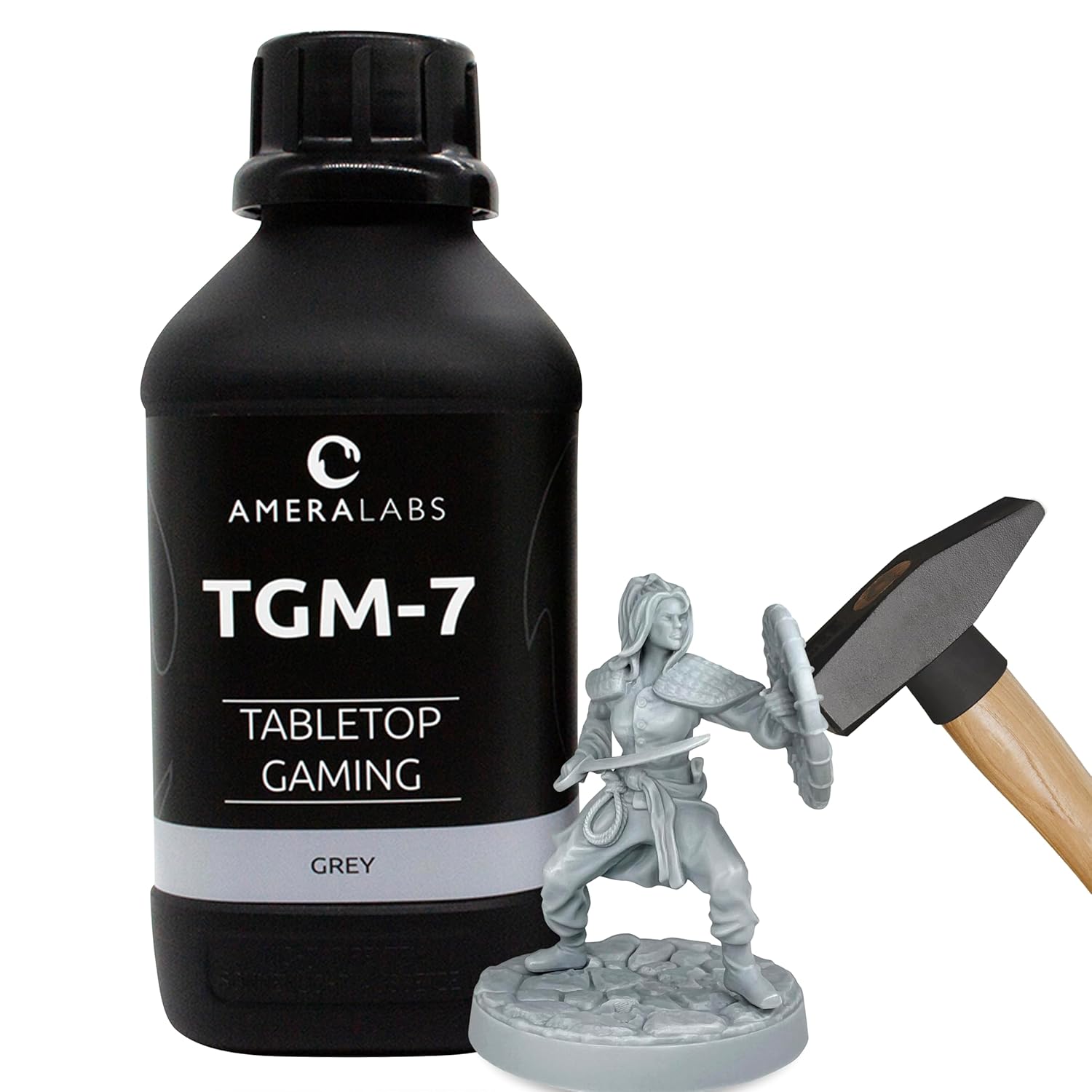
AmeraLabs TGM-7
Best for: armies that get treated roughly, and anyone selling printed miniatures. TGM-7 was formulated for tabletop gaming from the start, and its party trick is surviving drop tests that shatter standard-resin figures outright. Detail stays crisp enough for gaming standards, odour is low, and cured parts have a slightly waxy toughness that shrugs off transport. You pay a clear premium per litre, which is exactly why it earns its keep on models you cannot afford to reprint.
Price: ~$50/L (approximate; varies by bottle size, sale period and region, click through for current pricing)
- Class-leading impact resistance; survives concrete drop tests
- Low odour and consistent batch quality
- Premium price; detail a notch under the 8K display resins
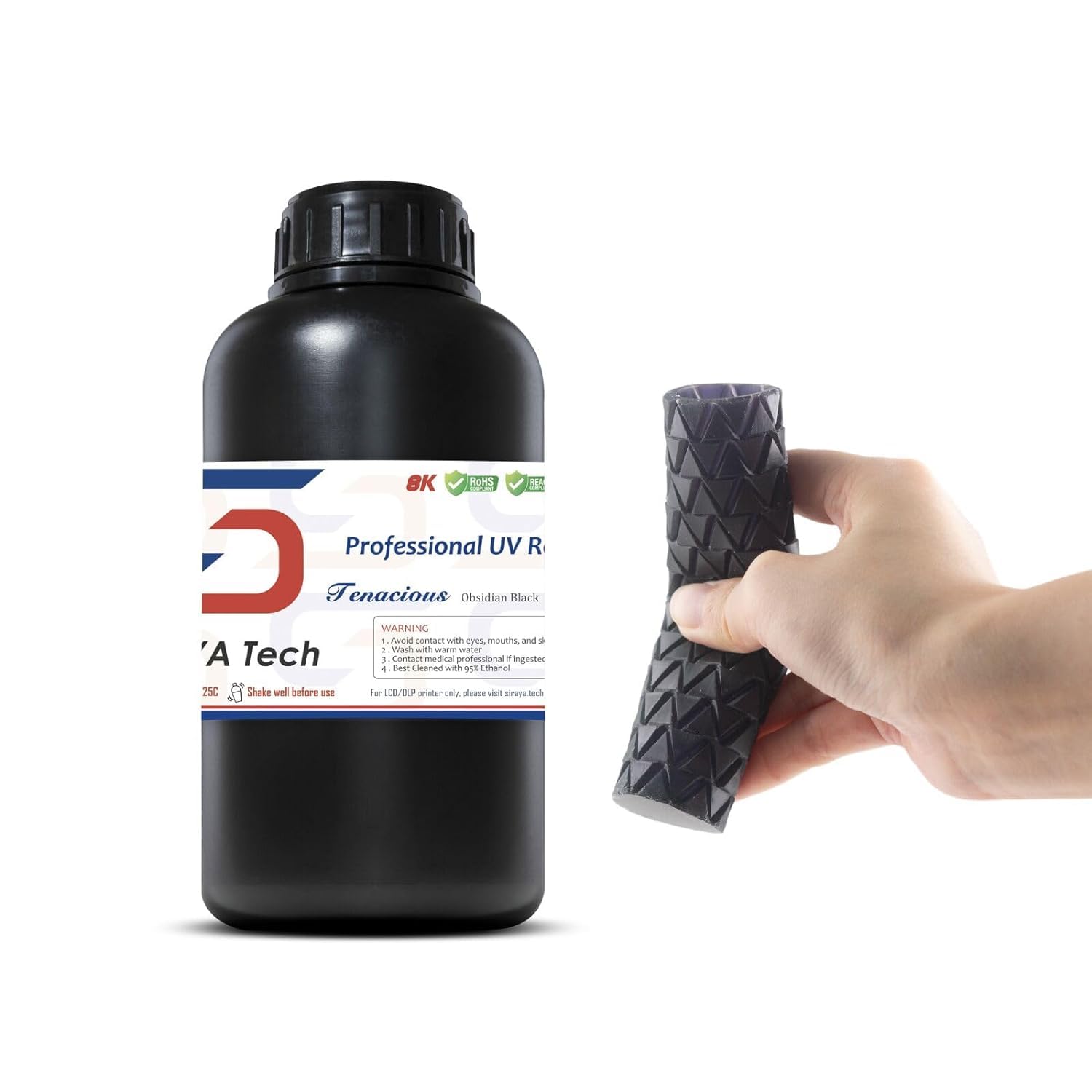
Siraya Tech Tenacious
Best for: upgrading the resin you already like. Tenacious is a flexible resin that few people print neat for minis; its real job is as the community’s favourite mix-in. Add 20 to 30 percent to a standard or 8K detail resin and thin blades stop snapping while the surface detail barely changes. It is the cheapest route to a custom detail-durability balance, one bottle toughens several litres of whatever else you print.
Price: ~$40/L (approximate; varies by bottle size, sale period and region, click through for current pricing)
- The proven mix-in: 20 to 30 percent transforms brittle resins
- One bottle toughens several litres of standard resin
- Rarely used neat for minis; edges soften at high ratios
Best resins for display and painting
For shelf pieces, busts, and competition painting, brittleness stops mattering and edge sharpness becomes everything. These are the bottles that reward a fine brush.
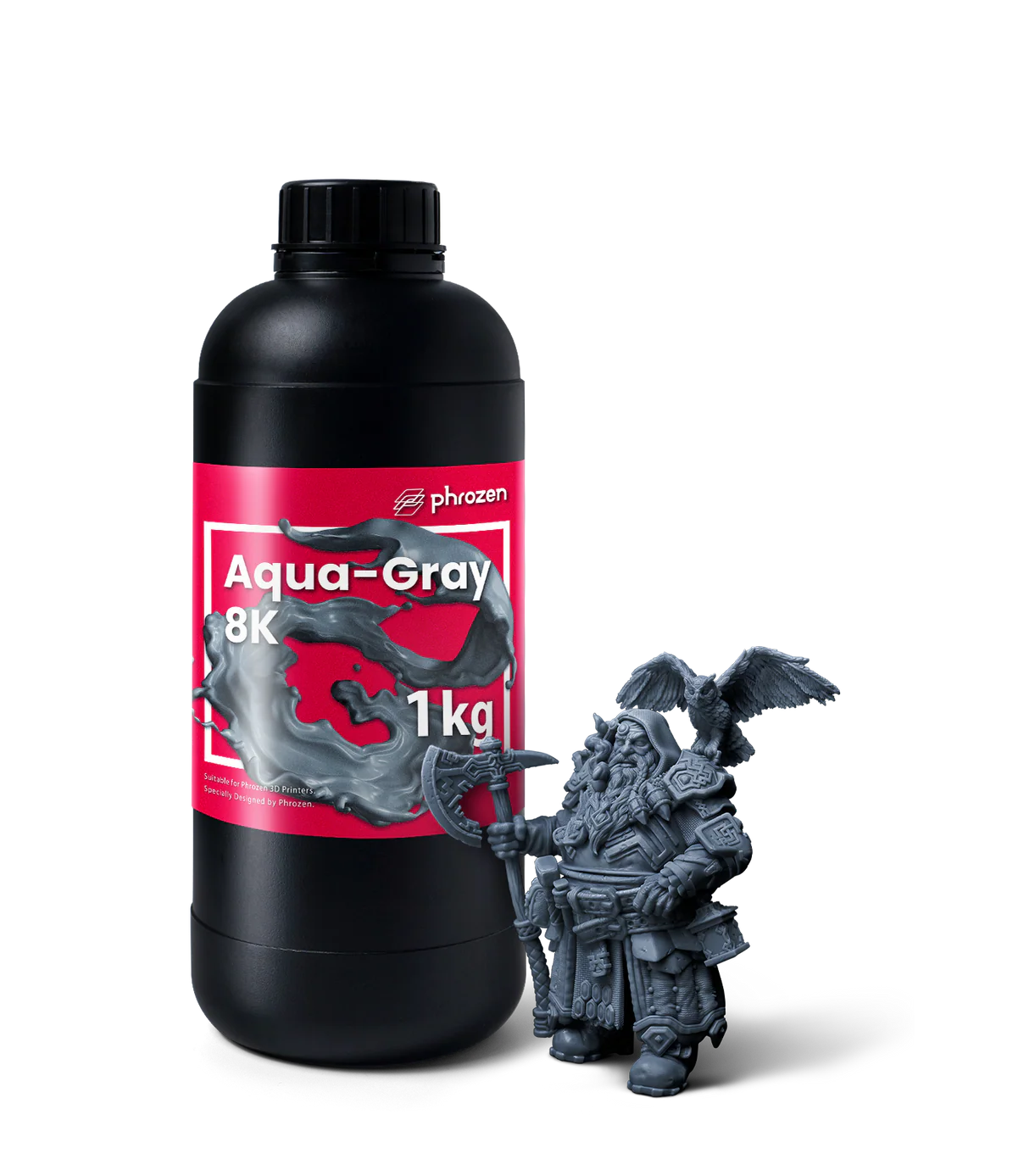
Phrozen Aqua-Gray 8K
Best for: the sharpest miniature your printer can produce. Aqua-Gray 8K is the resin painters name when they mean maximum detail: it resolves chainmail links, pupils, and fabric weave at 0.03 mm layers, and its matte grey surface shows every detail clearly while taking primer beautifully. It is a classic brittle standard resin, so keep it for display work, or follow the community recipe and blend in a tough resin for pieces that need handling. Despite the Aqua name, it is not water-washable; it washes in IPA like any standard resin.
Price: ~$35/L (approximate; varies by bottle size, sale period and region, click through for current pricing)
- The detail benchmark for display and competition minis
- Matte grey finish shows detail and takes primer perfectly
- Brittle; blend or handle with care, and not water-washable despite the name
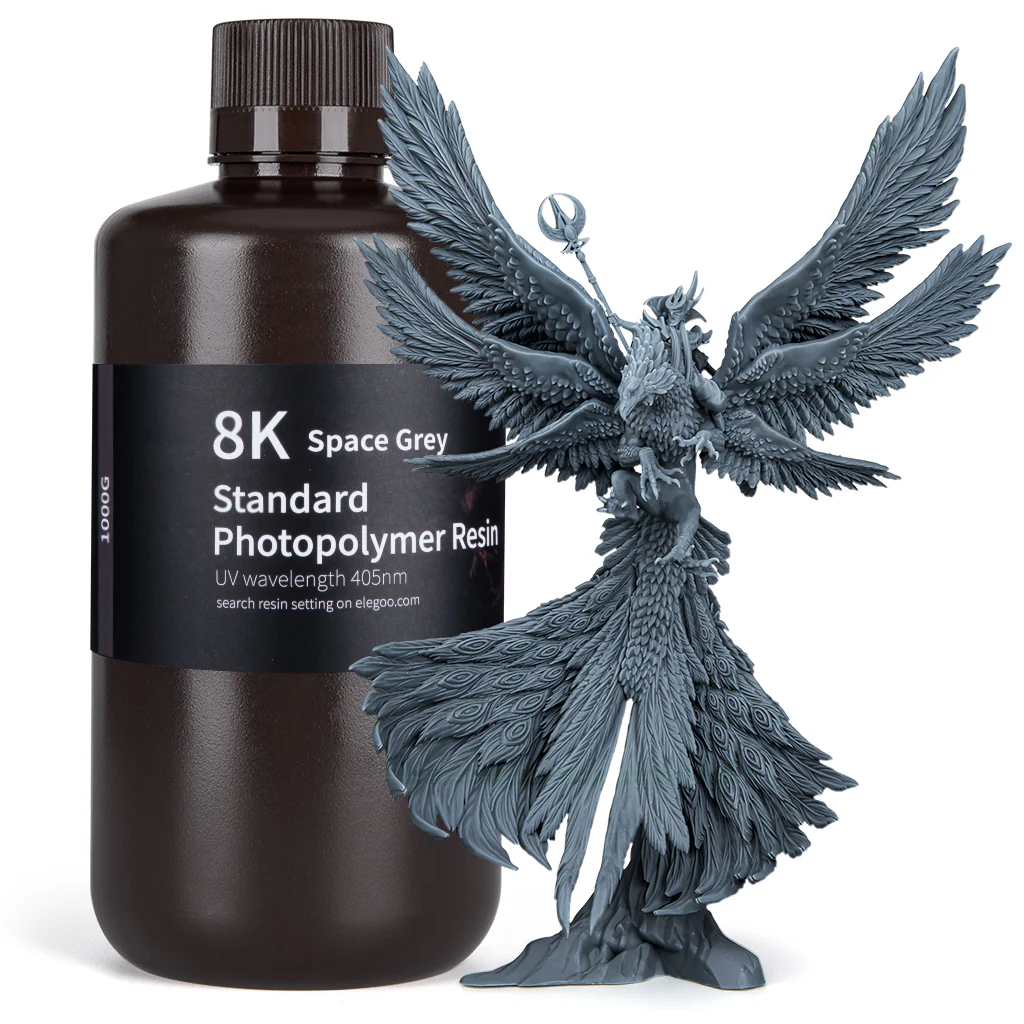
Elegoo 8K Standard
Best for: display-grade detail without the boutique price. Elegoo’s 8K formula gets close enough to the premium detail resins that most painters cannot pick the difference after priming, and it costs meaningfully less per litre while being available everywhere. Colour range is wide, batches are consistent, and exposure profiles for Elegoo’s own printers are built into every major slicer. Like every high-detail standard resin, it is brittle: shelf pieces only, or blend it.
Price: ~$28/L (approximate; varies by bottle size, sale period and region, click through for current pricing)
- Near-premium detail at a mainstream price
- Slicer profiles everywhere; very easy to dial in
- Brittle like all display resins; not for gameplay armies
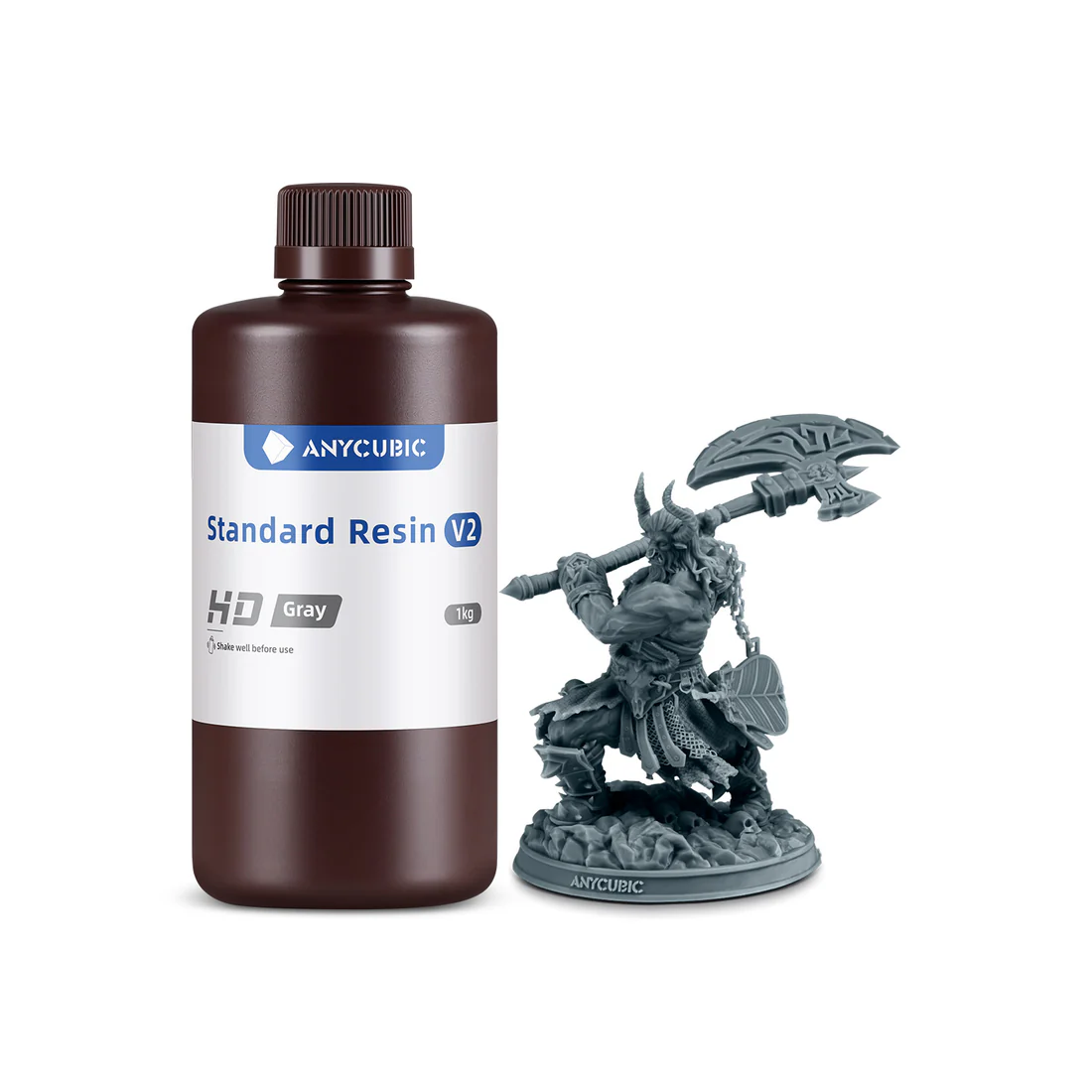
Anycubic Standard Resin V2
Best for: everyday miniature printing in rooms where smell matters. The V2 reformulation cut the odour substantially compared with classic standard resins and added a little toughness along the way, which makes it a comfortable daily driver for terrain, NPCs, and batch prints. Detail is solidly good rather than benchmark-level, and the price sits low enough that filling a plate with scenery does not feel expensive.
Price: ~$20/L (approximate; varies by bottle size, sale period and region, click through for current pricing)
- Noticeably lower odour than classic standard resins
- Slightly tougher than the usual brittle standard formula
- Detail good but not benchmark; masters go to the 8K bottles
US store →EU store →Global store →
Anycubic ships from regional stores; pick the store that matches your delivery address so pricing, tax and shipping are correct.
Formlabs Grey Resin V5
Best for: studios and print services running Formlabs hardware. Grey V5 is the reference material for professional master sculpts and client work on the Form 4: a rich matte grey that photographs beautifully, sharper detail and roughly 30 percent higher impact strength than the previous version, and cartridge-fed repeatability that hobbyist machines cannot match. The honest caveat is the ecosystem: it only runs on Formlabs printers, so if you own an MSLA machine from the picks above, this card is not for you. For a studio billing clients for miniatures, it earns its price.
Price: ~$99/L (approximate; varies by bottle size, sale period and region, click through for current pricing)
- The professional standard for master sculpts and client work
- Matte grey finish, sharp detail, tougher V5 formula
- Formlabs printers only; overkill for hobby MSLA setups
Value, budget and easy-clean picks
Armies are printed by the litre, and beginners should not learn on premium bottles. These picks keep the cost of a full warband, or a first month of mistakes, sensible.
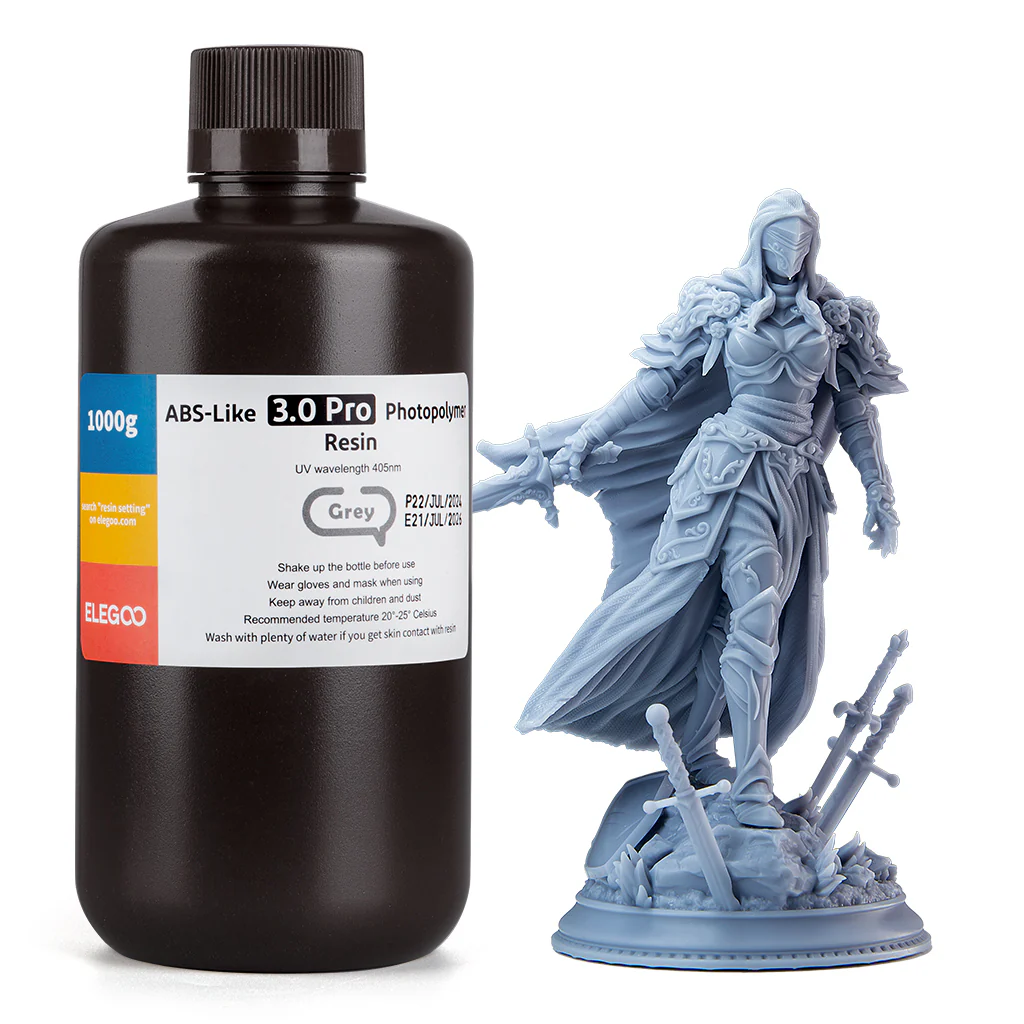
Elegoo ABS-Like Resin 3.0 Pro
Best for: toughening a whole army without premium pricing. The 3.0 Pro generation of Elegoo’s ABS-like line brought real impact resistance and heat tolerance to a bottle that costs standard-resin money, which is why it has become the default recommendation for gameplay armies on a budget. Thin parts survive support removal, dropped models usually bounce, and it prints predictably on the profiles built into every slicer. Detail lands just behind the boutique tough resins.
Price: ~$27/L (approximate; varies by bottle size, sale period and region, click through for current pricing)
- Tough-resin durability at standard-resin cost
- Predictable profiles on every mainstream printer
- Detail a step behind Blu and the mini-specific formulas
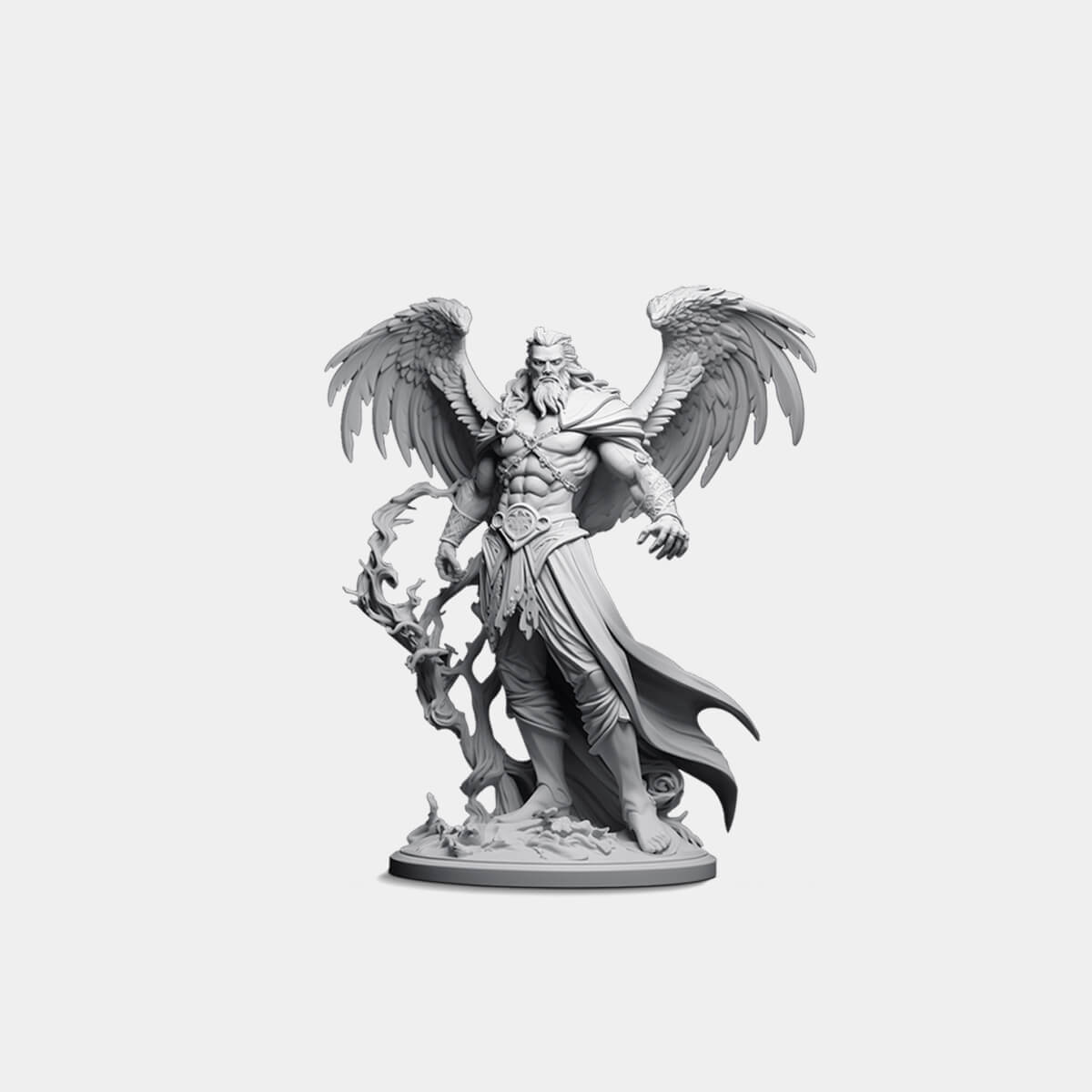
Sunlu Standard Resin
Best for: practice plates, terrain, and shelf minis by the kilo. Sunlu’s standard resin routinely undercuts everything else per litre, especially in multi-bottle bundles, while printing more consistently than a bottom-shelf price suggests. Detail is honest mid-tier: good enough that painted terrain and background figures look great, not the bottle for a competition bust. It is the right resin to learn on, because failed calibration prints stop hurting at this price. If Sunlu is out of stock in your region, eSUN’s standard resin plays the same budget role.
Price: ~$16/L (approximate; varies by bottle size, sale period and region, click through for current pricing)
- Consistently the cheapest reliable bottle per litre
- Ideal for terrain, batch prints, and learning exposure
- Mid-tier detail and classic standard-resin brittleness
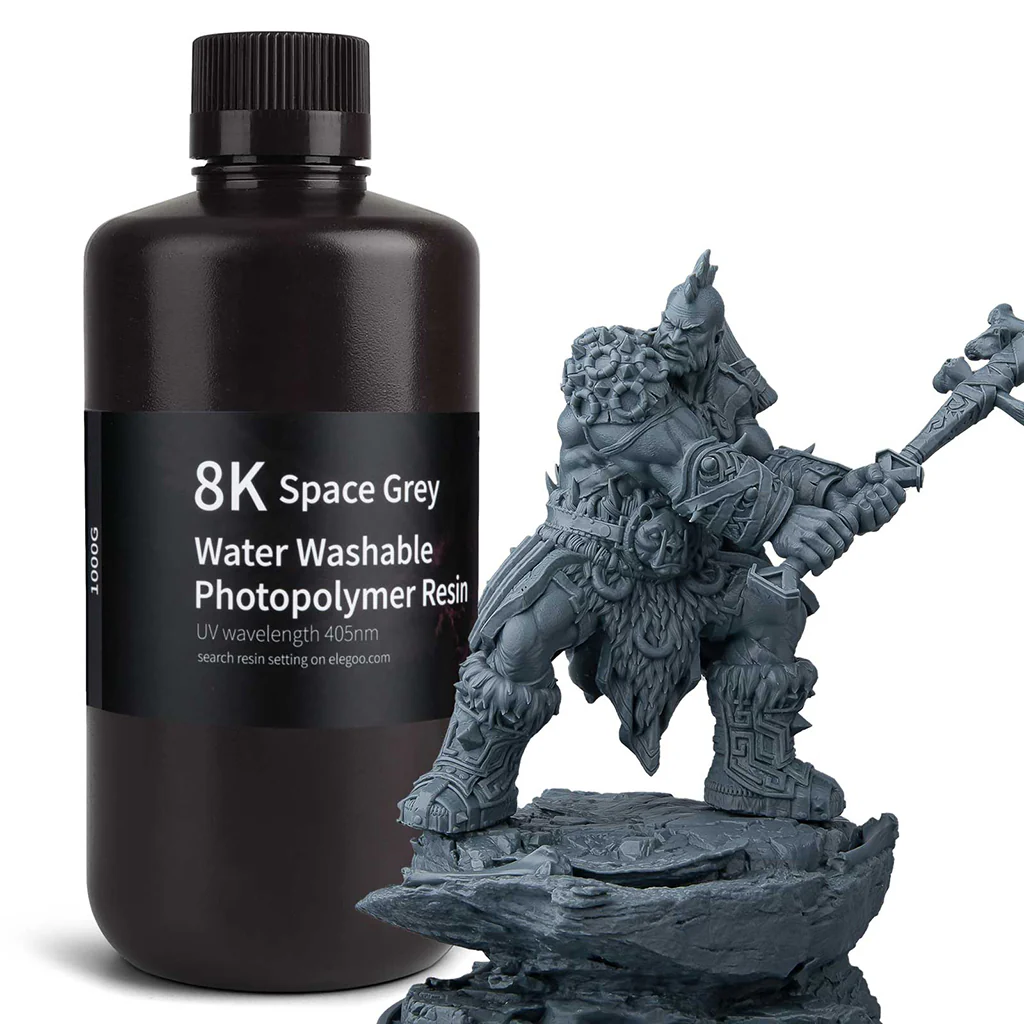
Elegoo Water Washable Resin
Best for: first-time resin printers and shared spaces. Rinsing minis under plain water instead of managing tubs of IPA removes the most intimidating part of the hobby, and Elegoo’s water-washable formula holds detail close to its standard line, easily enough for gaming figures. Two honest caveats: parts run slightly more brittle than standard resin, and the rinse water must sit in sunlight until the resin cures out before you dispose of it, never down the drain. Our water-washable resin guide compares the full category.
Price: ~$22/L (approximate; varies by bottle size, sale period and region, click through for current pricing)
- Water cleanup: the gentlest introduction to resin minis
- Detail close to standard; fine for gaming figures
- Slightly more brittle; cure the rinse water before disposal
How to choose a miniature resin
Answer three questions and the shortlist writes itself.
- Will it be handled? Gameplay means a tough, mini-specific, or ABS-like resin, or a blend. Display means a high-detail standard resin and no compromises.
- How much are you printing? A single display bust justifies a premium bottle. An army budget belongs with the value tough resins, with the premium bottles reserved for characters and centrepieces.
- Where are you printing? A garage with ventilation handles any resin. A shared flat points toward the low-odour and water-washable picks, plus the ventilation basics in our 3D printing safety guide.
Whatever you pick, uncured resin is a skin sensitiser: nitrile gloves, eye protection, and airflow are part of the hobby. And remember the settings section above; a calibrated cheap resin beats an uncalibrated premium one every time.
Explore the resin guides
This guide is part of our resin series. The 3D printer resin hub maps every type and how to choose; the sibling guides cover the best tough and ABS-like resins, the best water-washable resins, the best castable resins, and the best flexible resins. For the hardware side, see the best resin 3D printers, the best 3D printers for miniatures, and the best wash and cure stations.
Frequently asked questions
Should I use a different resin for display minis and gameplay minis?
Yes, if you do both regularly. Display pieces reward a high-detail standard resin, which is brittle but crisp. Gameplay figures need a tough, ABS-like, or mini-specific resin so thin parts survive handling and drops. Many hobbyists keep one bottle of each, or blend a tough resin into their detail resin as a middle path.
Is ABS-like resin worth it for miniatures?
For anything that gets handled, yes. The detail loss versus a standard resin is small and disappears under primer, while the durability gain is large: spears, banners, and rifle barrels that would snap in standard resin bend and survive. For pure display pieces it is unnecessary; brittleness does not matter in a cabinet.
What layer height and exposure should I use for fine detail?
Print miniatures at 0.03 to 0.05 mm layer height, and calibrate exposure with a test print for every new bottle and colour. Over-exposure fattens details and welds supports on; under-exposure loses edges and weakens the part. The calibration print takes twenty minutes and saves entire failed plates.
Do miniatures need washing and curing?
Yes, every resin print does. Wash off the uncured surface resin (IPA for most resins, water for water-washable), let the model dry, then cure it under UV. Keep the cure short for minis, a few minutes is enough; over-curing makes thin parts brittle. Cure before painting, or primer and paint will not bond properly.
Standard or water-washable resin for minis?
Water-washable is the friendlier workflow, plain water cleanup and less odour, and modern formulas hold detail well enough for gaming figures. Standard resin still takes the crown for ultimate crispness and is a little less brittle than most water-washable formulas. Beginners and shared households: water-washable. Competition painters: standard, in a ventilated space.
How do I stop thin parts snapping off the supports?
Three fixes, in order. Use lighter supports on thin detail (0.1 to 0.25 mm tips) so less force is needed to remove them. Remove supports while the print is still warm and unwashed, or under warm water, when the resin is at its most forgiving. And if parts still snap, switch to a tough or mini-specific resin, or blend one in; that flexibility is exactly what they are formulated for.
What is the best resin for Warhammer and D&D miniatures?
For figures that hit the table, a tough or mini-specific resin: the purpose-built gameplay formulas and tough all-rounders in this guide survive transport and play while holding gaming-standard detail. For display armies and centrepieces you paint but rarely handle, a high-detail 8K standard resin gives the sharpest result. Many players print rank-and-file in a value tough resin and characters in the detail bottle.