
Maker’s Pet has launched Oomwoo, an open-source robot vacuum that users build themselves from a 3D-printed chassis, a Raspberry Pi, and an inexpensive 2D LiDAR sensor. The robot runs ROS 2 with the Nav2 stack, integrates natively with Home Assistant, and operates entirely offline. All hardware, firmware, and software are released under the Apache 2.0 license.
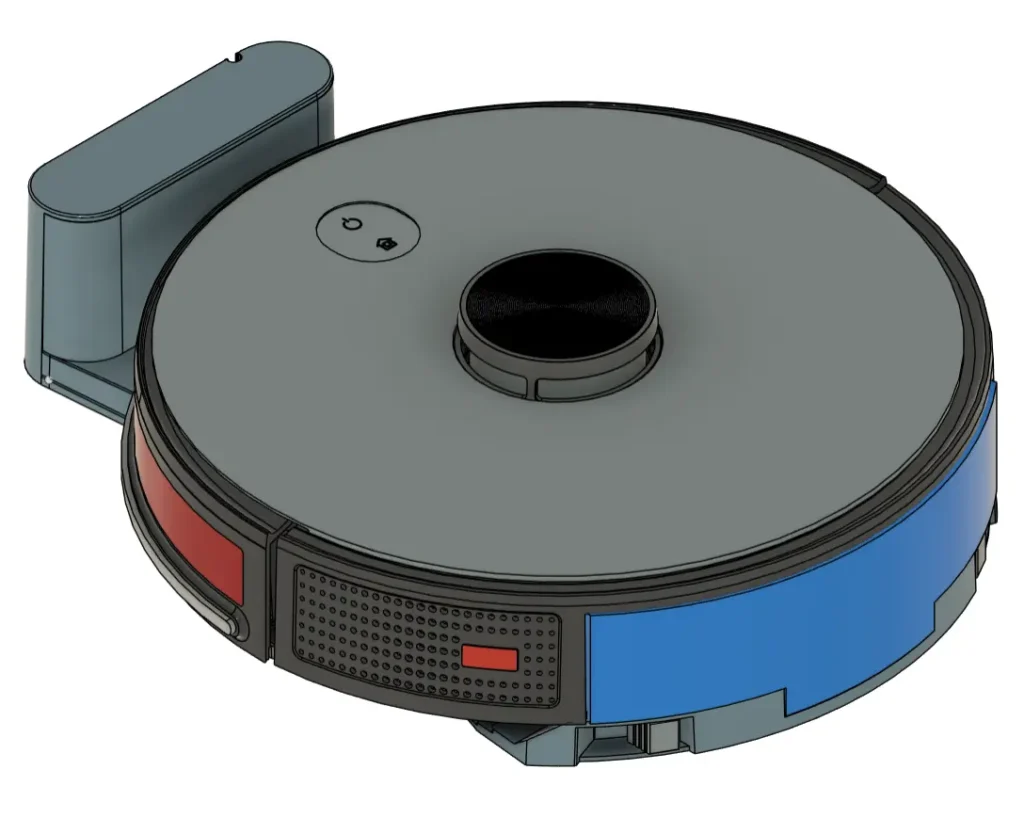
The project is early. Creator Ilia O. is developing Oomwoo in public “from the first commit,” and the current v0 milestone covers the 3D-printed chassis, a ROS 2 Gazebo simulation, and LiDAR mapping with manual SLAM. There are no build instructions yet, and the compute choice between a Raspberry Pi 5, an ESP32 running micro-ROS, or both is still undecided. The first bill of materials is targeted for around mid-July.
The robot is split into self-contained modules so contributors can build in parallel and submit work as pull requests. Maker’s Pet plans to sell a convenience kit, but Ilia says buying it won’t be required. Every part can be sourced independently.
The offline-only design is a direct response to a string of documented security failures in commercial robot vacuums. At DEF CON 32 in August 2024, researchers Dennis Giese and Braelynn Luedtke demonstrated that several Ecovacs models could be hijacked over Bluetooth to access their cameras and microphones. Giese told TechCrunch the security was “really, really, really, really bad.” Hijacked DEEBOT X2 units subsequently shouted slurs and chased pets in U.S. homes.
A token flaw in DJI’s Romo line let one user gain access to roughly 6,700 vacuums worldwide, exposing floor plans and live video feeds. In a separate incident, a manufacturer issued a remote kill command to brick a user’s vacuum after the owner blocked it from collecting data; the owner revived it with custom hardware and Python scripts to run it offline. Oomwoo navigates on 2D LiDAR and bumper sensors, with no camera pointed at the room.
The cloud-free approach isn’t entirely new. Valetudo, maintained by Sören Beye since 2018 and also released under Apache 2.0, replaces a commercial vacuum’s cloud connection with local control and Home Assistant integration. Installing it requires rooting vendor firmware, which on supported Dreame, Roborock, and Xiaomi models means disassembly, voids the warranty, and can’t be undone. Oomwoo’s design skips that entirely by starting from scratch.
Source: tomshardware.com