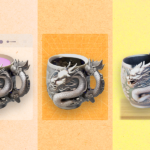

MIT researchers have built a 3D-printing system that produces objects capable of changing their surface appearance in response to physical interaction, no electronics required. Called ShiftLens, the system lets printed objects display different images or patterns when a user presses, slides, or turns part of the object, and everything can be manufactured in a single pass on a multimaterial 3D printer.
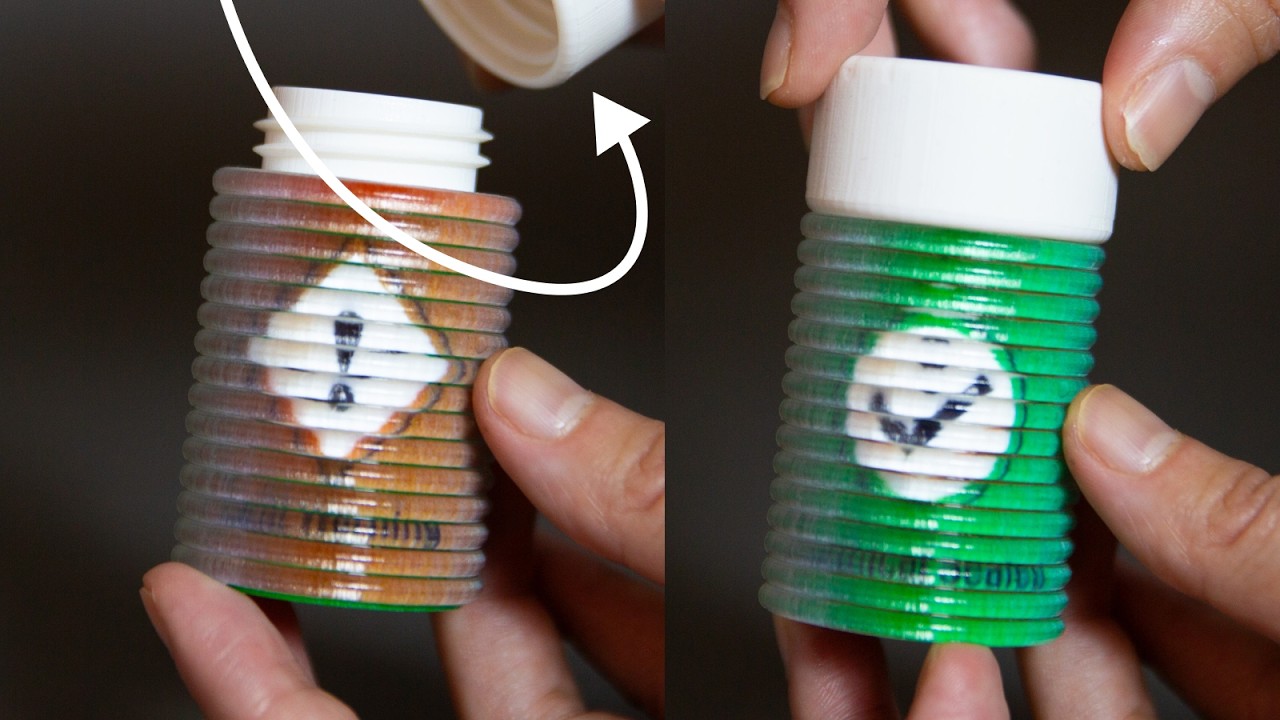
The technology works by combining two optical layers on an object’s surface. An array of tiny lenticular lenses sits over a patterned backplane. When the lens layer shifts, different portions of the backplane come into view, and the lenses magnify those sections to change what the user sees. The motion that drives this shift can be built directly into an object’s existing mechanics, like the rotation of a lipstick tube cap, or achieved by adding an actuation mechanism like a switch, knob, or roller.
“With our system, an object can tell you whether you are using it properly, without the need for sensors or any complicated electronics. The interactive display is mechanical, so you can create a self-contained, multistate, interactive device that a user can control very intuitively,” said Yunyi Zhu, a graduate student in MIT’s Department of Electrical Engineering and Computer Science and the paper’s lead author.
The research team demonstrated ShiftLens through several prototypes. One was a chemical bottle that turns green and displays a check mark when its cap is securely tightened, then turns red and shows an exclamation mark when it’s loose. Another was a tic-tac-toe game board with squares that display a red X, a blue O, or nothing at all, depending on which direction a user turns a knob.
Zhu’s co-authors include Dingning Cao, an MIT undergraduate; Jeremy Mrzyglocki, a graduate student at the Technical University of Munich; Stefanie Mueller, an associate professor in EECS and MIT’s Department of Mechanical Engineering and a member of CSAIL; and Narjes Pourjafarian, a postdoc at Northeastern University. The research will be presented at the ACM Symposium on User Interface Software and Technology.
The researchers built a user-facing design tool that automates the underlying optical and mechanical calculations. A user inputs images of the visual states they want and the desired shape of the object, and the tool generates a ShiftLens structure ready for printing. ShiftLens doesn’t work with every object, since it requires some form of shifting motion between the two layers, and the team thought carefully about how to communicate that constraint to users without optics or mechanical engineering backgrounds.
Potential applications go well beyond prototyping. Zhu pointed to industrial piping that could visually flag a damaged connection causing a leak, and outdoor warning signs that don’t rely on fragile circuits that foul weather could destroy. The team plans to develop an algorithm that generates ShiftLens structures with fewer user inputs and to expand the range of actuation mechanisms the tool supports.
Source: news.mit.edu