
The best PETG filament earns its place as the second spool most people buy: nearly as easy as PLA, but tough where PLA is brittle and untroubled by damp, garden duty, or a warm car. The catch is that PETG quality varies more between brands than PLA does, and its two famous quirks, stringing and a grip on the build plate that can crack it, are mostly solved by buying well and setting up right. This guide explains the material, then ranks ten spools across everyday, high-flow, Bambu-ready, translucent, toughened, and budget picks with the settings that make each behave.
PETG sits in the middle of the materials ladder, so if you are still weighing it against the alternatives, the 3D printer filament guide compares every material head-to-head and our engineering filaments guide covers the tier above it.
Jump to menu
Our top PETG picks at a glance
What PETG actually is and why it is the functional default
PETG is PET, the polymer of water bottles, modified with glycol so it prints without crystallizing. That chemistry is why it behaves the way it does: tougher and slightly flexible where PLA snaps, indifferent to water, and with a glass transition around 75 to 80°C that survives car interiors and dishwasher-adjacent life. It prints hotter than PLA (230 to 250°C nozzle, 70 to 80°C bed) but still without an enclosure, which is exactly why it owns the middle ground: real functional durability on any printer.
The trade-offs are cosmetic more than mechanical. PETG strings more than any other common material, loves to collect blobs on the nozzle, and its glossy finish shows every flaw that PLA matte would hide. Parts also flex slightly under load rather than holding dead stiff; for rigidity, PLA or a fiber-filled composite beats it.
The two PETG quirks, explained
Stringing is a moisture story first. PETG absorbs water faster than PLA, and wet PETG strings no matter how good the spool was on day one. The fix is staged: dry the filament (4 to 6 hours at 55 to 65°C in a filament dryer), then tune retraction and travel speed, then accept that a few wisps are PETG being PETG; they brush off with a heat-gun pass.
Bed adhesion works too well. PETG bonds so aggressively to bare PEI and glass that removal can tear chunks out of the surface. The standard practice is a release layer: a thin swipe of glue stick on smooth plates, or a textured PEI sheet, which grips exactly enough. Never print PETG on a perfectly clean smooth PEI plate at full bed temperature unless you enjoy resurfacing plates.
The best PETG filaments compared
Prices are per kilogram and approximate; they vary by color, bundle, sale period and region, so click through for current pricing.
Best everyday standard PETG
Four dependable answers to the same question; pick by where you shop and how much color matters.
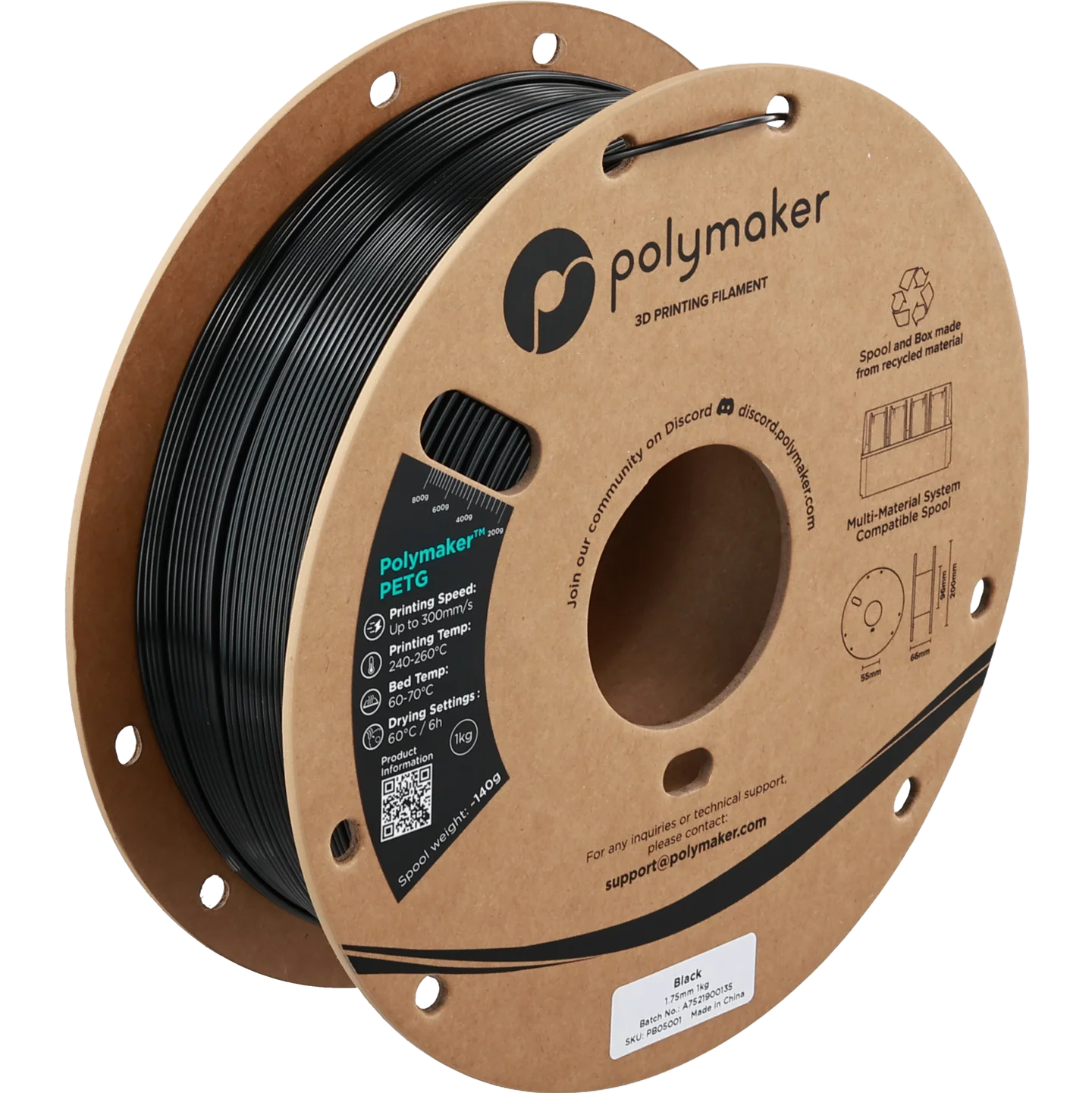
Polymaker PETG
Best for: the everyday default. Polymaker formulates its standard PETG to string noticeably less than the category norm, holds ±0.03mm, and matches colors to the Pantone system, so the orange you order in March is the orange you reorder in November. It bridges well for a PETG, the gloss is even, and the price sits in the middle of the field. Across the whole roster this is the spool with the fewest caveats.
Price: ~$20/kg (approximate; varies by color, sale period and region, click through for current pricing)
- Nozzle 230 to 240°C, bed 70 to 80°C
- Pantone-matched colors; consistent between batches
- Lower stringing than typical PETG
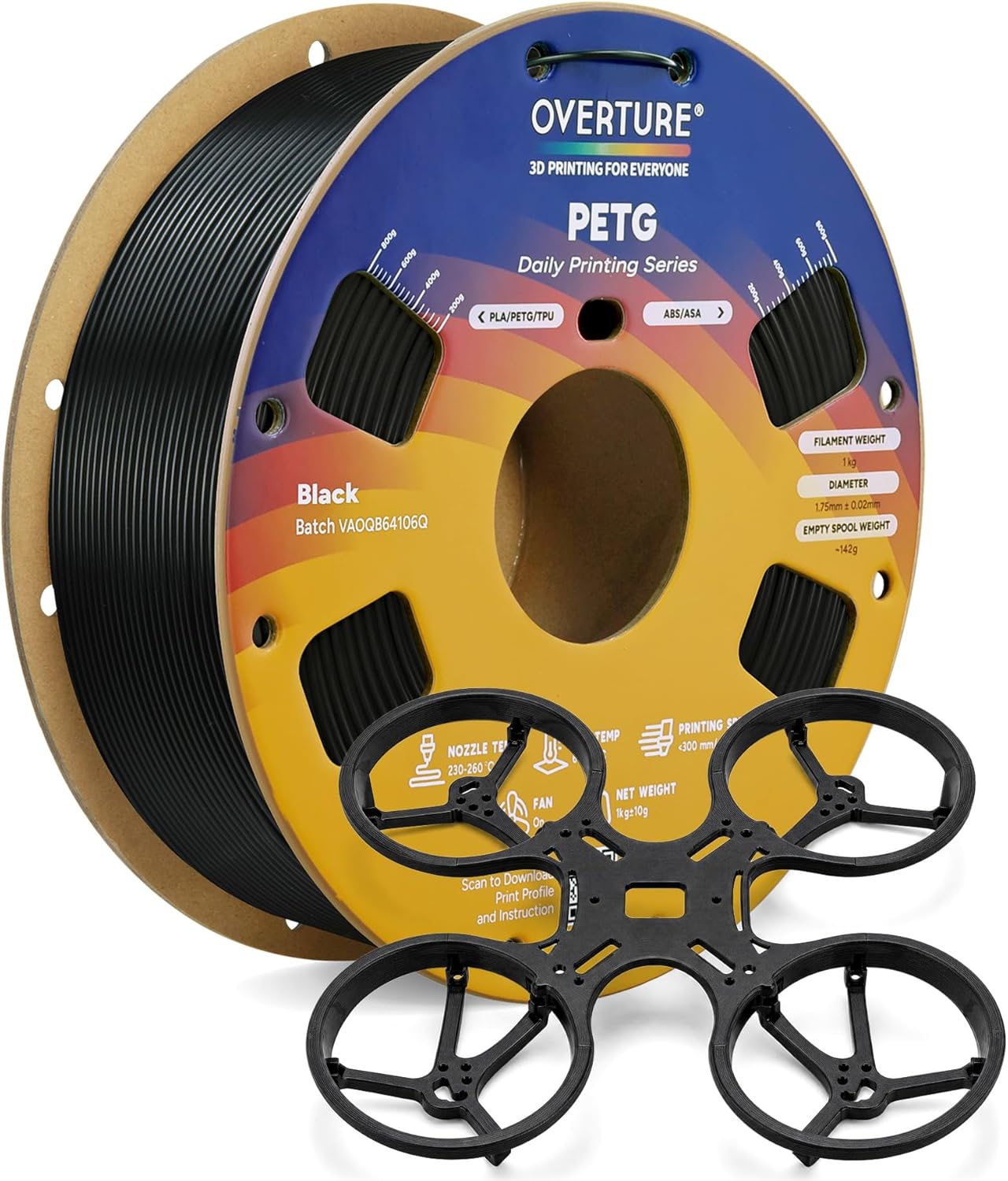
Overture PETG
Best for: the best print-per-dollar in PETG. Overture holds a genuinely tight ±0.02mm tolerance at a price most brands charge for ±0.05, layer adhesion is excellent, and multipacks push it under $18 a kilogram. The temperature window is wide and forgiving, which makes it the PETG we hand to people stepping up from PLA for the first time.
Price: ~$19/kg (approximate; varies by color, sale period and region, click through for current pricing)
- Nozzle 230 to 240°C, bed 70 to 80°C; tolerance ±0.02mm
- Excellent layer adhesion; forgiving window
- Multipack pricing under $18/kg
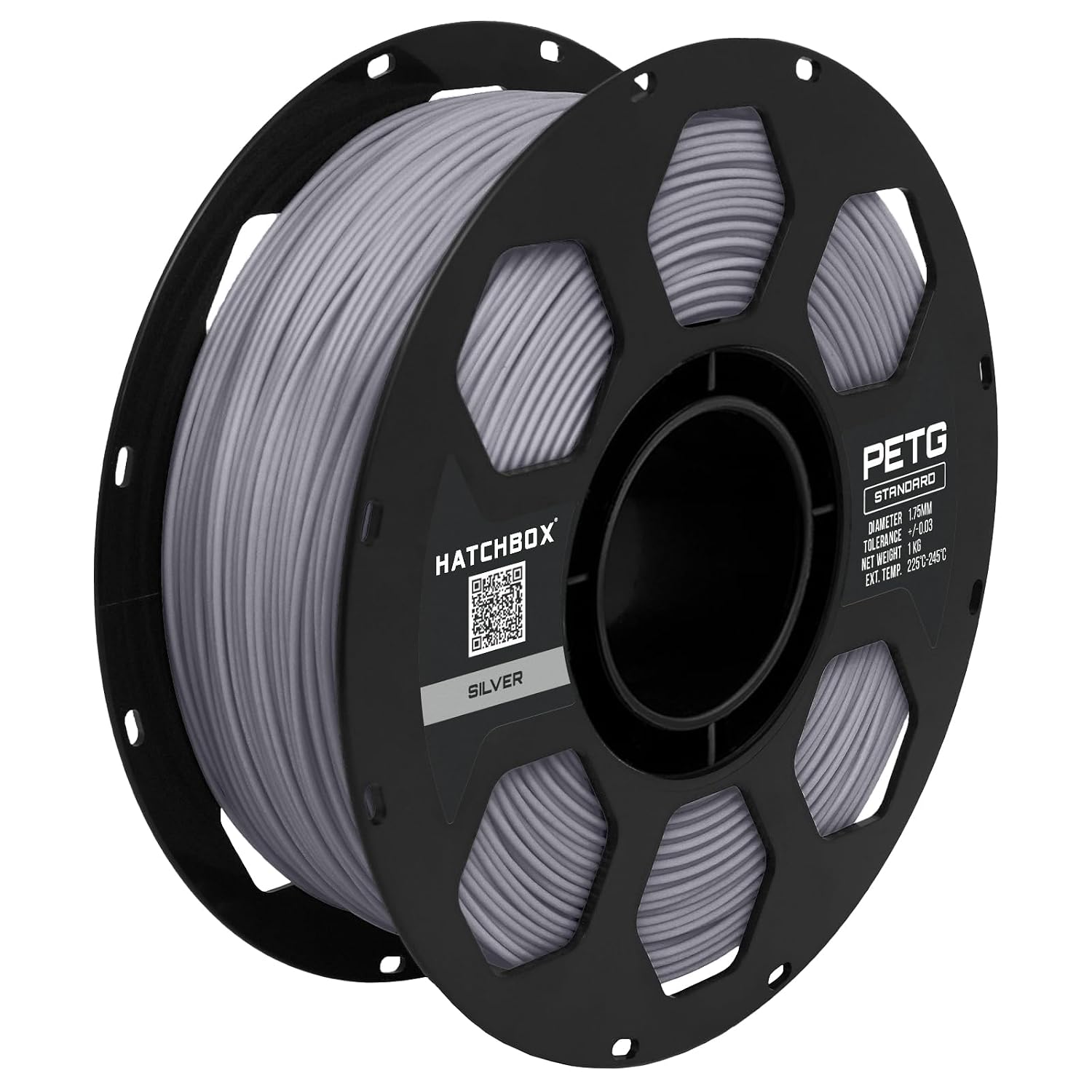
Hatchbox PETG
Best for: next-day PETG that behaves. The same quality control that made Hatchbox the Amazon PLA benchmark applies here: consistent diameter, dry packaging, and colors that print as pictured. It strings a little more than Polymaker and costs a little more than Overture, but it has never given us a bad spool, and that record is the product.
Price: ~$22/kg (approximate; varies by color, sale period and region, click through for current pricing)
- Nozzle 230 to 245°C, bed 70 to 80°C
- Reliable QC; vacuum-sealed with desiccant
- Prime shipping when a project cannot wait
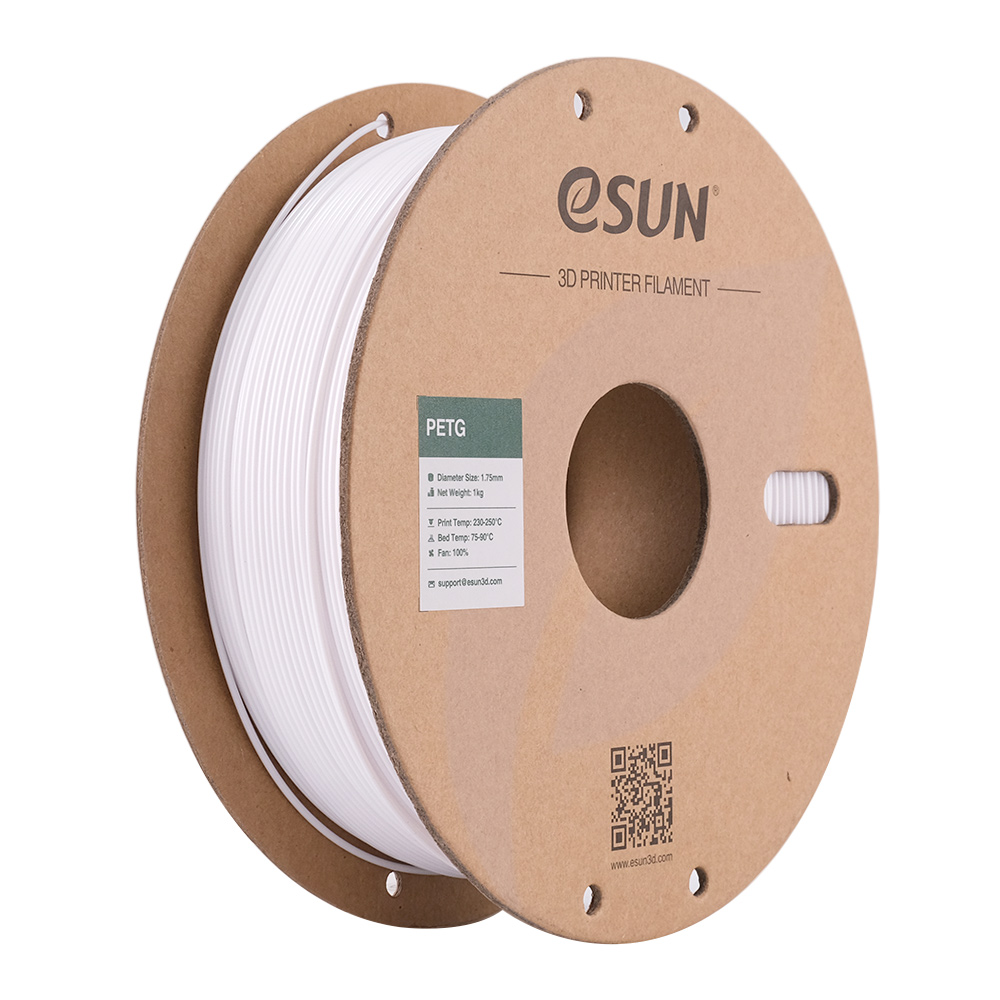
eSUN PETG
Best for: skipping the drying step. eSUN dries its PETG before sealing it, and it shows: spools print clean straight from the bag where other brands arrive already damp enough to string. Combined with one of the lowest standard-PETG prices going, it is the practical pick for anyone without a filament dryer yet. Finish and color range are mid-pack.
Price: ~$17/kg (approximate; varies by color, sale period and region, click through for current pricing)
- Nozzle 230 to 250°C, bed 75 to 85°C
- Factory-dried; prints clean out of the bag
- Among the cheapest reputable standard PETG
Best high-flow PETG
Standard PETG flows worse than PLA at speed; high-flow grades fix the melt rate so fast printers stay fast.
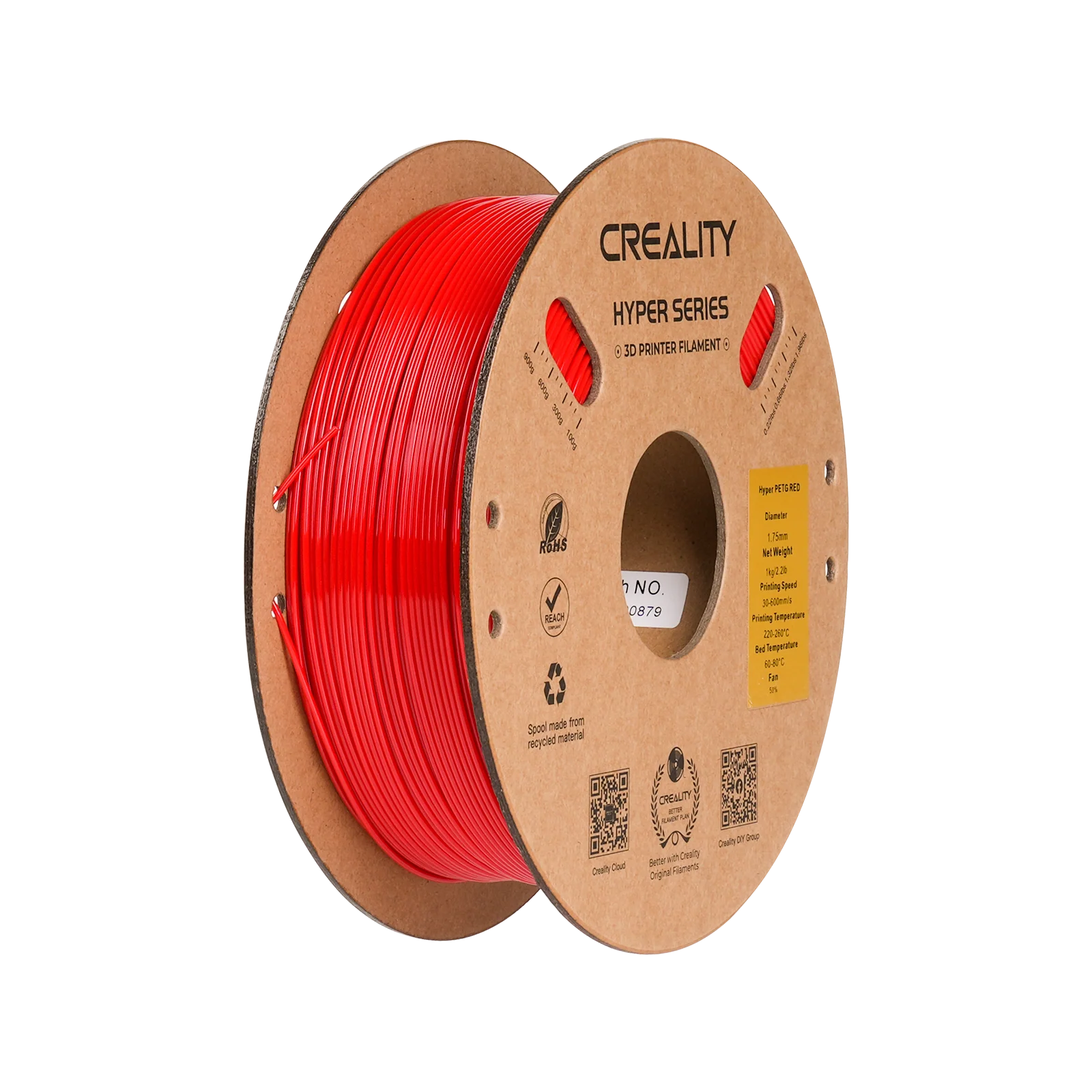
Creality Hyper PETG
Best for: running PETG at the speeds a modern CoreXY or K-series printer can actually reach. Creality reformulates the melt flow so Hyper PETG keeps extruding cleanly where standard PETG starves and weakens, and it is rated all the way to 600mm/s. It stays tough and low-warp at speed, the newer spools carry RFID for auto-profiles on Creality machines, and it costs less than most premium PETG. The trade-off is a looser ±0.05mm tolerance, fine for the fast utility parts this is built for. On any fast printer, Creality or not, this is the speed pick.
Price: ~$17/kg (approximate; varies by bundle, sale period and region, click through for current pricing)
- Nozzle 230 to 260°C, bed 70 to 80°C; rated to 600mm/s
- RFID auto-profiles on current Creality printers
- Tolerance ±0.05mm; tough and low-warp at speed
Best PETG for Bambu owners
Bambu printers reward filament that just works: the RFID tag auto-loads the right profile, the spool feeds the AMS cleanly, and refill rolls keep the cost down.
Bambu Lab PETG Basic
Best for: Bambu owners who want plug-and-play PETG. Bambu retired its high-flow PETG HF in 2026 and relaunched PETG Basic as the successor; it prints slower than HF did but tests stronger and tougher, with higher bending and layer strength and more impact resistance. RFID tags auto-load the right profile on Bambu machines and feed the AMS cleanly, and bulk refill pricing drops toward $13 a roll. Dry it before use, and expect a little more warp than HF on large parts.
Price: from ~$13/kg in bulk, ~$20 single (approximate; varies by bundle, sale period and region, click through for current pricing)
- Nozzle 240 to 260°C, bed 70 to 80°C
- RFID auto-profiles on Bambu printers; AMS-friendly refills
- Stronger and tougher than the discontinued PETG HF; dry before use
Best premium and toughened PETG
When the part is structural, spend on the polymer: these two buy measurable strength.
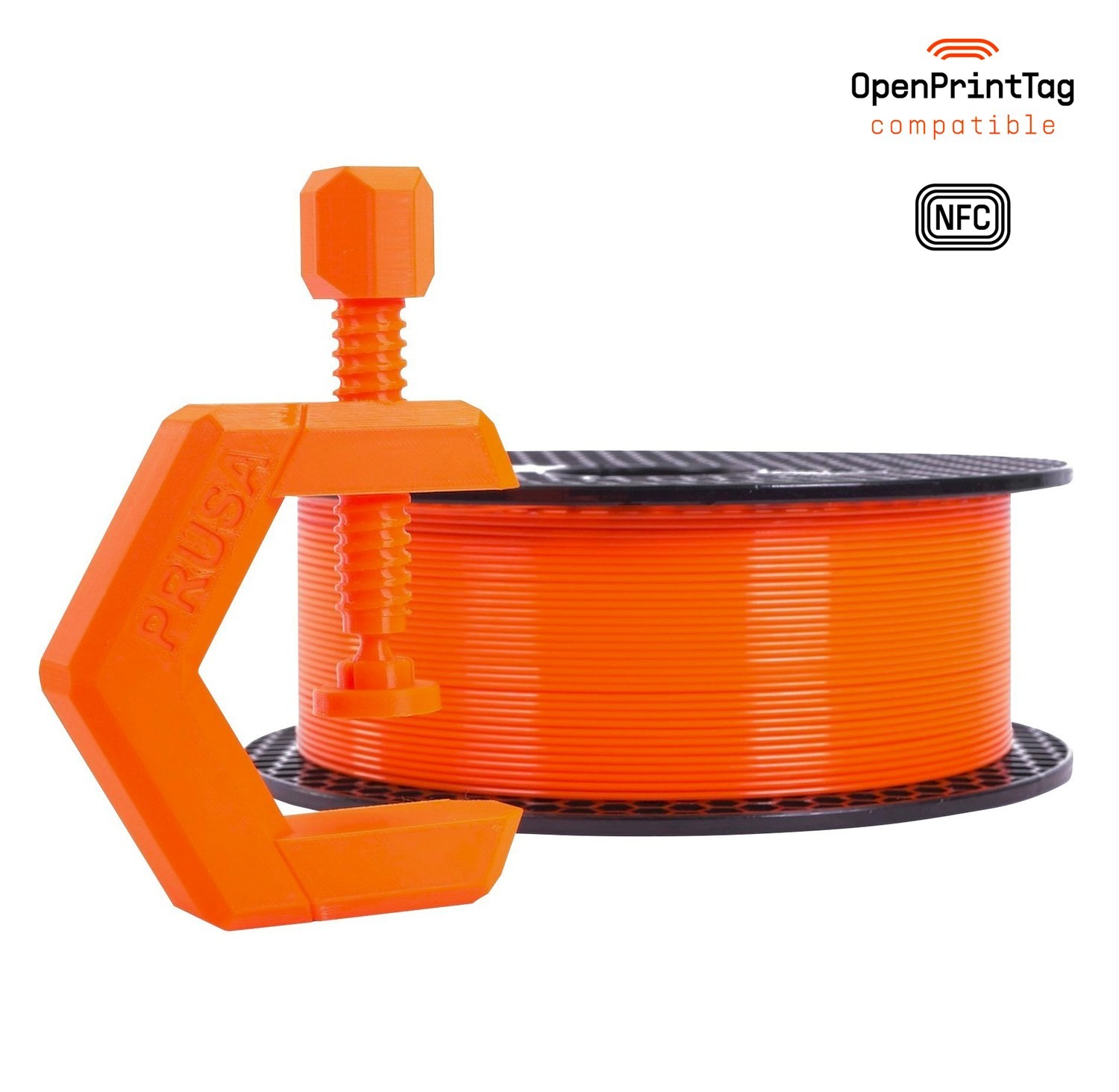
Prusament PETG
Best for: load-bearing parts and provable quality. In our printing and in most published testing, Prusament PETG delivers the best layer adhesion in the category, which is what actually decides whether a bracket survives. Tolerance is a guaranteed ±0.02mm with per-spool production data behind a QR code. You pay the Prusa premium; for structural parts it is the cheapest insurance available.
Price: ~$30/kg (approximate; varies by color, sale period and region, click through for current pricing)
- Nozzle 240 to 250°C, bed 80 to 90°C; ±0.02mm guaranteed
- Category-best layer adhesion; QR production data
- Made in-house by Prusa Research
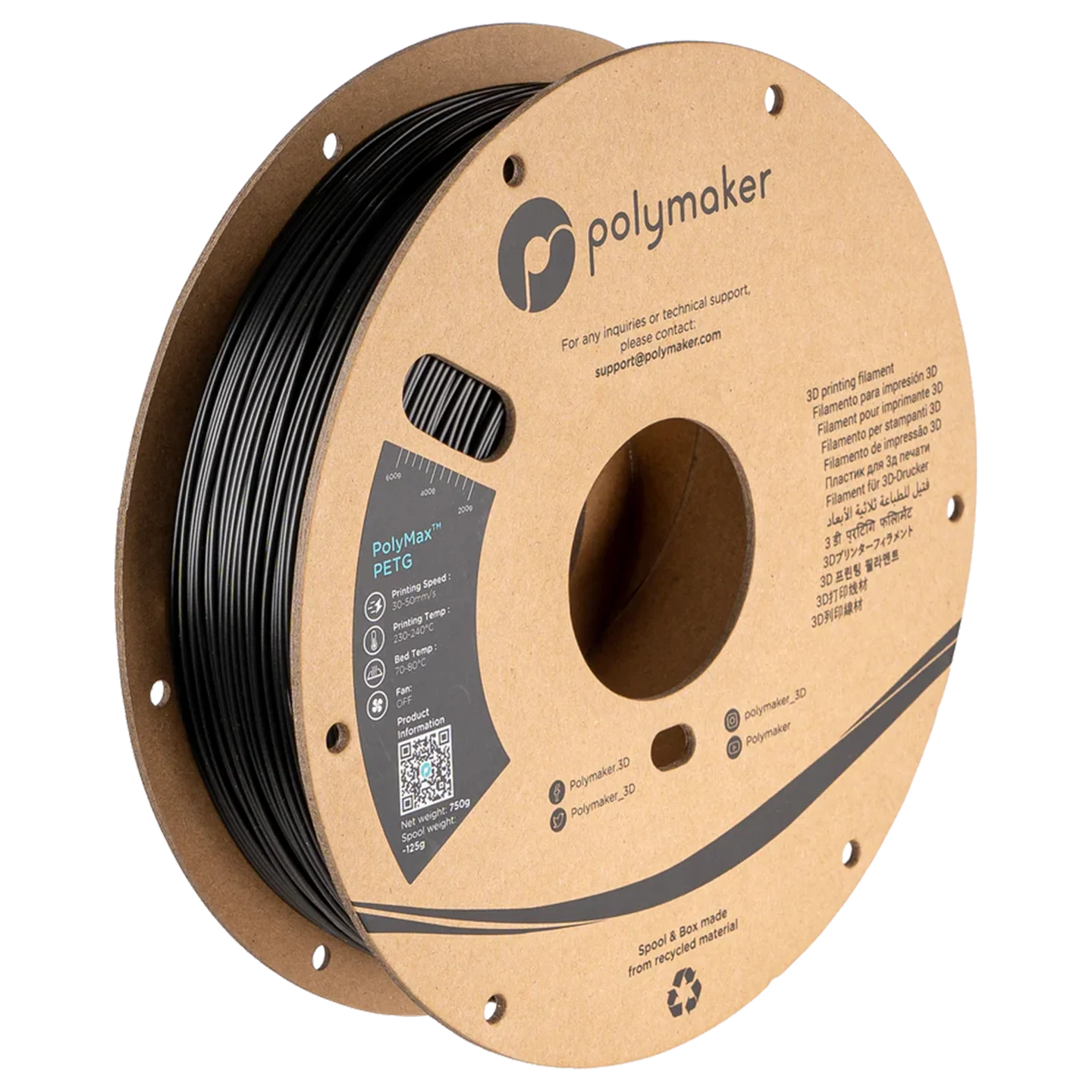
Polymaker PolyMax PETG
Best for: PETG pushed toward engineering territory. PolyMax adds Polymaker’s impact modifiers to the PETG base, roughly doubling impact resistance over standard PETG while keeping the same printing manners. It is the spool for tool handles, clamps, and brackets that get dropped, stepped on, or levered. If the part needs more than this, you are shopping in the engineering guide.
Price: ~$30/kg (approximate; varies by color, sale period and region, click through for current pricing)
- Nozzle 230 to 240°C, bed 70 to 80°C
- Roughly double the impact strength of standard PETG
- Satin finish hides layer lines better than gloss
Best translucent PETG
PETG is the one common filament that does transparency well; printed slow and hot in thick single walls, it gets close to frosted glass.
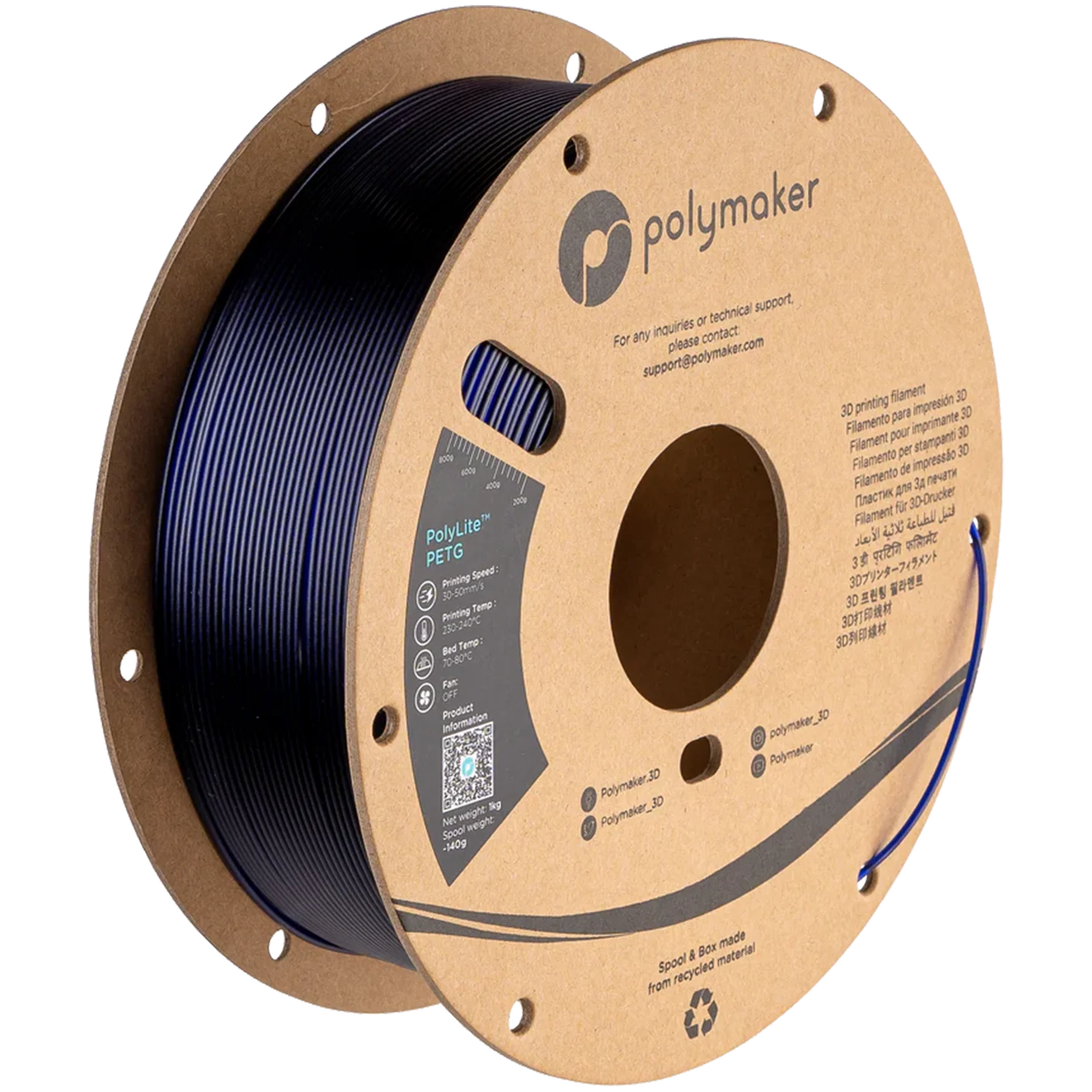
Polymaker PolyLite Translucent PETG
Best for: lampshades, light pipes, and jars you can see into. Clarity in printed PETG is mostly technique, but it starts with a base resin free of haze, and PolyLite Translucent is the cleanest we have printed, in clear and a set of jewel tints. Print it slow (60mm/s or less), hot, and in vase mode or thick single perimeters for the glassiest result.
Price: ~$22/kg (approximate; varies by color, sale period and region, click through for current pricing)
- Nozzle 230 to 240°C, bed 70 to 80°C; print slow for clarity
- Cleanest base resin we have tested; clear + tinted colors
- Vase-mode friendly
Best budget PETG
The floor has dropped: serious PETG now starts around $15.
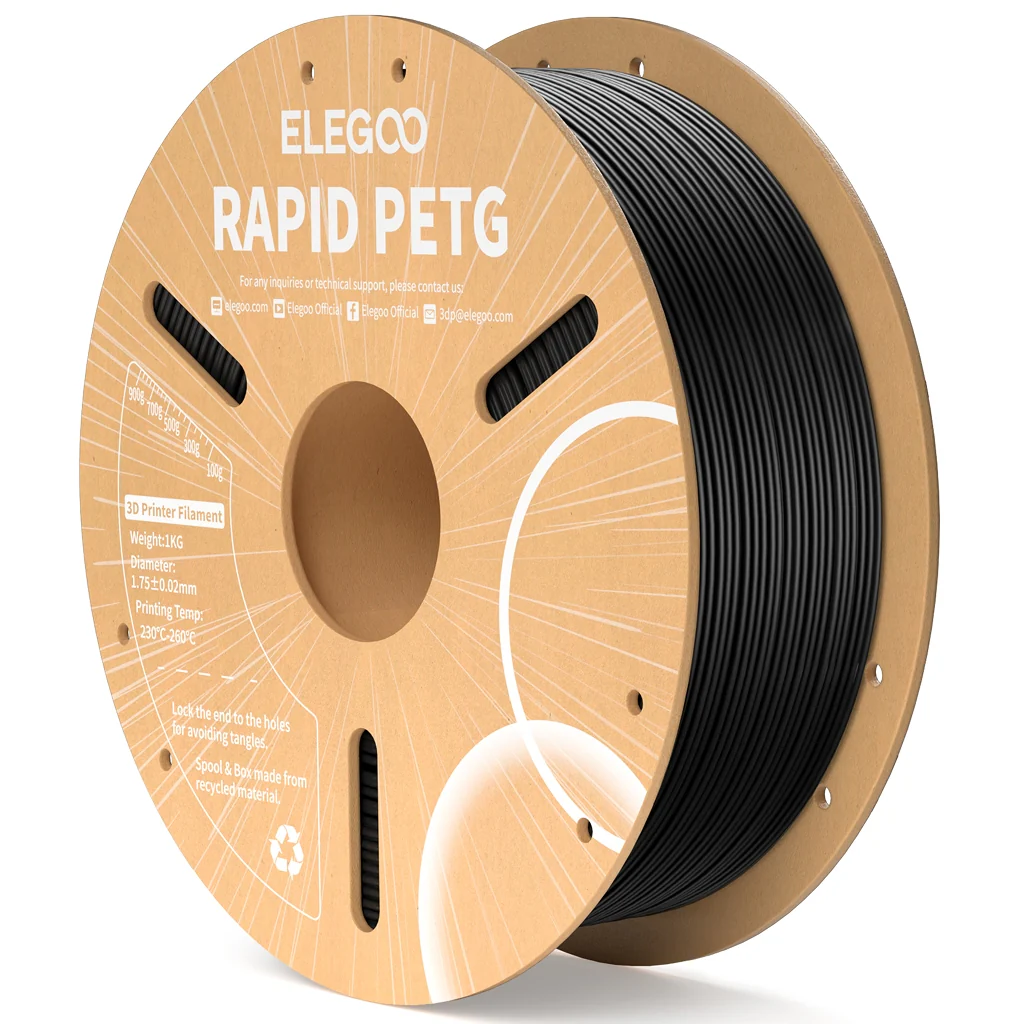
Elegoo PETG
Best for: functional parts in quantity. Like its PLA, Elegoo’s PETG undercuts the Amazon establishment while printing better than the price implies, and multipack deals push it toward $13 a kilogram. Stringing control is only average, so dry it and tune retraction, but layer adhesion, the spec that matters for functional PETG, holds up. For print farms, jigs, and garage parts, the math is unbeatable.
Price: ~$15/kg (approximate; varies by bundle, sale period and region, click through for current pricing)
- Nozzle 230 to 250°C, bed 70 to 80°C
- Claimed ±0.02mm; behaves like a solid ±0.03
- Multipacks toward $13/kg
How to choose PETG
Buy for layer adhesion, not color count. PETG is bought for toughness, and toughness in a printed part is layer adhesion. It is also the spec that separates the brands here from the $12 mystery spools, which often print pretty and delaminate under load.
Match flow rate to your printer. On a fast CoreXY machine, standard PETG quietly becomes the bottleneck; a high-flow grade restores the speed you paid for. On a classic bed-slinger the HF premium buys nothing.
Plan for moisture from day one. Every PETG quirk gets worse wet. A sealed box with desiccant for storage and a dryer for revival are not optional extras with this material; budget for them with the first spool.
And when PETG is the wrong answer: parts that must stay dead rigid want PLA or a composite, years of direct sun wants ASA, and sustained heat past 80°C is engineering-filament territory. The filament guide compares them all side by side.
Frequently asked questions
Why does my PETG string so much, and how do I stop it?
Three causes in order: wet filament, too-hot nozzle, and slow travel moves. Dry the spool first (4 to 6 hours at 55 to 65°C); that alone fixes most stringing. Then drop nozzle temperature 5 to 10°C, raise travel speed, and add a small retraction increase. A few fine wisps are normal for PETG and brush off with a quick heat-gun pass.
Why does PETG stick too hard to the build plate?
PETG chemically bonds to smooth PEI and bare glass at full temperature, hard enough to tear the surface on removal. Use a textured PEI plate, or apply a thin glue-stick layer as a release film on smooth surfaces, and let the bed cool fully before removing parts. Grip releases almost completely at room temperature.
Does PETG need to be dried?
More than PLA, yes. PETG absorbs moisture within days in open air, and wet PETG strings, bubbles, and loses layer strength. Store spools sealed with desiccant and revive damp ones at 55 to 65°C for 4 to 6 hours. If your prints string more every week, the filament is telling you it is wet.
Is PETG good enough for outdoor use?
For most outdoor parts, yes: it shrugs off rain and temperature swings, and tolerates sun far better than PLA. Over multiple years of direct UV it slowly yellows and embrittles, which is where ASA takes over as the permanent-outdoor material. Garden fittings in PETG, house numbers in ASA.
What temperature should I print PETG at?
Start at 240°C nozzle and 75°C bed. The usable window runs roughly 230 to 250°C: cooler reduces stringing, hotter improves layer bonding. Keep part cooling moderate (30 to 50 percent); full fan makes PETG layers weak. First layer slightly hot and slow, then let it run.
Is PETG stronger than tough PLA+?
They fail differently. PLA+ is stiffer and resists impact well indoors, but it still softens around 60°C. PETG flexes further before breaking, survives heat to roughly 80°C, and ignores moisture and weather. For anything outdoors or near heat, PETG wins; for stiff indoor parts, good PLA+ often matches it.
Can PETG parts go in the dishwasher?
Bottom rack, usually: PETG tolerates the 60 to 70°C of most dishwasher cycles where PLA deforms. It is not a food-safety endorsement; printed layer grooves still harbor bacteria, so keep printed PETG to stands, handles, and fixtures rather than food-contact surfaces.
Where to go next
- 3D printer filament guide: every material compared, including when PETG beats PLA.
- Best PLA filament: the easier material for parts that live indoors.
- Best engineering filaments: the step up when 80°C and real loads arrive.
- Best filament dryers: non-negotiable companions for PETG.
- Best 3D printers: machines that make the most of tougher materials.