
Finding the best PLA filament in 2026 is less about avoiding bad spools and more about matching the right grade to what you print. The market has split into real sub-categories: everyday spools that just work, high-speed formulations tuned for CoreXY printers, matte and silk finishes for display pieces, toughened PLA+ for parts that get handled, and bulk refill pricing that has pushed decent PLA under $15 a kilogram. This guide explains what PLA actually is, how the grades differ, and which spool to buy in each category, with print settings and per-kilogram prices for all eleven picks.
Every recommendation below comes from spools we have run ourselves or verified against current production batches. If you are still deciding whether PLA is the right material at all, start with our 3D printer filament guide and come back when PLA wins, which for most printing it will.
Jump to menu
Our top PLA picks at a glance
What PLA actually is and why it prints so easily
PLA, polylactic acid, is a thermoplastic made by fermenting plant starch (usually corn or sugarcane) into lactic acid and polymerizing it. That origin story matters less for printing than its physics: PLA melts at a low temperature, flows predictably, and barely shrinks as it cools. Low shrinkage is the whole secret of its friendliness. Parts stay flat on the bed without an enclosure, corners do not curl, and large prints come out dimensionally accurate on a bare-bones machine. A typical spool prints at 190 to 220°C nozzle and 50 to 60°C bed, settings every printer made in the last decade can hit.
The trade-offs are heat and toughness. PLA starts to soften around 55 to 60°C (its glass transition temperature), so a part left on a car dashboard in summer will warp. It is also stiffer but more brittle than PETG: it snaps rather than bends. For decorative prints, prototypes, jigs, toys, and most everyday objects none of that matters, which is why PLA remains the default material for the overwhelming majority of FDM printing. When a part needs to survive heat, sunlight, or repeated impact, that is the cue to step up a material; our engineering filaments guide covers those options.
PLA grades explained
Manufacturers tune base PLA with additives, and those tunes have settled into recognizable grades. Standard PLA is the unmodified workhorse: cheapest, widest color range, fine for nearly everything. PLA+ or Pro blends in impact modifiers, trading a little stiffness for noticeably better toughness; layer adhesion usually improves too, at the cost of a slightly higher printing temperature. High-speed PLA is reformulated for melt flow, so it stays properly melted at the 300mm/s+ speeds modern CoreXY printers run; standard PLA printed that fast goes matte and weak because it never fully fuses.
The finish grades change the look rather than the mechanics. Matte PLA uses texture additives that scatter light and visually hide layer lines, the closest thing to a free quality upgrade for display prints, with a small interlayer-strength penalty. Silk PLA adds gloss enhancers for a metallic sheen; it is the weakest grade and likes to be printed slow. Lightweight LW-PLA foams when printed hot, cutting part weight roughly in half for RC aircraft and cosplay builds. Two PLA families deliberately live elsewhere on this site: carbon-fiber and wood-filled PLA are in the composite filaments guide, and recycled and eco-certified PLA is in the bio filaments guide.
The best PLA filaments compared
Prices are per kilogram and approximate; they vary by color, bundle, sale period and region, so click through for current pricing. Tolerance is the manufacturer’s stated diameter spec.
Best everyday standard PLA
Standard PLA is where most spools should come from. These three differ less in print quality than in where you buy them and how wide the color wall is.
Polymaker PolyLite PLA
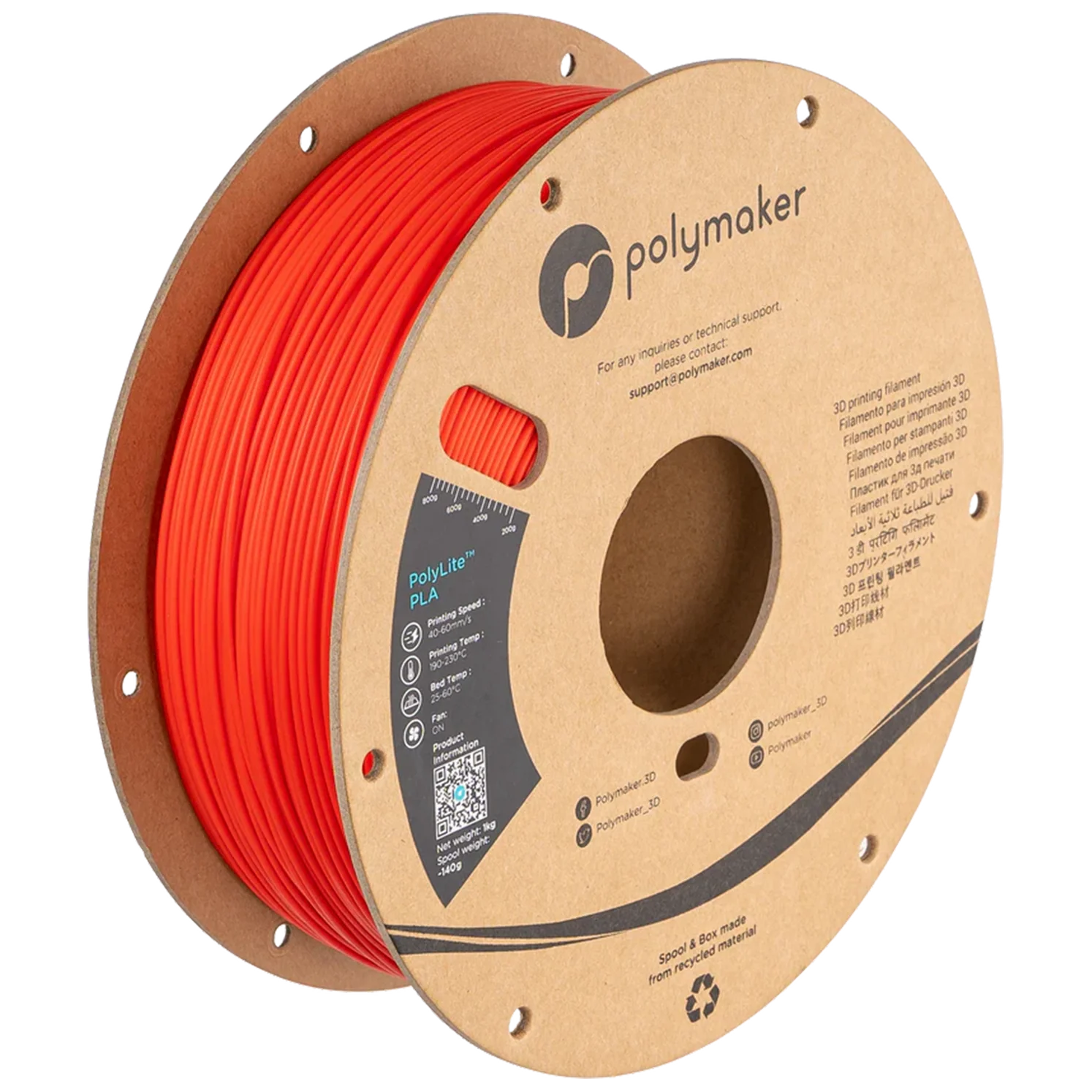
Best for: the spool you stop thinking about. PolyLite has been our default recommendation for years because it does nothing wrong: diameter stays within spec, colors match between batches bought months apart, and it prints clean at anything from a careful 50mm/s to a brisk 200mm/s. The color range is one of the largest in the business, and Polymaker backs spools with a jam-free guarantee. If you print regularly and want one answer to “which PLA,” this is it.
Price: ~$20/kg (approximate; varies by color, sale period and region, click through for current pricing)
- Nozzle 190 to 230°C, bed 25 to 60°C; tolerance ±0.03mm
- Huge color range with strong batch-to-batch consistency
- Cardboard spool, recyclable; jam-free guarantee
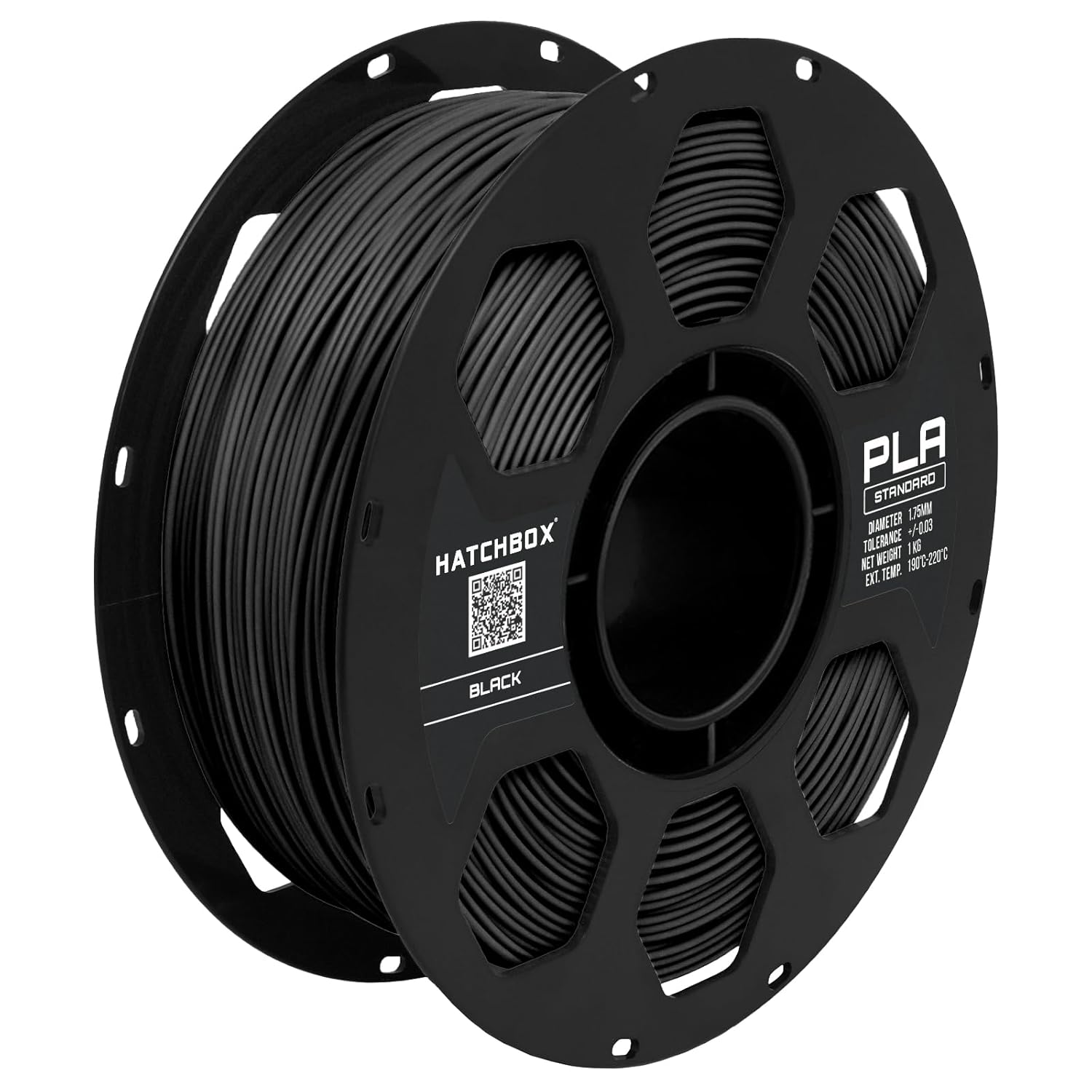
Hatchbox PLA
Best for: next-day reliability. Hatchbox built its reputation spool by spool on Amazon, and it holds up: across many rolls over the years we have yet to see moisture-damaged packaging or a diameter excursion that ruined a print. The finish is a touch rougher than Polymaker’s and the color wall is smaller, but when a project needs filament tomorrow morning and zero drama, Hatchbox is the safe click.
Price: ~$20/kg (approximate; varies by color, sale period and region, click through for current pricing)
- Nozzle 180 to 220°C, bed up to 60°C; tolerance ±0.03mm
- Years of consistent quality control; vacuum-sealed with desiccant
- Prime shipping; frequent multi-spool discounts
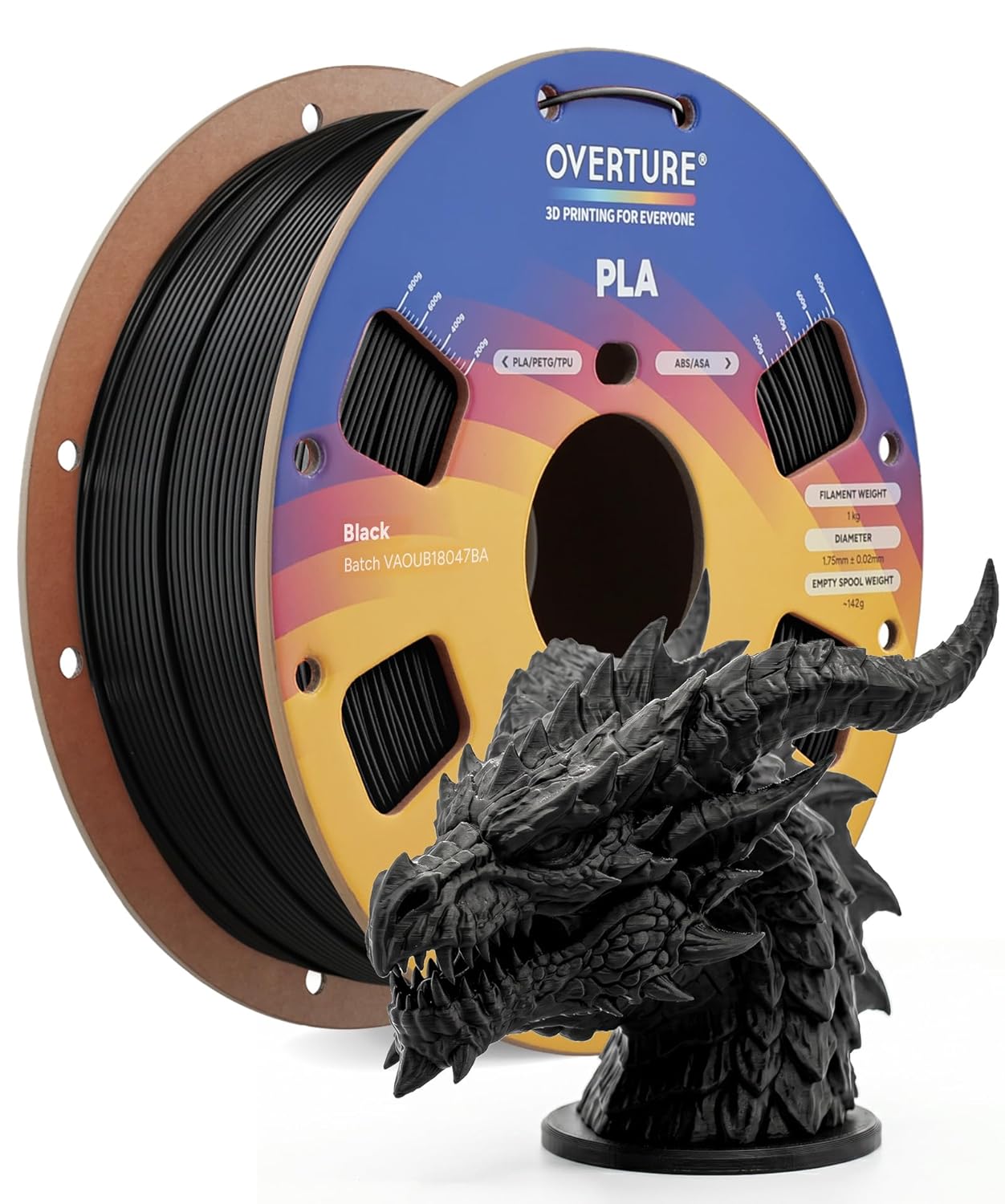
Overture PLA
Best for: beginners and anyone tuning a new printer. Overture is forgiving of imperfect settings, sticks well to textured beds, and costs little enough that a failed calibration print does not sting. Spools wind cleanly (tangles are the classic cheap-filament killer for newcomers) and the brand’s wide-format packaging includes a printable settings card. Quality sits a hair below Hatchbox on finish, a hair above it on price. The Rapid variant is a credible high-speed option too, though PolySonic below remains our pick there.
Price: ~$17/kg (approximate; varies by color, sale period and region, click through for current pricing)
- Nozzle 190 to 220°C, bed 50 to 60°C; tolerance ±0.03mm
- Clean winding, low tangle risk; settings card included
- Often the cheapest reputable spool on Amazon outside sales
Best value and bulk-buy PLA
If you print a lot, per-kilogram price beats every other spec. These two have pushed the floor down without the quality lottery that used to come with cheap filament.
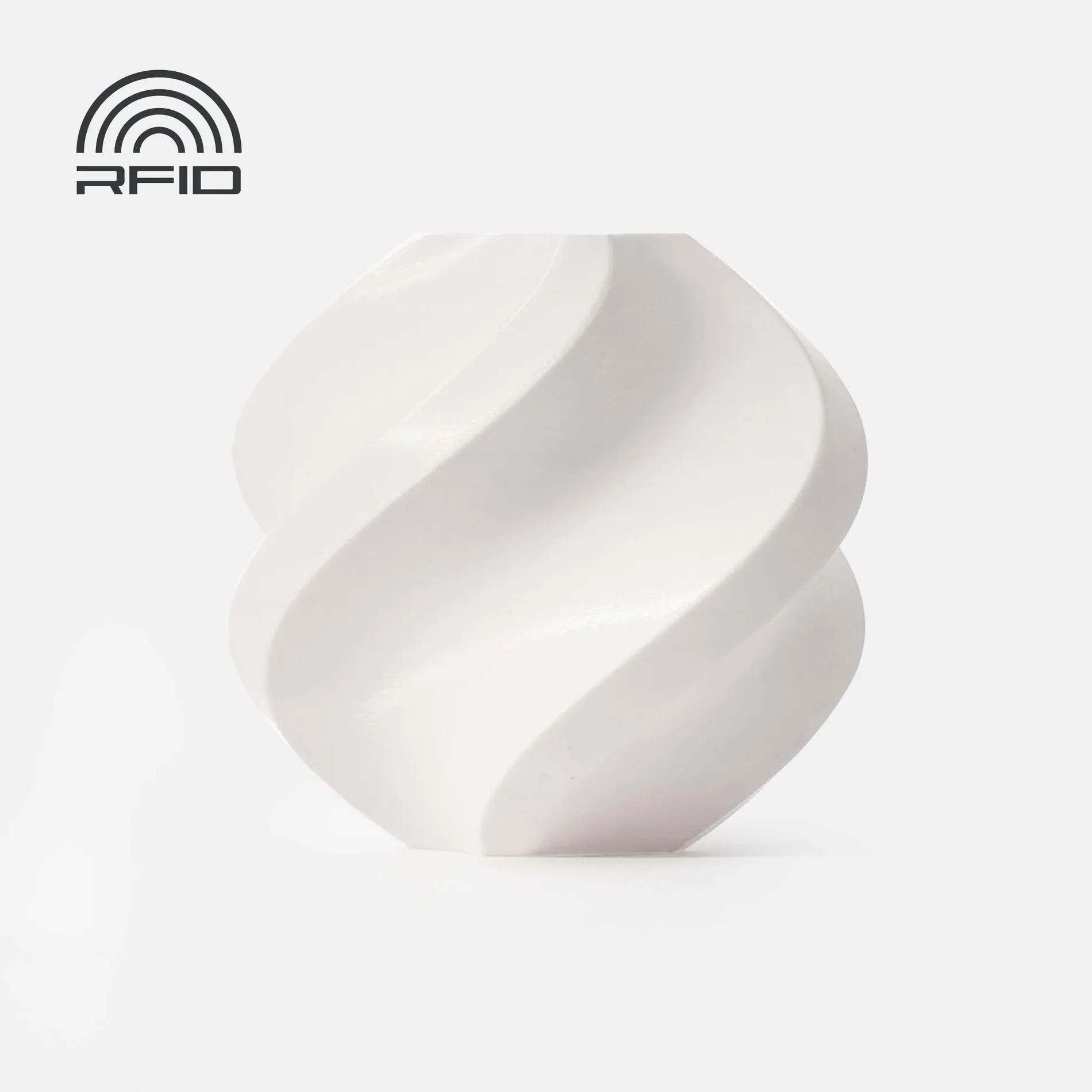
Bambu Lab PLA Basic
Best for: Bambu owners and bulk buyers. In recent independent tolerance tests PLA Basic measured tighter than spools costing twice as much, and the bulk refill pricing (4 rolls from about $15 each, 6 rolls from about $14) makes it the cheapest name-brand PLA going. RFID tags load the right profile automatically on Bambu printers, and refill rolls cut both cost and spool waste. On non-Bambu machines it is still excellent filament, you just lose the auto-setup. Color range is the main limitation next to Polymaker.
Price: from ~$14/kg in bulk, ~$20 single (approximate; varies by bundle, sale period and region, click through for current pricing)
- Nozzle 190 to 230°C, bed 35 to 45°C textured PEI; tolerance ±0.03mm
- RFID auto-profiles on Bambu printers; refill rolls available
- Rated for 300mm/s on stock Bambu profiles
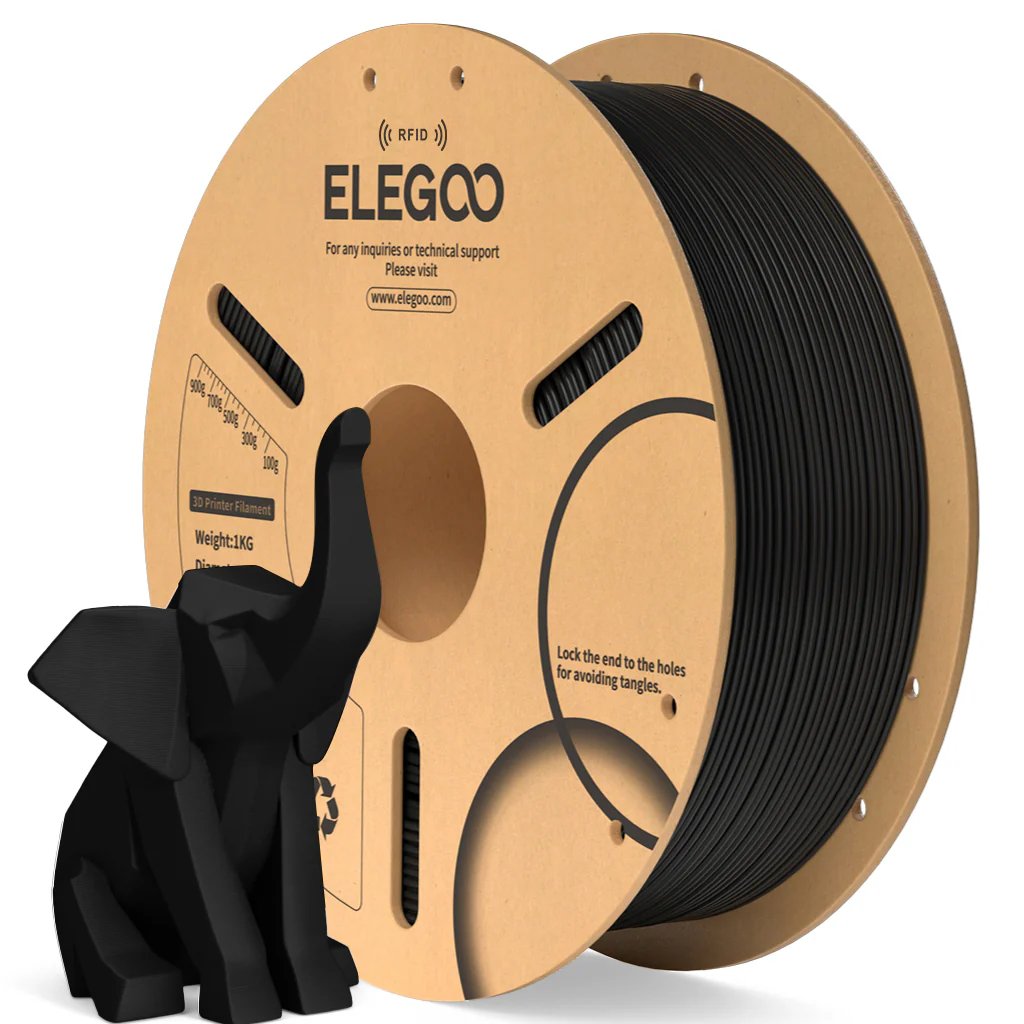
Elegoo PLA
Best for: the lowest cost per print that we would still put our name behind. At around $14 a kilogram, and meaningfully less in multipacks during sales, Elegoo PLA undercuts the established Amazon brands while printing better than its price suggests. Surface finish will not match Prusament and the color palette is functional rather than exciting, but for drafts, prototypes, print-farm volume, and kids’ projects it is the value answer. Elegoo claims a ±0.02mm tolerance; in our experience it behaves like a solid ±0.03 spool.
Price: ~$14/kg (approximate; varies by bundle, sale period and region, click through for current pricing)
- Nozzle 195 to 230°C, bed 50 to 60°C
- Multipack pricing routinely beats every name brand
- Fine for fast profiles up to ~200mm/s
Premium PLA buys consistency you can measure: guaranteed tolerances, documented production, colors that match across years. One brand still defines the tier.
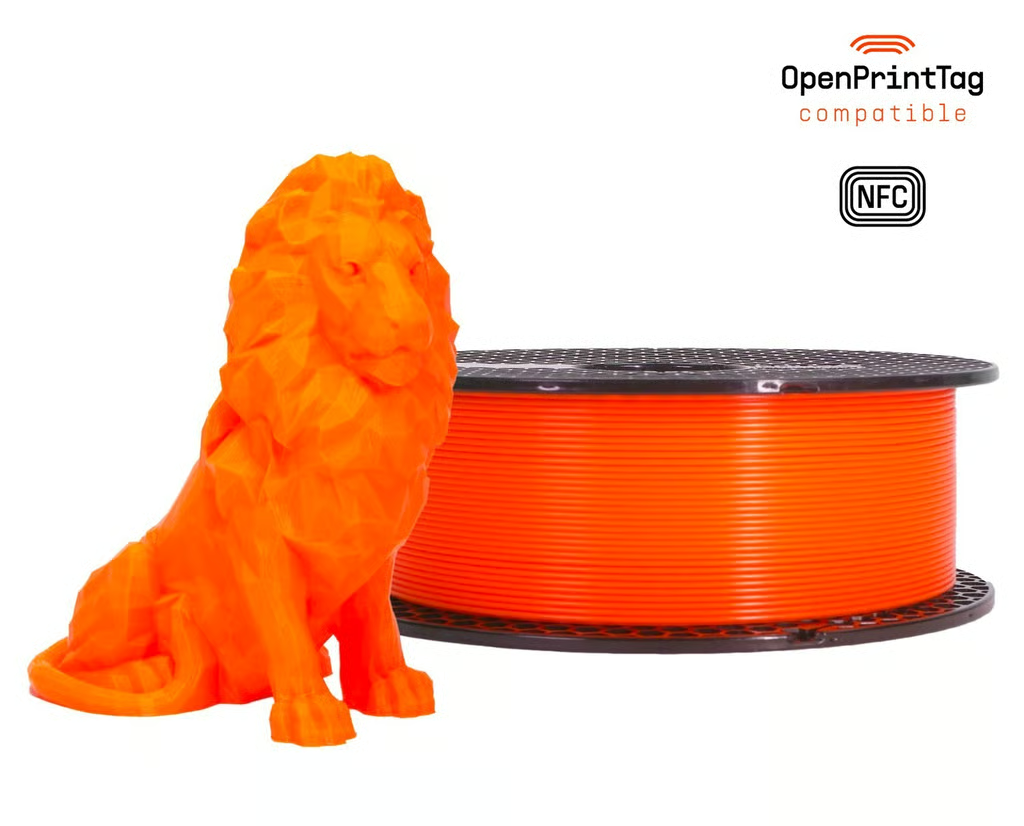
Prusament PLA
Best for: color-critical work and anyone who wants receipts. Prusa manufactures Prusament in-house with a guaranteed ±0.02mm tolerance, and every spool carries a QR code linking to its actual measured production data, diameter graph included. Batch-to-batch color matching is the best we have used, which matters when a client project spans several spools. You pay roughly half again the price of standard PLA for it; for calibration prints, products you sell, and galleries it is worth every cent.
Price: ~$30/kg (approximate; varies by color, sale period and region, click through for current pricing)
- Nozzle 205 to 225°C, bed 40 to 60°C; tolerance ±0.02mm guaranteed
- Per-spool QR production data; exemplary winding
- Made in-house by Prusa Research
Best high-speed PLA
Fast printers exposed a weakness nobody used to notice: standard PLA pushed past roughly 250mm/s never fully fuses, so parts come out dull and weak. High-speed grades fix the melt flow so speed stops costing strength.
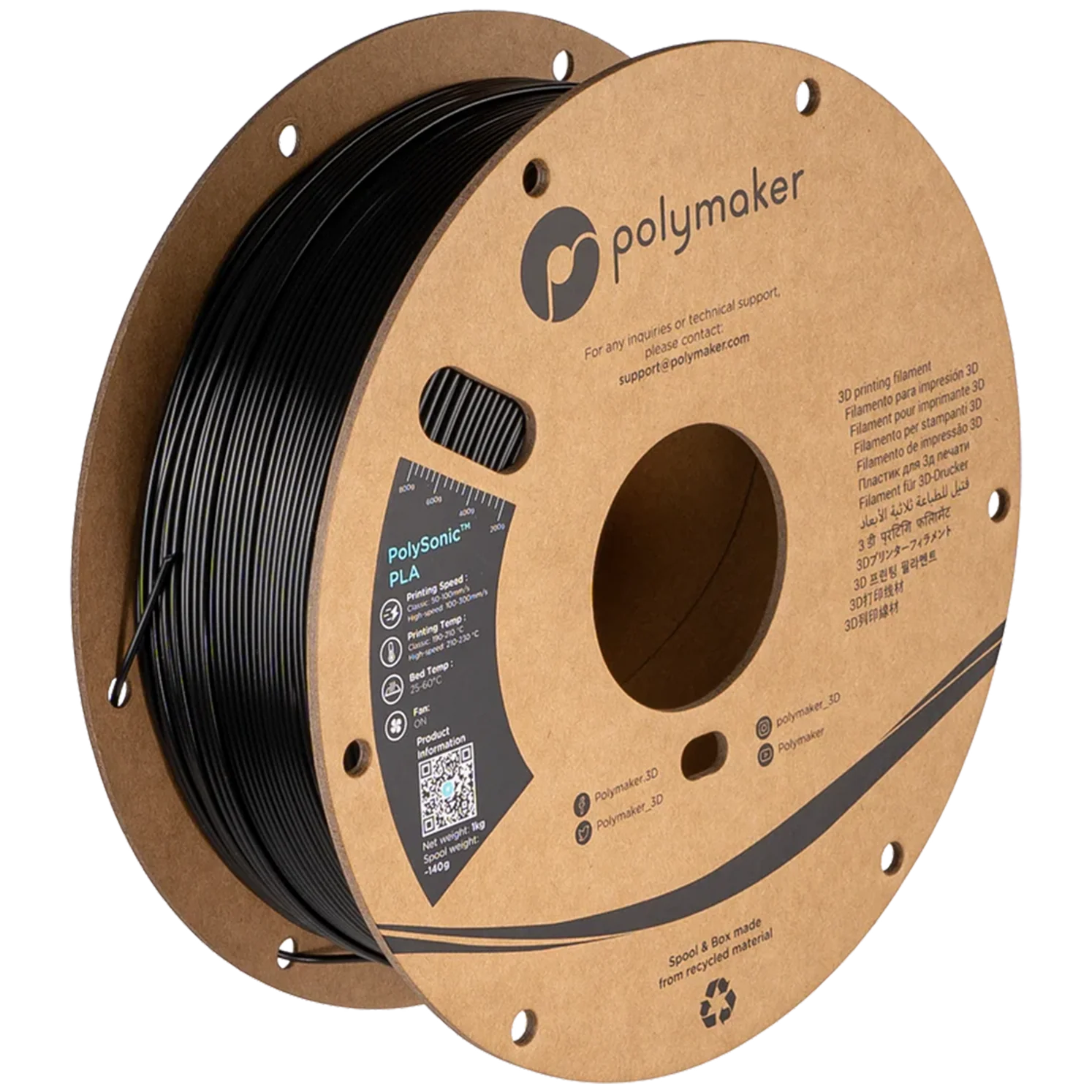
Polymaker PolySonic PLA
Best for: CoreXY printers run at full tilt. PolySonic is engineered for melt flow, and Polymaker publishes the data to back the claim: parts printed at 300mm/s keep close to the strength of slow-printed standard PLA instead of dropping a third of it. Surface quality holds up at speed too, with less of the dullness fast PLA prints usually show. If you bought a fast printer to actually print fast, pair it with this rather than forcing standard spools past their comfort zone.
Price: ~$23/kg (approximate; varies by color, sale period and region, click through for current pricing)
- Nozzle 190 to 230°C, bed 25 to 60°C; rated 300mm/s+
- Published mechanical data at speed; minimal strength loss
- Works fine at normal speeds on slower printers too
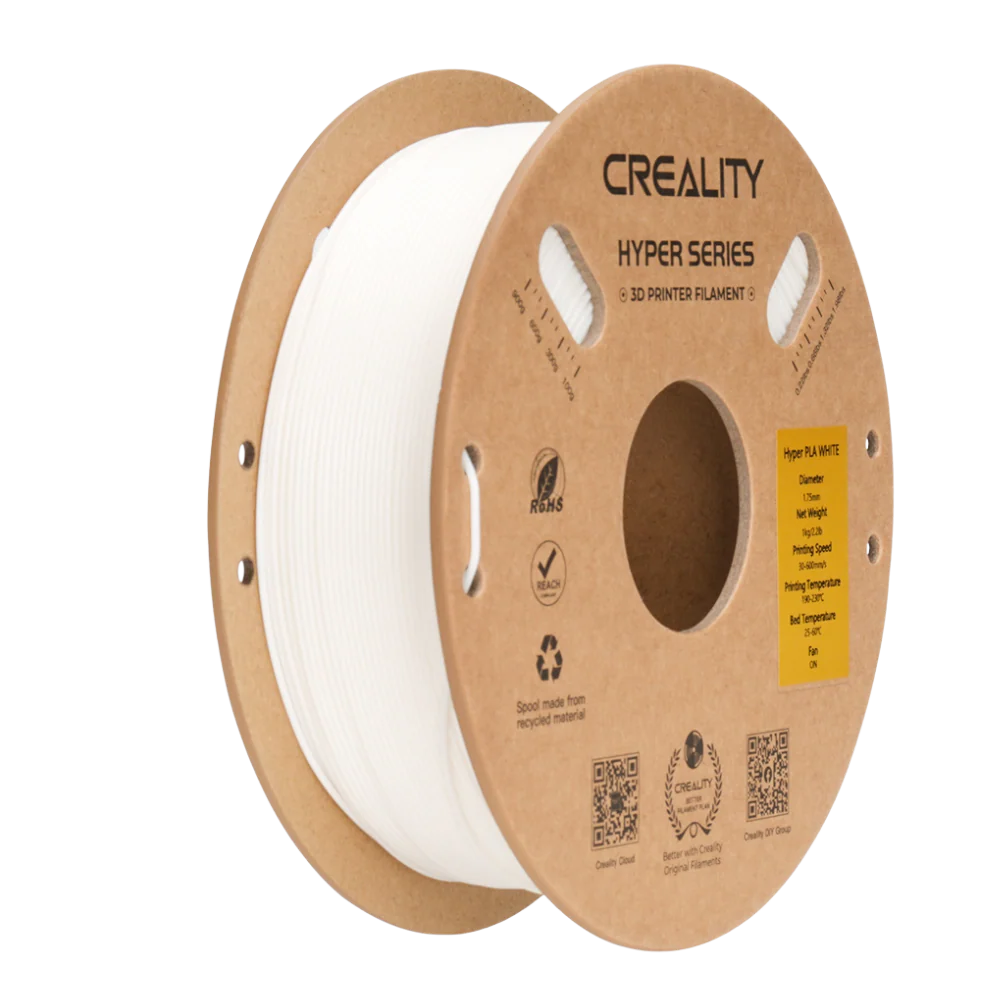
Creality Hyper PLA
Best for: K-series owners and anyone chasing the 600mm/s spec. Hyper PLA is what Creality tunes its fastest printers around, rated to 600mm/s with cooling-optimized flow, and the newer spools carry RFID tags that auto-load profiles on current Creality machines, mirroring Bambu’s trick. It is cheaper than PolySonic and shows up in nearly every Creality bundle and sale. Peak surface quality lands just below PolySonic at equal speeds, which keeps it the alternative rather than the pick.
Price: ~$17/kg (approximate; varies by bundle, sale period and region, click through for current pricing)
- Nozzle 190 to 230°C, bed 45 to 60°C; rated to 600mm/s
- RFID auto-profiles on current Creality printers
- Heavily discounted in Creality store bundles
Best matte and silk PLA
Finish grades are about how the part looks straight off the bed. Matte hides layer lines; silk turns them into a feature. Both give up some strength for it, silk more than matte.
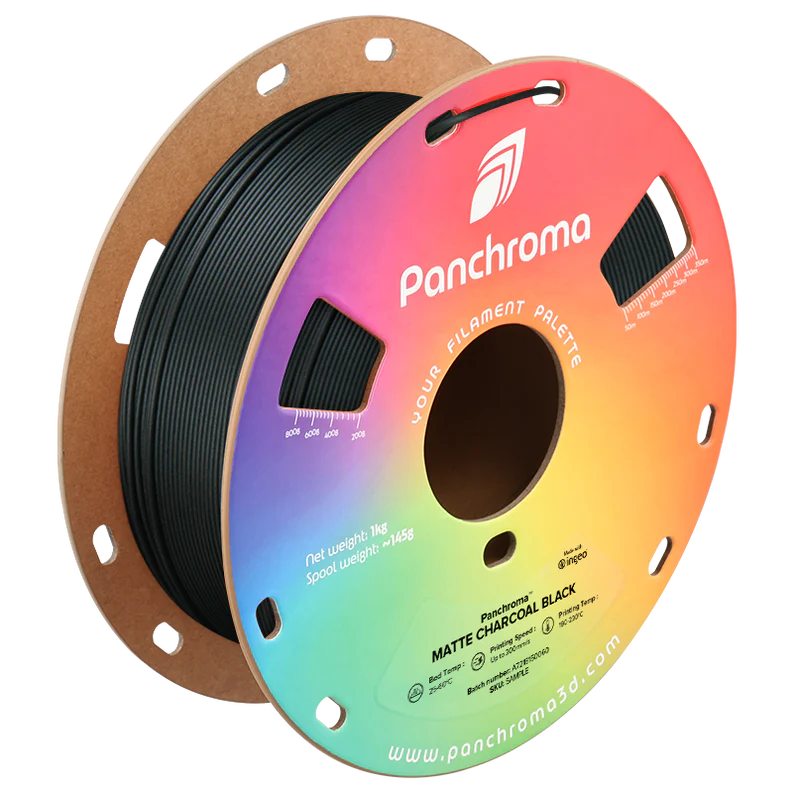
Polymaker Panchroma Matte
Best for: display prints that should not look 3D printed. Panchroma Matte is the renamed PolyTerra, the matte PLA that made the finish mainstream, now spanning more than 50 colors. The texture scatters light so layer lines all but disappear at normal viewing distance, which flatters busts, plant pots, cosplay parts, and anything photographed. It prints as easily as standard PLA. The trade-off is a modest drop in interlayer strength, so keep it off load-bearing parts, and like most matte formulations it appreciates a dry box in humid rooms.
Price: ~$20/kg (approximate; varies by color, sale period and region, click through for current pricing)
- Nozzle 190 to 230°C, bed 25 to 60°C
- 50+ matte colors; layer lines visually vanish
- Cardboard spool; slightly lower interlayer strength than gloss PLA
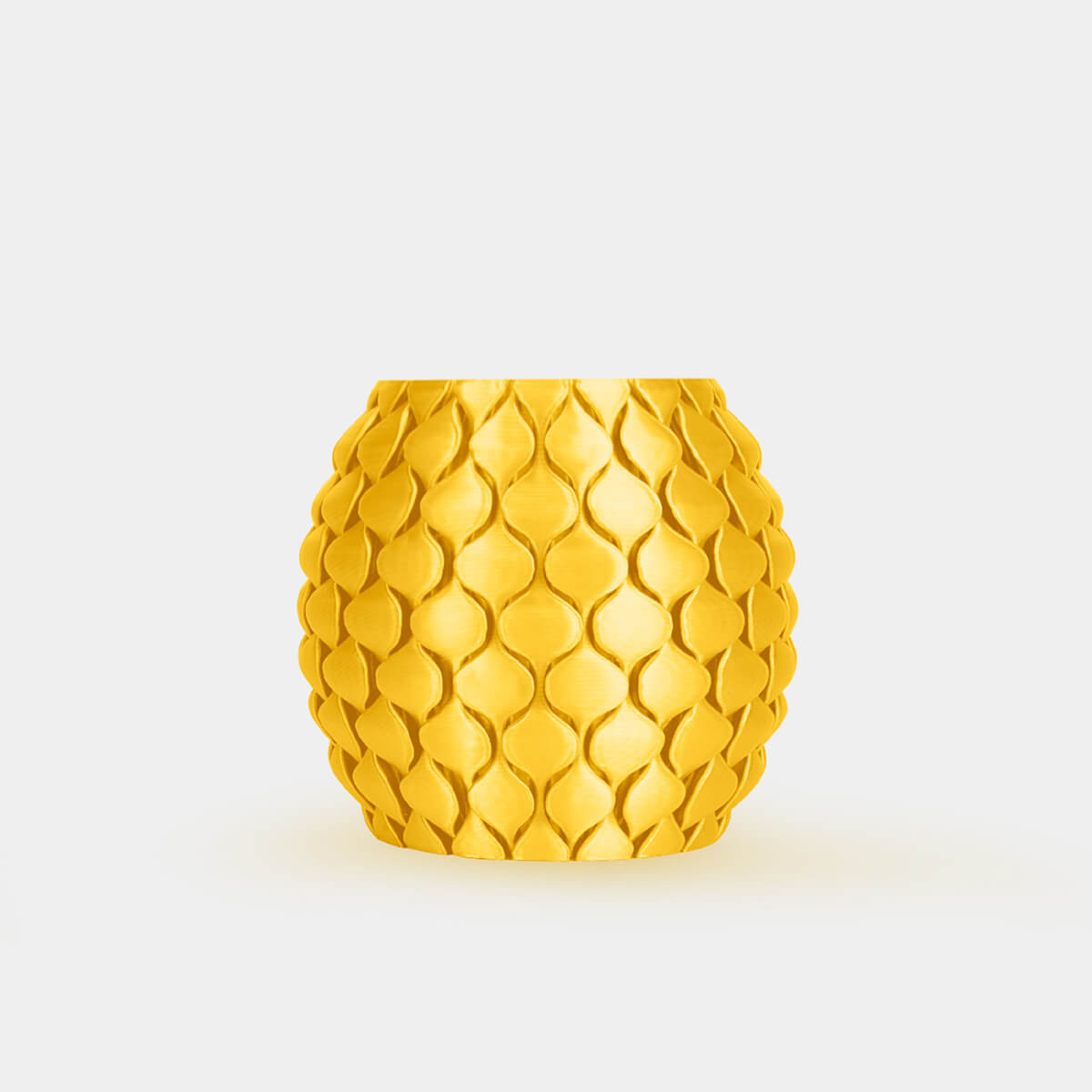
Sunlu Silk PLA+
Best for: vases, ornaments, and gifts that need to gleam. Sunlu’s silk formulation is tweaked for stability, so corners lift less than the silk norm during cooling. The metallic sheen is the entire point, and it rewards patience: the box says 60mm/s, but dropping to around 40mm/s noticeably deepens the gloss, while pushing faster flattens it toward matte. Silk is the weakest PLA grade on layer adhesion, so treat prints as decorative. At about $15 a spool it is an easy way to make a simple model look expensive.
Price: ~$15/kg (approximate; varies by color, sale period and region, click through for current pricing)
- Nozzle 205 to 225°C, bed 50 to 60°C; print slow for best sheen
- Stable for a silk; less corner lifting than typical
- Decorative use; weakest interlayer strength of the grades here
Best tough PLA+
PLA+ keeps PLA’s easy printing and adds impact resistance, the difference between a hook that snaps and one that flexes and survives.
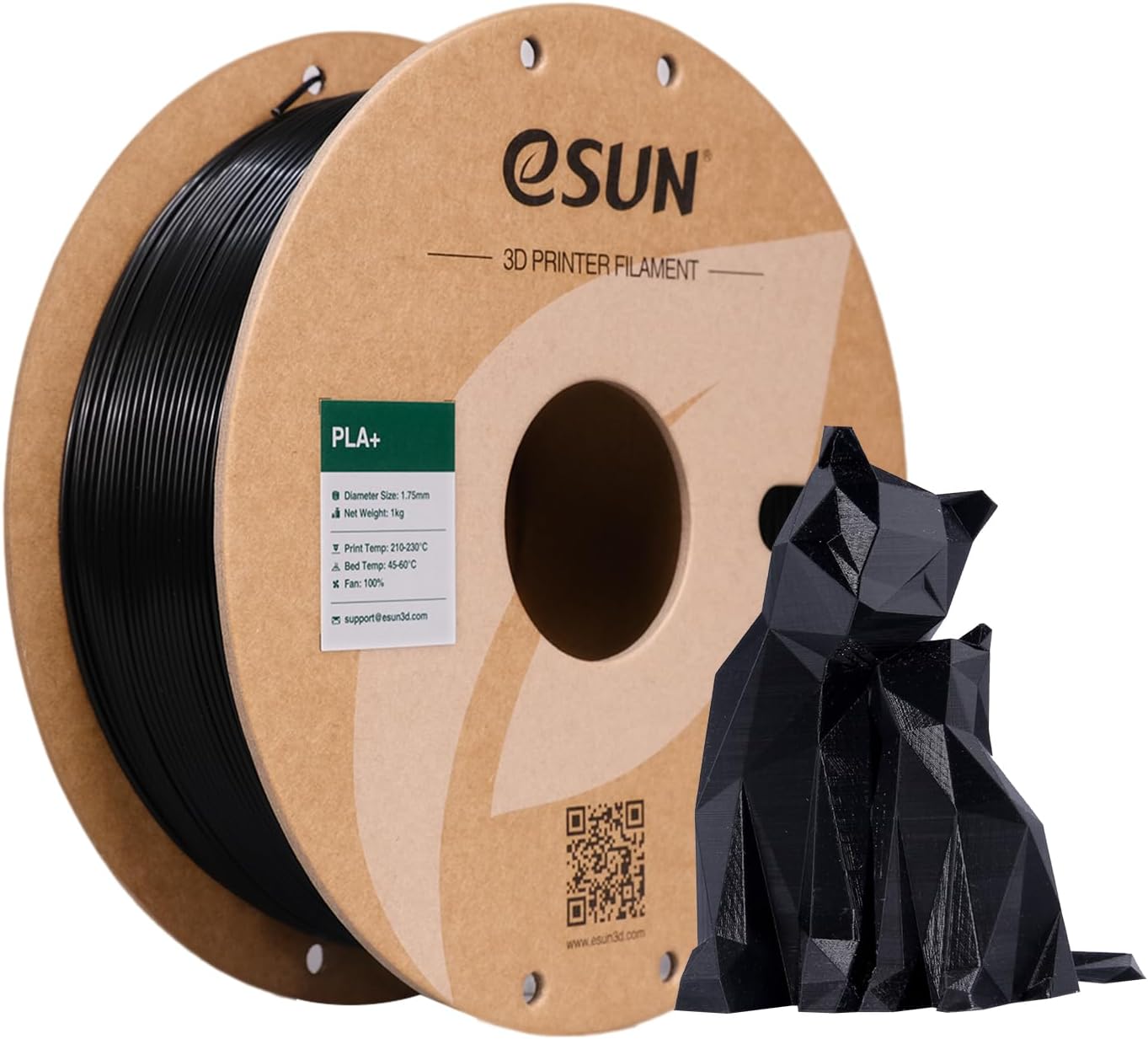
eSUN PLA+
Best for: functional prints that stay in PLA territory. eSUN’s PLA+ is the long-standing benchmark of the toughened grade: clips, brackets, hooks, and handles that would shatter in standard PLA bend and survive in this. It asks for a slightly hotter nozzle (205 to 225°C) and rewards it with strong layer bonding and a clean satin finish. It will not fix PLA’s heat ceiling, a hot car still defeats it, but for indoor functional parts it postpones the move to PETG surprisingly often, at a bargain price.
Price: ~$17/kg (approximate; varies by color, sale period and region, click through for current pricing)
- Nozzle 205 to 225°C, bed 50 to 60°C
- Markedly better impact resistance and layer adhesion than standard PLA
- Satin finish; wide color range; frequent multipack deals
How to choose PLA
Tolerance is the spec that separates good filament from cheap-feeling filament. A ±0.03mm diameter spec means the extruder gets what the slicer promised; looser spools under-extrude and over-extrude unpredictably, which reads as random surface defects. Everything on this page is ±0.03mm or tighter, which is exactly why the picks cluster between $14 and $30 rather than at the $10 floor.
Match the grade to the printer as much as the part. On a fast CoreXY machine, a high-speed grade is the difference between using the speed you paid for and quietly halving it. On a bed-slinger running classic speeds, standard PLA is all you need and the speed premium buys nothing. RFID-tagged spools (Bambu, newer Creality) are a real quality-of-life feature on their own ecosystems and ordinary filament everywhere else.
Spool format matters more than it looks. Cardboard spools are recyclable but shed fibers that some dry-feed systems dislike; plastic spools run quieter in an AMS; refill rolls cut cost and waste if your ecosystem supports them. If you buy in bulk, check the spool weight too: a listed price sometimes covers 750g rather than a full kilogram.
Moisture is PLA’s quiet enemy. PLA is less thirsty than nylon but still absorbs water, and the matte and silk grades suffer first: popping sounds, stringing, and dull finishes are the symptoms. Spools stay happiest sealed with desiccant between sessions, and a dryer revives any spool that has sat out for weeks; our filament dryer guide covers the options from $40 dry boxes up.
And when PLA is the wrong answer, change material rather than fighting it: sustained heat above roughly 55°C, long-term outdoor sun, or parts that must flex all point elsewhere. Our filament guide compares PLA against PETG and the rest head-to-head, the engineering guide handles heat and load, and the flexible guide covers TPU.
Frequently asked questions
What is the difference between PLA and PLA+?
PLA+ (sometimes Pro) is standard PLA blended with impact modifiers. It bends where standard PLA snaps, bonds layers more strongly, and usually prints 10 to 15°C hotter. It costs slightly more and the finish is a touch more satin. For decorative prints the plus buys nothing; for clips, brackets, and anything handled regularly it is the better default.
Do I need to dry PLA filament?
Fresh from the vacuum bag, no. After weeks in open air, often yes: wet PLA pops and steams in the nozzle, strings between features, and loses surface quality. Matte and silk grades absorb moisture fastest. Four to six hours at 45 to 50°C in a filament dryer restores a damp spool; storing spools sealed with desiccant prevents the problem entirely.
Is PLA food safe?
The raw polymer can be food-grade, but FDM prints are not practically food safe: the layer grooves harbor bacteria that washing cannot fully reach, nozzles can shed traces of metal, and colorants are rarely certified. One-time use with dry snacks is low risk; for anything else, use a food-safe sealant or print a mold and cast in a certified material instead.
At what temperature does PLA soften?
Around 55 to 60°C, PLA’s glass transition. That is why prints left in a parked car in summer slump: dashboard temperatures comfortably exceed 60°C. Annealed PLA and some HT-PLA formulations push the ceiling toward 90°C+ at the cost of some shrinkage during annealing. For parts that live in heat, PETG (around 75°C) or ABS/ASA (95°C+) are the materials to step up to.
What is the strongest PLA grade?
For impact toughness, PLA+ wins: the modifiers let parts absorb shocks that fracture standard PLA. For stiffness, standard PLA is already among the stiffest common filaments. Silk is the weakest grade and matte gives up a little interlayer strength for its finish. If strength is the whole point of the part, carbon-fiber PLA adds stiffness (see our composite filaments guide), but a tougher base polymer is usually the better upgrade.
Why do my silk PLA prints break easily?
The gloss additives that create the sheen also weaken the bond between layers, so silk parts split along layer lines under stress. Printing slower and slightly hotter helps the layers fuse, but silk never reaches standard PLA’s strength. Treat it as a display material: vases, ornaments, and gifts yes, hooks and handles no.
What nozzle and bed temperature should I print PLA at?
Start at 210°C nozzle and 60°C bed, then tune. Standard PLA runs anywhere from 190 to 230°C: lower gives crisper detail, higher gives stronger layer bonds and suits faster speeds. PLA+ and silk like the hotter end. The bed can go as low as room temperature on textured PEI with good first-layer calibration. A temperature tower per new spool settles the question in twenty minutes.
Where to go next
- 3D printer filament guide: every material compared, and how PLA stacks up against PETG and the rest.
- Best PETG filament: the tough, weatherproof step up from PLA.
- Best TPU filament: when the part has to bend instead of resist.
- Best ABS and ASA filament: heat and sunlight, enclosure required.
- Best composite filaments: carbon-fiber and wood-filled PLA live here.
- Best bio filaments: recycled PLA and the eco-certified options.
- Best filament dryers: keep matte and silk spools printing like new.
- Best 3D printers: the machines to feed all this PLA into.
- 3D printers for beginners: starting from zero, begin here.