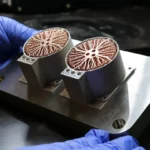

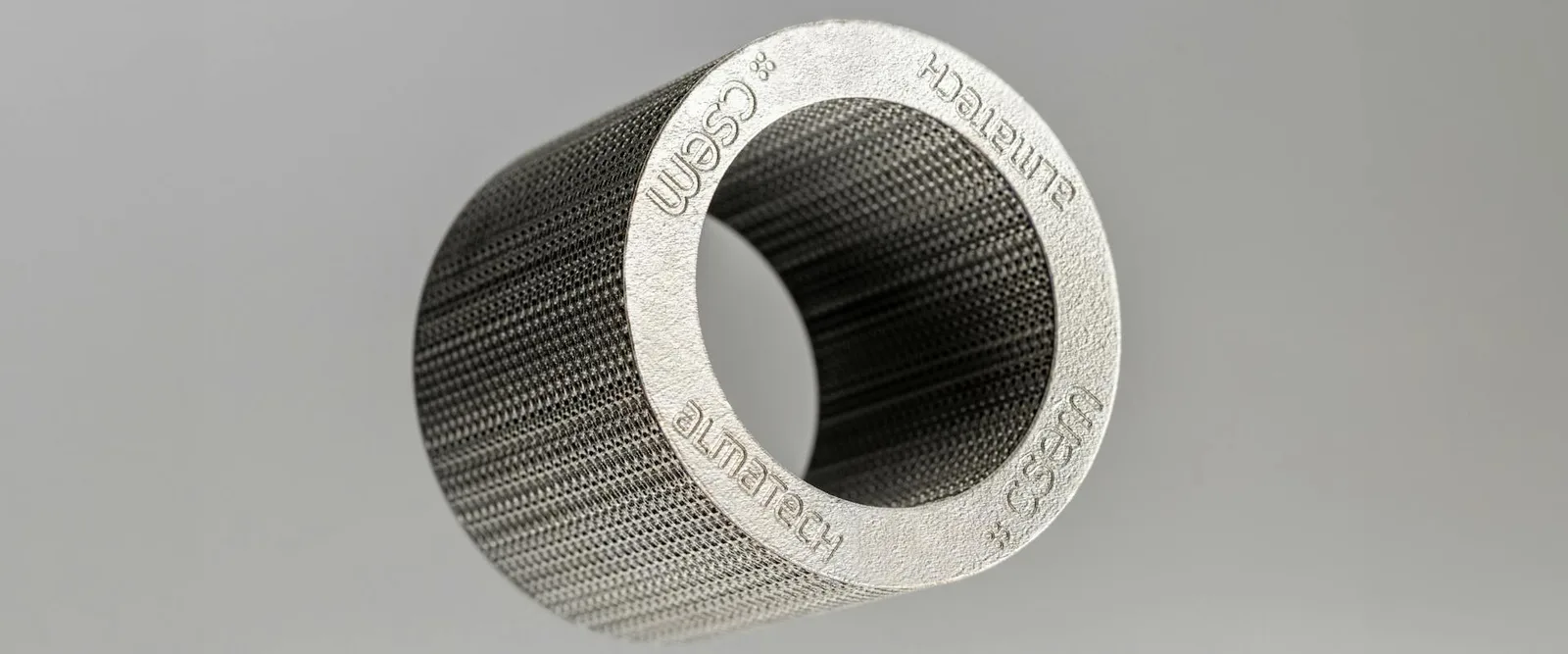
Swiss research center CSEM and space engineering company Almatech have 3D printed a shape memory alloy shock absorber for reusable landing gear on future landers.
The 18-month project, called RESHAPE, was supported by the European Space Agency (ESA) through its Discovery and Preparation programme. It set out to answer a simple question. Can spacecraft landing gear be reused instead of discarded after every touchdown?
Today that job usually falls to crushable aluminum honeycomb cartridges paired with hydraulic dampers. They work, but they are single use, heavy and complex to integrate. Together they can account for more than a quarter of a landing leg’s mass budget. The energy they absorb is modest for that weight. As reusability becomes central to affordable space access, that trade-off is a growing limitation.
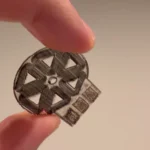
The RESHAPE absorber swaps the honeycomb for a lattice printed in nickel-titanium (NiTi). Its fine, repeating cells are about a millimeter in size and collapse in a controlled way to soak up the impact. NiTi is a shape memory alloy. Heat the crushed part after landing and it returns to its original shape, ready for the next touchdown.
Printing a fine, reliable lattice in a shape memory alloy pushes the limits of current additive manufacturing. CSEM led the project and brought its experience in laser powder bed fusion of NiTi, a material that needs careful process control to perform consistently. The team compared four lattice geometries. It picked the one with the best balance of strength, energy absorption and printability.
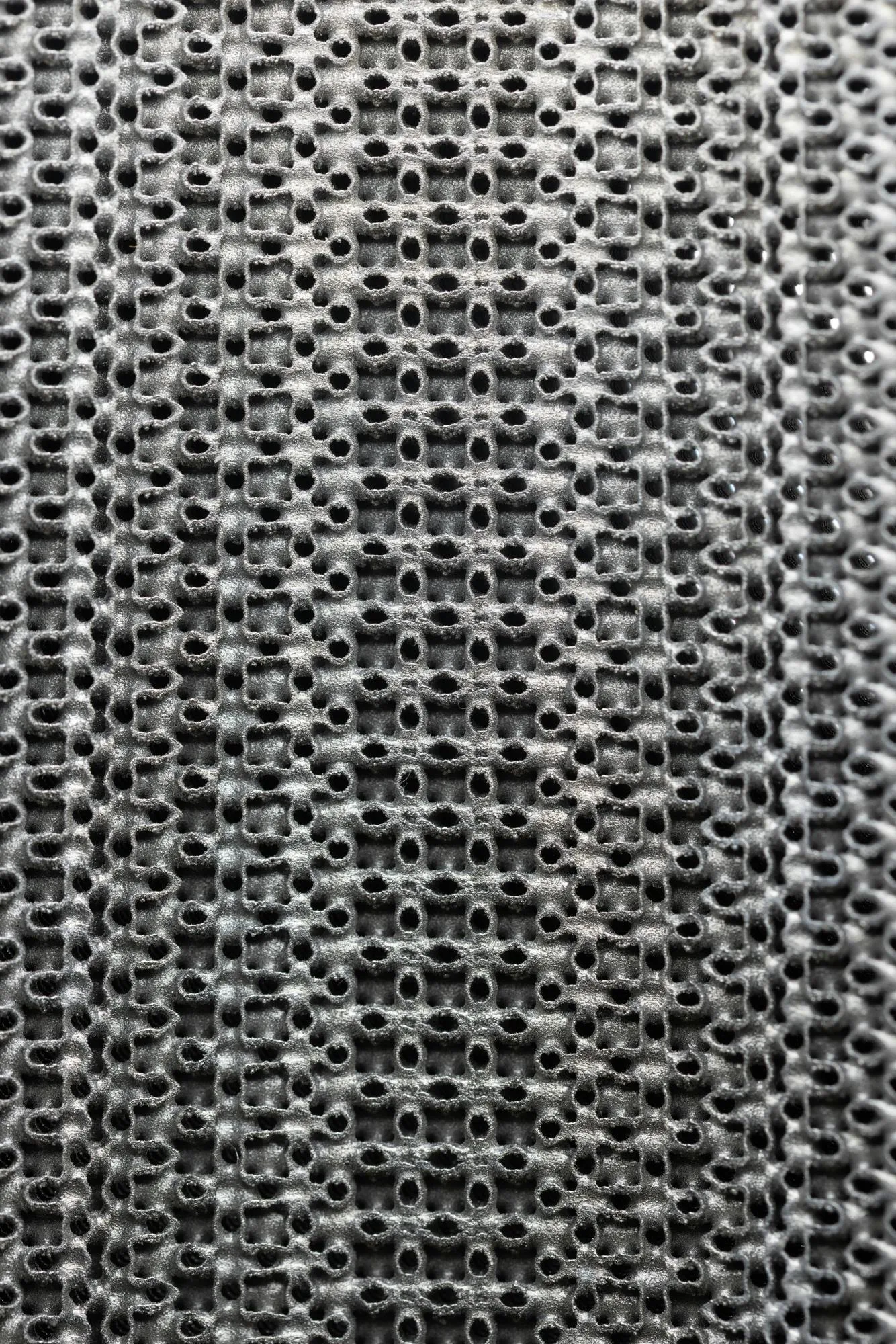
Small printed samples were then crushed under slow, quasi-static loads and under high-speed impacts. That showed the material behaves the same way in a fast landing as in a controlled lab test. The key experiment compressed a sample, heated it to trigger the shape memory effect, and repeated that cycle 24 times. Next came a sub-scale demonstrator about the size of a large coffee can.
The demonstrator was tested against a reusable rocket booster landing on Earth. Scaled to full size, it absorbed the energy the target application requires. It also kept peak loads below the required threshold and behaved predictably across 24 reuse cycles.
“By combining shape memory alloys with additive manufacturing, we can rethink components that have remained unchanged for decades,” said Vaclav Pejchal, a material and technology expert at CSEM.
The test data fed straight into Almatech’s system analysis of the landing leg. Almatech used it to turn lab-scale material behavior into a full-scale shock absorber design.
“RESHAPE is another great illustration of how this close collaboration allows us to transform ideas into solutions addressing space mission needs,” said Fabrice Rottmeier, chief technology officer at Almatech.
Further development and qualification are still needed before the absorber becomes flight hardware. The partners see the strongest potential in lunar missions. NASA’s Artemis and ESA’s Argonaut programmes plan repeated landings at the same sites on the Moon. There, reusable landing gear could be refurbished on site rather than replaced with new hardware shipped from Earth.
Source: CSEM