
Researchers at Nanyang Technological University, Singapore (NTU Singapore) have developed nontoxic light-activated compounds that could replace photoinitiators now being banned from resins.
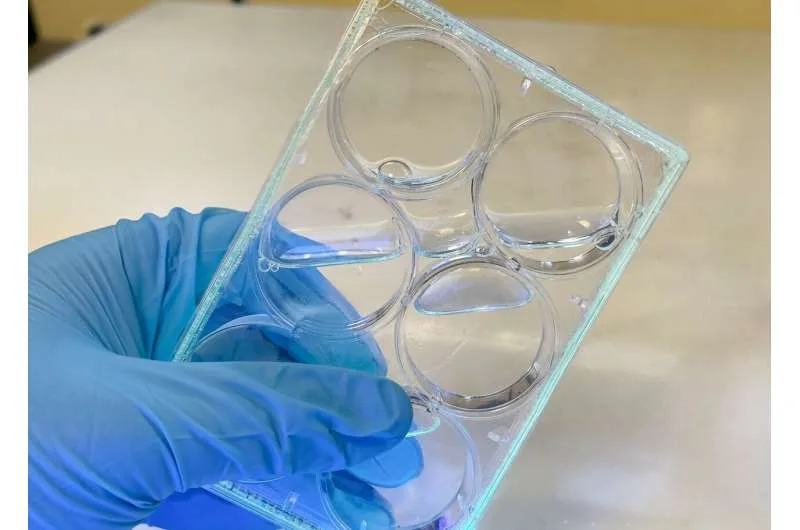
The new compounds are aryl diazirine photoinitiators. Like the ingredients in today’s resins, they turn a liquid into a solid plastic within seconds of light exposure. In lab tests they were not toxic to human cells. They also cut shrinkage and work in water-based resins.
The timing matters for anyone who makes or uses photopolymer resin. Two of the most common photoinitiators are diphenyl(2,4,6-trimethylbenzoyl)phosphine oxide (TPO) and phenylbis(2,4,6-trimethylbenzoyl)phosphine oxide (BAPO). Both have been identified as reproductive toxins. Regions including the European Union are banning them. The ban has already disrupted gel nail polish makers, who relied on TPO for fast and reliable curing.
Professor Terry W. J. Steele of the NTU School of Materials Science and Engineering led the team. “The industry is facing a major challenge as the most effective and widely used photoinitiators are being regulated out of existence due to toxicity,” Steele said. The team set out to make an activator that is safe and biocompatible and also performs better than existing ones.
Shrinkage is the second problem the compounds tackle. Most resins contract as they harden, which hurts accuracy in printed parts and dental work. Aryl diazirines release nitrogen gas while they cure. The team can tune that gas release to offset the contraction, which leaves finished parts more stable.
Handling is easier too. Several of the new compounds are liquid at room temperature and dissolve in water. That lets them mix straight into water-based, more sustainable resins. It also suits biomedical uses where organic solvents have to be avoided.
The team tested the chemistry in several demonstrations. They made watertight form-in-place gaskets, cured on the spot with a handheld UV light. They also 3D printed microfluidic channels from a soybean-oil-based resin.
A medical demo went further. The researchers made a stretchy skin bioadhesive that extends to more than three and a half times its length without damaging the skin beneath it. The same material can act as a protective barrier around long-term medical catheters. The group also sees potential in live-cell encapsulation, food packaging and wearable electronics.
The work is still at lab scale. “Our next step is to bridge the gap between our laboratory findings and industrial-scale manufacturing, ensuring these safe activators can be easily adopted by global partners,” said lead author Naziruddin Ali.
The paper, “Non-toxic aryl diazirine photoinitiators,” is published in NPG Asia Materials.