
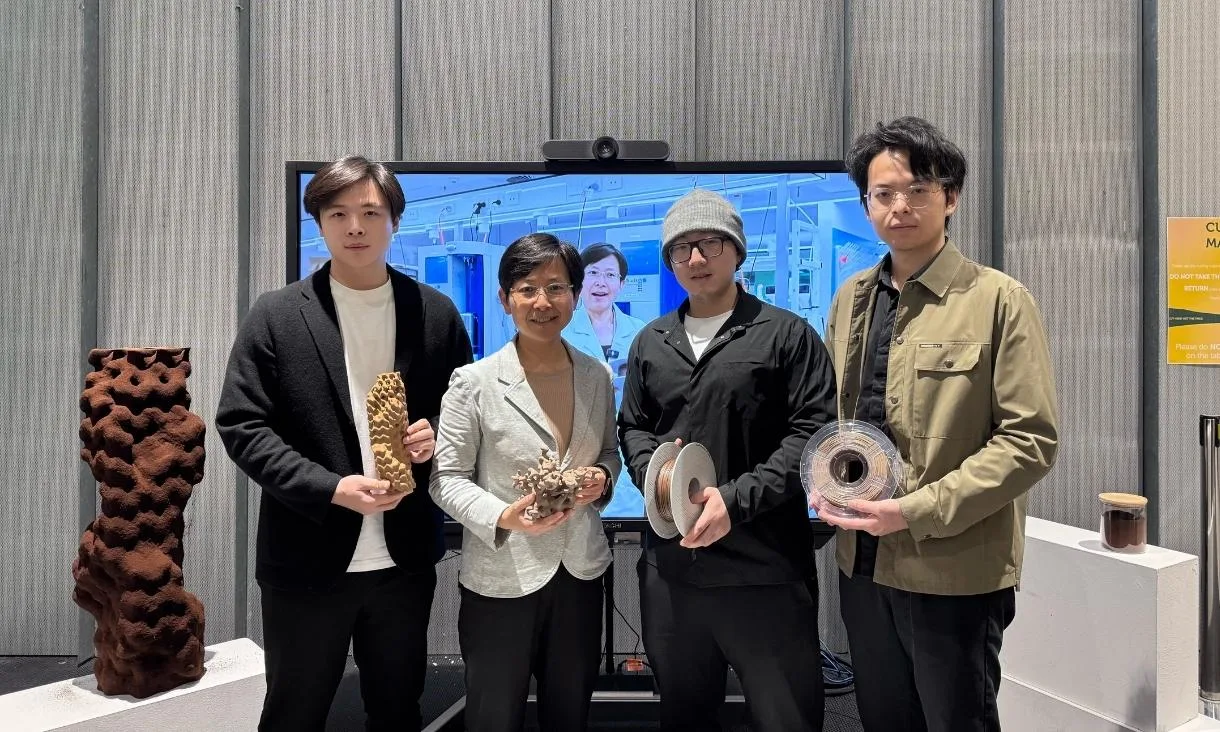
RMIT University researchers have developed a biodegradable coffee waste filament from Melbourne’s spent grounds and used it to print full-scale architectural forms.
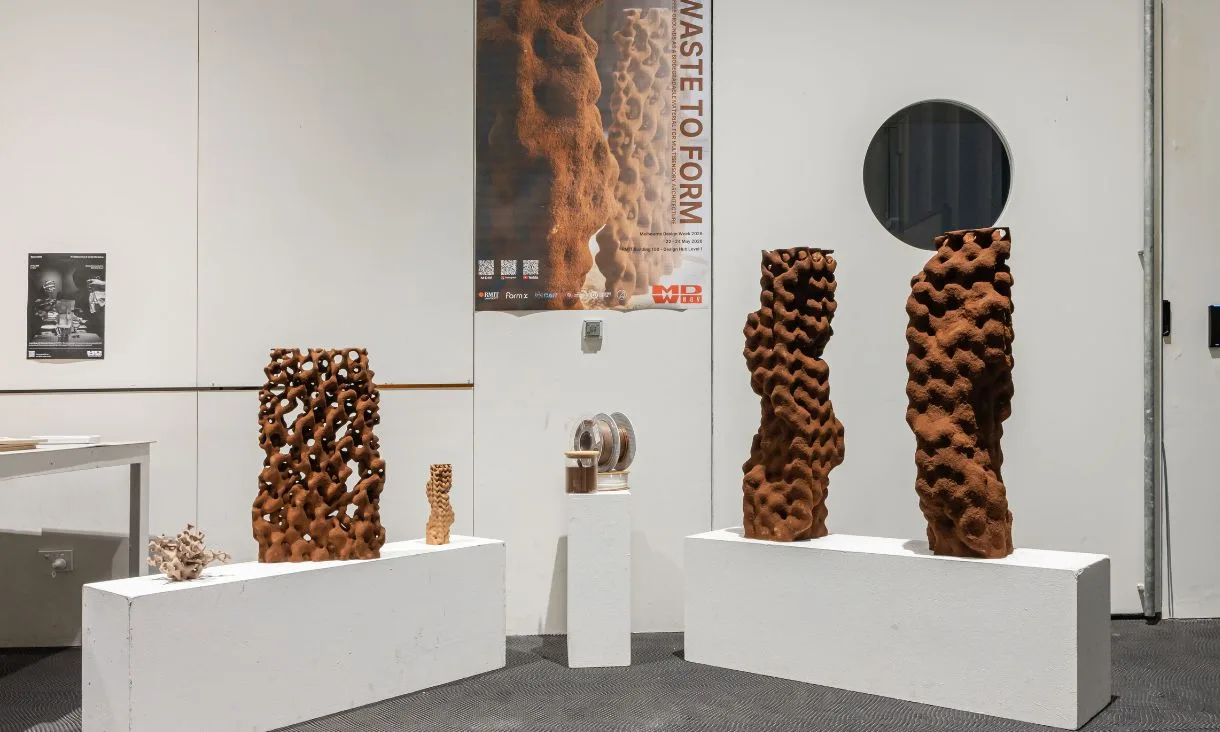
The Waste to Form project is led by Distinguished Professor Baohua Jia of RMIT’s School of Science and Dr Nic Bao, Director of the FormX Research Lab in the School of Architecture and Urban Design. The resulting designs were shown at Melbourne Design Week, where they drew positive feedback for both their design and their scent.
The starting point was a waste stream the city produces in bulk. Coffee is part of everyday life in Melbourne, yet most of the spent grounds are simply discarded. Jia’s team at the Centre for Atomaterials and Nanomanufacturing had been looking for ways to make better use of materials people throw away every day, and coffee, a rich biomaterial and a good fertiliser, looked like a promising base for a printing material that could break down.
Adding the grounds increased the strength of the material and gave the prints a rich coffee colour and smell. For the architects on the team, those qualities are a design tool rather than a side note.
“With coffee grounds, the material can support sound absorption, insulation, scent and appearance, giving architects another layer to work with,” said Kang Liu, a higher degree by research candidate on the team.
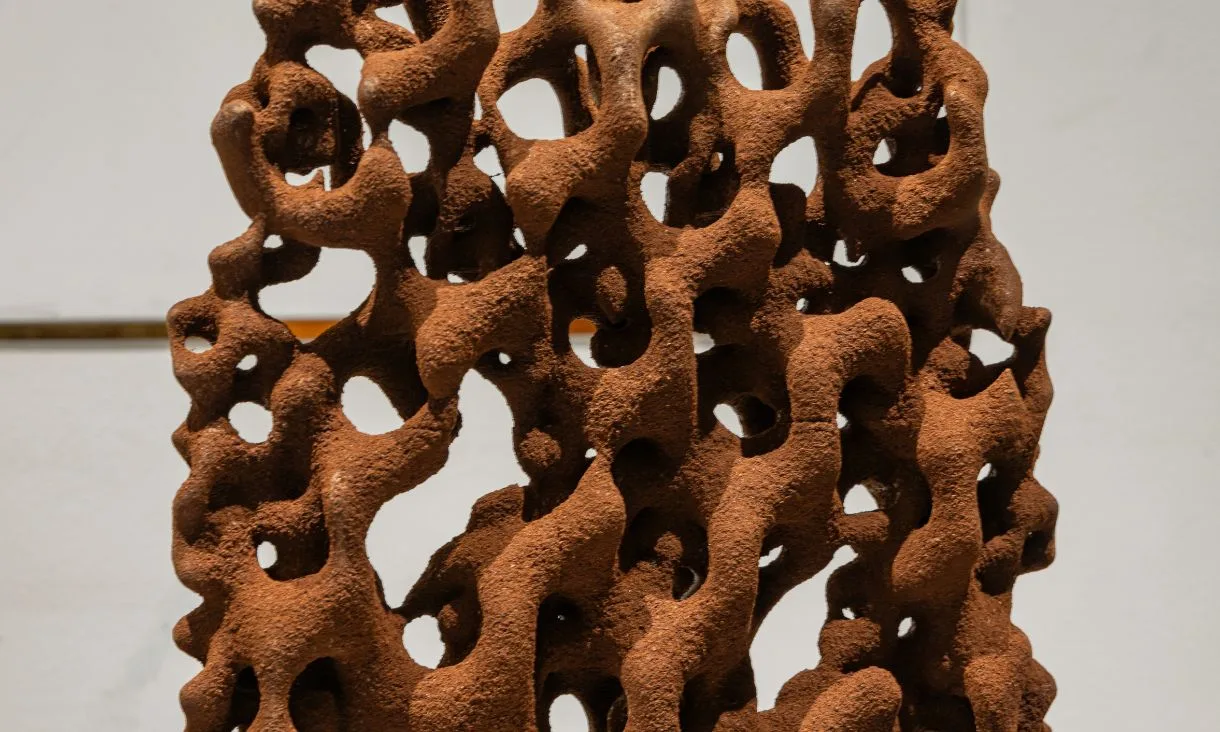
The work is split by scale. The science group develops and characterises the material, while Bao’s lab explores how its properties can inform computational design, additive manufacturing and larger architectural applications. For Liu, that link answers a question architects often hear, why complex forms are needed when they may cost more. In this project, the complexity is tied to function and material performance.
“The full-scale demonstrator is an important step in testing how a waste-derived material can move from laboratory research towards an architectural system,” said Bao.
The project is already travelling beyond the exhibition. Modular builder Modscape + Modbotics featured it for its potential in prefabrication, advanced manufacturing and circular design, and the Architectural Intelligence journal selected it as a cover image. Through the Australian Nano Manufacturing Future Challenges program, the coffee material and printing concept are also being worked into high school STEM outreach, giving students hands-on time with materials, design and manufacturing.
The next step is wider collaboration. The team wants to develop the idea with cafés, material suppliers, designers, engineers, manufacturers and construction partners, including organisations working on circular materials, plastic recycling and coffee waste reuse, across sectors from waste management to packaging and consumer products.
Source: RMIT University