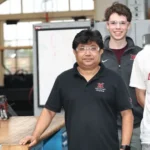

CNC Kitchen YouTuber Stefan Hermann’s free ScanRuler tool now lets an artificial intelligence (AI) agent rebuild a 3D scan as a parametric computer-aided design (CAD) model.
My latest free tool, https://t.co/ImLUnr1wRO, can automatically reverse-engineer your 3D Scans! Just tell your AI agent to connect to the ScanRuler MCP give it an stl and tell it to reverse engineer it. A detailed video and a custom skill will be released in the next few days! pic.twitter.com/7nZoBXMbTu
— Stefan – CNC Kitchen (@CNC_Kitchen) October 21, 2026
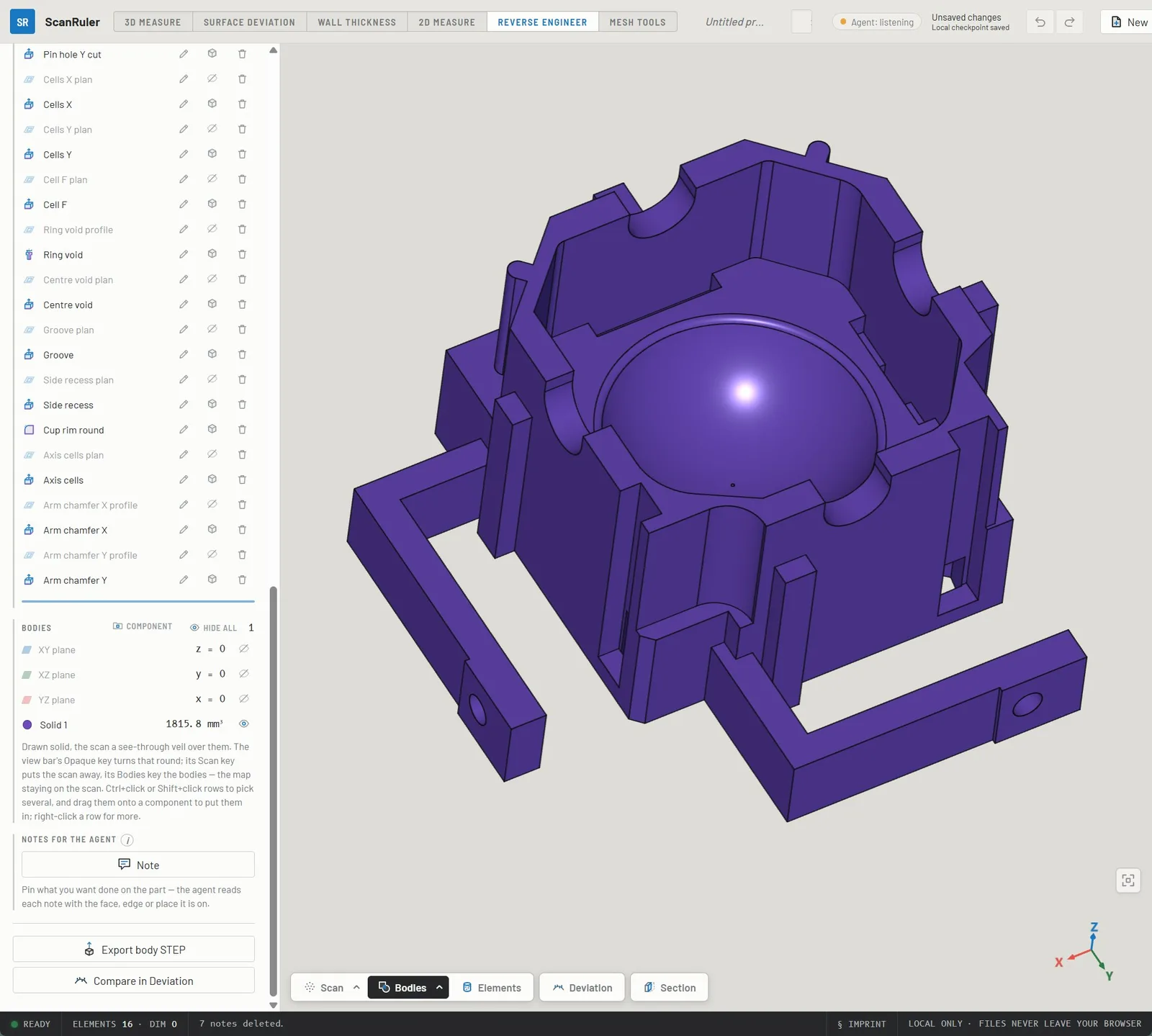
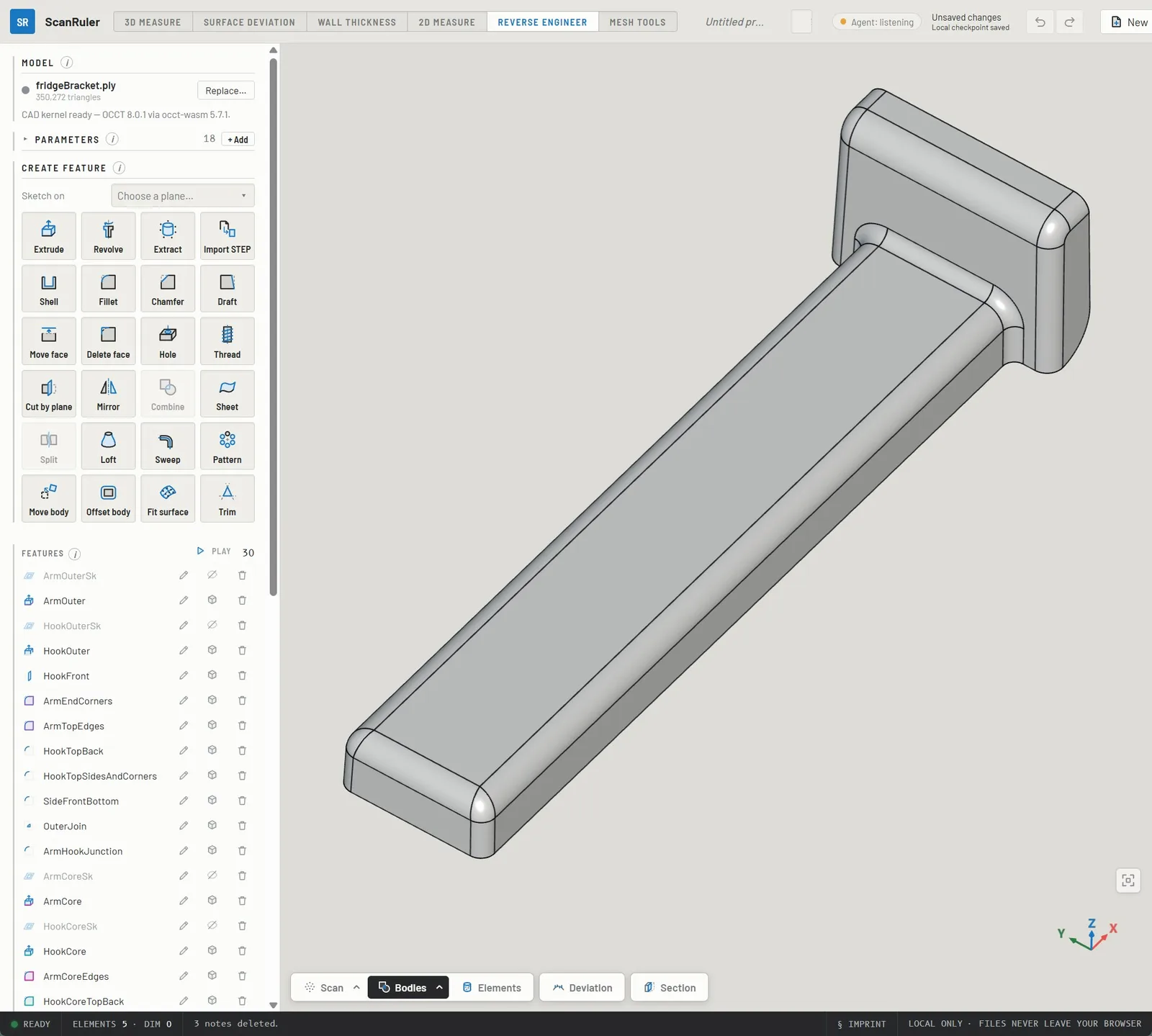
Hermann, an additive manufacturing engineer, announced the new Reverse Engineer workspace on X on October 21. Users connect their agent to ScanRuler, hand it an STL file and ask for the part to be reverse engineered. The agent then builds a fully parametric CAD model inside the browser tab, feature by feature, with the extrudes, revolves, fillets and cuts a designer would use, running on the Open Cascade geometry kernel.
Because the model keeps its feature history instead of being a cleaned up mesh, a fillet radius or a wall can still be changed afterward, which matters to anyone scanning a broken part to print a replacement. The agent estimates dimensions to allow for scanning tolerances, and users can pin notes on specific surfaces telling it to hold a given size or ignore wear. “It’s great at even repairing broken parts,” Hermann wrote in reply to a follower.
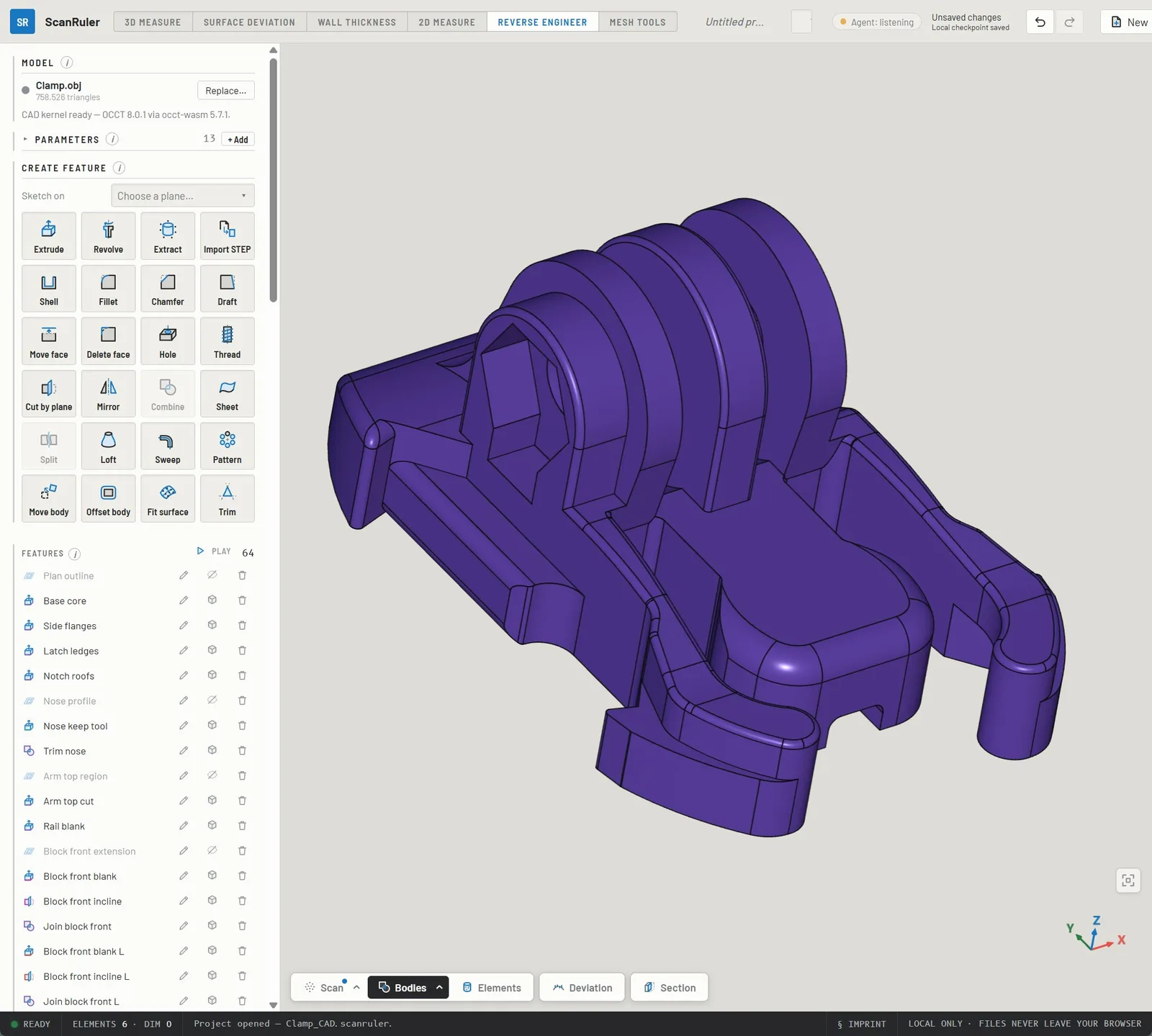
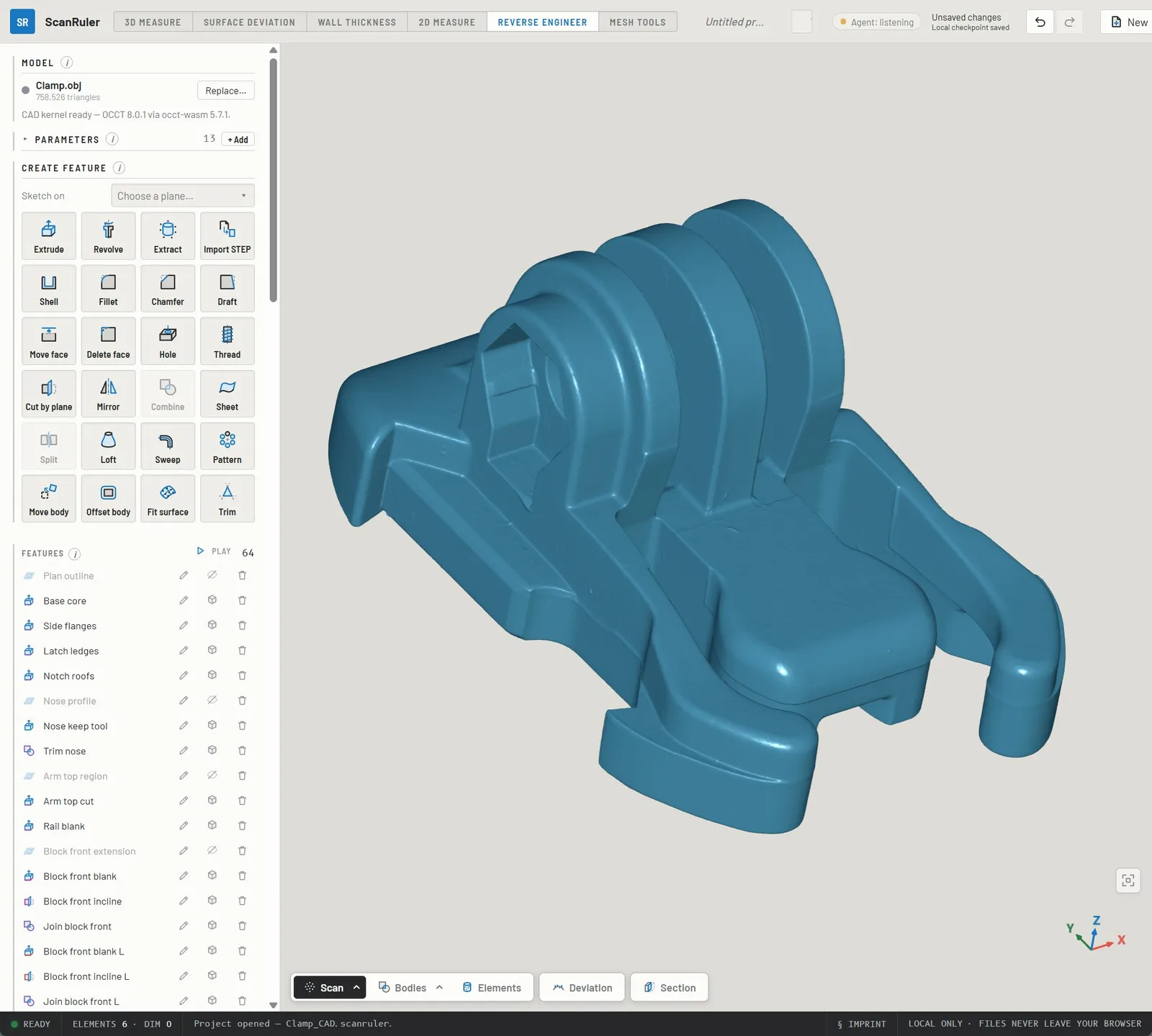
His examples so far include the GoPro clamp shown above, a fridge bracket and the so-called bowl part from a Nintendo 64 controller. The Opus 5.5 model from Anthropic has given him the best results, and he steers people away from running the job on their own hardware. “Local models unfortunately, at least with my system, model like a 5 year old, so don’t even try,” he wrote.
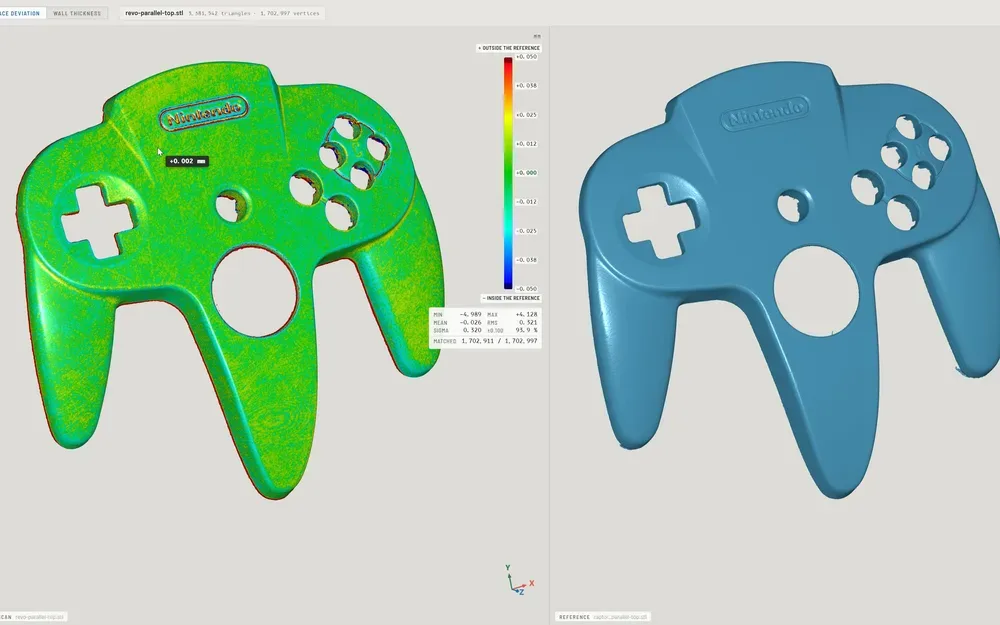
The reverse engineering sits on top of measurement tools that ScanRuler already offered. Modeled on metrology software such as GOM Inspect, the app fits planes, cylinders, spheres, cones and tori to a mesh, checks geometric dimensioning and tolerancing (GD&T) values such as flatness and coaxiality, maps deviation against a reference part and measures wall thickness. Checked against GOM Inspect on a structured light scan, ScanRuler measured a center distance of 148.639 mm where GOM read 148.64 mm. Those fits are what let the agent tell a true cylinder from a cone before it guesses at design intent.
The agent link is a small helper called scanruler-mcp that runs on the user’s own computer and speaks the Model Context Protocol (MCP). Claude Code, Codex, Claude Desktop and Cursor can all drive the open tab through it. Every step plays out visibly in the browser and can be undone, and scan files are processed locally rather than uploaded.
The measurement core is open source on GitHub under the AGPL-3.0 license, with commercial exceptions for closed source use. The reverse engineering and mesh workspaces are not open source yet. Hermann is considering releasing them but has set no date. A detailed video and a custom agent skill are due within days, and the tool itself is live at ScanRuler.com.
Source: CNC Kitchen on X