
South African artist and designer Nico Meyer spent more than 700 hours on The Mariner’s Shadow, a resin 3D printed whale sculpture finished with paint, handcraft and lighting. It caps a journey that began less than two years ago, when he first tried 3D sculpting.
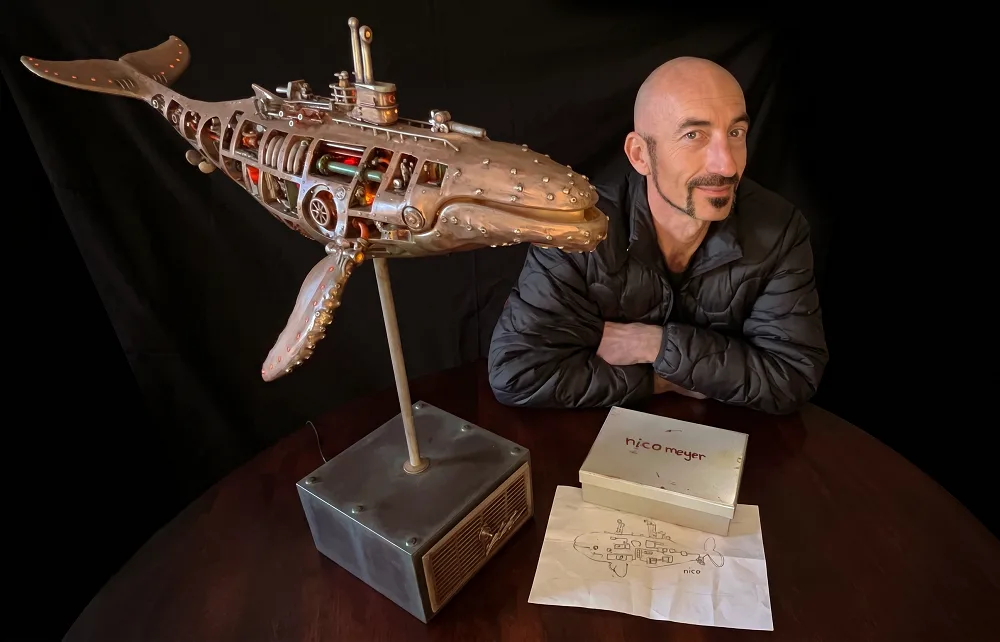
Meyer, who lives in Pretoria, has worked as an illustrator and graphic designer for more than 25 years. His work spans advertising, corporate branding, publishing and fine art. As a child he drew unusual creatures and invented imaginary worlds, and his mother kept some of his favorite sketches. Several of those drawings later became the basis for a series of digital paintings. He never expected to turn them into physical objects.
That changed with a small side project on a Creality Halot-X1 resin printer. It quickly grew into a new creative path. Illustration and digital design now meet sculpture, lighting and woodwork in the same pieces. As a newcomer to resin, he wanted a machine he could learn on that still held the fine detail his work needs.
His sculptures are not simply enlarged prints. Detailed resin parts sit alongside woodwork, metal, lacquer finishes, custom electronics and integrated LED lighting. Each piece is planned from the start as one complete mixed-media artwork.
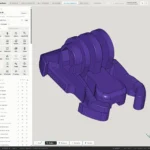
The whale shows how that works in practice. Meyer sculpted it digitally, then divided the model into printable sections. Many of his sculptures are far larger than the printer’s build volume, so a single piece can run to dozens of parts. Each one has to keep its surface detail and still fit tightly against its neighbors. That makes designing for assembly critical.
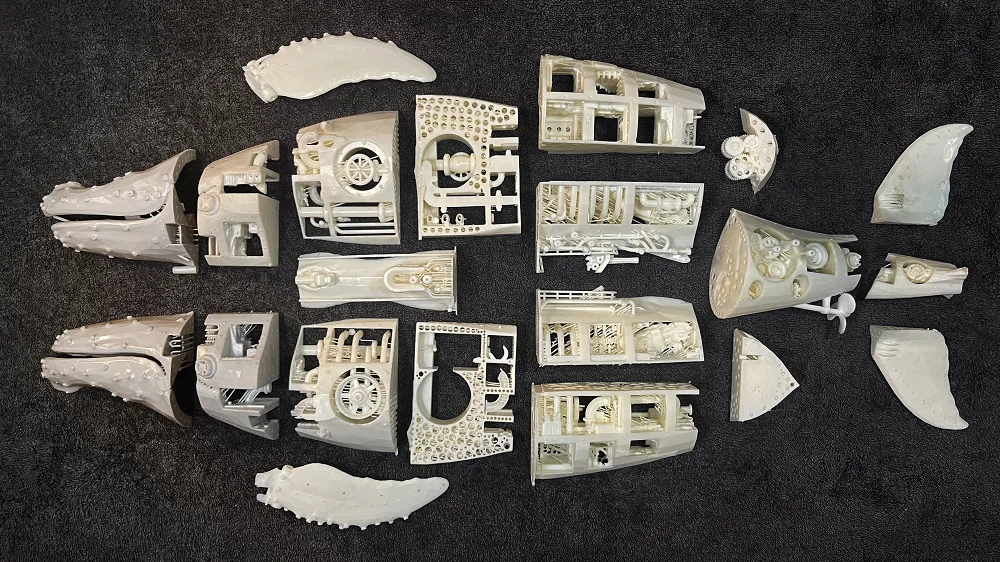
Model splitting, print orientation, supports and hollowing all have to be worked out before printing starts. After printing, the parts are assembled, sanded and painted. They are then combined with components in other materials.
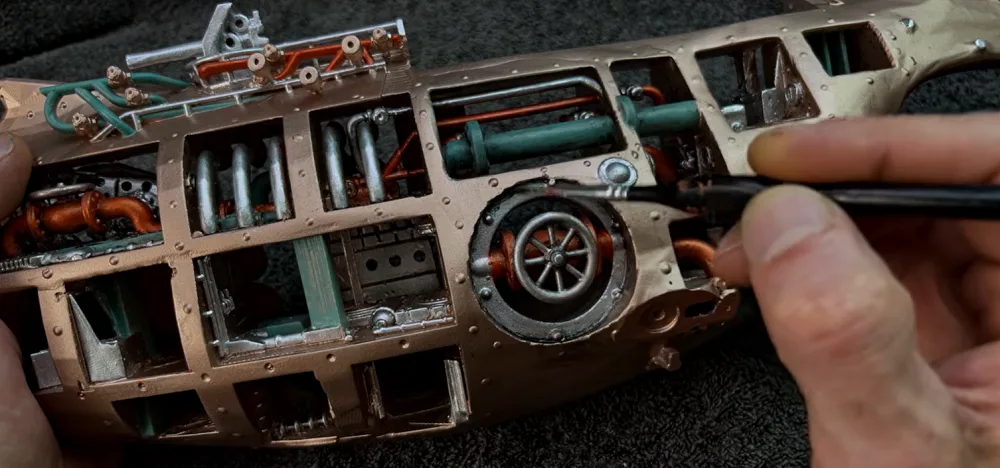
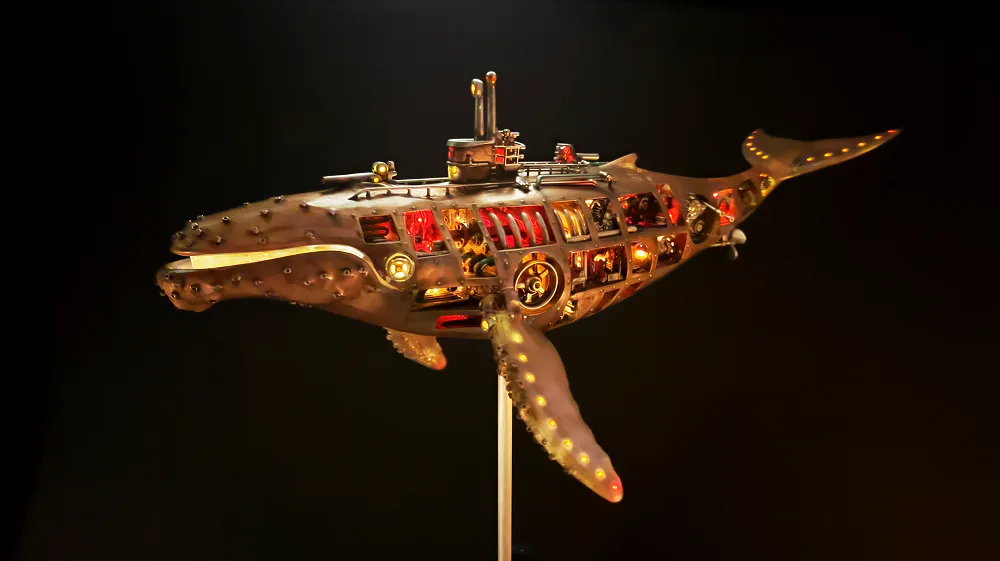
The Mariner’s Shadow brings digital sculpting, resin printing, traditional craftsmanship, painting and lighting together in a single artwork. It also marks how far his skills and workflow have come since his first resin experiments.
He does not see it as an endpoint. Meyer is now developing the next chapter of the series, building on techniques from earlier pieces. He is also experimenting with built-in light and new materials. Larger-format resin printing could let him make bigger, more seamless pieces without giving up the fine detail central to his style.
After more than two decades on paper and screen, he has found a way to connect drawing, digital creation and physical making. The childhood sketches his mother saved are now the starting point for ever more elaborate sculptures.
Source: Creality