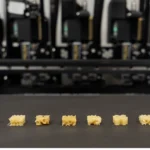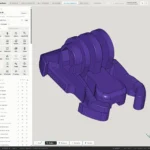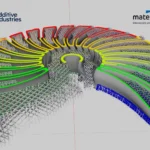

Electronics manufacturing startup Nebula has shown an early 3D printed motor prototype, a flat stator with printed coils built on its in-house Fabricator machine.
Here’s an early prototype of an AI designed and 3D printed electronic motor.
We used our Continuum Engine platform to produce electromagnetic, thermal and mechanical simulations rapidly for the 3D optimised model. The physical product was constructed, molecule by molecule, by… pic.twitter.com/LNHXay7grn
— troy mccann (@troy_mccann) October 23, 2026
Nebula founder and chief executive Troy McCann posted the five second clip on X on October 23. McCann previously founded Moonshot Space Co., an Australian space technology incubator and investment fund. Nebula is based in El Segundo, California, and is hiring for its first electronics fab there.
An electrical engineer on X asked whether it was a stator with coils, and McCann confirmed that it basically is. The coils wind in both the horizontal and vertical directions to fit more turns into the same volume. The post shows no rotor, test run or performance figures.
McCann’s post describes the part as designed by AI. Its 3D model went through electromagnetic, thermal and mechanical simulations in Nebula’s Continuum Engine, the in-house electronic design automation software McCann introduced in April. In a follow-up reply, he qualified that label. “It pains me to over simply say this was ‘AI designed’,” he wrote. The workflow combined a custom finite-difference time-domain solver, a parametric algorithm for the base geometry and other multiphysics solvers. A custom large language model harness drove those tools to iterate on the design.
The post also says the Fabricator built the part molecule by molecule. McCann’s earlier descriptions of the machine are more concrete. It is a drop-on-demand inkjet system in which a small crystal in each nozzle flexes to eject droplets of about 4 picoliters. More than 1,000 nozzles, each about 20 microns across, run in parallel and can jet different materials. Nebula’s listing in a New South Wales space industry directory names liquid silver and polymers as the second-generation Fabricator’s materials, with features as fine as 18 microns. The team is still formulating polymer, metal and ceramic materials. McCann told followers the current phase focuses on material properties and geometric precision.
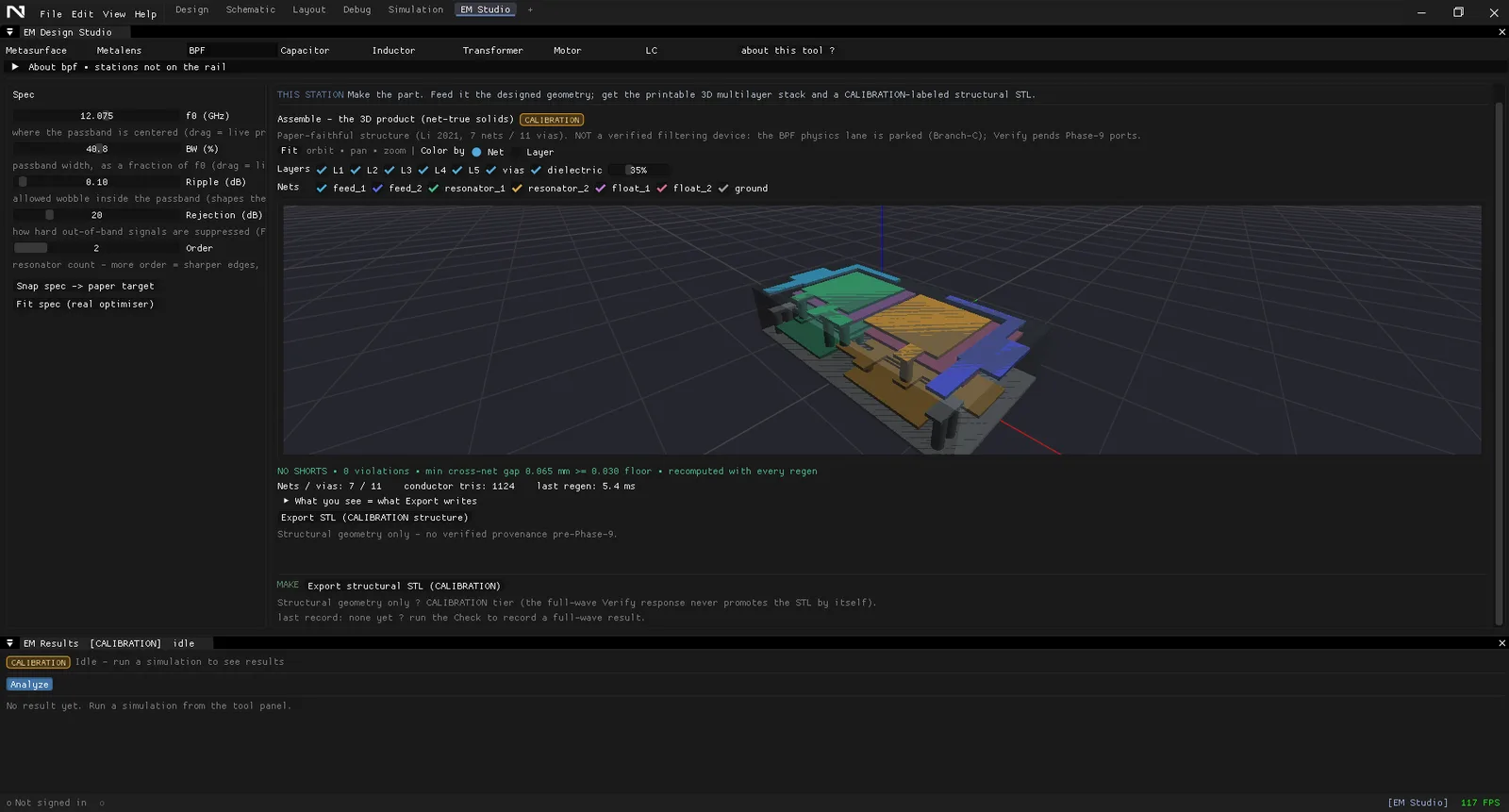
Nebula’s first business is printed circuit boards (PCBs). Its website pitches same-day rigid and flex boards, fully assembled, with resistors, capacitors and inductors printed into the board rather than placed as parts. McCann has said the first full production line will grow past 100,000 nozzles and initially turn out about 500 boards a day.
The motor is a step toward a bigger goal, complete products such as drones, satellites and medical devices built from raw material in one small machine. “We’re very close to letting you vibe code with a real-life matter compiler,” McCann wrote.
Source: Troy McCann on X