
Verona developer Marco Franzon’s free print3d plugin lets AI agents reverse engineer objects from an idea, a photo or a product listing into Bambu Lab prints.
This is REA for objects.
You see something you like and you can print it starting from a picture or a descriptionhttps://t.co/DcCFnWyngp
— Marco Franzon (@mfranz_on) October 24, 2026
In his post on X Franzon called print3d “REA for objects.” Reverse Engineer Anything (REA) is an open-source tool that lets coding agents work out how software works without its source code, from apps and old games to device firmware. A developer known as morluto started it in April. It took off in early October and now has more than 377,000 GitHub stars. Users have used it to rework a sluggish Samsung TV and to build a simpler app for a 3D printer.
Franzon co-founded Dualistic, a startup building digital twins and simulation tools for physical systems. He built print3d for Hermes Agent, the open-source assistant from Nous Research. It also runs inside other coding agents such as Claude Code, Codex, Cursor and Gemini CLI. Every job targets Bambu Lab’s dual-nozzle X2D printer.
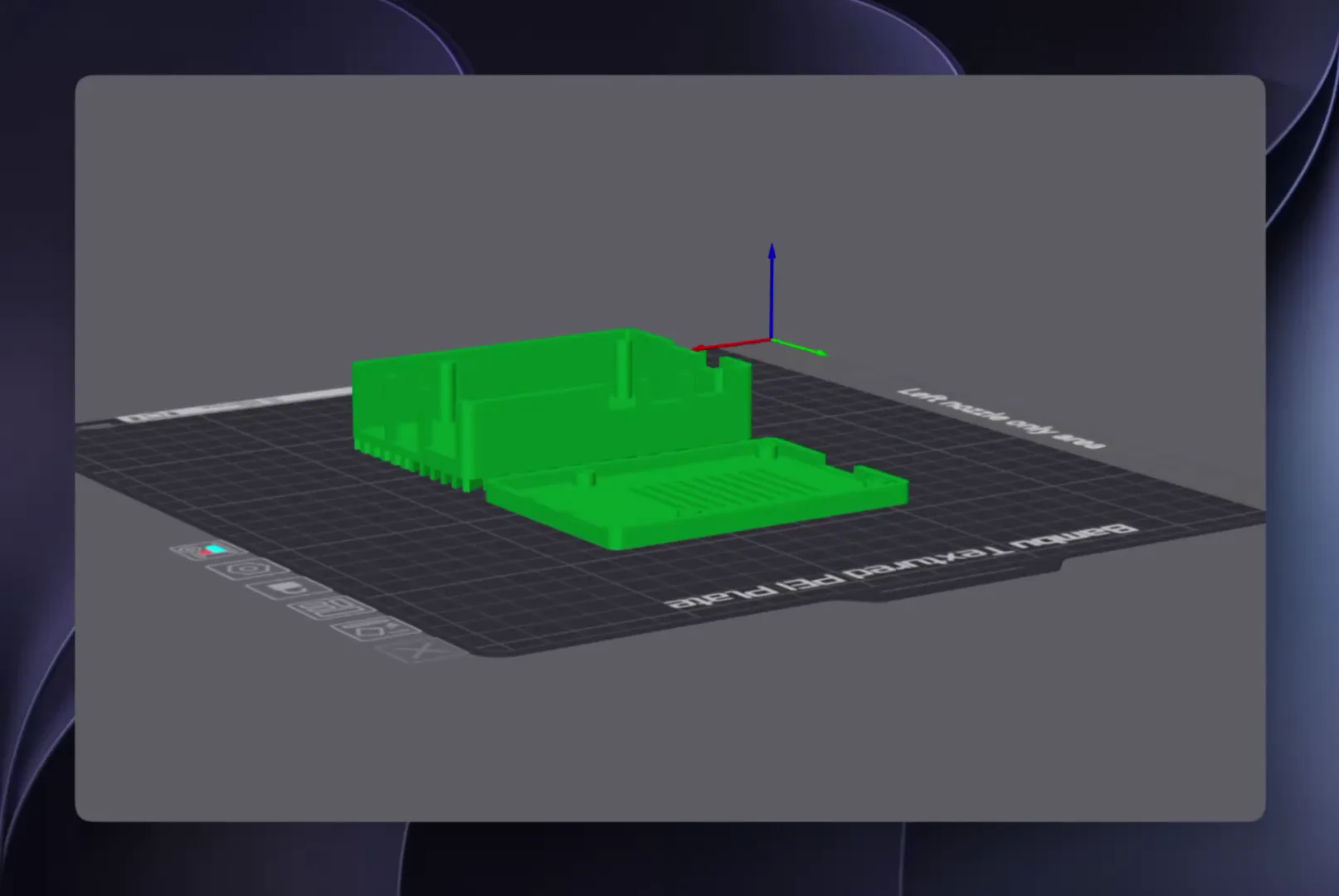
The tool does not lean on a text-to-3D generator. The agent writes a Blender script that builds the part. print3d runs that script, checks the mesh and slices the result with Bambu Studio’s command line. The agent fixes what fails and runs it again until every check passes. The user prints from Bambu Studio, because print3d never talks to the printer.
Working from a photo is the headline trick. The object is shot square-on beside something of known size, such as a bank card or a coin. That reference turns pixels into measurements. A likeness check then lays the model over the photo. The run fails if the shape or size is off.
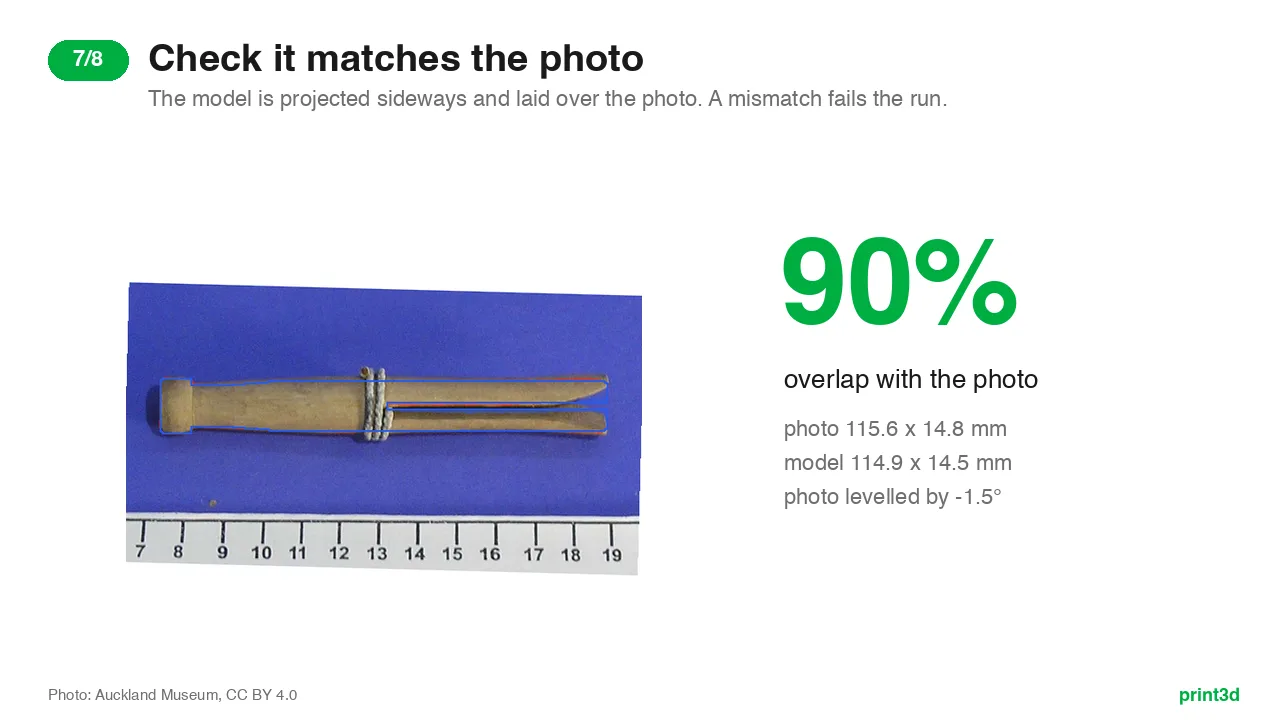
Franzon benchmarked the method on a wooden clothes peg from an Auckland Museum photo. The measured length came out at 114.9 millimeters, against 115 in the museum catalogue. The finished model covered 90 percent of the photographed outline.
A shop listing can stand in for the object when someone weighs printing a part instead of buying it. Its stated sizes scale the product photos, and the run puts the listing price next to the print’s grams and time.
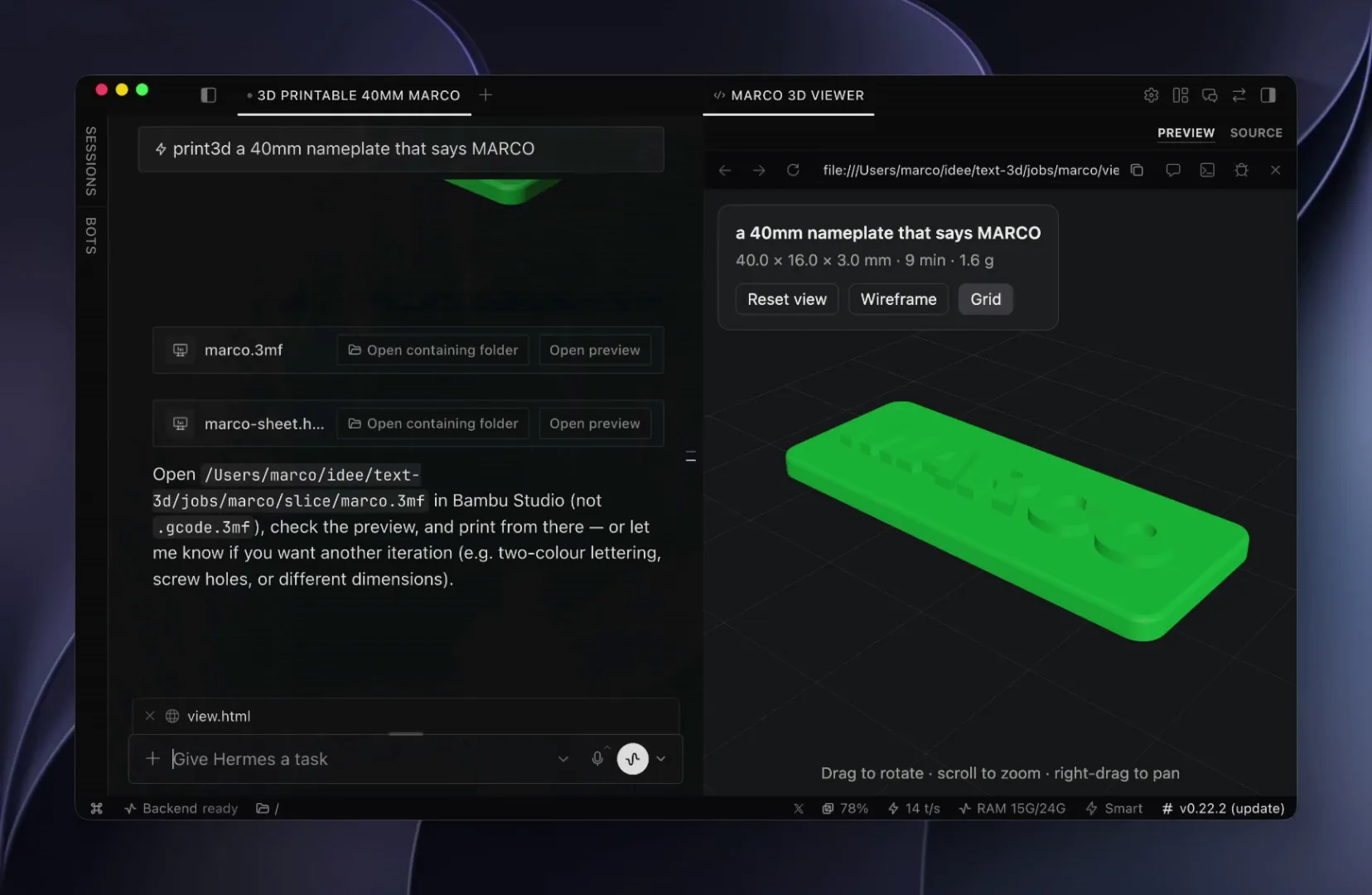
In an October 21 demo on X, Franzon fed Hermes a photo of a Raspberry Pi case. Running Anthropic’s Claude Opus 5.5 model, it returned a two-part case ready to slice. Two days later he added a 3D viewer to the Hermes desktop app, so users can turn the part around. “You can print what you see. No modeling skills required,” he wrote.
The repository went up on September 23. The photo workflow landed on October 18 and the Hermes plugin on October 23. His request to list it in the Hermes plugin catalog is still open.
Source: Marco Franzon on X and print3d on GitHub