
Buying a 3D scanner has never been cheaper, but hiring a 3D scanning service has never been more available either. This guide answers the question most readers actually have before they spend a dollar: should I buy a scanner of my own, or hire a service for the job? Three reader profiles, four decision factors, and an honest cost comparison so you land on the right side of the call.
Independently researched. 14 years of 3D printing and 3D scanning coverage at 3DPrinting.com, including hands-on reviews across the consumer and entry-pro tiers. The cost ranges and decision framework below pull from our four bracket buyer guides and from publicly listed service-vendor pricing in 2026. Service pricing varies by region, object complexity, and turnaround; treat the figures here as orientation, not quotes.
What is a 3D scanning service?
A 3D scanning service captures real-world objects on the vendor’s hardware, processes the scan, and delivers a digital model: a mesh (STL or OBJ for 3D printing), a point cloud (PLY for inspection or visualisation), or a finished CAD file (STEP or IGES for redesign and manufacturing). The customer never touches the scanner; they ship in the part or host the technician on site, then receive a file.
Two delivery modes are common. Ship-the-object is the standard for small to medium parts that fit in a courier box: mail it in, the service scans it on their bench, and emails back the file. On-site sends a technician with portable hardware to your factory, museum, dental lab, or sculpture studio when the object cannot be moved (vehicles, statues, manufacturing lines, anatomical capture of patients). On-site costs more per job because the labour and travel are part of the bill, but the value when an object cannot ship is non-negotiable.
Typical turnaround is 3 to 10 working days for a standard part, with most services offering rush options at a premium. The output is a clean, watertight digital model ready for whatever you do next, whether that is 3D printing a replacement, machining a redesigned version, archiving the geometry, or comparing it to a reference for inspection.
The four decision factors
Most buyers land on the right answer by working through four questions in priority order. Get these right and the rest of the article confirms what you already know.
1. Frequency: how often will you scan?
A one-off project (a single heritage capture, one prototype, one keepsake) favours hiring every time. The economics simply do not work for a single use of a $1,500 scanner. The crossover point in 2026 is roughly five scans a month at the consumer tier: at that volume a $1,500 standalone scanner pays for itself in four to seven months against typical service pricing. Above ten scans a month, the case for buying is overwhelming unless your accuracy needs push you into industrial-tier hardware. Below five scans a month, hiring almost always wins on total cost.
2. Object access and sensitivity
Heritage objects, dental impressions, IP-sensitive engineering parts, and any object that cannot leave its room favour on-site service or buying outright. Generic parts that travel safely can ship to any service. The same logic applies to confidentiality: parts under NDA or trade secrets often cannot leave the building, which pushes you toward in-house scanning or a service willing to work under your NDA on site. Most consumer services do not sign NDAs; most industrial metrology services do, with a corresponding price step up.
3. Accuracy needed
Hobbyist 3D-printing accuracy (0.1mm or thereabouts) sits well within the reach of a $300 to $800 consumer scanner. Sub-100-micron accuracy for jewellery or dental work needs a $700 to $2,400 consumer pick (Seal, MINI 2, EinScan SP V2). Certified metrology with traceable calibration (5 microns or below, GD&T, ISO inspection) belongs at the industrial tier ($20,000+) and usually favours hiring a metrology service unless you scan constantly.
4. Skill and time investment
A new scanner adds two to four weeks of post-processing learning curve before scans come out reliably clean: mesh registration, hole filling, alignment, export to your CAD or slicer. Hiring outsources that curve entirely. For one-off captures, the learning curve cost is the deciding factor; for ongoing work, the curve is a feature (you build a real skill) not a bug. Either way, factor in the time you actually have, not the time you wish you had.
Cost: hire vs buy in 2026
Service pricing varies more than scanner pricing because labour, travel, and turnaround all enter the bill. The figures below are typical 2026 ranges for parts services in North America and Europe; rush jobs, on-site work, and certified metrology all push higher.
Approximate 2026 ranges. Break-even excludes operator time and learning curve cost; on real jobs those add days, not dollars.
Featured scanner picks at each tier
If the break-even math swings you toward buying, the four picks below cover the scenarios in the table above. Each one is the top recommendation from the matching bracket on our Best 3D Scanners 2026 hub.

3DMakerpro Seal
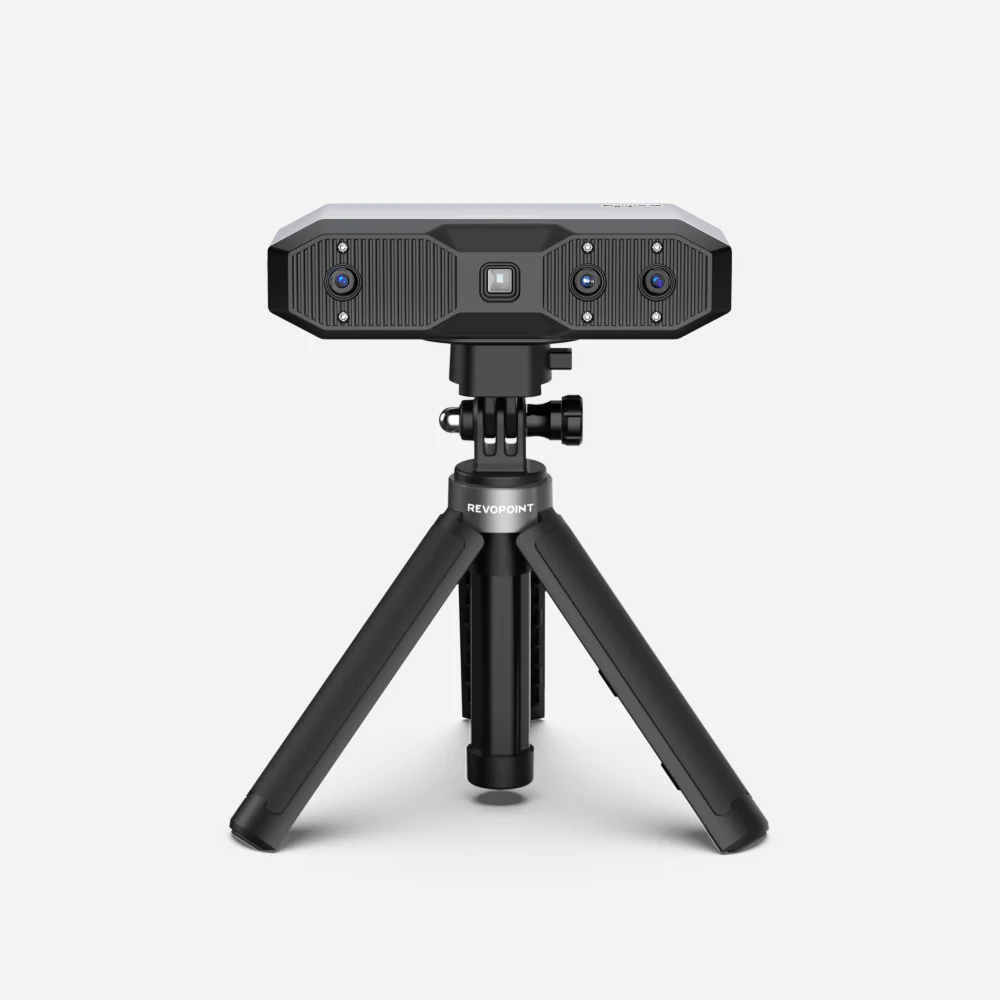
Revopoint MINI 2
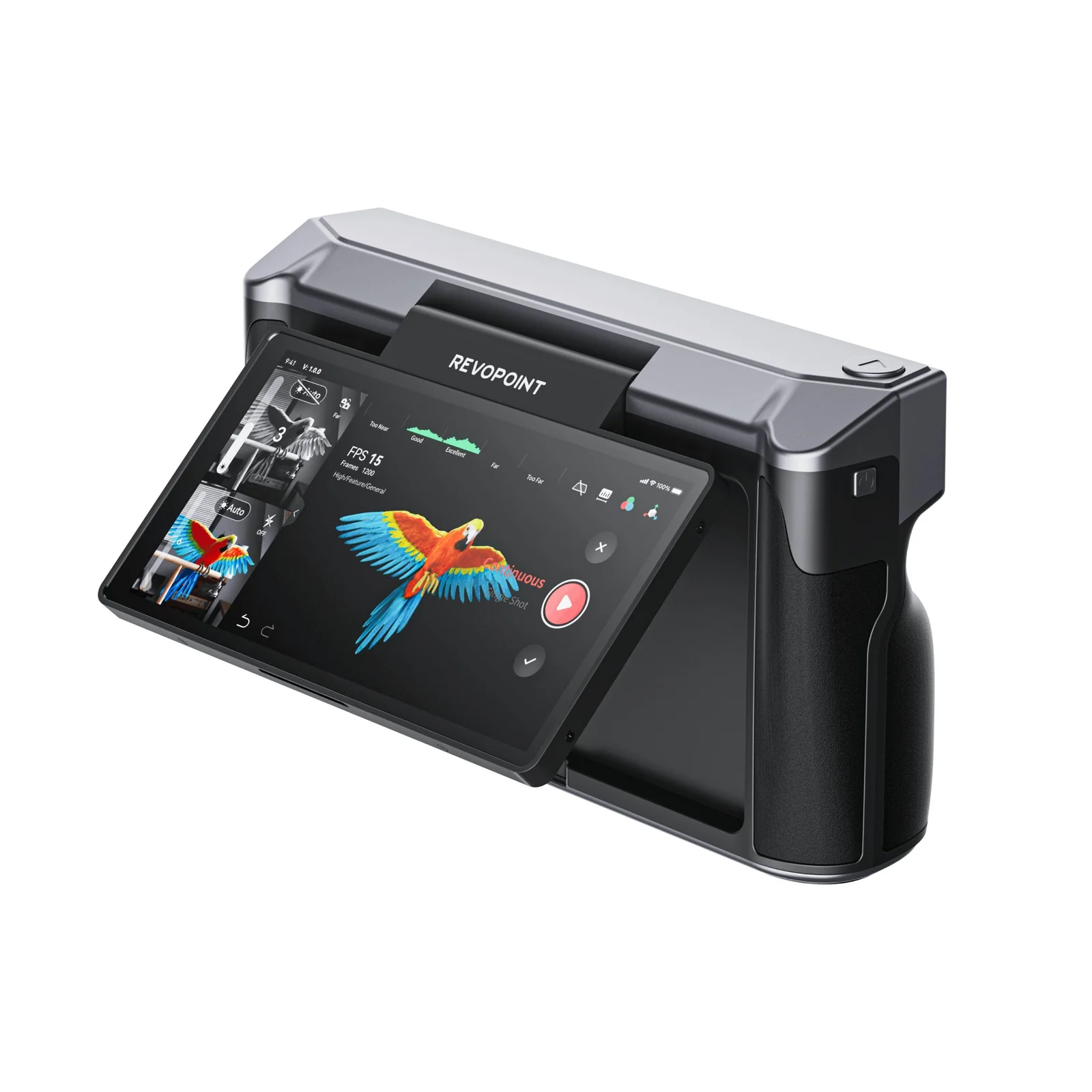
Revopoint MIRACO
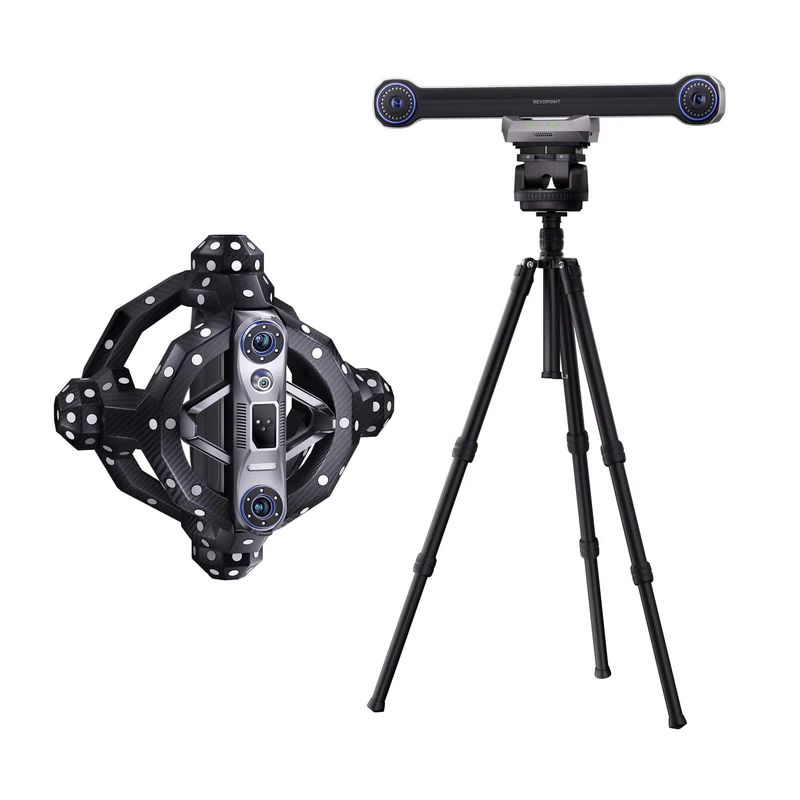
Revopoint Trackit
Two notes on the break-even math. First, the per-job figures only count the scan itself, not the value of having the scanner in-house for iterative work. A scanner that lets you re-scan a prototype each time you tweak it has a real value above its per-job math, especially on engineering and design projects where iteration speed matters. Second, the professional and industrial tier rarely pays back on per-job arithmetic. It pays back on calendar time (no vendor in the loop), IP control (parts never leave the building), and ability to scan at will (no scheduling).
When to hire a 3D scanning service
Five scenarios where a service is almost always the right call, even before you do the cost comparison.
One-off heritage or artistic capture
A single bust, statue, family heirloom, or art piece does not justify a scanner purchase. Most heritage and archival services have specialised hardware (Artec Eva, Artec Leo, photogrammetry rigs) and the workflow knowledge to produce archival-quality output. The premium per job is real but the result is a one-off model you would not match on the first try with new hardware.
Sub-monthly need with no in-house technical staff
If you scan one or two parts a quarter and nobody on the team wants to own the workflow, hiring is the cleaner answer. The scanner cost is the small part; the learning curve, the maintenance, and the calibration discipline are the real cost. A service absorbs all of that.
Certified inspection or metrology you cannot deliver in-house
Certified inspection with ISO traceability, GD&T evaluation, and metrology-grade calibration belongs at industrial-tier services unless you scan production volume. The hardware is $20,000+ and the software pipeline (Geomagic Control X, PolyWorks, ZEISS INSPECT) adds another $10,000+ plus the trained operator. For occasional QC, a metrology service contract is the right answer.
Specialised capture you cannot match
CT scanning for internal geometry, structured-light micro-CT for sub-50-micron capture, terrestrial laser scanning for whole job sites, or aerial LiDAR for large-area capture all sit outside the consumer market. These services rent or own equipment that retails for hundreds of thousands of dollars; the only way to access it is to hire it.
Tight deadline where the learning curve is the bottleneck
A scanner in the door on Monday will not produce a usable mesh on Tuesday for a first-time operator. If you need a clean file by the end of the week, a service hits the deadline and you can decide later whether the workflow justifies an in-house tool.
When to buy a 3D scanner
Five scenarios where the answer is almost always “buy”, regardless of the headline cost.
Recurring need (5+ scans a month)
Past five scans a month at the consumer tier, the per-job math flips firmly toward buying. A $1,500 standalone scanner pays for itself in months, not years, against typical service pricing. Above ten scans a month, the buy decision is essentially automatic unless your accuracy needs push you into industrial-tier hardware that swings the math back.
IP-sensitive parts that cannot ship out
Parts under NDA, trade secrets, anything covered by an export control regime, or designs you are not ready to share with a vendor all favour in-house scanning. The cost of the scanner is small against the legal cost of a leak. Even with a service that signs an NDA, the part still leaves your premises, which is an exposure point you remove entirely by buying.
Iterative design work where speed matters more than per-scan polish
When you tweak a prototype every two days and need to re-scan after each tweak, the round-trip time of a service kills the workflow. An in-house scanner lets you scan on the bench in 15 minutes and iterate without scheduling. For product design, jewellery, and engineering prototyping, the iteration speed is often the deciding factor regardless of cost.
Tight cost ceiling over a year
If you have a fixed budget for the year and reasonable volume, the math almost always favours buying. The break-even point sits between 4 and 10 jobs at the medium and large bracket, and any business doing more than that finds the per-job service spend stacks up fast against a one-off scanner purchase.
You want to learn the craft
Some buyers want 3D scanning as a skill, not a service. For makers, students, hobbyists, and design-curious teams, the learning curve is the feature, not the bug. Buy the scanner and accept that the first month is a learning investment.
Decided to buy?
Our Best 3D Scanners 2026 hub maps the four buyer brackets (small format, medium, large, professional) with picks at every price tier, the scanner software pipeline, and a buyer FAQ. Start there to find the right scanner for your project size and budget.
Picking a 3D scanning service
If hiring is the right call, the choice of vendor matters more than people expect. Five evaluation criteria to use, plus a directory of well-known services as starting points.
1. Output format match
A service that delivers in STL when you need STEP is a workflow problem. Confirm before you book: STL or OBJ for 3D printing, PLY for inspection workflows, STEP or IGES for CAD-ready output. Most services deliver multiple formats but on a tiered price; the cheap option is often mesh-only, and CAD-ready is a step up.
2. Accuracy claim with measurement traceability
A service that cannot tell you the accuracy they will deliver on your object class is not a service. Reputable vendors quote accuracy per object size and material; metrology services back the claim with traceable calibration. If the conversation stalls on this question, walk.
3. Portfolio in your object class
Jewellery, dental, automotive, sculpture, anatomical capture, and reverse engineering each have their own quirks. A service that has scanned 200 rings is not automatically good at scanning a Ferrari, and vice versa. Ask to see a recent example in your category before you ship the part.
4. Turnaround in writing
3-10 working days is the typical range. Get the commitment in writing and confirm the start-of-clock (date of receipt at the vendor, not date you mail). Rush options exist on most services but at a real premium; check it before you need it.
5. NDA willingness
If your work needs confidentiality, ask early. Industrial metrology vendors sign NDAs as a matter of course; many consumer-tier parts services will not. There is no point starting a relationship if the legal piece kills it later.
Well-known services as starting points
Names below are orientation, not endorsement. We have no commercial relationship with any of them. Pricing, availability, and quality vary, so apply the five criteria above before committing.

Hexagon Manufacturing Intelligence

Direct Dimensions

Capture 3D

3D Scan Store
Also worth checking: local maker spaces and library fab-labs. For hobbyist-scale parts, your nearest fab-lab often offers scanning at near-cost rates. Check membership requirements; some require a monthly fee.
Frequently asked questions
How much does it cost to hire a 3D scanning service in 2026?
Typical 2026 pricing runs ~$150-$400 per small object (sub-300mm, one pass), ~$300-$1,200 per medium object (multi-pass), ~$500-$3,000 per session for large objects on site (vehicles, sculpture), and ~$150-$300 per hour plus setup for certified metrology contracts. Pricing varies by region, object complexity, and turnaround. Rush options and on-site work both add a premium. Treat published ranges as orientation, not quotes, and confirm with the vendor before booking.
Can I rent a 3D scanner instead of buying one?
Yes, but it is a niche market. A handful of suppliers rent consumer and pro-tier scanners by the day or week, typically at 10-15% of the purchase price per week. The economics rarely beat hiring a service for one-off work, because you also have to learn the software and absorb the workflow risk. Rental makes most sense when you want to evaluate a scanner before buying, or when you have one short project with enough scans to justify a week of learning.
How long does a typical 3D scanning service job take?
3 to 10 working days is the standard range for a parts-scanning job, from the day the vendor receives the object to the day the file is in your inbox. Rush options at most services bring this to 1-3 days at a premium. On-site jobs depend on scheduling: a vehicle or sculpture scan can usually be booked 1-3 weeks ahead. Industrial metrology contracts are scheduled differently; talk to the vendor about your timeline before assuming.
What file formats do 3D scanning services deliver?
The standard outputs are STL or OBJ (mesh, for 3D printing), PLY (point cloud, for inspection and visualisation), and STEP or IGES (parametric CAD, for redesign and manufacturing). Most services deliver multiple formats but on a tiered price: mesh-only is the cheapest, and CAD-ready output is the step up. Confirm the format you need before booking, because a mesh-to-CAD conversion downstream can add as much cost as the original scan.
Is it safe to send valuable or proprietary objects to a scanning service?
For valuable physical objects, reputable services carry shipping insurance, but the buyer is responsible for confirming coverage limits. For irreplaceable items, on-site capture removes the shipping risk entirely. For proprietary IP, ask whether the service signs NDAs (industrial-tier vendors usually do, consumer-tier often will not), and confirm in writing what they do with the file after delivery. The most cautious workflow is on-site capture under NDA, with files deleted from the vendor’s systems after sign-off.
Do I need to be at the scanning location for on-site capture?
Not usually. On-site capture means the technician comes to you with portable hardware; you provide access to the object and a workspace. For vehicles, sculpture, manufacturing lines, or anatomical capture of patients, a brief access window (often 1-3 hours) is enough. The technician handles the scanning, the post-processing, and the file delivery. Your role is access and approval, not operation.
Should I buy a 3D scanner or hire a service for jewellery, dental, cars, or reverse engineering?
For jewellery, the consumer-scanner economics flip toward buying fast: a 3DMakerpro Seal at ~$699 pays for itself in a handful of design jobs. For dental, hire below crown-volume; the EinScan SP V2 at ~$2,399 is the realistic in-house floor when you regularly need crown-grade accuracy. For one-off car capture, hire (vehicles need on-site work and pro tracking); for recurring automotive work, the Revopoint Trackit at ~$4,980 makes more sense. For reverse engineering, the answer depends on volume and accuracy: ad-hoc work fits a $1,200 to $5,000 in-house scanner like the MetroX Pro, while production-grade reverse engineering with ISO traceability favours hiring until you scan constantly.
Where to go next
Decided to buy? The Best 3D Scanners 2026 hub is the starting point for picking a scanner. Going straight to a bracket? Best small-format 3D scanners for jewellery and miniatures; best 3D scanners for medium-sized objects for figures and prototypes; best 3D scanners for large objects for cars and sculpture; best professional 3D scanners for industrial and metrology work. For the software side of the workflow, see our complete 3D scanner software guide; for the cleanup step after the scan, see our STL repair software guide. Pairing a scanner with a printer? Start with our Best 3D Printers of 2026.