
When Vinmec switched on a nationwide robotic surgery network, the real advance was the connective tissue around it: preoperative 3D reconstruction, surgical simulation, and patient-specific manufacturing built into one coordinated system.

On June 27, 2026, Vinmec Healthcare System activated a nationwide robotic surgery network across five cities, coordinating platforms for general surgery, orthopedics, and neurosurgery under a single clinical structure. Coordinated through Vinmec Times City, the deployment marked Vietnam’s first integrated multi-platform surgical ecosystem, connecting robotic surgery with preoperative 3D reconstruction, surgical simulation, and patient-specific manufacturing workflows.
The list of hardware is impressive on its own: Da Vinci Xi, Hugo RAS, and Toumai MT-1000 for general surgery; ROSA, MISSO, and CORI for orthopedics; and StealthStation S8, Mazor X Stealth Edition, and O-arm for neurosurgery and spine procedures. But the network represents something more fundamental than a hardware roster. It is an institutional architecture designed to convert isolated clinical innovations into reproducible system capabilities, and 3D printing sits at the center of that shift.
From outlier to infrastructure
The foundation for this infrastructure was already being built a year earlier.
In May 2025, an eight-year-old boy named Tran Minh Duc arrived at Vinmec Times City with bone cancer that had destroyed his entire femur. Conventional implants were not viable. Vinmec reconstructed his femoral anatomy from imaging data, designed and 3D printed a titanium implant modeled precisely to his skeletal structure, and manufactured it entirely within Vietnam. According to medical literature in the U.S. National Library of Medicine, Duc became the youngest patient in the world to receive a total femur replacement of this kind.
The distinction is not only his age. A 2025 systematic review of total femur replacement indexed by the U.S. National Library of Medicine catalogues cases reported in the medical literature over five decades, and none were produced with 3D printing. Every documented replacement before Duc’s relied on conventional methods, which is what makes a personalized, additively manufactured femur for a child this young a genuine first.
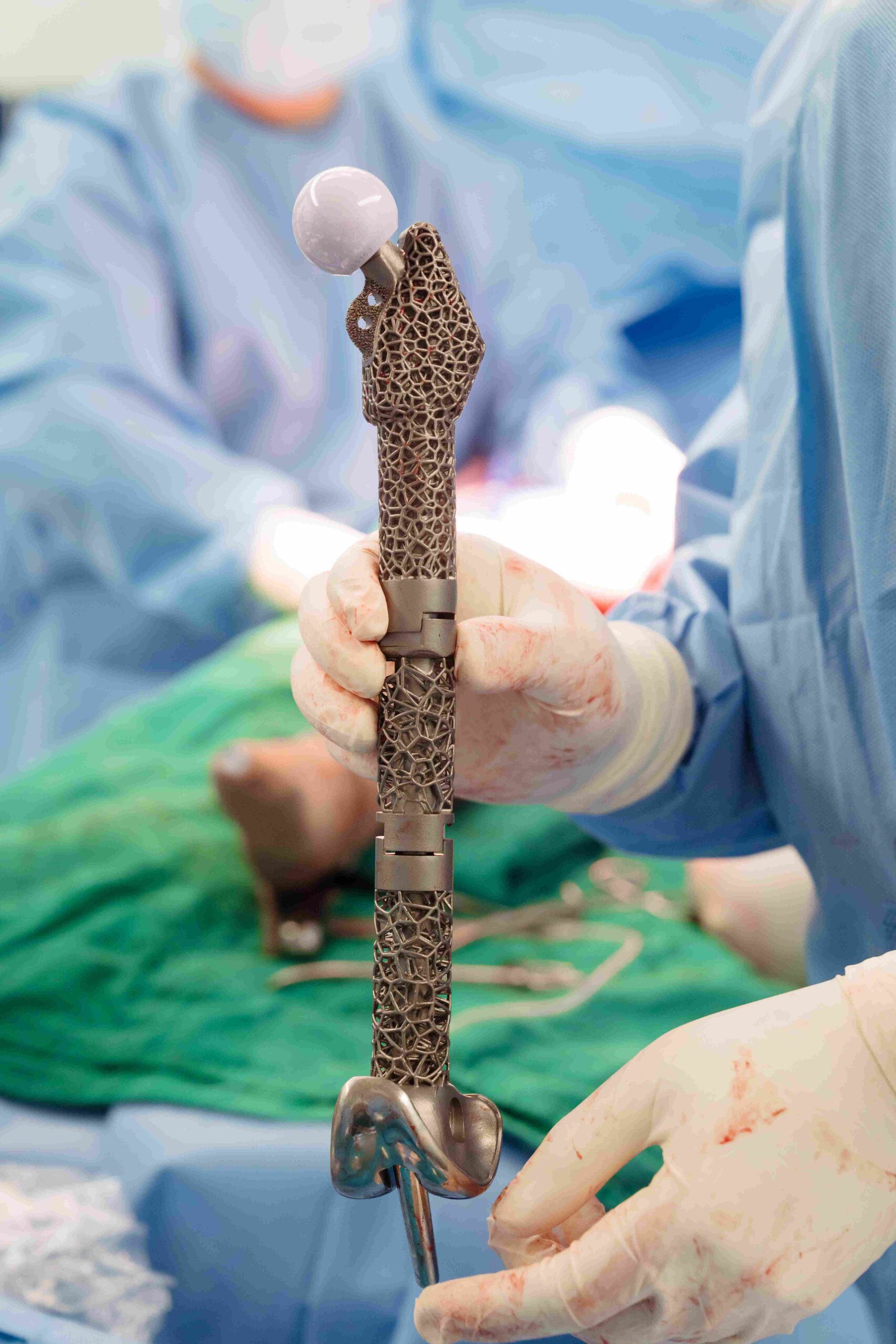
At the time, a case like Duc’s depended on a rare concentration of expertise in one place. One year later, when Vinmec launched its robotic surgery network on June 27, the system had matured the very capability that made his treatment possible. The network now coordinates preoperative 3D reconstruction, surgical simulation, and custom manufacturing protocols across five cities, turning a one-off feat into a repeatable workflow.
Building a connected surgical ecosystem
The defining feature of Vinmec’s new network is not a single robot or technology platform, but connectivity. Vinmec Times City International Hospital serves as the clinical coordination hub, linking robotic surgery centers at Vinmec Smart City, Vinmec Da Nang, Vinmec Central Park, Vinmec Can Tho and other Vinmec hospitals throughout the country.
That same structure does double duty. The connectivity that enables robotic surgery at scale also creates the conditions for patient-specific manufacturing to expand beyond individual centers of excellence. Before independently applying advanced techniques, physicians undergo structured training, competency assessment and certification, so a capability proven in one hospital can be reproduced safely in the next.
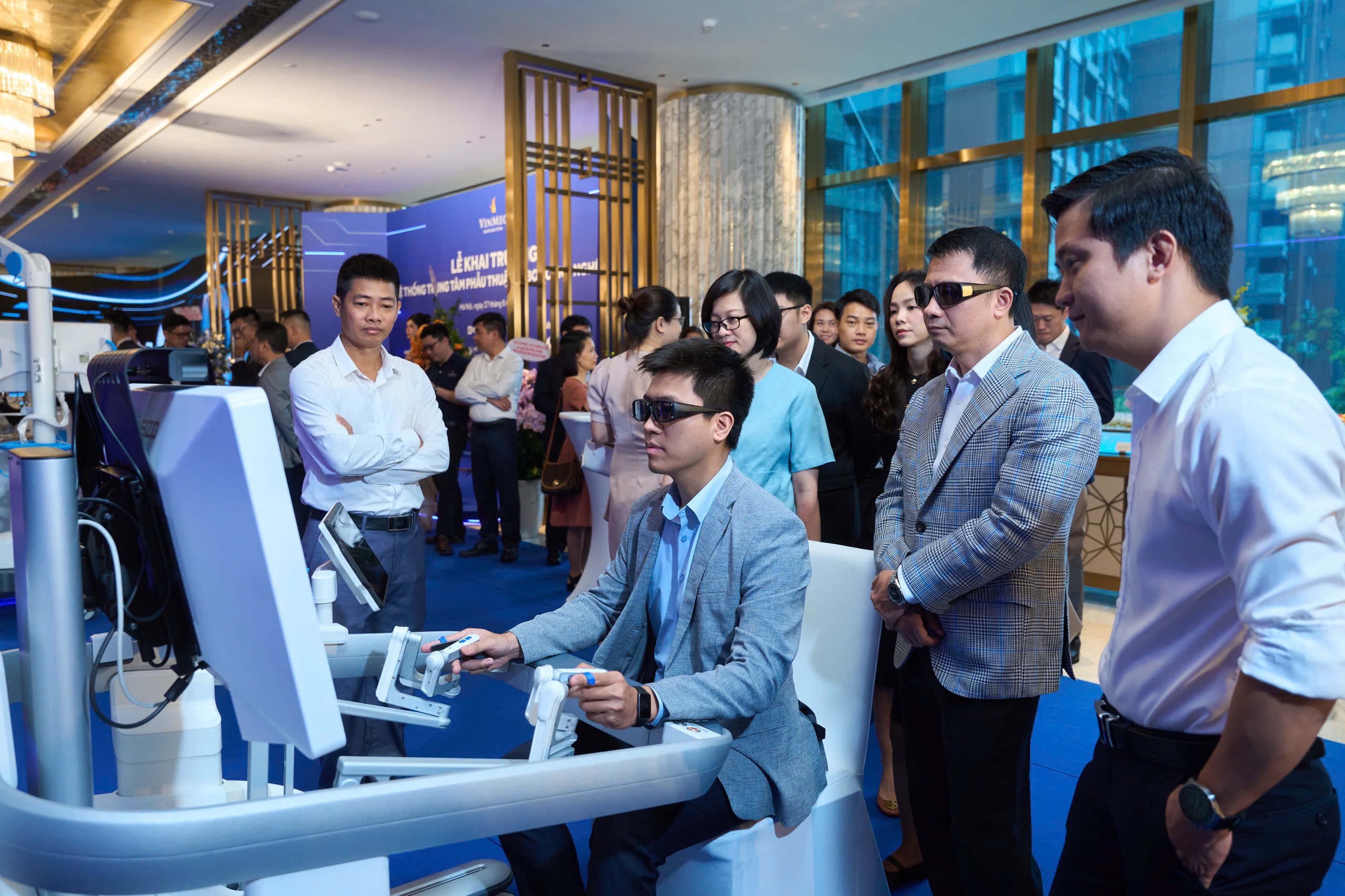
The system’s “3-in-1” model, Personalization, Automation, and Standardization, treats patient-specific planning, robotic execution, and standardized protocols as equally essential elements of modern surgical care. In that framing, a 3D-printed implant is not a showcase project. It is one standardized output of a system engineered to deliver it consistently.
“What patients care about is not how advanced a robot is, but whether they are safer, experience less pain, and recover faster after surgery. The robot is not the ultimate goal. The patient’s treatment outcome is.”
Assoc. Prof. Pham Van Binh, Director of Vinmec’s High-Tech Robotic Surgery Center Network
The next institutional move
Also in May 2026, Vingroup established VinSurgical, a dedicated surgical robotics and medical technology R&D company. The move reflects Vietnam’s growing ambition to play a larger role in the development of surgical technologies, alongside continued adoption of leading global platforms. It also points to increasing investment in the research, engineering and clinical capabilities needed to support future innovation domestically, the same capabilities that patient-specific manufacturing depends on.
“For Vinmec, this investment in robotics is not the end goal. It is the foundation for building a modern treatment ecosystem where technology, people, and knowledge develop together for the benefit of patients,” said Prof. Tran Trung Dung, CEO of Vinmec Healthcare System.
For readers who follow additive manufacturing, the Vinmec story is a useful marker. The headline may be robotic surgery, but the durable lesson is about workflow: 3D reconstruction, simulation, and printing only change medicine at scale once an institution builds the systems, training, and standards around them. A titanium femur printed for one child in 2025 becomes meaningful when the pathway that produced it can be run again, in another city, for the next patient.