
Scientists in China have developed a 3D-printed tooth implant that restores the sense of chewing — a capability that conventional dental implants don’t offer — with 90% of trial patients reporting recovered masticatory perception after receiving the device.
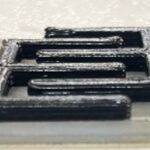
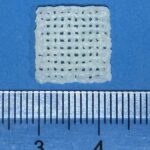
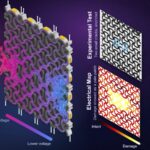
The implant, developed by researchers at Huazhong University of Science and Technology, uses piezoelectric materials to convert the mechanical forces of chewing into electrical signals, which are then sent to the brain via the tooth nerve. The core is made from barium calcium zirconate, a material known to be safe for humans, and is surrounded by a 3D-printed ceramic crown that mimics natural tooth enamel. Both components are customized and assembled to match the exact size and shape required for each patient.
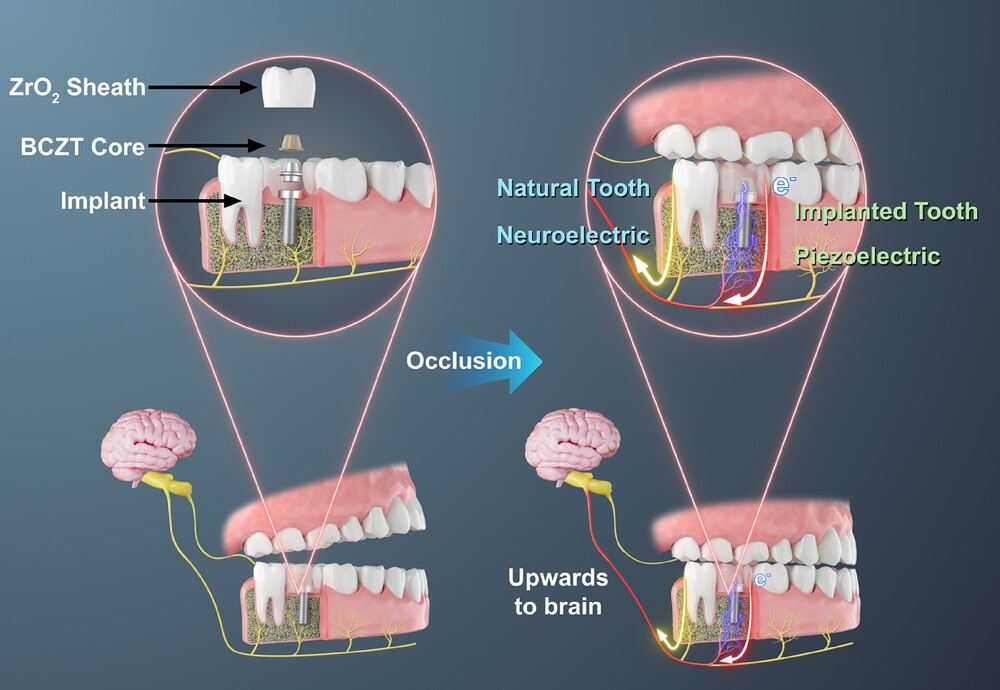
The clinical problem the device addresses is a serious one. Patients with conventional implants lose all sensory feedback from the artificial tooth, which means they can’t regulate biting force properly. Over time, that leads to damage to other teeth and the jaw. Previous research attempts focused on regenerating the missing ligaments or injured nerves that normally house mechanoreceptors — the structures that convert pressure into sensation — but none have proven effective.
“Existing implants are primarily designed to restore masticatory function yet fail to completely recover the sensory feedback of natural teeth,” said Yunyun Han, professor at Huazhong University of Science and Technology. “Over 90% [of] patients reported the recovery of masticatory perception after being implanted with the piezoelectric tooth compared with those with commercial ceramic dental crowns.”
The team tested the device on 23 volunteers at the university’s hospital who needed dental implants. Participants underwent biting and continuous chewing tests, with results from the piezoelectric implant compared against a commercial implant and a natural tooth on the opposite side used as a control. Only a small portion of patients who received a conventional implant responded to the tests, while those with the piezoelectric version performed far closer to natural tooth benchmarks.
“We have successfully engineered a manufacturing and assembly pathway to fabricate piezoelectric dental implants,” Han added. “The artificial tooth converts force into electrical signals, shedding light on a solution to a critical clinical dilemma.”
The research was published in Advanced Science under the title “An Implanted Tooth That Can Feel” (DOI: 10.1002/advs.202520786).
Source: advancedsciencenews.com